
In contemporary homes, temperature control of warm water floors is essential for both comfort and energy economy. These systems provide an opulent substitute for conventional heating techniques by using boiler-heated water to warm the floor surface. Not only does proper temperature control improve comfort, it also prolongs the life of flooring materials.
The use of thermostats is one practical way to control the temperature of warm water floors. The temperature of each room or zone can be precisely controlled with modern thermostats made for radiant heating. They can be set to maintain various temperatures all day long, saving energy when a room is empty and guaranteeing comfort when needed.
A different strategy is to adjust the hot water flow within the system. Homeowners can fine-tune the warmth of the floors based on specific needs by varying the flow rates in various zones of the house. In addition to maximizing comfort, this technique keeps various parts of the house from overheating or underheating.
Stable floor temperatures are largely dependent on insulation. Sufficient insulation below the floor keeps heat from escaping to the basement or the earth, keeping the heat produced by the system inside the living area. This method lowers heating expenses over time while also improving energy efficiency.
| Method | Description |
| Thermostat | Controls the floor temperature by adjusting the water flow based on the desired room temperature. |
| Mixing Valve | Blends hot water from the boiler with cooler return water to maintain a steady temperature. |
| Flow Control | Manually adjusts the flow rate of water in the system to regulate heat output. |
| Programmable Controller | Automates temperature settings and schedules for different times of the day. |
- Concept
- Methods of regulation
- How to adjust the temperature correctly?
- Manual
- Group
- Comprehensive and individual control mode
- Connection diagram
- Useful video
- Video on the topic
- Connecting a heated floor to a heating system. 4 connection methods.
- Adjusting the temperature of the water heated floor
- RTL valve for adjusting the temperature of the heated floor
- Do-it-yourself precise adjustment of the heated floor temperature
- A simple way to adjust the temperature of a heated floor
- Here"s how to regulate underfloor heating – managing floor temperature
- Ventilation and adjustment of water heated floors.
Concept
The temperature is changed to guarantee error-free, optimal operation of the water floor heating system. These configurations serve to make the system user-friendly, and they must be followed in a way that upholds the required heat regime. comprises the maintenance requirements as well as the parameters of the ideal microclimate.
For your home’s comfort and energy efficiency, warm water floors must be kept at the proper temperature. In this post, we’ll look at four efficient ways to manage these systems: utilizing smart home technology for automated and convenient management, installing mixing valves to control water temperature, integrating zone control for customized heating in different areas, and using thermostats for precise control. Through comprehension and implementation of these tactics, you can guarantee a comfortable and economical atmosphere throughout the entire year.
Methods of regulation

There are multiple ways to regulate the assembled warm floor’s temperature, depending on the equipment that the heating system uses. We will tell you about four in this article:
- manual regulation;
- group regulation;
- individual adjustment;
- complex control mode.
How to adjust the temperature correctly?
The following criteria are used to determine the proper warm water floor setting:
| Room | Optimum t, °C | Permissible t, °C |
| Living room | 20-28 | 18-24 |
| Kitchen | 19-21 | 18-26 |
| Hallway | 18-20 | 16-22 |
| Bathroom | 24-26 | 18-26 |
| Toilet | 19-21 | 18-26 |
The device that regulates the water flow must be adjusted during the control process so that its supply is increased and decreased at the appropriate times.
Manual
This adjustment involves a manual process whereby temperature conclusions are derived from subjective experiences. Inaccurate data is, of course, perfectly acceptable with such measurements. Consequently, the following list should guide the technology used to modify the water floor:

- In the operation of heated water floors with laminate or parquet covering, thermal heads are used, which are mounted on both pipelines – supply and return. In manual mode, adjustments are made: the feed is increased or decreased.
- The floor temperature is adjusted only when each loop is filled with water; when filling, you need to ensure that there is no air.
- In the process of filling pipelines with water, first of all, water must be in the rest of the heating system. This is done by opening the taps that give access to the heat carrier to the entire system, as well as the return manifold valve. Only after this can you open the forward and return pipes of one loop and fill it completely, checking and preventing air from entering (release it into the air vent).
- The next step is to start the pump to move water through the pipeline. Determine the heating by hand, and if the pipes are warm to the touch, close the loop.
- The same is done with each loop.
- When all loops are filled, turn the valves to open. The water supply of each loop can be set by determining the temperature by hand.
- The temperature of the water in the pipes depends on their length, so it is advisable to install them of the same size.
To determine the efficacy of the actions, this kind of adjustment must be carried out in stages, with two hours of rest between each stage.
Group
The group regulation process’s accuracy in readings makes it convenient. depending on an automatic change in temperature and a change in the coolant (water) supply. This straightforward kind of control makes use of climate and continuous circuits.
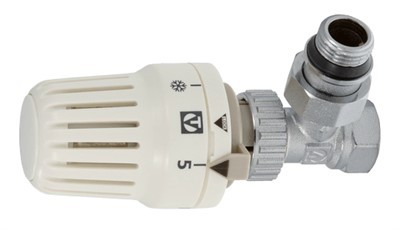
Thermal head valves are used in work done in accordance with the constant circuit.
The system expands or contracts the capillary tube that controls the valve opening if a temperature adjustment is required. Until the desired mode is selected, this keeps going.
Automatic adjustment takes place. The automation of the system calculates the required temperature and instructs the valve to open or close based on the number of degrees Celsius in the room’s air.
Comprehensive and individual control mode
Sensors in each room are used to adjust the floor temperature in the individual mode. Group adjustment and individual adjustment are not the same. In the first scenario, each room’s climate can be freely adjusted, and in the second, the system as a whole is subject to a general temperature regime.
A technique for adjusting a warm water floor combines individual and group modes. It is referred to as complex. This method corrects the temperature in each room individually as well as throughout the entire house.
Connection diagram
Experts claim that installing a heated floor is not a difficult task. The heating components are placed first, and then screed (cement, sand, and water) is added. And once the mixture has solidified, the coating is applied.
You can begin connecting a water floor heater with temperature control to an electrical source once all of this installation work is finished. Since this is the most important task in the entire scope, you must handle it with caution. We will examine the thermostat connection diagram in this section.
Connecting the structure with the energy carrier is more challenging in city apartments than it is when installing parts and pouring screed. The reason is that because the water in the pipe that comes from the boiler is so hot, this type of connection is only permitted on the return pipe. Since heating is dependent on the boiler room supply’s temperature values, temperature control is essentially impossible in this situation.

However, an independent heating system operates a little differently in a private residence. Water in your home is distributed through a system known as a collector, which operates as follows: water is sent from the boiler via a common pipe, travels through individual tubes to the rooms, and returns to the boiler via a return collector.
A separate valve regulates the water supply to each individual room. Additionally, this lever instinctively closes or opens in response to the degree sensor’s readings. Another control option is manual, whose orientation is determined by the user’s preferences. It is only functional, though, if the boiler is kept at or below 50 °C and the water-heated floor serves as the only source of heat. If there are alternative ways to distribute heat, a water floor regulator must be installed.
The thermostat (ideally located in the boiler room) issues commands to the valves that distribute water as a heat carrier. Thermostats come in two varieties: those that regulate floor temperature and air heating. Typically, sensors are found inside the housing.
For accurate readings, the thermostat should be positioned between one and one and a half meters above the floor. Additionally, you must ensure that it is not exposed to the sun’s rays or drafts, and that there are no external sources of heat or cold in the vicinity.
The servo drive needs to be attached to the manifold’s return comb. Proceed to run the wires from the thermostat to the manifold. The switchboard and distributor box are connected via a cable.
In this system, the servo drive helps prevent equipment from running idle by opening and closing the coolant. Owing to the water heating system’s complexity, it is advised that you hire a professional to install it instead of trying to do it yourself.
Useful video
A straightforward method for modifying the heated floor’s temperature:
Warm water floor temperature control is crucial to preserving efficiency and comfort in your house. You can make sure that your underfloor heating system runs as efficiently as possible by learning and putting into practice one of the four main strategies: room thermostats, weather-compensated controls, thermostatic mixing valves, or smart home systems.
Thermostatic mixing valves provide an easy-to-use solution for maintaining a steady temperature, avoiding overheating, and guaranteeing uniform heat distribution. Many homeowners favor this approach because it is simple to use and trustworthy.
The floor’s temperature is adjusted by weather-compensated controls according to the outside weather. With its dynamic approach, which offers a more responsive heating solution, you can be sure that your home will remain comfortable even in the face of changing outdoor temperatures.
Individual rooms can be precisely controlled for temperature thanks to room thermostats. This approach ensures optimal comfort where and when it’s most needed, making it perfect for people who wish to personalize the heating experience in various rooms of their house.
The highest levels of efficiency and convenience are provided by smart home systems. You can automate settings, receive alerts in the event of a problem, and remotely control and monitor the temperature of your warm water floor system by integrating it with smart technology. This cutting-edge solution can greatly improve the heating efficiency of your house.
Every approach has benefits, and the optimal option will rely on your own requirements and tastes. You can choose the best method for controlling your warm water floors and creating a comfortable and energy-efficient home by carefully weighing your options.


