
One-room apartments in Khrushchev-era buildings are a familiar reality for millions of people. With their modest square footage, low ceilings, and often less-than-ideal layouts, people live in them for decades. The main challenge here is not the size itself, but rather the organization of space, where you need to fit your entire life into 30 square meters.
But limitations often give rise to the most creative solutions. This article is not just a catalog of beautiful pictures, but a collection of practical ideas that can be adapted to your needs. We're not talking about radically tearing down all the walls, but about zoning tricks, smart furniture, and visual techniques that can transform even the most cramped space.
We will examine how to divide a room into zones for sleeping, relaxing, and working without turning it into a maze of drywall. How to use every inch of the hallway and kitchen. How to “push back” the walls with color, light, and texture. The goal is to create not just an interior, but a comfortable, functional, and cozy home that you will want to return to.
Layout and zoning
When planning one-room apartments, especially in Khrushchev-era buildings or studios, the space is often divided into zones. In this case, all finishes and furniture should be selected in light colors. This is very important, as it can visually make the space wider and more spacious.
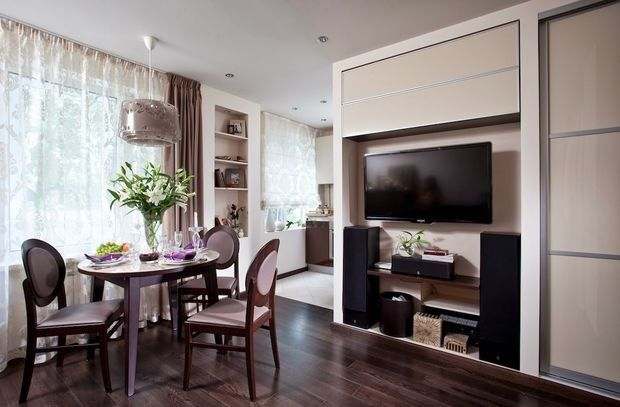
Today, beige tones are very popular, as they make the interior of a studio or small apartment refined and, at the same time, quite simple. To visually enlarge the space, you can opt for Scandinavian-style decor. It is worth noting that choosing spot lighting will also make the space much more spacious.
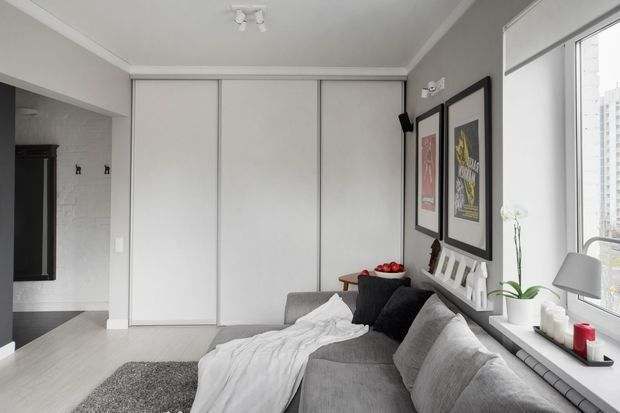
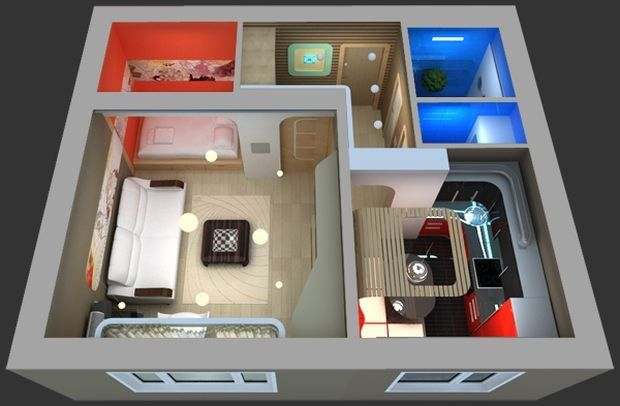
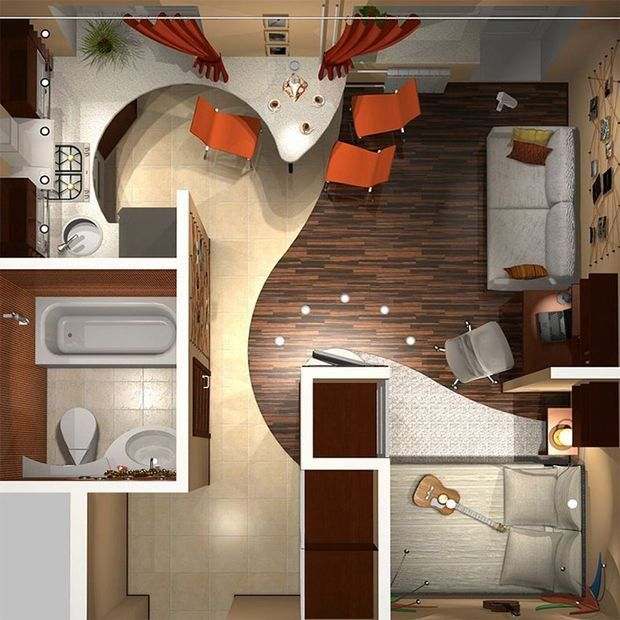
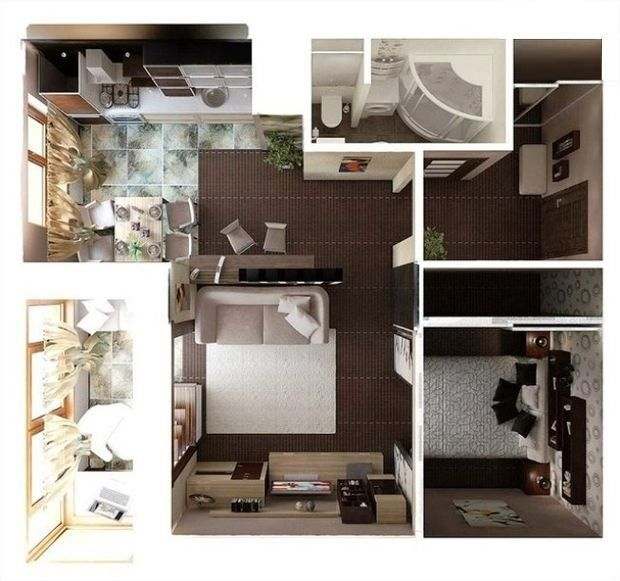
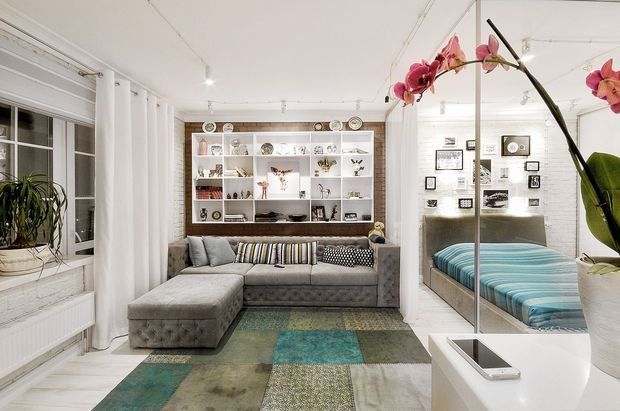
Please note that when dividing an apartment into functional areas, you cannot do without arches, some partitions, large shelves, and unique podiums. With the skillful use of all these elements, you can create a cozy and functional apartment that is difficult to classify as a Khrushchev-era apartment, while its area remains unchanged.
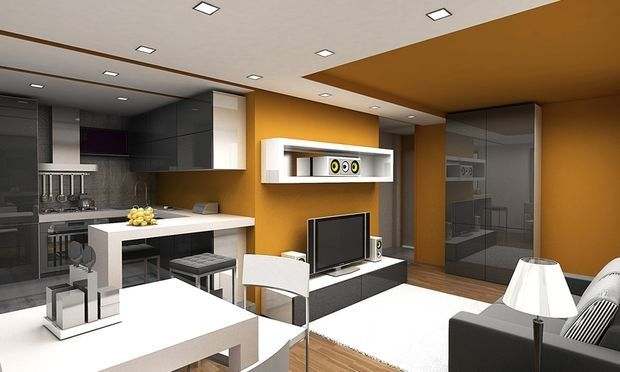
Also, when planning a studio apartment, it is worth paying attention to mirrors, which significantly expand the space and add a lot of light to it. Large mirrors can also be used to highlight one of the areas.
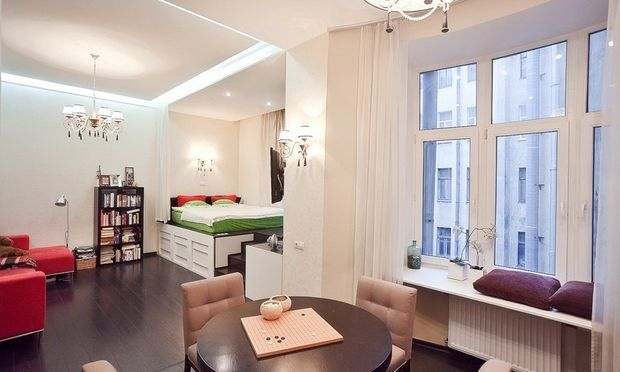
Check out some photo examples of one-room apartment layouts of the “Khrushchev” and “studio” types.
Color scheme
Color plays a very important role in the decoration of any apartment, whether it is a Khrushchev-era apartment or a studio. It has long been known that light colors are excellent reflectors of light, and therefore, thanks to them, the space becomes much more spacious in visual perception.
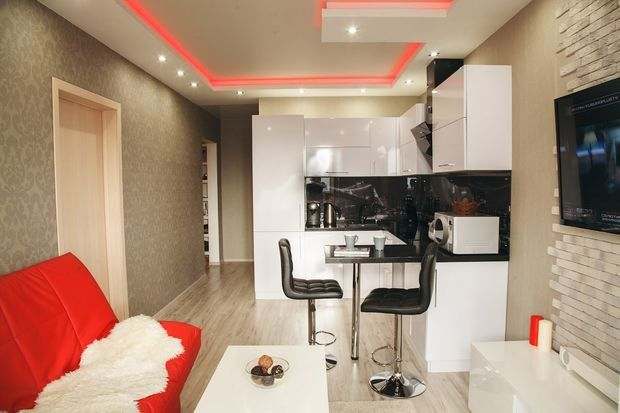
It is very important to know that warm shades visually bring elements closer together. These include orange, yellow, and red tones. Cold shades, on the other hand, have the opposite effect, visually distancing elements. Cool tones include blue, purple, and green. That is why, if you have a small space, you should give preference to cool light shades.
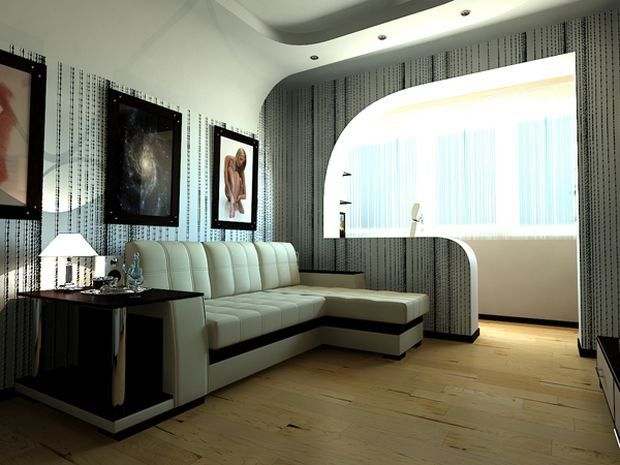
Another method often used to visually enlarge a space is to use wallpaper with horizontal or vertical stripes. Their visual enlargement effect is clearly visible in the photo.
Living in a one-room Khrushchev-era apartment is not a sentence, but a chance to be creative. Even in a small space, you can fit a cozy relaxation area, a workspace, and a space for guests — if you use every centimeter wisely. Zoning, folding furniture, niches, light colors, and smart lighting can turn a cramped apartment into a comfortable and stylish home. The main thing is not to be afraid to experiment: out of 80 ideas, you are sure to find ones that are right for your apartment.
Choosing furniture
The layout of a one-room apartment also implies the right choice of furniture, which must be in accordance with certain factors, such as mobility, compactness, and multifunctionality. You cannot use bulky wardrobes in a Khrushchev-era apartment. Storage facilities for personal belongings should be distributed throughout the entire area. Small cabinets and shelves for storing all sorts of small items can be installed in hallways or corridors.
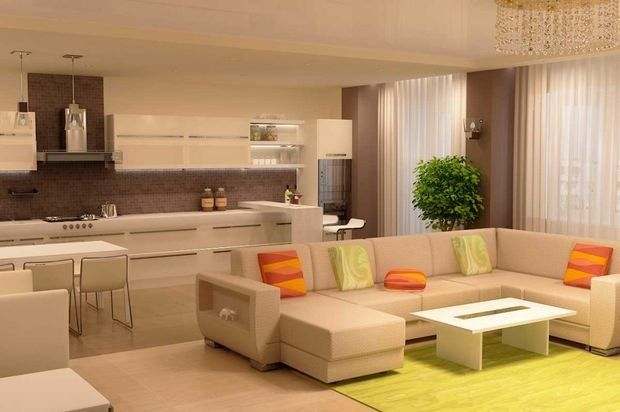
Furniture with built-in wheels is perfect for a Khrushchev-era apartment. The material from which the furniture is made is also very important. Furniture in light pastel colors with glossy, reflective fronts will look best in a Khrushchev-era apartment. Glass or transparent plastic surfaces also look good here.
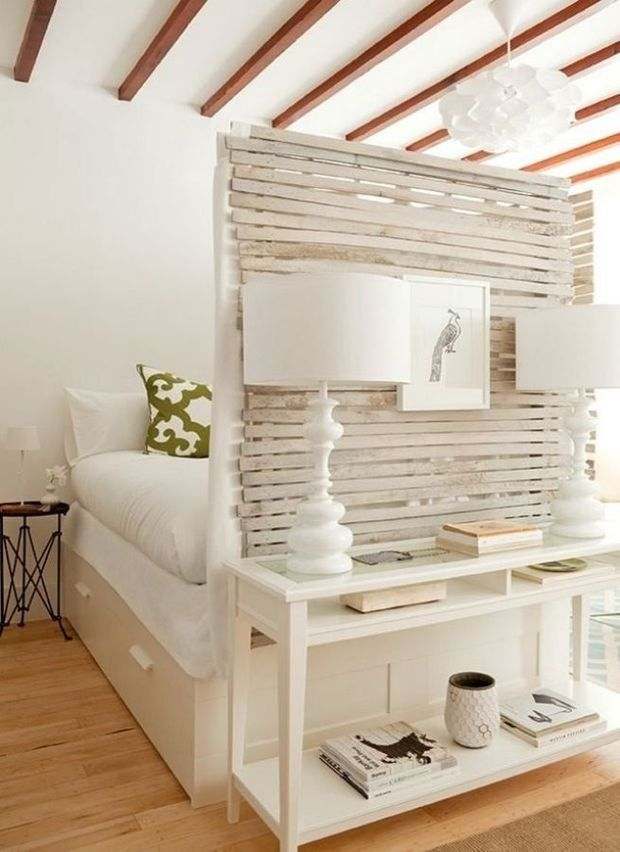
Expanding the space To make the room appear slightly wider, it is worth using only light colors such as ocher, white, ivory, wood, and pastel for the finish.
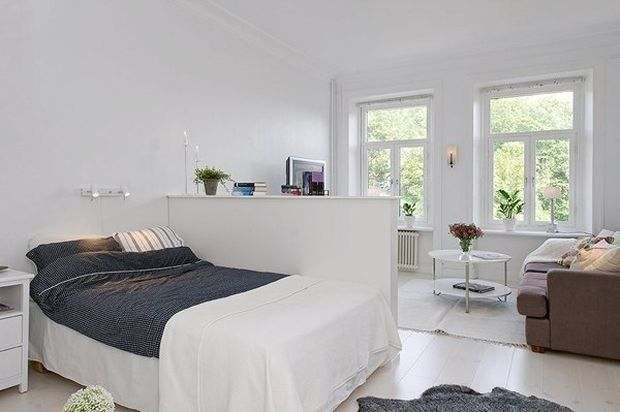
Most often, when designing a Khrushchev-era apartment, specialists use the Scandinavian style, as it is the most suitable due to the predominance of white in it. This style uses furniture made only in light shades and a large number of different lamps, which add a certain sophistication and special appeal to the room.
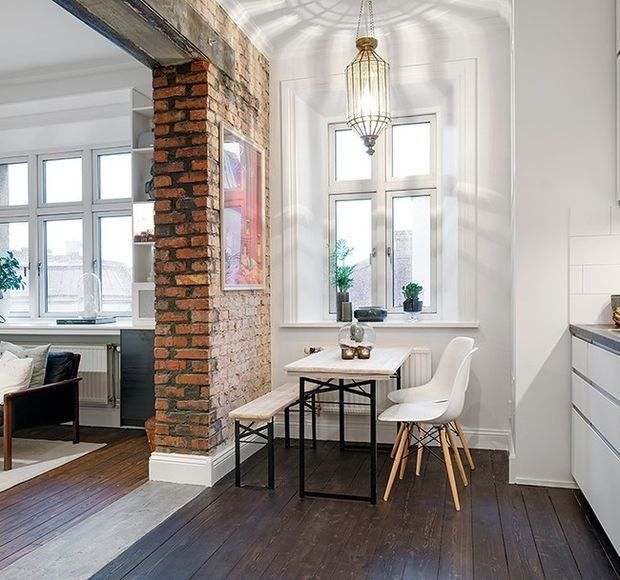
Take a look at the layout of the one-room apartment in the photo below.
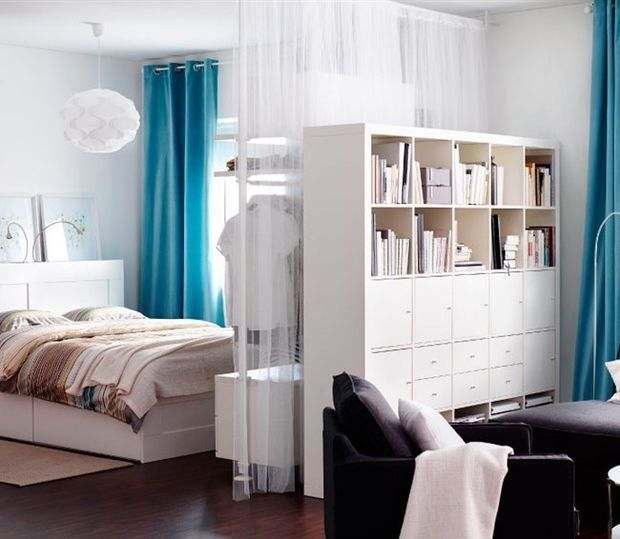
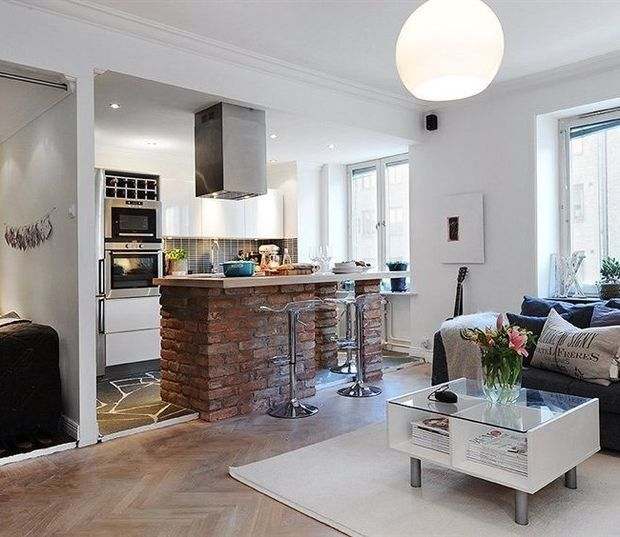
Kitchen
The most important purpose of a kitchen is to prepare food. The dining table can be placed in another room. Only the main work surfaces, stove, and refrigerator are located in the kitchen area. If you still want to keep the table in the kitchen, it is worth choosing an oval or small round shape.
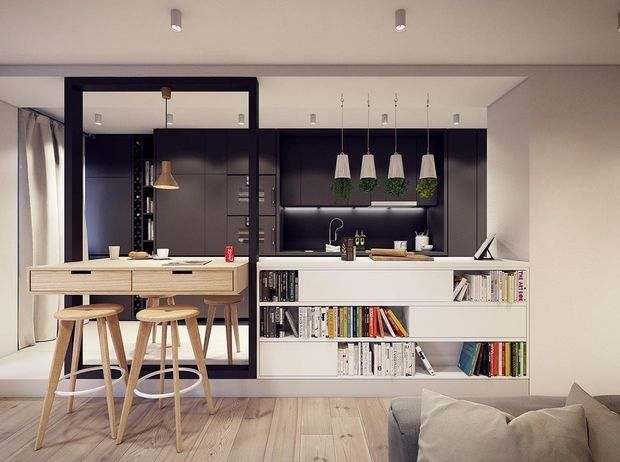
If you have a well-functioning exhaust system, you can do without interior doors or install unique sliding doors. Curtains or blinds must be in light colors, and the same applies to the walls.
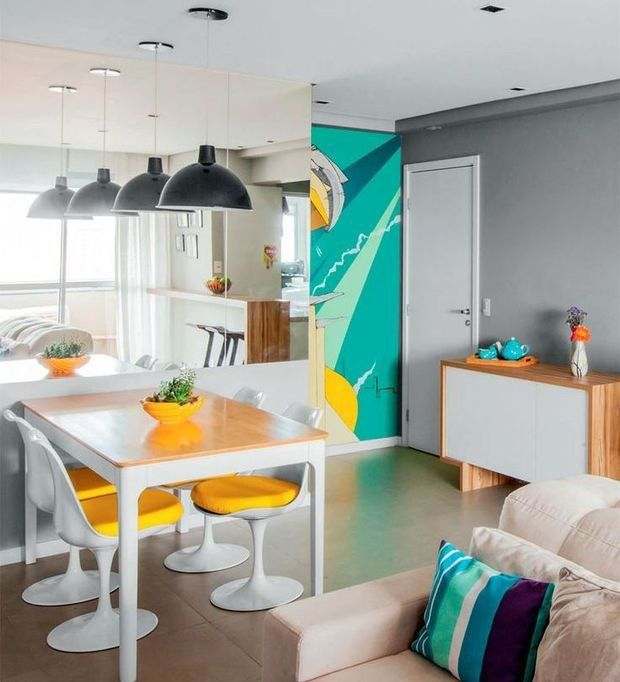
The furniture should be in the same color scheme as the walls. For a kitchen in a Khrushchev-era apartment or studio, you can use transformer furniture, which can be disassembled and reassembled as needed. A large chandelier, also decorated in light colors, is perfect for a small kitchen.
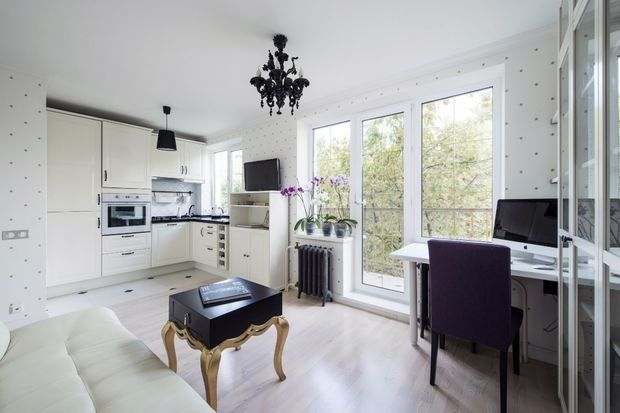
Bathroom
Most often, Khrushchev-era apartments do not have separate bathrooms and toilets. If this is not the case, it is worth combining the two rooms into one to save space.
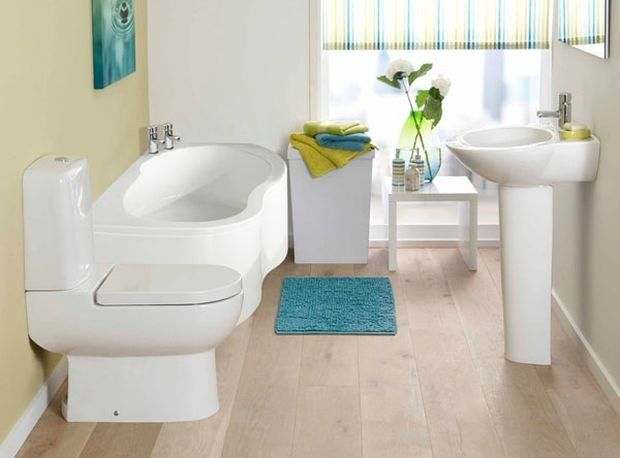
There are a few tricks you can use to save a lot of space in your bathroom:
- Place the washing machine under the sink. In this case, a special sink without a leg is selected. At the same time, the sink is placed at a sufficiently high level;
- Another option is to place the washing machine in the kitchen, but in a Khrushchev-era apartment, it is also usually small in size.
- Install a small shower cabin instead of a bathtub.
- The radiator in the bathroom should be replaced with a towel dryer, which does not take up much space.
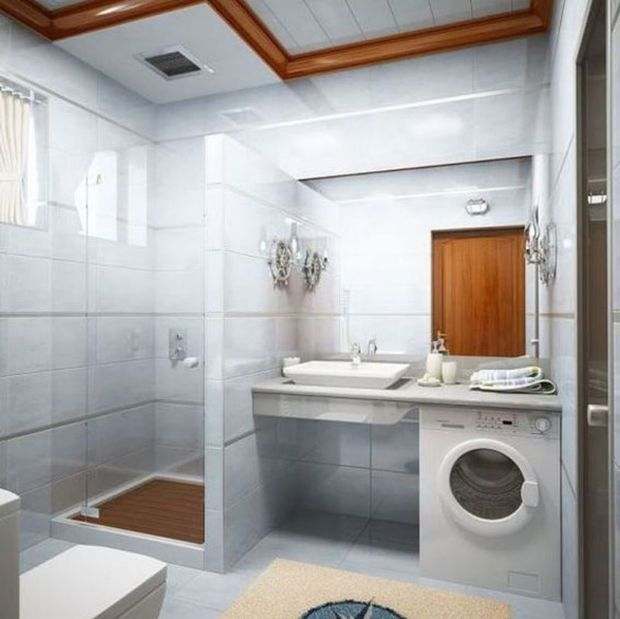
Studio apartment
The layout of a studio apartment consists of dividing the entire space into several areas. With a small number of residents, there are four areas:
- Sleeping area;
- Guest area;
- Cooking area;
- Work area.
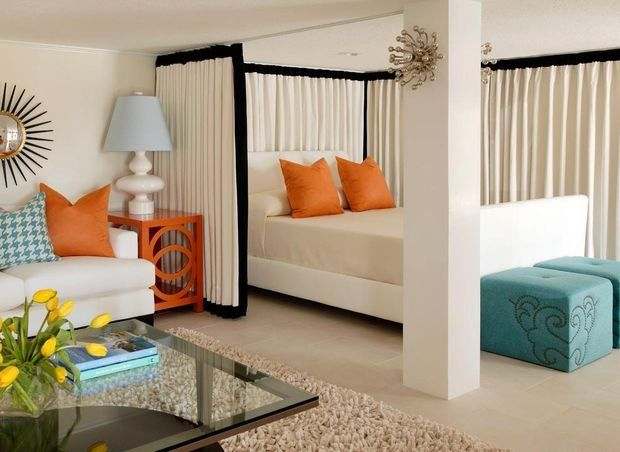
When planning a studio, it is worth following certain rules:
№1. Zoning can be achieved with the help of light, or more precisely, its shades. Most often, the brightest lighting is used in the guest area, and the most diffused lighting is used in the sleeping area.
№2. The sleeping area can be located on a small elevation, which will have a certain number of drawers for convenience.
№3. The zones of the studio can also be divided using different floor coverings.
№4. The kitchen and living room can be separated from the relaxation area using special shelving units. A bar counter can also be used for this purpose.
№5. You can also use furniture that can be transformed. A wardrobe bed is perfect for this purpose.
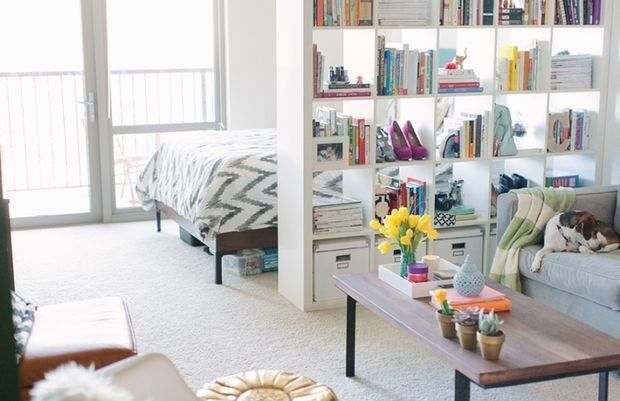
30 Sq. m. Khrushchev-era apartment
Rooms with these parameters are usually found in Khrushchev-era apartments. Planning a one-room Khrushchev-era apartment is not the easiest task. Designers usually recommend dividing Khrushchev-era apartments into several zones. It is worth putting effort into the layout, as there should be enough space for everything you need.
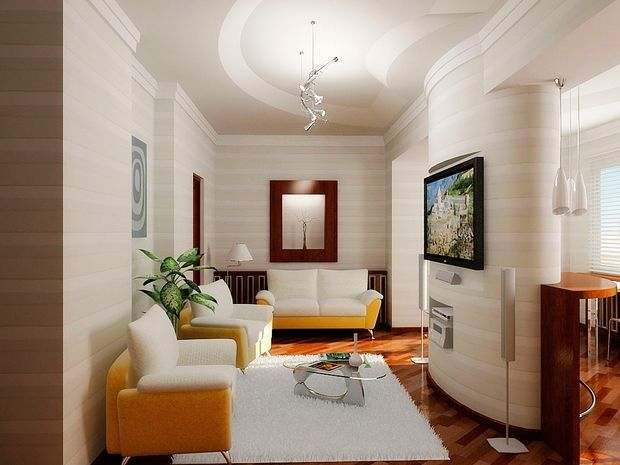
To visually enlarge a tiny Khrushchev-era apartment, it is best to use only light colors. It is also a good idea to use mirrored surfaces, which will add extra light to the room.
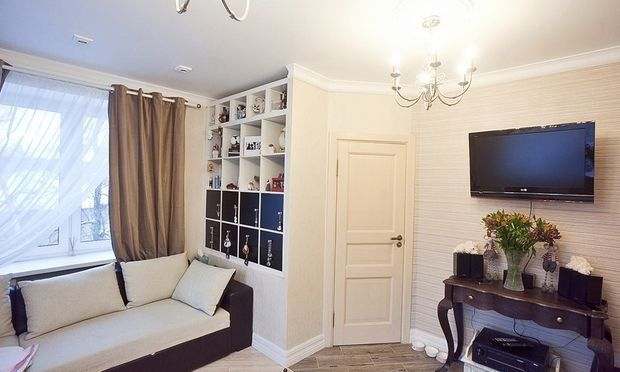
It is not worth using a large number of decorations and accessories in a Khrushchev-era apartment. It is also advisable to use transformable furniture. You can choose a corner sofa as a bed, as shown in the photo.
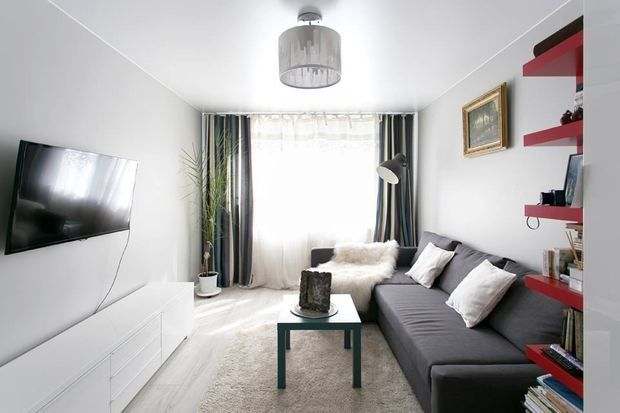
One-room apartment over 40 sq. m
This type of Khrushchev-era apartment would be perfect for a young family with a child. It is not advisable to use bulky wardrobes and massive beds in such an apartment. Sliding door wardrobes, ceiling-high bookcases, corner sofas, and other similar compact furniture would fit perfectly here.
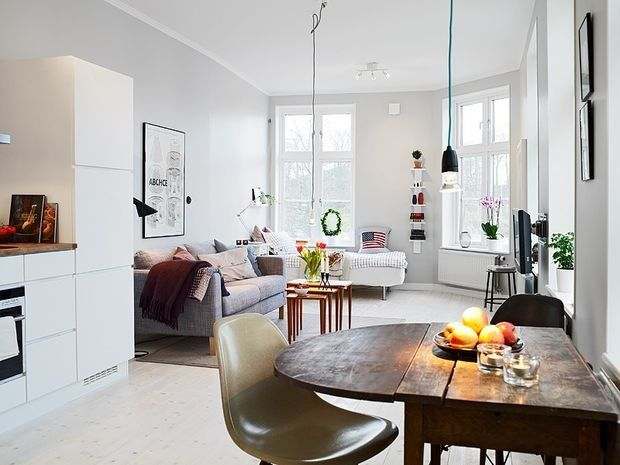
Compact sliding doors fit perfectly into the layout options for one-room apartments. The advantages of such doors include space efficiency. Folding doors, which work like an accordion, are often used for small rooms.
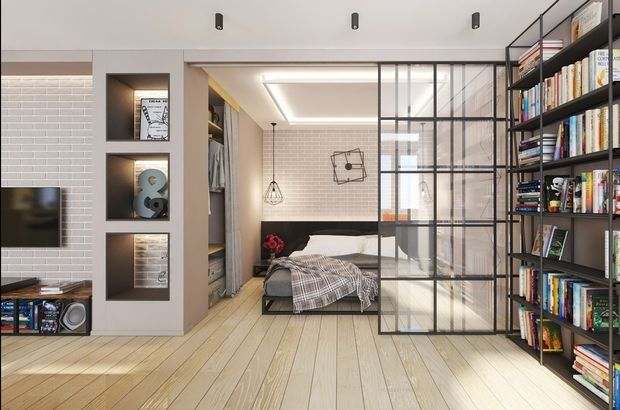
Interior for a family with a child
In order to accommodate a family with a child in a small Khrushchev-era apartment, it is worth trying to divide one room into two rooms, because this is the only way everyone can feel most comfortable.
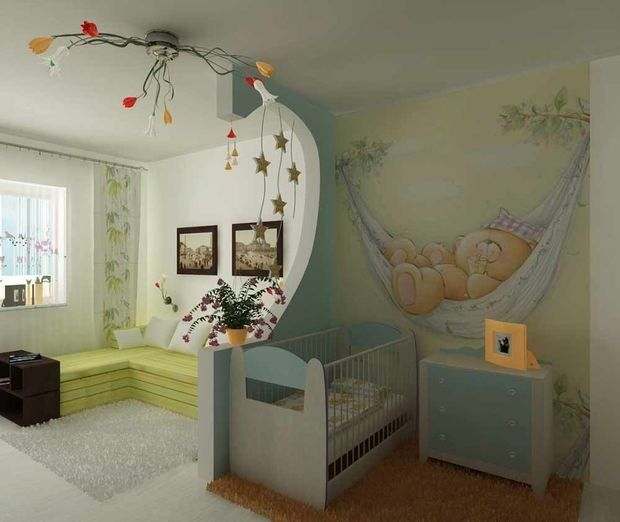
To divide the room, you can use various curtains or special screens. It is also advisable to set aside a space that will be intended only for the child. This area should be highlighted with wallpaper featuring favorite fairy-tale characters. Furniture that can be folded and unfolded is perfect here.
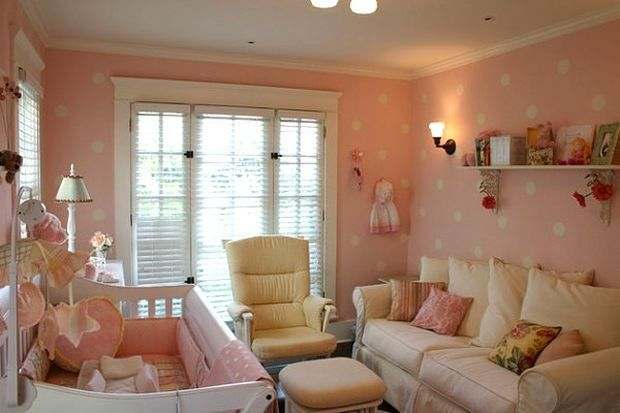
When planning a studio apartment, the main thing is to know certain rules and follow them!
As can be seen from numerous examples, even a small Khrushchev-era apartment can be transformed into a comfortable and functional living space. The key is to approach the task with imagination and clearly define your priorities.
Don't be afraid to experiment with rearranging furniture, color, and lighting. Often, it is these seemingly minor details that radically change the perception of a room. Mirrors, proper zoning, and multifunctional furniture are your best allies.
Remember that there is no such thing as a perfect layout that suits everyone. The best solution is one that reflects your lifestyle and makes your apartment truly your home. Trust your taste and sense of comfort.


