
Hinge components may not immediately come to mind when discussing windows, but they are essential to the operation of your windows. For windows to operate smoothly, seal properly, and provide security, window hinges are necessary. If the hinges are of poor quality, even the best windows may not function as intended.
Window hinges come in a variety of forms, each intended for a particular window style and purpose. Depending on the kind of window and how it opens, options range from conventional butt hinges to specialized friction hinges. Not
| Types of Window Hinges | There are various types of window hinges, including friction stays, side-hung hinges, and center pivot hinges. Friction stays allow windows to stay open at any angle, side-hung hinges are common for casement windows, and center pivot hinges enable windows to pivot horizontally or vertically. |
| Installation | Proper installation of window hinges is crucial for functionality. Hinges should be securely attached to both the window frame and the sash to ensure smooth operation and durability. Follow manufacturer guidelines for precise placement and use of appropriate tools. |
| Possible Problems | Common issues with window hinges include stiffness, misalignment, or rusting due to exposure to weather. Regular maintenance such as lubrication and checking for alignment can prevent these problems. If hinges become damaged, replacement may be necessary to ensure proper window operation. |
- What is this element?
- Kinds
- By location
- Type
- By window type
- Installation Tools
- Step-by-step installation instructions
- Problems and their causes
- What to do if there is a draft and the structure does not press?
- Replacement
- Average prices in the Russian Federation for parts
- Video on the topic
- Door hinge with overlap angle JOCKER (125 kg)
- Adjusting non-adjustable hinges
- Why does plastic windows blow from the hinges?
- Rotating hinge scissors G-U for plastic windows and doors (PVC) replacement, do-it-yourself installation
What is this element?
Window hinges are a structural component that guarantee the window segment’s ability to open and close. In addition, they carry out several other tasks:
- fastening windows to the frame;
- distribution of mechanical impact over the entire area of the structure;
- maintaining the correct geometric position.
Special grooves positioned along the edge of the window structure house the hinges.
Kinds
There are numerous kinds of loops, and they can vary greatly from one another. But they will all serve the same purpose, which is to guarantee that windows can be opened and closed freely and to secure the structure to the frame.
By location
Windows hinges can be classified as either upper or lower based on the location principle. They carry out all of the aforementioned fundamental duties of this fitting, including maintaining the proper positioning and fastening windows to the frame.
Type
Loops fall into one of two categories:

- Invoices. Such elements are considered classic. They are used not only for windows, but also in other cases – for example, they are used for furniture and interior doors. Fittings of this kind can have different sizes and shapes, but with one common feature – these hinges can withstand heavy loads. Their main part is attached to the side inner surface of the frame, which allows for free opening/closing of the window.
- Anti-burglary. They help partially solve the problem with burglars who enter a house or apartment through a window. In such situations, thieves open simple construction mechanisms. Burglary-resistant hinges prevent unauthorized entry due to a number of inherent characteristics:
- made of high strength steel;
- have three or four attachment points;
- at least two self-tapping screws are attached to the metal inside the structure;
- When closing the window, the lock is located entirely in the inner part, which eliminates the presence of another way out. It is also worth noting the increased number of points at which the structure is locked, which can significantly increase resistance to burglary.
- Hidden. The main difference between hidden hinges and standard fittings is that they are located not on the side, but between the frame and the sash, which makes them invisible from the outside. It must be taken into account that such elements have limited load resistance.
By window type
Depending on the maximum load, hinges can be classified into different categories based on the weight of the structure:
- from 80 kg to 130 kg;
- from 50 kg to 80 kg;
- up to 50 kg.
Another method of classification is based on the material used to make the doors. For instance, window fittings made of wood have a flatter shape than those made of plastic.
Installation Tools
The following instruments are necessary for the proper installation of fittings and the configuration that follows:

- damp cloth;
- sponge;
- screwdriver;
- screws;
- hex wrench;
- pliers;
- crosshead screwdriver;
- lubricant suitable for the type of fittings used.
It might be necessary to use additional tools in your particular situation.
Step-by-step installation instructions
Proper fitting installation guarantees a good portion of the window’s long service life in the future, so it’s important to plan ahead for this procedure.
You must adhere to these basic instructions for a successful installation:
- Clean surface. It is worth getting rid of dirt, pieces of plaster, etc.P.
- Make markings. Usually a special template is included with the fittings. It needs to be attached to the window structure, circled and marks made for the screws. If there is no template, you will have to select sizes using a ruler.
- Make holes. Using a screwdriver, drill the required number of holes, taking into account the depth set for the hinge screws.
- Secure the fittings. To do this, you need to attach the hinges to the marked places and attach them with screws. The key point at this step is to ensure the level position of the structural elements.
- Lubricate the structure. Standard WD-40 lubricant is suitable for this.
- Place the fittings on the sash. Having placed the hinges, it is necessary to secure the ear of each element to the window scissors. To do this, you need to manipulate the wedging washers using left-right movements.
- Put the sash in place. After this, you need to secure the structure using a pin.
When drilling holes for fittings, it is not advised to exert a great deal of effort because this increases the possibility of creating an incorrectly sized hole that could compromise the functionality of the entire structure.
The process of installing hinges for wooden windows is done in compliance with the previously provided instructions. The installation process for other kinds of structures is essentially drilling holes and then fastening them.
Window hinges, which come in a variety of forms like butt, pivot, and continuous hinges, are essential for the longevity and smooth operation of your windows. Every variety offers distinct advantages and fits well with various window styles. To guarantee functionality and avoid problems like misalignment or trouble opening and closing, proper installation is essential. Wear and tear, improper installation, or material flaws, however, can cause issues. Knowing the features of window hinges makes it easier to select the best kind, install them properly, and deal with any potential issues down the road.
Problems and their causes
Drafts and the building’s ventilation are the most frequent issues with window hinges.
The following issues could be the cause of the frame blowing:
- the reason in most cases lies in the lack of pressing of the window to the frame due to poorly screwed fittings, as well as its adjustment;
- the problem could also have arisen due to unevenly fastened hinges.;
- another possible factor lies in the partial destruction of the fittings due to improper installation or low-quality materials.
Additionally, condensation and the growth of mold may result from such malfunctions. The hinges can be adjusted or replaced in a timely manner to avoid problems.
What to do if there is a draft and the structure does not press?
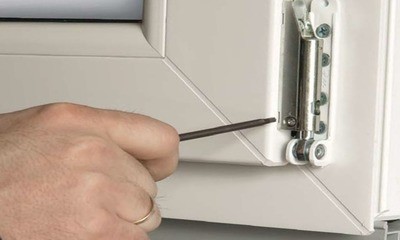
If the hinges are adjusted correctly, drafts can be eliminated. Most of the time, a hex key will be sufficient for this. You must locate a specific hole for the key and open the window in order to adjust the structure.
The bottom of the sash rises and the structure is pulled to the hinge when the hex key is rotated clockwise. When one makes counterclockwise adjustments, the opposite result is seen. You must proceed cautiously to avoid harming the structure’s components.
Replacement
There could be several reasons why the hinges need to be replaced:
- They were damaged. The average service life of the fittings is 10-15 years. However, it may fail earlier if low-quality materials were used in production. Another reason is a significant excess of the permissible load.
- At the request of the owner of the house. Perhaps the property owner will want to increase security and install anti-burglary ones, or to improve the appearance of the structure, he will decide to change to hidden hinges.
The procedure for replacement is as follows:
- Decorative caps are removed.
- Using a hammer, the axial mechanism is knocked out. To do this, you first need to open the sash slightly.
- Pull the axle mechanism out of the loop.
- Raise the sash to release the bayonet of the lower support.
- Remove window.
After that, you have to install the window hinge by following the guidelines mentioned above.
Average prices in the Russian Federation for parts
The type of fittings used largely determines the average cost of hinges:
| Name | Average cost (rubles) |
| Upper | 200 |
| Average | 300 |
| Lower | 250 |
| Hidden | 450 |
| Invoice | 400 |
| Anti-burglary | 550 |
| Rotary | 500 |
The cost is influenced by a number of general factors that impact the price of all products, in addition to the type of loop and the manufacturer, material, and regional surcharges.
It is essential for homeowners who want to keep their homes secure and functional to understand the features of window hinges. You can select the ideal solution for your window type and size by learning about the various types that are available, such as friction hinges and butt hinges. For long-term durability and seamless functioning, proper installation is essential.
Paying close attention to details is crucial when installing. Making sure hinges are firmly fastened and oriented correctly averts later problems such as misalignment or trouble opening and shutting windows. Larger or specialty windows may benefit from professional installation as this process often calls for accuracy.
Window hinges are mechanical parts that can break down with time, just like any other. Problems like rusting, stiffness, or inability to remain open can occur. Frequent inspection and upkeep, such as lubricating hinges and quickly replacing worn-out components, can help minimize these problems.
Homeowners can make wise decisions to guarantee their windows function smoothly and securely for many years to come by being aware of the different types of window hinges, how to install them, and any potential problems. Paying attention to hinge characteristics when installing new windows or updating old ones guarantees that functionality satisfies both practical and aesthetic requirements.


