
Though drainage holes may not be the first thing that come to mind when installing or maintaining windows, they are essential for keeping your house dry and free of water damage. These minor but important details assist in diverting any water that might leak into the window frame and away from your house’s interior.
Drainage holes are made to keep water from building up in the window frame, which over time can cause problems like wood rot and the growth of mold. These holes support the structural integrity of your windows and the surrounding walls by letting water escape.
This article will discuss the importance of drainage holes, their operation, and maintenance requirements. By being aware of these factors, you can make sure that your windows continue to work and that your house remains safe and comfortable.
- What are drainage holes and what do they look like
- Why do we need it and how does it work?
- Window frame
- Impost
- Doors
- Kinds
- Can they blow?
- What are the dangers of poorly functioning drainage?
- How can I clean it?
- Video on the topic
- Water flows from the PVC window into the apartment ? | SEE SOLUTION
- Low tide and drainage holes
- Upgrading and cleaning drainage in windows.
- Why do they make holes in windows? ? Window drainage system| WINDOWS CASPER
- Drainage holes
- Drainage holes . Why are there holes in the window?
- Problems with windows in new buildings. Window drainage.
- Condensation on windows. Eliminate fogging of windows. We insulate plastic windows – we analyze all the methods.
What are drainage holes and what do they look like
The first plastic windows were designed to be as airtight as possible by manufacturers. But eventually, some unfavorable figures were gathered. First of all, installation companies seldom, but frighteningly consistently, complained about water inside the profile; they found a tiny puddle beneath the window after drilling a hole for fasteners. Second, consumers started to need window replacements more frequently, as stated by the warranty; the exterior profile changed to bubbles.
After an inquiry, it was discovered that only colored plastic was distorted (the returned windows were brown). tried altering the recipe, but the outcome remained the same. It was then that one of the technologists suggested looking for signs of heating in white profiles. Upon observing bubbles, it was evident that the cause was the high pressure within the chamber caused by the intense sun’s rays. It turned out that the material’s chemical makeup was meaningless because dark materials heat up more quickly and intensely when exposed to sunlight.
With water, a lot more was sorted out over time, until one company’s installers discovered an intriguing pattern: the puddle only developed if the windows were rain-covered during storage or transit. In an experiment, the manufacturers sprayed water from a hose on the window. The upper outer chamber of the frame had moisture inside of it when it was disassembled, despite the rubber seal’s inability to stop leaks ("water will always find a hole").
It did not take long to figure out the solution: drainage holes that let air and water out. They are located in the impost and sashes of modern windows, outside the block at the bottom and inside at the top (they can be round, like in furniture, or rectangular drainage plugs). Not content with this, the technologists suggested creating a through drainage channel that would allow access at low tide, connecting the upper and lower chambers.

For information, since plastic and aluminum frames have cavities, window drainage is required. Since wooden windows don’t have chambers, drainage holes are not necessary.
Why do we need it and how does it work?
The most crucial jobs are done by tiny holes in the window structure: they drain water that enters the frame, impost, or sash and release pressure inside the profile during periods of high wind or heating (seen above the 20th floor).
When washing windows, it may rain, or there may be a sudden drop in temperature, all of which can cause condensation and let water into the chamber. Weeks may pass while it naturally evaporates, which during the fall and winter months may cause the liquid to freeze with unpredictable results. Moisture is swiftly removed from outside the window structure by drainage.
When the sun heats the window’s surface, these same holes let out extra air. As the wind loads on the window, pressure inside the profile rises. Additionally, drainage holes lessen internal profile pressure.
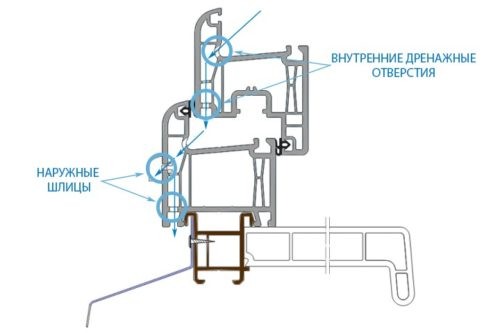
Drilling holes in the frame, sash, and impost precisely is necessary for the drainage system to function properly.
Window frame
As can be seen in the picture, the frame has two holes drilled or milled from the outside at the bottom and the same amount through internal channels. Ventilation holes are drilled at the top and side of the apartment to equalize pressure caused by wind. They are at least 50 centimeters apart. They may whistle when they leak air if positioned closer. In order to stop water from entering the profile through the external holes, you must install special plugs that have a channel for moisture drainage at the bottom and an umbrella at the top.
Impost
Drilling drainage holes needs to start at the structural element’s bottom. At low tide, water drains through designated channels.
Doors
Drainage in sashes is located at the base of the profile, which is only visible by looking underneath it. It acts as ventilation as well as drainage, just like in earlier instances.
Kinds
The only way the drainage holes vary from one another is in shape. Two varieties are possible:
- rectangular – obtained by milling;
- round – drilled.
Experts claim that because rectangular drainage clogs less frequently, it is more dependable.
GOST (30674-99) states that the lowest points of the falsis are milled or drilled with holes. Dimensions: 8 mm (diameter) for round, 5 x 10 mm or 5 x 20 mm for rectangular. The quantity of them is determined by the window unit’s size:
- for a frame length of up to 1 m – 2 holes at a distance of 60 cm from each other;
- for large sizes – 3. But there are options: three, 5 x 20 mm in size, or larger, but 5 x10 mm. The main thing is that the requirement of a distance of 60 cm is observed.
Can they blow?
About forty reasons can be listed by window installation and repair experts for why something might blow out of a window in the winter. Drainage is not mentioned in any of them. It blows when there is a through gap from the street into the apartment. That’s the simple explanation. The drainage system is designed so that air from the street cannot enter the apartment through the holes in the profile in any way because the solid wall of the chamber across from it interferes.
In conclusion, blowing through the drainage holes is nearly impossible.
What are the dangers of poorly functioning drainage?
Drainage holes in windows may not work well for two reasons. First of all, it’s trivial to get stuck. The question immediately arises: what. After all, dirt and dust cannot get inside the camera. The answer is in the water. Microorganisms live in it. As they multiply, they form mucus, which clogs small holes. By the way, it can also be found in the form of dried thin plates. This happens after heavy rains, when a large amount of water accumulates inside the chamber, and the drainage does not have time to remove moisture. Secondly, the workers simply forgot to remove the internal caps that cover the openings during storage and transportation of the windows.
Different outcomes may arise from inadequate drainage system performance. The water that’s still in the chamber could:
- when freezing, at best, deform the profile, at worst, break the frame;
- rot and stink;
- if metal fittings are exposed to metal for a long time, it can cause rust;
- become a breeding ground for mold. And this is such a “thing” that it will not be satisfied with the internal cavity, but will certainly crawl onto the slopes and the bottom of the frame.
Note that we are merely discussing water at this time. Any plug will be forced out by air at a higher pressure unless it is forced in.
To keep your windows lasting a long time and avoid water damage, you must have drainage holes in them. These tiny holes let extra water out of the window frame, lowering the possibility of rot, mold, and degradation. If your drainage holes aren’t working properly, your windows won’t last as long and won’t shield your house from the weather.
How can I clean it?
Periodically cleaning the drainage of PVC windows is necessary (once a year is plenty). Combining this process with cleaning the glass unit and frame is the best option. For this:
- open the sash;
- remove the plugs from the bottom of the window from the frame, sash and impost (if there is a hole);
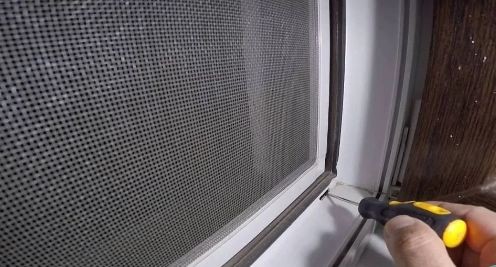
- use a household vacuum cleaner to remove all debris from the drain.
If the drainage hole is round and you are unable to clean it with a vacuum, you can clean it with a hard-bristled brush, a thin wire, a toothpick, or a thin screwdriver.
| Feature | Description |
| Purpose | Drainage holes help prevent water from accumulating inside the window frame by allowing it to escape, reducing the risk of damage and mold growth. |
| Location | They are typically located at the bottom of the window frame or sash, where water is most likely to collect. |
| Size | The size of drainage holes is usually small, just enough to allow water to flow out without letting in debris or insects. |
| Maintenance | It"s important to keep drainage holes clear of obstructions like dirt or paint to ensure they function properly. |
| Design | Many modern windows have built-in drainage systems, but older windows might require manual installation of drainage holes. |
Windows with drainage holes are essential to preserving the structural integrity of your house. They aid in diverting rainfall away from the window frame and stop moisture from entering the interior or penetrating the walls. These little touches can drastically lower the possibility of mold growth and structural damage by diverting water outside.
Drainage holes are kept clear and functional by routine upkeep and inspection. Water can pool due to obstructions, which could result in leaks and other damage. One easy but effective way to protect your home and extend the life of your windows is to keep these holes clear.
To sum up, drainage holes are an essential part of window design that protects your property and helps control water flow. By keeping them maintained, you can keep your house dry and safe and avoid future, more expensive repairs.


