
Because of its superior thermal and acoustic qualities, mineral wool is a popular choice for home insulation. To get the most out of mineral wool, you must properly adhere it to your walls. This post will discuss three dependable ways to safely install mineral wool insulation, keeping your house cozy and energy-efficient.
Mechanics fasteners are a good way to fasten mineral wool to the wall. This entails fastening the insulation straight to the wall surface with anchors, screws, or nails. Make sure the mineral wool batts or boards fit snugly against the wall before beginning. The insulation can then be securely fastened in place by using the right fasteners distributed evenly throughout. This technique offers a solid bond and works well with both concrete and masonry walls.
An additional dependable method is adhesive bonding. A strong bond between the mineral wool insulation and the wall can be achieved with specialized adhesive products made for this purpose. Make sure the wall surface is dust- and debris-free, clean, and dry before applying the adhesive. Press the mineral wool boards or batts firmly against the wall after evenly applying the adhesive to their backs. As directed by the manufacturer, give the curing enough time to guarantee a solid attachment.
If you’re searching for a multipurpose and effective solution, think about combining adhesive and mechanical fasteners. With this hybrid approach, the extra bonding power of adhesive is combined with the strength of mechanical fixings. As previously mentioned, begin by fastening the mineral wool insulation with mechanical fasteners. To improve the seal and stability after the insulation is in place, put adhesive around its joints and edges. This technique works especially well to guarantee a sturdy and insulated wall surface.
Features of choosing a fastener
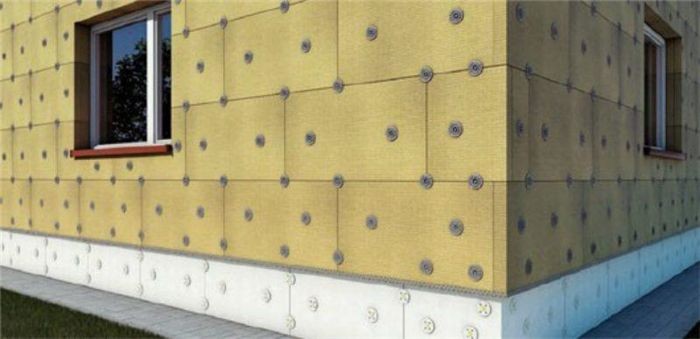
The following criteria determine which thermal insulation attachment method is best:
- type of insulation;
- wall material (wood, concrete, brick);
- surface structure (homogeneity, presence or absence of cracks).
The strength of the thermal insulation structure will be ensured if the fastener for a given material is chosen appropriately.
Therefore, there are three methods (which can be combined) for attaching insulation to the wall:
- on the lathing;
- on glue;
- on dowels.
Each of them has benefits and drawbacks of its own. Let’s proceed sequentially.
Lathing
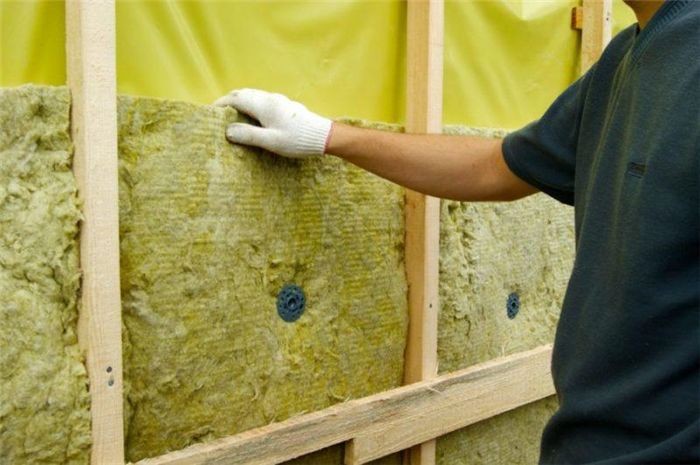
Ventilated facades employ lathing. This is because, in theory, "wet" facades should not use soft insulation. It lacks the necessary rigidity to support the plaster layer’s weight.
Thus, what is the process for lathing walls beneath insulation?
- A vapor barrier film fixed with staples should be placed on the wall.
- The lower base profile is screwed.
- A beam with a thickness equal to the thickness of the insulation is screwed to the vapor barrier using self-tapping screws. The step of the beam in width should actually be equal to the width of the slab, but be 2-5 centimeters less. Most often, a beam step of 60 cm is used.
- After this, starting from the bottom towards the box, mineral wool is laid.
Slabs in the box should be securely seated. In this instance, the space between the wood and the stove will keep the cold out. Nevertheless, this method is not frequently employed. primarily applied to wooden homes. Furthermore, soft mineral wool slabs invariably need a windproof layer outside in addition to an interior vapor barrier. The wind will blow otherwise. Since installing a windshield adds to the overall cost, the other two mounting options are more frequently utilized.
Glue
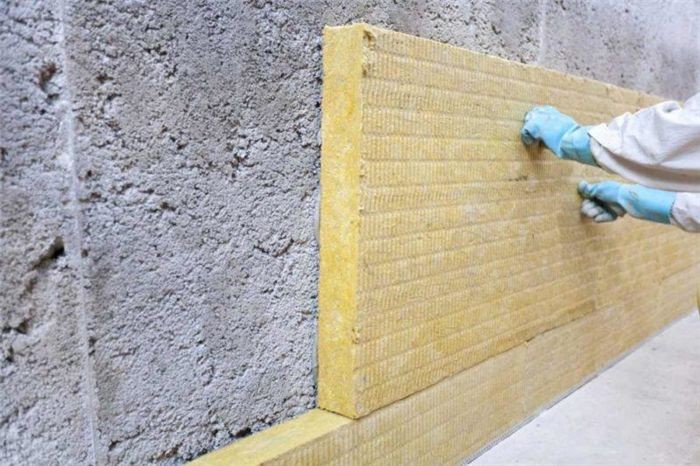
Used sparingly and exclusively on facades with ventilation. Dowels are needed to provide extra reinforcement for plastering projects. But this approach has unique qualities of its own that should be taken into account individually.
Two varieties of glue exist:
- Dry mixes. Sold in bags and requires dilution.In the case of a dry mixture, you need to apply several pieces to the plates and distribute evenly, using a comb, over the entire surface. After this, the insulation board is fixed to the wall. Typically, laying mineral wool or other materials begins from the corner and always from the bottom row.
- Foam glue. Adhesive foam is sold in cans and does not require prior preparation. Costs a little more, but the convenience is worth it. The glue is applied along the entire perimeter of the slab and in several strips between them. After application, press the plates flat. The foam hardens from 30 minutes to 2 hours. During this time, you can slightly adjust the position of the slab with a level.
Learn the three tried-and-true techniques for safely attaching mineral wool insulation to your walls. Whether you’re building from scratch or renovating, knowing these simple methods will guarantee efficient installation of insulation.
Dowels
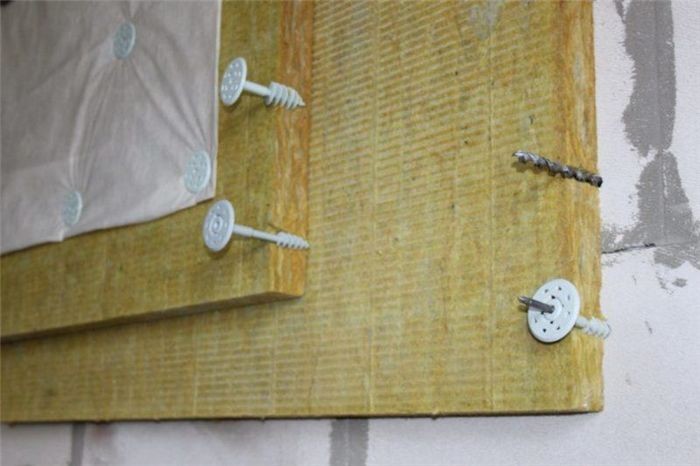
Dowels are used 90% of the time to secure materials such as mineral wool to the wall.
How can I use dowels to secure mineral wool to a wall?
- First of all, if glue was used to attach the insulating boards, they must be firmly secured. In most cases, doweling can be done 2–24 hours after gluing. A more accurate figure can be found in the instructions for the adhesive composition.
- We select and buy a dowel of the required length.
- Drill a hole into which the fastener will go.
- Insert the dowel into the hole.
- Hammer in the anchor (be especially careful when applying force with plastic nails).
- Our sheet is securely fastened.
Not only will holes need to be pre-drilled on the rigid slabs used to lay mineral wool, but the slabs themselves will also need to have round recesses for umbrella covers. If not, there will be challenges when installing the finish because these caps will stick out above the insulation.
| Method 1: Adhesive | Apply construction adhesive directly onto the wall in vertical strips. Press mineral wool firmly against the adhesive, ensuring full contact. Allow adhesive to dry thoroughly. |
| Method 2: Mechanical Fixing | Secure mineral wool using plastic anchors and screws. Drill holes into the wall, insert anchors, and fasten screws through the mineral wool into the anchors. |
| Method 3: Framework Installation | Build a wooden or metal framework on the wall. Fit mineral wool between the framework members and secure with staples or screws. Ensure a snug fit to prevent gaps. |
Selecting the appropriate technique for bonding mineral wool to your walls is essential to guaranteeing efficient insulation and long-term functionality. Depending on your particular needs and the type of wall surface, each of the three methods—mechanical fastening, adhesive application, and using a framework—offers a unique set of benefits.
Adhesive application turns out to be a practical choice for homeowners seeking a simple method with less mess. It makes it possible to seamlessly affix mineral wool panels straight to a variety of surfaces, guaranteeing a tight fit that improves thermal efficiency.
However, in situations where there is a lot of wind or where the structure is bearing weight, mechanical fastening offers a sturdy solution that is perfect for securing mineral wool. This technique entails securely fastening insulation to the wall with screws or anchors, providing stability and assurance against movement or displacement over time.
Building a framework to support mineral wool can be useful for more complicated installations or circumstances that call for extra support. This technique provides a consistent and efficient layer of insulation by accommodating variations in wall surfaces and facilitating accurate insulation placement.
In the end, the method selection should be in line with the particular needs of your project, taking into account elements like the type of wall, the surrounding environment, and the required level of insulation. You can maximize energy efficiency, improve indoor comfort, and guarantee the longevity of your home’s thermal envelope by choosing the best attachment method.


