
Adding TechnoNIKOL to your garage roof is a useful and affordable way to improve its weather resistance and durability. TechnoNIKOL roofing supplies are well known for their high quality and simplicity of installation, which makes them perfect for do-it-yourself projects. Whether you’re looking to update or protect a new garage, knowing the features, cost, and installation procedure of TechnoNIKOL products will help you get a dependable and long-lasting roofing solution.
A variety of roofing materials from TechnoNIKOL are appropriate for different climates and architectural styles. Every product, from contemporary polymer membranes to conventional bitumen shingles, is made to be weatherproof and offer superior insulation. Because of its adaptability, you can select the ideal material for your needs in terms of cost, aesthetics, and climate.
With the correct equipment and planning, installing TechnoNIKOL roofing on your garage is simple. Cleaning the roof’s surface, installing an appropriate underlayment to protect it from moisture, and then laying the TechnoNIKOL material in accordance with the manufacturer’s instructions are the usual steps in the process. In addition to saving labor costs, this do-it-yourself method offers you the satisfaction of finishing a useful home improvement project.
You should budget for the cost of materials as well as any additional tools or supplies that will be required for installation when thinking about how much TechnoNIKOL will cost to cover your garage roof. TechnoNIKOL is a well-liked option for both contractors and homeowners due to its reputation for affordability, even though prices can vary based on the product line and size of the roof.
- Roof characteristics
- Product marking
- Advantages and disadvantages
- Types of coating
- Selection criteria when purchasing
- The best option
- Installation methods – how to glue correctly
- Video on the topic
- laying roofing felt on the roof with your own hands How to install TechnoNIKOL
- We cover the garage roof with TechnoNIKOL with our own hands.
- Garage roof repair using Uniflex EKP TechnoNIKOL roofing. Joining of rolls. Installation on top of an old roof
Roof characteristics
Consumer preferences are taken into consideration when creating modern roofing. The bitumen-polymer material that forms the basis of TechnoNIKOL Corporation’s innovative soft roll roofing coverings and waterproofing clings well to virtually any surface, including brick, concrete, reinforced concrete slabs, and wood.
The production’s computer system has complete control over every step of the process and the final product’s quality. It is affordable, practical, robust, water-repellent, fits any surface, shields from noise and temperature fluctuations, and is simple to quickly lay down on any surface.
TechnoNIKOL soft roofing is installable by hand. Some models of flexible roll roofing material with a bitumen-polymer base have a self-adhesive film on the lower portion that makes installation much easier.
The fiberglass or polyester frame is covered with a unique basalt dressing after being impregnated with bitumen on both the upper and lower sides.
With the help of this feature, you can add more environmental resistance to the technical qualities, increasing the material’s durability. Shades of basalt dressing vary. The roof can be made in bright colors as well as gray and dark ones, if preferred.
Produced by TechnoNIKOL in compliance with GOST 30547-97 specifications. The products’ technical attributes are as follows:
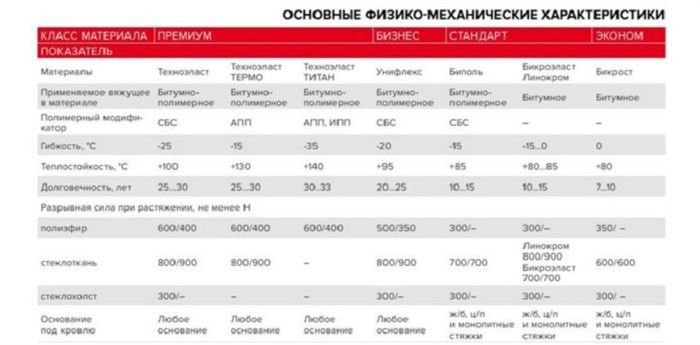
Any brand of bitumen-polymer coating with a fiberglass or synthetic base works well for exterior roofing applications as a waterproofing layer beneath metal or slate tiles or as the primary roofing covering.
Industrial product arranged in series:
- Premium.
- Business.
- Standard.
- Economy.
Because a variety of products are available, garage owners can select the ideal coating to fit their budget. Many different types of industrial and residential facilities can be built or repaired using TechnoNIKOL.
Because manufacturers maintain control over adhering to technological production parameters, we are able to manufacture rolled products that are of high quality, in demand, and regarded as dependable and long-lasting.
TechnoNIKOL, a rolled Euroruberoid, is lettered. It lasts for 25 years in service.
Product marking
There are names for soft roofing materials, such as HKP, KhPP, EKP, etc. The base situated within the bitumen layers is indicated by the initial letter:
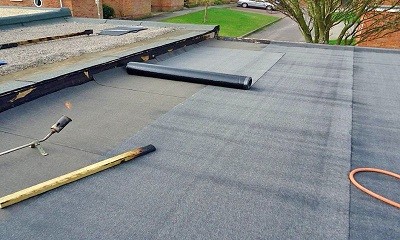
The second layer’s composition is represented by the second letter:
There is a lower layer, as indicated by the marking’s third letter. The following are the designations:
- P – additional protective film polymerization.
- IN – ventilated covering.
- WITH – self-adhesive side.
- E – non-woven fabric as additional protection.
If the product name is shortened to just one letter, it can read as follows:
- TO – coarse-grained coating with UV protection.
- P – a film material without coating, which can be used as waterproofing in construction work, and especially in roofing pie.
Roll markings may also be accompanied by numbers that represent the material’s density (kg/m2). Based on the material’s breaking load, markings make it easier to ascertain the material’s intended use.
In contrast to polyester, which stretches well and does not tear, fiberglass is prone to tearing over time and is not able to bear tensile loads. Therefore, polyester-based roofing material is selected for locations where there is a high risk of roof deformation.
The following is the response to the query: how much does a roll of coating cost? One square meter of TechnoNIKOL costs 188 rubles, with a material width of one meter and a weight of 2.1 kg. The total cost is 1691 rubles if, for instance, the market standard minimum purchase amount is 4 rolls for 423 rubles. One roll comprises 9, 10, or 15 m2.
Advantages and disadvantages
To apply TechnoNIKOL to a garage roof, the damaged old roofing must be taken apart, the surface must be cleaned and leveled, the material must be evenly distributed and leveled, air bubbles under the soft roof must be removed during installation, ventilation pipes must be glued, and overlapping rolls must be installed to prevent leaks.

The material’s benefits are taken into account:
- High level of waterproofing – 100%.
- Reliable protection from wind, formation of a continuous coating.
- Withstands summer temperatures up to +50°C and winter temperatures up to -60°C.
- Good plasticity and quick installation, without special equipment.
- Strength and density, withstanding mechanical loads and tears.
- Good level of sound insulation.
- Anti-corrosion properties – no rotting, oxidation, rust formation or damage to the internal structure.
- Large range of soft roofs available on a budget.
- Ecological base obtained from natural materials by distillation of petroleum products.
The material’s only drawbacks are a distinct odor and the need for surface preparation, which includes cleaning and drawing a distinct geometric line.
The manufacturer advises keeping TechnoNIKOL at room temperature in a dry area with adequate ventilation.
Types of coating
Technically speaking, bicrost—which is perfect for flat or low-slope roofs—is more akin to soft roofing.
TechnoNIKOL roofing comes in two primary varieties:
- Rolled, built-up.
- Soft tiles.
The products in the released line range from premium to economy class:

- Technoelast (surfaced). Bitumen-polymer material – glass or polyester base with applied bitumen-polymer binder modifier and mineral filler. It has a high level of biostability and is not susceptible to rotting.
- Technoelast TERMO. The composition includes APP modifiers, thanks to which the material can be used multifunctionally (waterproofing of any surfaces). Has increased strength.
- Uniflex (surfaced). Bitumen-polymer material – a base impregnated with a bitumen-polymer binder modifier, styrene-butadiene-styrene and mineral filler. Belongs to the business line, has a wide range of uses.
- Ecoflex. Characterized by high quality characteristics of a fiberglass or polyester base. Suitable for regions with high summer temperatures.
- Bipole. Bitumen-polymer material – it can be used not only as roofing waterproofing, but also as a vapor barrier.
- Bicroelast. Bituminous material – considered universal. Suitable for hydro- and vapor barrier.
- Linocrom (surfaced). Bitumen material. Helps to ideally arrange the top layer of the roofing carpet. Suitable for waterproofing and vapor barrier.
- Bikrost. Universal bitumen material suitable for repairing and arranging roofs, as well as other surfaces. Considered one of the best in the line.
- Gidroizol. Economical material obtained by applying bitumen with filler to asbestos cardboard.
- Technobarrier. Roll vapor barrier roofing material with bitumen-polymer material applied to fiberglass together with metal foil and laminated film.
- Vapor barrier. This is a vapor barrier self-adhesive bitumen-containing roofing material. Used for vapor barrier in structures with a base made of galvanized corrugated sheet and as a temporary roof.
- Roofing felt. Classic waterproofing obtained by impregnating roofing cardboard with bitumen and applying sprinkling on both sides.
- Parchment. Plain roofing cardboard impregnated with petroleum bitumen. This is a lining material for the lower layers of the roof.
- Rubemast (surfaced). obtained by double-sided application of a coating composition and topping onto bitumen-impregnated roofing cardboard.
- Stekloizol. Roll material obtained by applying bitumen and filler to fiberglass.
The internal basis of the material, the volume and amount of spraying, the thickness, the number of linear meters per roll, the budget class, and the presence of a self-adhesive or fusing layer are the only differences between the lines that are presented. However, the quality of the Technonikol brand unites them all.
Selection criteria when purchasing
There are a few key factors to take into account when selecting TechnoNIKOL brand roofing material for a garage. carries the following meaning:

- The condition of the roof, its angle of inclination (preferably 12°), climatic zone of location (the line includes products designed for climates with hot summer temperatures – for example, Ecoflex, Uniflex).
- Compliance with international and Russian technical standards.
- Preparing the surface before installing the covering – sealing seams, leveling the roof to ensure maximum tightness.
- Availability of roll markings, with useful information and instructions from the manufacturer, as well as a barcode, release date and packaging integrity.
- Grain – the coarser it is, the better the protection from the external environment, it is recommended as an external coating. Fine-grained material is suitable as a waterproofing or vapor barrier.
A reserve must be used when buying the necessary amount of material. Since one roll typically covers 10 to 15 square meters of roofing, it is important to accurately measure the area before applying the appropriate amount of bitumen roofing felt.
It is worthwhile to invest in a coating with multicolored sprinkles for finishing work (forming the first layer of the roof) because it resists overheating, attracts fewer UV rays, and lasts longer.
The best option
Each garage owner for himself determines what the best option is. While some people prefer premium coverage, others prefer coverage on a budget. As a component of a roofing pie, one requires a roof, and the other requires external finishing.
Numerous appropriate products that satisfy the selection criteria are available from TechnoNIKOL. The universal series Uniflex and Bikrost are praised by masters.
This in-depth guide will teach you how to use TechnoNIKOL roofing materials to transform your garage roof. We cover all the essential information, from comprehending the special qualities and advantages of TechnoNIKOL to implementing it step-by-step. Learn about the costs involved and acquire the self-assurance to take on this project on your own, guaranteeing a long-lasting and economical solution for your garage roof.
Installation methods – how to glue correctly
The installation technique—fusing and fastening—determines the work involved in installing TechnoNIKOL roofing. The consumables and tool master will require:
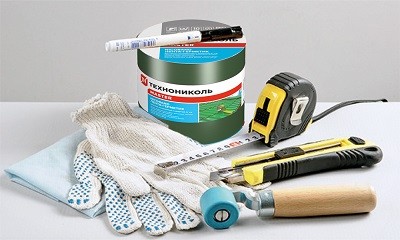
- Prepared rolls.
- Roofing knife.
- Ruler, construction tape.
- A simple gray or red pencil, chalk.
- Roller, brush.
- Putty knife
- Gas-burner.
- Rags, broom or industrial vacuum cleaner.
- Pneumatic equipment with a gas cylinder, a hose and the ability to connect to an electrical network (for the fusing method).
- Materials for repair and line alignment (if required) – cement-sand mortar + spatula, trowel and shovel, sealants, polyurethane foam.
- Primer for covering the working area.
- Fasteners (for fastening method).
- Protective work clothing, shoes and gloves.
Setting up the foundation is the same for both approaches:
- Cleaning the surface of old coating.
- Washing and cleaning the garage roof, followed by drying.
- Diagnostics of the roof, in order to identify dents, depressurization of seams, areas requiring pouring cement mortar, sealants, polyurethane foam or repairs.
- Drying the area.
- Priming the surface in 1-2 layers.
Following this, carry out the following tasks:
- If the mounting method (more often on sloping roofs) – the rolled material is secured with fasteners – self-tapping screws, nails, staples.
- If the fusion method (more often for flat roofs) – a rolled strip is rolled out over a prepared primed surface, heated from the inside with a burner, then rolled on top with a roller. Then the rolls are laid with an overlap: on the sides – 8 cm, and on the ends – 15 cm, in the direction of the roof slope.
In hot weather, the fusing method is not used because the film sticks to the working area and makes installation more difficult.
When work is done on a wooden roof, a soft roof that serves as a vapor barrier and waterproofing layer is installed alongside other materials. The materials needed by the craftsman include rafters, moisture-resistant chipboard, lathing, and roofing and lining materials.
Soft tiles and other self-adhesive products are applied to the surface, and air bubbles are removed by rolling over them. TechnoNIKOL is laid with a minimum 4 mm thickness. The garage can be covered in layers one, two, and three at a time.
Work needs to be done at a specific air temperature:

- Laying bitumen roofing (Linokrom, Bikroelast, Bikrost) – laying at a temperature not lower than +5°C.
- Laying bitumen-polymer roofing (Technoelast, Bipol, Uniflex) – laying at temperatures above the flexible temperature of the material.
- Technoelast – no higher than -25°C;
- Uniflex – no higher than -20°C;
- Bipole – no higher than -15°C.
Using TechnoNIKOL to cover your garage roof can be a useful and affordable way to shield your car and possessions from the weather. TechnoNIKOL roofing materials are well-known for being long-lasting and simple to install, which makes them ideal for do-it-yourselfers who want to take on roofing projects on their own.
TechnoNIKOL roofing’s outstanding performance in a range of weather conditions is one of its main benefits. Throughout the year, TechnoNIKOL materials offer dependable protection against rain, snow, and strong sunlight. In comparison to conventional roofing materials, this material’s longevity is ensured by its resistance to ultraviolet radiation.
TechnoNIKOL roofing systems have been designed with ease of installation in mind. They are often simple to install and only need a few simple tools, so even people without much roofing experience can do it. In addition to saving money on installation, this do-it-yourself method gives homeowners the satisfaction of finishing the project on their own.
When it comes to cost-effectiveness, TechnoNIKOL roofing presents a competitive alternative to other roofing materials available in the market. Because of this, it’s an affordable option that doesn’t sacrifice performance or quality. TechnoNIKOL offers a dependable solution that won’t break the bank, whether you’re building a new garage or replacing an outdated roof.


