
The weight of materials is an important consideration when organizing a home renovation or new construction project. PVC windows are one such material that is frequently found in contemporary homes. The longevity, low maintenance requirements, and energy efficiency of these windows make them popular. However, as this can impact different aspects of your project, it’s crucial to know the weight of PVC windows before installing them, both per square meter and for the entire unit.
The structural requirements of your home may be affected by the weight of your PVC windows. For example, knowing the weight makes it easier to calculate how much weight the walls and frames supporting these windows can support. This is especially important for older buildings or structures that have weight restrictions. Furthermore, knowing the weight is crucial for organizing transportation and installation, ensuring that the necessary tools and personnel are on hand to ensure a seamless and secure procedure.
The weight of PVC windows varies according to their size, kind of glass, and design elements like reinforced frames or multiple panes. Generally, the weight is expressed in kilograms per square meter, making computations simple regardless of the size of the window. A typical single-pane PVC window, for instance, could weigh about 10–12 kg per square meter, but a more intricate double- or triple-pane window might weigh much more.
With this information at hand, builders and homeowners can make better decisions, ensuring that the windows chosen satisfy functional and aesthetic criteria without sacrificing the structural integrity of the building. We will go into more detail about the weights of various PVC window types in the sections that follow, along with offering helpful advice on how to take these factors into account when planning a building or renovation project.
Comprehending the mass of one square meter and an entire PVC window is imperative for organizing and carrying out any building or remodeling endeavor. It assists in selecting the best materials for longevity and effectiveness, guards against overloading, and guarantees adequate structural support. Understanding these weights facilitates precise cost estimation and efficient project management by averting possible problems that may result from erroneous assumptions.
- Description of the concept
- Documents establishing requirements
- What does it depend on?
- Frame
- Profile
- Double-glazed window
- Accessories
- Doors
- Permissible total weight
- Calculation
- 1 square meter
- Total product
- Why do you need to know how much a structure weighs??
- Video on the topic
- What you need to know about windows.
- What you need to know BEFORE purchasing PLASTIC windows? / 10 MYTHS about PLASTIC windows!
- They brought us windows. PVC profile, anthracite lamination, good double glazing
- What you need to know about installing windows in winter
- DO NOT TOUCH the winter-summer mode on the windows! Master"s advice ☝️
- HOW NOT TO MEASURE PLASTIC WINDOWS #221
- WHY DO PVC Windows LEAK??! Six reasons puddles inside after rain. Window tragedies – 48.
Description of the concept
The force exerted by the body on a support is known as the product’s weight. As a result, the force of a plastic window’s action on the building’s load-bearing wall should be referred to as its mass. The value obtained determines the type of glass unit that should be installed in a specific situation. Ultimately, 90% of the light in the space enters through the glass.
Overloading the structure can result in a substantial reduction in its service life.
Documents establishing requirements

Plastic windows have more than 20 GOSTs installed, which control the specifications, features, and attributes of the goods as well as the production and installation procedures.
Please consult the following regulatory documents to find the product’s allowable weight:
- GOST 30674-99. The interstate standard defines all parameters of window blocks made of PVC profiles.
- GOST R 56926. Describes all requirements for window and balcony structures.
- GOST 23166-99. The text is devoted to the general technical characteristics of window units.
- GOST 24866-99. This document contains technical specifications for laminated glass units for construction purposes.
- GOST 30673-99. Text on technical specifications for PVC profiles.
All of these documents have the data required to determine the accurate weight of PVC windows.
What does it depend on?
The weight of the profile directly affects how much a PVC window weighs. Here, too, the weight of the profile is determined by several functional components, such as the thickness of the partitions and the layout of the chambers; the lighter the window profile, the lower the overall weight of the structure.
The strength of the profile determines how long the window will operate. Additionally, the mass is also influenced by other design elements.
Frame
This is the window’s overall frame, supporting the sashes, transoms, and crossbars. PVC is used to make the frame of a plastic window. However, plastic comes in various varieties. It varies in mass and thickness, respectively. The thickness of the frame wall determines the weight of the window. In the event that it falls under class A, the thickness is fixed at 3 mm. Class C is non-adjustable, and Class B has a 2.7 mm limit. Thus, the thickness and strength of the profile directly affect the weight of a plastic window.
Profile
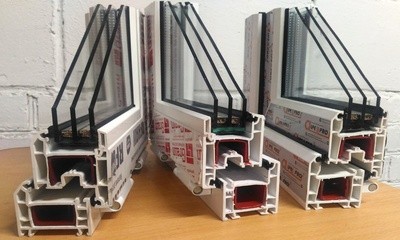
Every additional chamber, air compartment, and partition adds to the profile’s weight. However, the thickness of the profile matters more.
A product is stronger and more dependable when it is thicker, but it also weighs more. Consequently, this indicator needs to be recorded, particularly for offices and residential buildings.
The presence of metal in the reinforcing profile adds to the structure’s weight. Such a reinforcing element is used in the production of the majority of plastic products. It keeps the sash from drooping and gives the product durability. Having more stiffening ribs on the window is also a good idea. However, they also increase weight. Additional elements that add to the profile’s weight are:
- External wall thickness. Therefore, in the technical specifications for building glazing there are requirements to limit the thickness of profile systems.
- Reinforcement type. For example, an L-shaped frame type is lighter than a closed one.
Apart from the arrangement of reinforcement, the weight is also influenced by the material of the profile. The final mass of the plastic profile can range from 1.8 kg to 3 kg, contingent upon the size of the chamber.
Double-glazed window
This component is far heavier than the profile. Included in the package are:
- glass;
- primary and secondary sealant;
- distance frame;
- desiccant.
Crucial! Only glass parameters need to be considered when making calculations; other factors don’t really matter.
Finding the weight of a window is simple if you know how many glasses come in the box. One square meter of glass with a one mm thickness weighs 2.5 kg. The quantity of glasses determines the glass unit’s weight. A single chamber, for instance, weighs 20 kg, while a double chamber weighs 30 kg. The formula is used to get the product’s mass.
Accessories
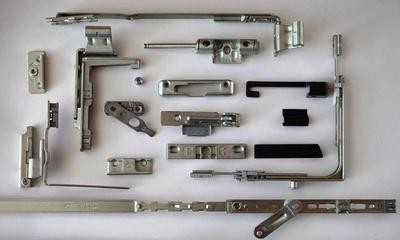
Another element impacting the window’s weight. Manufacturers do not think it appropriate to make accessories with lighter parts or simpler designs.
The elements’ dependability and quality are indicated by the fittings’ weight.
The strength and quality of the metal components, handles, latches, or pins integrated into the interior determine how reliable each component of the fittings is.
The fitting mechanism weighs between 2 and 2.4 kg (depending on the manufacturer) because of steel inclusions.
Doors
The sequence and accuracy of each installation technology step are necessary for the valves to operate. additionally from heavy weight or fittings of inappropriate quality. There are limitations on the sashes’ weight in order to prevent this. The weight of pivoting sashes on typical PVC windows should not exceed 60 kg, per standards. To prolong the product’s life, some manufacturers lower this weight to 50 kg.
Crucial! There is no control over the weight of blind sashes.
There are 0.5 kg in the sash.
Permissible total weight
Prominent producers are attempting to avoid a significant rise in the quantity of goods produced. Furthermore, an excessively light window might not offer the required performance qualities. As a result, the mass of the sash and moveable components is limited to 60 kg. Ideally, the weight should be 50 kg. The parameters and state of the walls determine the maximum window load. The weight on the slab must still be considered when standing on the balcony.
Calculation
You should consider that a double-glazed window occupies the majority of the window before beginning the computations. Therefore, you must first determine the mass of the double-glazed window before figuring out the weight of the structure.
To find the area of the glass, you must measure its height and width. Additionally, you must be aware of the glass’s thickness, such as 1 or 2 mm.

1 square meter
Glass has a standard thickness of 4 mm. The reference book is used to determine the mass value. For instance, the mass of one millimeter thick glass is 2.5 kg/sq m. In other words, the mass of one square meter of 4 mm thick glass is 10 kg/sq m.
A single-chamber glass unit weighing one square meter is 25 kg, made up of 20 kg for the glass itself, 3 kg for the profile, 1.5 kg for the fittings, and 0.5 kg for the sash.
Total product
Here, the following formula is applied:
Weight is equal to 3 x window height x window width x glass thickness x 2.5. Three, the first digit, denotes the number of glasses in the apparatus (three pieces in a device with two chambers).
Example of a typical double-chamber glass unit: 4 mm thick, 1.8 m high, and 1.4 m wide.
The area is 2.52 square meters (1.8 x 1.4). Determine the weight: 75.6 kg = 3 x 2.52 x 4 x 2.5
The outcome is not exact. This is because various kinds of fittings have been installed.
The weight of the chambers with varying thicknesses should be determined independently if the double-glazed window has glass installed in it. The outcomes ought to be compiled.
When calculations are done incorrectly, the following issues arise:
- sagging and rubbing of the sash;
- fogging and freezing of the window;
- deformation of the frame structure;
- glass unit depressurization.
It is especially concerning that issues might not become apparent right away following installation. They usually show up after a while of use.
As a result, it is essential to determine in advance how much the plastic window weighs approximately and whether the results comply with the specifications of legal documents.
Why do you need to know how much a structure weighs??
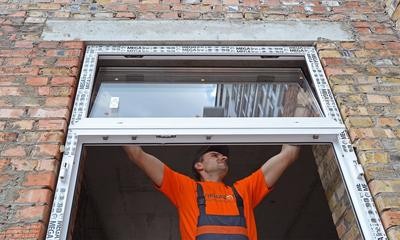
For engineers working on plastic structure manufacturing companies, similar information is crucial. It provides the foundation for figuring out the loads on all associated components, such as the load-bearing wall, building facade, and profile.
This indicator is also necessary for installation technicians to know.
The degree of installation complexity, the cost of transportation, and the need to replace double-glazed windows all depend on him.
A plastic window’s weight has an impact on several aspects of the product’s design, including:
- Operational. Sagging of the sash is most often observed with excessive or maximum weight of the part. Adjustment measures or installation of a microlift will be required. To achieve ease of opening/closing, it is necessary to install expensive fittings.
- Load parameters. This primarily applies to load-bearing walls in old structures. The walls of new houses are characterized by good strength and load-bearing capacity, so the weight of the window will not have a strong impact.
- Installation process. Installation of a lightweight product is much simpler and does not require much experience. If the structure is bulky and heavy, the physical costs increase not only for installation, but also for the design of slopes and the number of necessary materials and tools.
- Total construction cost. The amount and type of material used depends on the weight. Reliable, durable, high-quality materials have considerable weight.
Crucial! The total weight and material quality of a plastic window determine its weight.
There are negative effects if the mass is computed incorrectly.
It is possible to incur excessive weight increases and financial costs when replacing a double-glazed window with an upgraded model that offers better sound insulation. Fittings will wear out quickly on a heavy frame.
Calculating the maximum load on each element is done when choosing it. If it is exceeded, issues with operation will occur. As a result, before installing, you must be aware of the weight.
Comprehending the weight of PVC windows is essential for both builders and homeowners. PVC windows usually weigh between 7 and 15 kg per square meter, depending on dimensions, thickness, and extra features like glazing options. This weight guarantees structural integrity without placing undue strain on the building and is manageable for installation.
A PVC window’s overall weight is determined by several factors in addition to its frame weight. This comprises the weight of the glass panes, any reinforcing materials used within the frame, and hardware elements like hinges and handles. All of these components add up to the total weight that the window frame and surrounding structure must support.
Understanding a PVC window’s weight is crucial for installation since it guarantees correct handling and support throughout the fitting procedure. It assists in identifying the kind of support required, such as sufficient framing, anchors, or extra reinforcement to securely support the weight and avert structural problems in the future.
Furthermore, a PVC window’s weight affects both its insulating and energy-efficient qualities. Because of their thicker profiles and multiple glazing layers, heavier windows typically have better insulation. This can help to reduce heat loss and noise transmission, improving interior comfort levels.


