
When people talk about Italian design, the image of impeccable style immediately comes to mind. It is not just a set of fashionable items, but a whole philosophy of life, where beauty goes hand in hand with comfort. Italians know how to create spaces that breathe harmony and warmth, even if they look ultra-modern.
The secret of this approach lies in respect for materials and form. Here, the natural texture of marble, the expressiveness of wood, and the shine of metal are valued. Every detail, from a large sofa to a door handle, is well thought out and carries elegance. The main thing is the feeling of lightness and balance when there is nothing superfluous in the interior.
Italian design is never cold or sterile. It always has a soul, emotion, and sometimes even a touch of theatricality. It skillfully combines centuries-old craft traditions with the boldest innovations. The result is interiors that you not only want to admire, but also live in, feeling like you are part of something beautiful.
- The basics of Italian style
- Classic and modern Italian style
- Italian style – ideas for interior design
- The living room – a warm welcome
- Bedroom – sweet dreams
- Kitchen – delicious treats
- Bulky furniture will be replaced by coat racks, side tables, shelves, racks, and stands.
- The hall in a private home is much more than just a transitional space. It is the first thing your guests see when they cross the threshold and what greets you every day when you return home. The overall impression of the entire home largely depends on its atmosphere and comfort.
- The subtleties of Italian-style decoration
- Color scheme
- Choosing Italian-style furniture
- Lighting selection
- Italian-style window design
The basics of Italian style
The origins of Italian style date back to Ancient Rome. Ancient luxury complemented by eclectic accessories had a major influence on the formation of Italy's cultural and artistic values. Neighboring France added exquisite sophistication to the architecture and interior design of homes. A bohemian style with simple geometric lines and interesting fabric textures was formed at the intersection of cultural traditions.
The basis of modern interior design is the Tuscan style. It is named after the province of Tuscany, located in central Italy. Industrialization at the beginning of the last century led to an increase in the number of city dwellers. The shortage of housing and building space provoked the settlement of the nearest suburbs. Houses in Tuscany were traditionally built from natural materials – wood, stone, and clay. Open terraces and patios with columns and arches became a characteristic feature. Modest interiors were decorated with frescoes, mosaics, stained glass, and ceramic tiles.
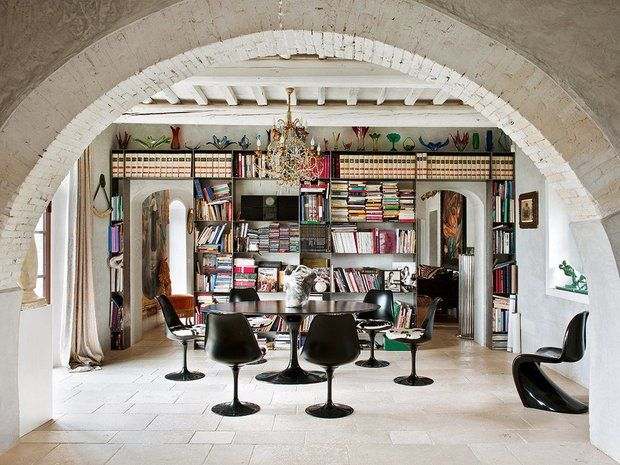
Design: b-arch architectural studio

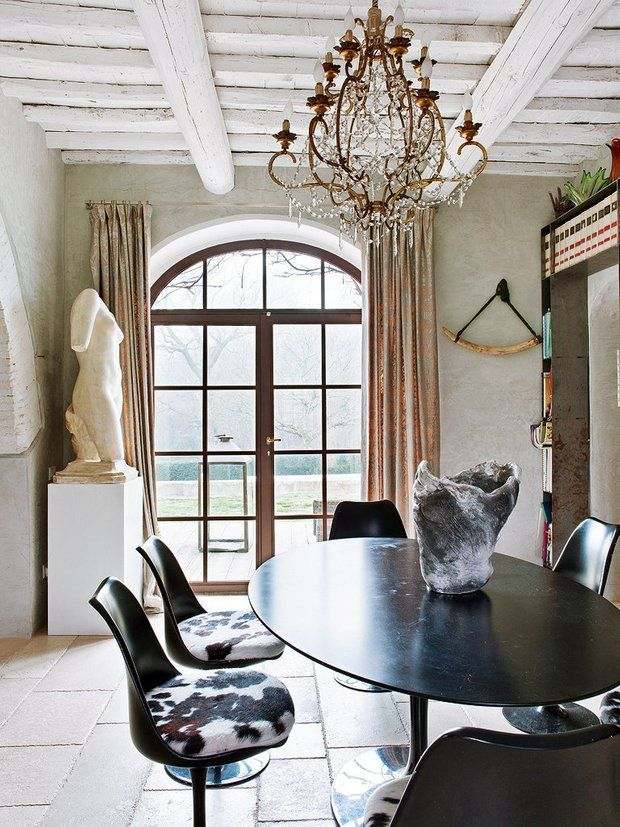
Design by b-arch architectural studio
The basic features of traditional Tuscan interiors have been preserved in contemporary Italian style. Ancient symmetry in architecture, sculptural elements, laconic design, and rich decorative details have been given a new lease of life in the modern world.
Classic and modern Italian style
The organic combination of rustic simplicity and bohemian design is very similar to the concept of country and Provence styles. A distinctive feature of Italian interiors is their expansiveness. Several generations live under one roof, honoring family traditions and norms. Classic interior design calls for a large house where all relatives can gather around a wooden table.
Large windows, a fireplace, heavy, sturdy furniture, a wrought-iron chandelier, an abundance of antiques, small details, and accessories, each of which has its own history and meaning. The walls are decorated with frescoes depicting Mediterranean scenes and Venetian plaster. Massive columns, arches, and ceilings are adorned with openwork stucco moldings. Zoning and panoramic glazing are welcome here.
For many years, Italy has been rightly considered a trendsetter in many areas, including textile and furniture production, clothing and footwear manufacturing. The talented designs of Italian designers and artists are very popular all over the world. The rich cultural heritage has shaped the modern style of Italian interiors.
The design of the apartment is interpreted as the creation of a unified art space filled with interesting decorative items and accessories—3D paintings, bronze busts, vintage clocks. The main task is to create a compact and functional space. The center of the home is usually a large modular sofa for entertaining guests and a compact biofireplace. The trend is toward clean geometric shapes and bright upholstery colors.
Newfangled technology and household items coexist harmoniously with antique decor. Magnificent bas-reliefs and stucco moldings look great with a large plasma TV, and a crystal chandelier with a mirrored ceiling.
The correct geometry of the furniture forms is contrasted by the asymmetry of the racks and wall shelves. The modern trend welcomes non-standard configurations in interior design.
Italian interior design is not about pretentiousness, but about a sense of proportion: warm tones, natural materials, thoughtful details, and a slight carelessness that still looks refined. Everything is important here—how the blanket lies on the sofa, the shape of the lamp, and the texture of the wall. The main thing is not to overload the space, to let it breathe. Italians know how to combine the old and the new: an antique table next to a minimalist sofa, vintage tiles on the floor, and clean lines in the kitchen. It's a lifestyle, not just room decor.
Italian style – ideas for interior design
The Italian style delights with its original decor and perfect execution of every detail of the interior. An atmosphere of comfort and home warmth is its hallmark. The exquisite simplicity of sunny shades and the use of natural materials emphasize unity with the surrounding landscape.
The living room – a warm welcome
The main difference between an Italian-style living room and other design styles is the symmetry of the interior elements, the elegance of the lines, and the conciseness of the forms. There are no random accessories here; everything is in its place. The interior design uses prestigious and expensive high-quality decorative items.
The necessary furniture includes a corner sofa with ottomans or a set of armchairs. A small coffee table with curved legs complements the central part of the living room. A fireplace, real or stylized, adds coziness to the room, and the space above it is decorated with a mirror in a heavy gilded frame. The acceptable number of large items in the interior is equal to the number of corners.
Italian-style textiles are used extensively—pillows on armchairs, throws on the sofa, curtains with lambrequins. Traditional fabrics include silk, velour, jacquard, velvet, and velour. A multi-lamp chandelier with crystal pendants and wrought iron lamps complete the harmony of the space.
Bedroom – sweet dreams
The central place in the bedroom is traditionally occupied by a double bed with an elegant headboard. Italian interior design is characterized by the use of wood and soft textile or leather upholstery with quilted detailing. An airy canopy in pastel shades creates a romantic mood.
Small bedside tables with lampshades are placed on both sides of the bed. A classic-style wardrobe made of precious woods (oak, pine) is used for storing clothes. Soft poufs, a chest of drawers, and a dressing table with a mirror in a heavy frame have become essential attributes of an Italian-style bedroom. The color scheme is calm.
Kitchen – delicious treats
The Art House (2006–2012) in Tessinsky Lane seamlessly combines embossed and multi-toned handmade bricks—on which snow lies so picturesquely in winter—and the Corten surface of the parking lot entrance, ventilation outlet of the underground space, and retaining wall on the side of Tessinsky Lane. The architect emphasizes that this combination was chosen to maximize the brutality and “loftiness” of the house in response to its art house name. The goal was to create a lively, complex, and at the same time non-glamorous surface. The lack of natural light will be replaced by carefully thought-out and meticulously calibrated lighting.
Walls
Bulky furniture will be replaced by coat racks, side tables, shelves, racks, and stands.
A well-designed hallway serves many purposes. It acts as a cloakroom, an entrance hall, and sometimes a place to store lots of small items. At the same time, it should be cozy, reflect the character of the home and its inhabitants, and smoothly connect the entrance area with the rest of the rooms.
Hallway finishes (walls, floor, ceiling) Fabric canopy for relaxation
The hall in a private home is much more than just a transitional space. It is the first thing your guests see when they cross the threshold and what greets you every day when you return home. The overall impression of the entire home largely depends on its atmosphere and comfort.
The entrance hall is no less important than the kitchen or living room. It becomes the starting point for the interior design of the living space. The design of an Italian-style hallway depends on its size. If there is sufficient space in the entrance hall, you can place a wardrobe for outerwear and shoes, a chest of drawers with a mirror, and a comfortable pouf or bench.
If space is limited, a wooden coat rack and a table for keys are sufficient. Paintings in gilded frames, mirrors of various shapes, and candle-shaped lamps are used as decorations.
The subtleties of Italian-style decoration
The feeling of exclusivity and luxury in a living space is created through the careful selection of building materials for interior decoration.
Venetian plaster is a classic that is always in style. It creates an effect of refined carelessness. Active areas in the interior are highlighted with stonework, frescoes, or decorative panels.
The height of the ceiling directly influences the choice of finishing materials. A mirrored wall paired with a crystal chandelier will visually enlarge the space. Plaster moldings and wooden beams will fit organically into a room with high ceilings. Openwork stucco moldings and bas-reliefs will add stylish chic.
Parquet flooring, veneered oak, or granite slabs are used as flooring. Carpets are not typical for Italian interiors. In northern latitudes, it is recommended to install a “warm floor” system.
Color scheme
The Mediterranean landscape is characterized by a particular riot of colors—the azure shades of the sky and sea, the rich palette of greenery, fruits, and flowers. In such an environment, there is no need to complement the interior with a colorful palette. The Italian style is based on calm, natural shades – beige, terracotta, olive, ochre. The color scheme of a Tuscan house is a canvas or a backdrop for furniture, textiles, and decor.
Choosing Italian-style furniture
Italian furniture combines exquisite glamour and aristocracy. In the classic version of furniture, only valuable wood species are used. Smooth shapes and curves, curls and wavy patterns serve as decoration. The upholstery of chairs and sofas is distinguished by high-quality fabric or leather. Forged elements, gilding, and bronze overlays create an atmosphere of respectable sophistication.
For connoisseurs of natural aesthetics, furniture with a simple configuration and casual finish is suitable. Without pretentious details and fittings.
Lighting selection
The overall color palette dictates a specific lighting arrangement. The central part of the room is in a zone of soft twilight to create the illusion of sunlight pouring in from the windows. Functional areas of the interior are illuminated by separate groups of decorative items.
Cast iron or crystal chandeliers are used for ceiling lighting. Wall sconces with spherical shades and wrought iron candlesticks help highlight individual details. A small kerosene lamp emphasizes the southern style of the room.
Italian-style window design
Curtains in Italian design play a decorative role. Windows are decorated with airy curtains and heavy drapes. The bohemian style atmosphere is supported by fabric – velvet or jacquard with decorative tiebacks. In a modern style, the use of roller blinds with floral patterns is welcome.
The color scheme of the windows and the pattern on the textiles should match the upholstery of the furniture.
Massive columns and arched openings, openwork stucco molding and wrought iron fittings, precious woods and natural fabrics have become an integral part of Italian interior design. European luxury in a modern setting is created to demonstrate refined taste and wealth.
Italian interior design is more than just a style. It is a whole philosophy that teaches us to enjoy life here and now. It brings warmth, history, and a special sense of harmony to the home, where everything is in its place not just for beauty, but to create a mood.
The main secret is the ability to combine centuries-old traditions with modern ideas. An antique wooden beam on the ceiling goes well with an ultra-modern kitchen, and a vintage carpet goes well with a minimalist sofa. This is fearless design, where both high-quality materials and the emotions they evoke are important.
Ultimately, creating the atmosphere of an Italian home means surrounding yourself with things you truly love. This could be a few elegant details: a beautiful vase, the texture of natural stone, soft lighting, and a comfortable armchair. This approach transforms any home into a cozy and harmonious space where you can feel the spirit of Italy—lively, warm, and incredibly charming.


