
A niche in the wall is not a random defect in the layout, but a real gift to the designer. It is often perceived as a problem that needs to be hidden. But in fact, it is a ready-made architectural element that can be turned into the highlight of your interior.
Imagine a cozy recess where your collection of favorite books lives, the light from a sconce flickers, or a single vase with a branch stands. Such a detail adds depth, character, and coziness to a room. It is much more interesting than just a flat wall.
The main thing is to approach the design with imagination and an understanding of the style of your home. It doesn't matter if it's a large arch or a small recess, it can be made functional or purely decorative. Let's figure out how to unlock the potential of this space and make it truly beautiful.
Ways to create recesses and how to finish them
In most modern apartments (especially inexpensive ones), recesses in the walls are not provided for. However, you can easily make a niche yourself; just keep in mind that it is not easy to do this in load-bearing structures: you will need special permission. But you can make a recess in an interior partition without any paperwork. The first thing to do is to decide on the purpose of the niche, which can be used to store small household items, decorative items, appliances, shelves, as well as a bed or wardrobe. Photos of niches in home interiors are shown below.
Plasterboard overlay niches
In this case (if the recess will be used to store light items), you will have to sacrifice some of the room's space. To install the structure, you will need to attach metal profiles to the wall and cover them with gypsum plasterboard sheets, forming a false panel and a recess of the required size. How can it be finished?
-
Cover the inside with the same material as the real walls.
-
Emphasize the niche by giving it a color that contrasts with the overall background of the room.
-
Use decorative plaster to create a specific pattern or ornament: this will give an unusual effect, but you will need to hire a specialist.
-
Apply inexpensive self-adhesive film with an image you like.
-
Create a relief finish using textured wallpaper (lincrusta), stucco, or bamboo.

Niches inside the finished wall
To create a recess in a brick wall, you will need the help of professionals. You need to know the exact thickness of the partition, mark the wall, and start cutting it out. The advantage of this method is that it does not take up valuable square centimeters of space. A niche in a brick wall can be decorated using one of the methods described above.

Design: Svetlana Chepikova
Color and decorative design
In the first case, designers offer a couple of options. The interior of the niche can be the same (or very similar) shade as the rest of the walls. The second option involves a contrasting color. But don't paint the recess in dark colors: this will make it look like a black hole. It is better to use calm pastel colors.
What is placed in niches? Most often, these are shelves for decorative items, figurines, vases, paintings, or books. Household appliances can also be placed inside recesses, or large pieces of furniture such as sofas and wardrobes can be “disguised” there.
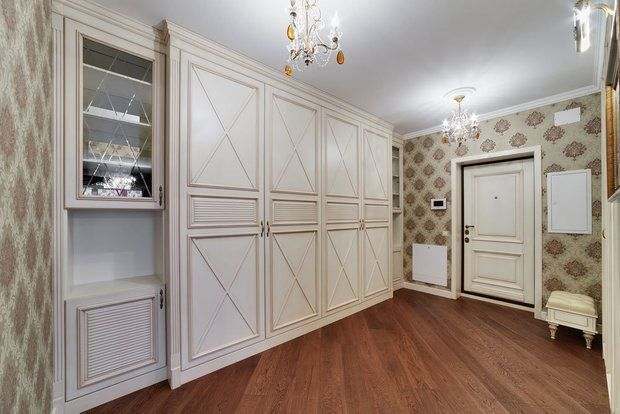
Features and design of wall niches in different rooms
Depending on its location in a particular room, a recess will have its own decorative nuances. What are the features of niches in different rooms?
- In the bedroom
The design of a niche in the wall of this room is quite popular. The design will look impressive if the headboard of the bed is placed in it. In this case, a mirror or a lamp can be placed in the recess. Designers recommend using wallpaper to decorate and highlight the niche: cover the main area of the room with plain wallpaper, and the area where the recess is located with wallpaper with subtle patterns.

Design: Svetlana Chepikova
- In the living room
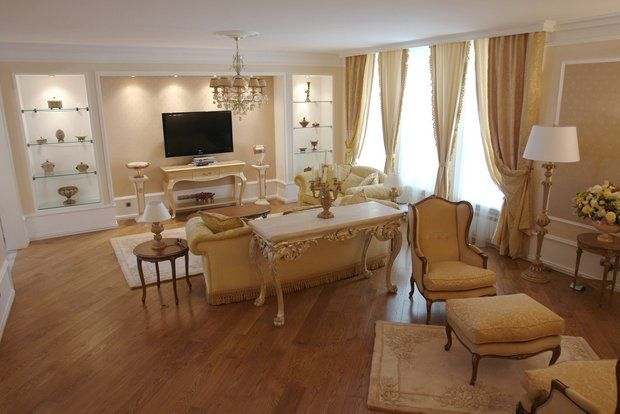
The main room of the house is where friends and relatives are welcomed. Therefore, it is not surprising that the owners want to make the design and decoration of the niche interesting and original. One option is to create three parallel recesses, each of which can be used to place figurines, vases, and other art objects. Soft, unobtrusive lighting will add a special charm to the design.

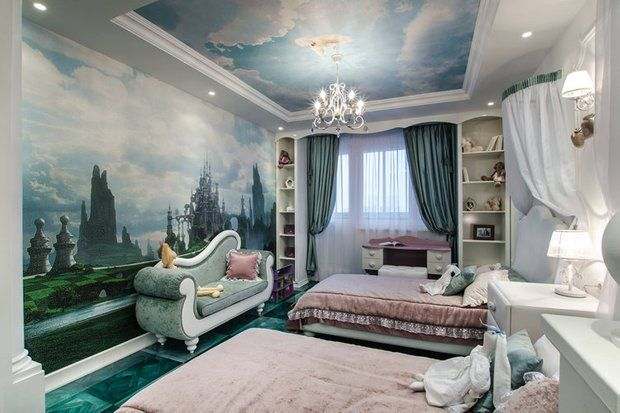
- In the nursery
Here, the installation of a recess can be safely called a necessity. The niche (there may be several) is a convenient place to store toys, the number of which grows from year to year. Place a crib next to the recess so that the child can freely choose their favorite toy.
- In the hallway
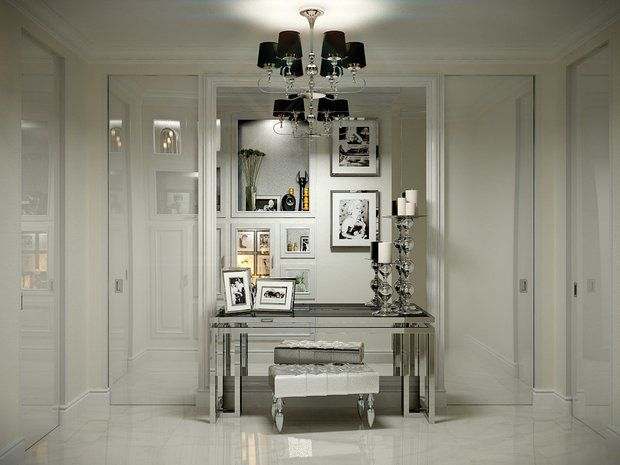
If the niche is vertical and narrow, it can be filled with decorative items, such as vases. A wider structure can be used to place a table with a mirror. In a horizontal recess (if it is at the bottom), place a shoe cabinet; if it is at arm's length, it is a good structure for storing small items: keys, wallets, etc.
- In the kitchen
One interesting solution for organizing your workspace is to create a niche for a storage cabinet. It can contain shelves for your most frequently used items. A sufficiently high and wide recess will fit a refrigerator.
- In the bathroom
In a room like this, recesses can help solve the problem of storing all sorts of things that make bathing more comfortable, as well as personal hygiene items. It's super convenient when the shampoo and shower gel you need are right next to the bathtub and you can easily reach them while you're bathing.

A niche in the wall is not just an empty space, but an opportunity to add character to the interior. To make it look beautiful, you don't have to spend money on expensive materials or design projects. It is enough to think about how to illuminate it, how to highlight the inner surface — for example, with contrasting paint or decorative tiles — and what to put there: books, plants, vases, or collectibles. The main thing is to maintain balance: let the niche stand out, but don't overload the space. A successful solution looks simple but is memorable.
Other ways to use niches
In addition to placing decorative and other items, recesses in the wall are often used to install furniture and household appliances. How to design a niche so that it is not only functional but also part of the interior?
- For the sofa
Installing this piece of furniture in a niche creates a cozy space enclosed on three sides. If you place spotlights above it, you will have a comfortable place to read books and magazines. And you can hang a picture or panel above the back of the sofa.
- For a wardrobe
This is a good option for aligning furniture in a single line if the storage space extends beyond its boundaries. Another common solution is to build a niche in a thick (usually load-bearing) wall to accommodate a built-in wardrobe.
- For household appliances and shelves
The first case implies the optimal solution for placing built-in appliances in the kitchen. However, there is another common option: using a niche in the living room for a TV. Shelves in recesses are most often used to store books or decorative items.

Backlighting
The most common option is to use LED strips. The main advantage here is the ability to use different shades, which gives the niche the required color lighting that harmonizes with the main interior of the room or, conversely, attracts attention by emphasizing the contrast. Spotlights also give good results: this solution is used to illuminate cabinets and other large pieces of furniture.
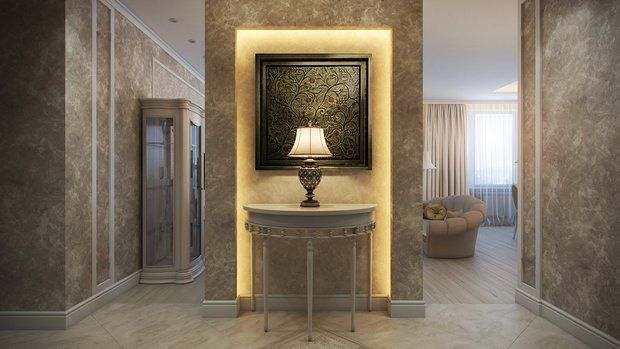
Designing a niche is a great chance to add zest and character to your interior. As you can see, there are many options: from functional shelves to cozy decor. The main thing is to listen to yourself and consider the style of the room.
Don't be afraid to experiment. Start with an idea you like and try different combinations. Even a small detail such as lighting or an unusual color can completely transform a space.
Ultimately, a beautifully designed niche is a detail that makes a home cozier and more individual. It tells a story about your taste and creates the right mood. Create with pleasure and enjoy the result!


