
When it comes to flooring, linoleum is often unfairly overshadowed by more fashionable materials. And that's a shame. Today, it's not the boring gray roll from the past, but a modern, stylish, and incredibly practical option for any room. It has come a long way in its evolution and is ready to surprise you with its variety.
In this article, we will explore how linoleum can become a key element in the design of your home. We will look at the different types available, from natural marmoleum to wear-resistant commercial linoleum. We will see how patterns, colors, and textures can be used to zone a space, create optical illusions, or add accents. You will see that there is a suitable option for a Scandinavian kitchen, a children's room, and a loft-style office.
In addition to aesthetics, we will give practical advice on choosing. What to look for in a store? Which wear resistance class is suitable for the hallway, and which for the bedroom? How does the color of the floor affect the perception of the room? The answers to these questions will help you make an informed choice that will delight you for many years to come.
Linoleum is a practical, inexpensive, and stylish flooring option that has long ceased to be boring: today it comes in different types, colors, and patterns—wood, stone, tile, or bright patterns. It is suitable for almost any interior—from the kitchen to the bedroom, especially if you choose high-quality material. The main thing when choosing is to look at wear resistance, thickness, and appearance, and also to make sure that the linoleum goes well with the overall style of the room. Photos in the interior will help you understand how it will look in reality and not make a mistake with your decision.
- What is linoleum?
- What types of linoleum are there for apartments?
- Types
- Material
- Surface varieties
- Pros and cons
- How to choose linoleum?
- Linoleum placement in the interior
- How to choose a color?
- Design options and patterns
- Under tiles
- Under laminate flooring
- Under parquet
- Grass and flowers
- Imitation stone and brick
- Patterns
- Wood effect
- Patterns and ornaments
- Unusual ideas
- Patchwork
- Geometric prints
- Photos of linoleum in apartment interiors
- Ideas for the living room interior
- In the kitchen
- Photo in the hallway and corridor
- Linoleum in the bathroom
- Finishing on the balcony and loggia
- Examples in the interior of a child's room
- In the bedroom
- In the bathroom
- Features of choosing for a cottage and country house
- What does linoleum look like in different styles?
What is linoleum?
Linoleum is a type of roll flooring, which is mainly made from polymer materials.
What types of linoleum are there for apartments?
There are many varieties, differing in certain characteristics, positive or negative qualities.
Types
There is a basic classification:
- Commercial. It is quite dense, resistant to abrasion, and can withstand heavy loads.
- Semi-commercial. It is distinguished by an even thicker protective layer and high wear resistance. The semi-commercial type has a felt and synthetic base, which allows it to retain heat.
- Domestic. Considered the most inexpensive option, it withstands minor loads perfectly.
Types of linoleum flooring differ in thickness, protective layer, susceptibility to abrasion, materials used in manufacturing, and nature of application.


Material
Popular types of materials:
- Natural. It has a jute base and is made using resin from deciduous trees, wood flour, lime as a filler, and natural coloring pigments to add color.
- PVC. It can have a woven or non-woven base, one layer or several. This polyvinyl chloride coating is cold, as it has low thermal conductivity, but at the same time is highly environmentally friendly and resistant to mold. In terms of composition, it is divided into homogeneous and heterogeneous. Often, a cork underlay is used as an additional layer for PVC linoleum.
- Rubber. Relin has a top layer made of rubber with filler and pigment and a backing made of crushed rubber and bitumen.
- Alkyd. Glyphthalic or alkyd linoleum is distinguished by a fabric base with alkyd resin applied to it. It consists of oils, fillers, pigments, and sometimes antiseptics.
The type of material completely affects not only the performance characteristics of the finish, but also the warmth and comfort of the faced surface.


Surface varieties
Several types:
- Smooth. Significantly improves interior aesthetics and provides the perfect backdrop.
- Textured. Due to its velvety and rough texture, a textured surface reflects less light and is perceived as much softer and cozier.
- Matte. It perfectly diffuses light falling on it, hides small defects and irregularities, and is a very elegant design option for any room.
- Glossy. It has a prestigious appearance and good reflective properties, which make the room look much brighter.
Depending on the type of surface, you can make a space even more interesting and distinctive.


Pros and cons
Like any other finishing material, this product has its advantages and disadvantages.
| Pros | Cons |
|---|---|
| Affordable price and easy installation. | It has a specific odor. |
| Some types are highly heat and sound insulating, moisture resistant, and resistant to chemicals. | Dents from heavy loads may remain. |
| It is soft, elastic, quite durable, and not prone to deformation. | Certain types become brittle at low temperatures. |
| Thanks to its varying thickness, it can be used to finish any surface, even uneven ones. |
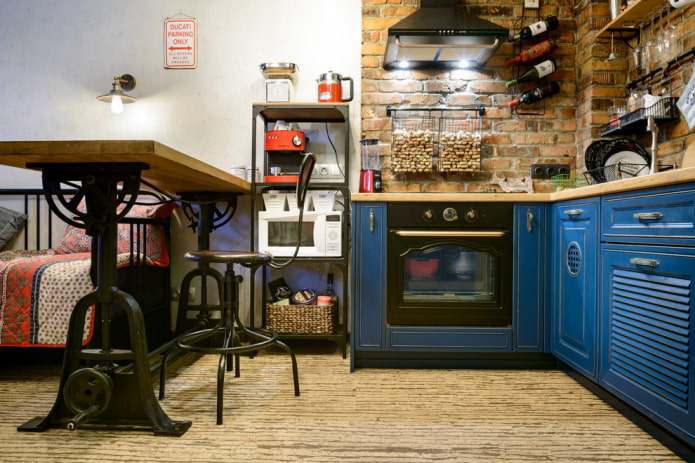
How to choose linoleum?
Selection tips:
- In a room located on the shady side, it is better to use linoleum flooring in light and pastel colors, and when decorating a south-facing room, products in cooler shades.
- To visually expand a narrow room, you can use material with a linear pattern arranged across the walls or diagonally.
- Linoleum with a small tile pattern is also great for making a small space look bigger.
Linoleum placement in the interior
There are several placement options:
- On the floor. The most common location, which is perfect for those who prefer high-quality, safe, and very beautiful flooring.
- On the wall. Due to its reduced thickness and the absence of synthetic and natural backing, this finish is very light and does not put any strain on the walls.
- Doors. An excellent solution that not only refines the appearance of the door structure, making it much more attractive, but also hides minor defects and insulates the door leaf.
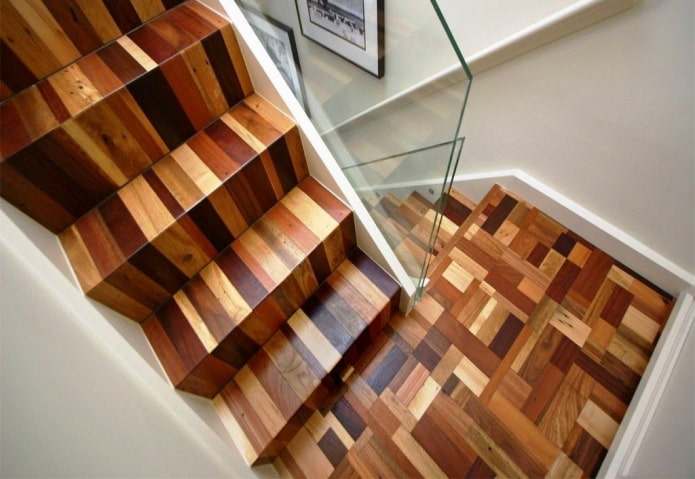
- Stair steps. Soft and more elastic PVC linoleum is perfect for covering steps, which, in combination with a decorative threshold, will give the staircase a finished look.
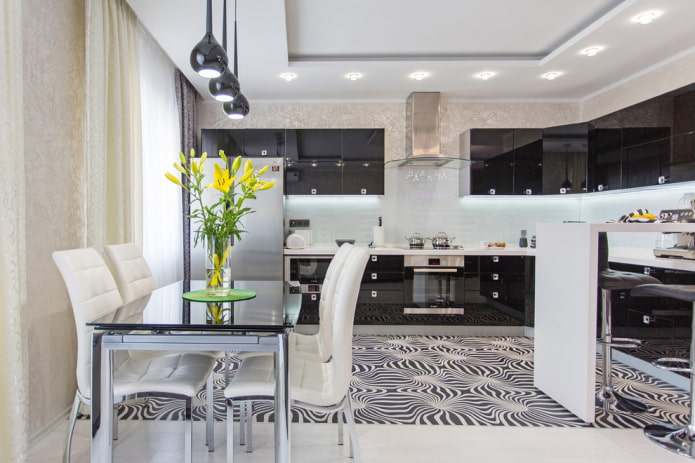
The photo shows a floor covered with linoleum in a kitchen-dining room interior.
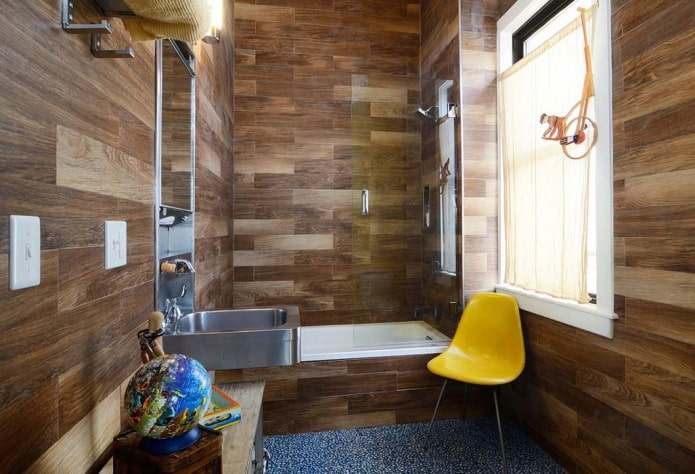
How to choose a color?
The color scheme should first and foremost harmonize with the overall setting, furniture, and interior atmosphere, as well as correspond to the purpose of the room.

Design options and patterns
Interesting design options.
Under tiles
It looks just like tile, but it doesn't have any seams and isn't as hard.

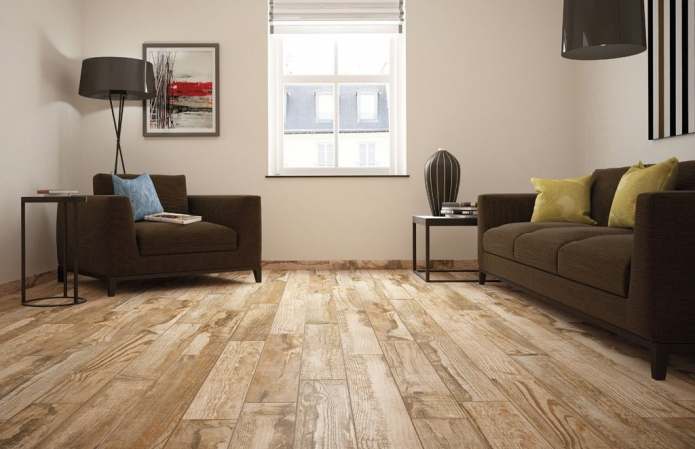
Under laminate flooring
This covering, which imitates laminate panels, has a perfect appearance and therefore becomes a decoration for any interior.
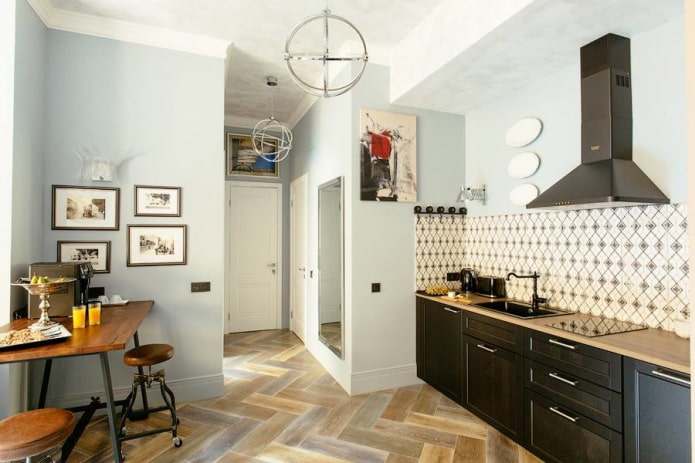
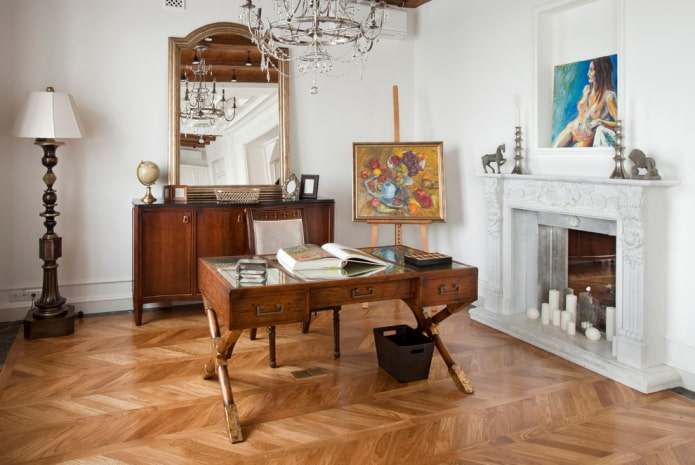
Under parquet
It completely replicates parquet flooring and undoubtedly adds an elegant touch to the entire space.
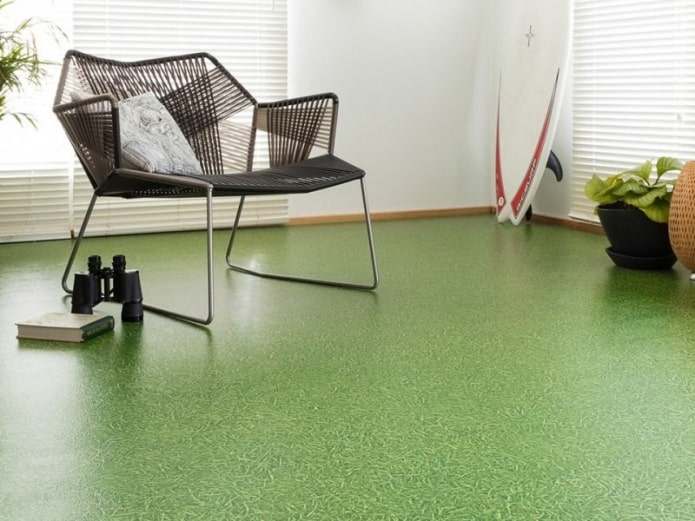
Grass and flowers
This design is a bright decorative element that allows you to transform a flat surface into a flowering meadow or add floral motifs with roses, peonies, or delicate irises to a monochrome setting, filling the space with new colors and a festive atmosphere.

Imitation stone and brick
It comes in a wide range of colors and imitations of granite, marble, sandstone, balzata, brick, small pebbles, and gravel, allowing you to create a unique and original design.
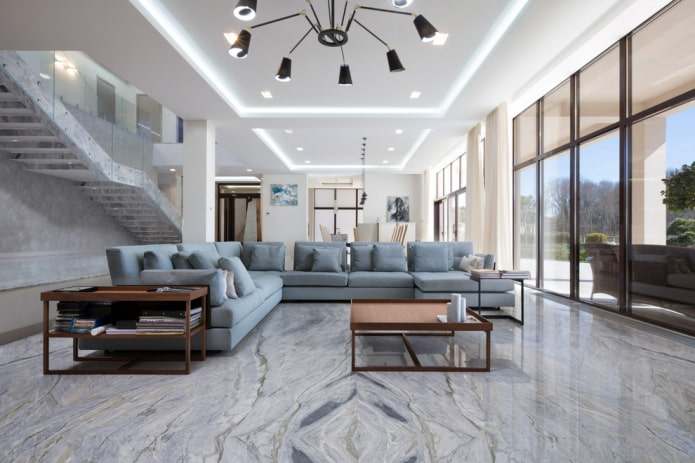
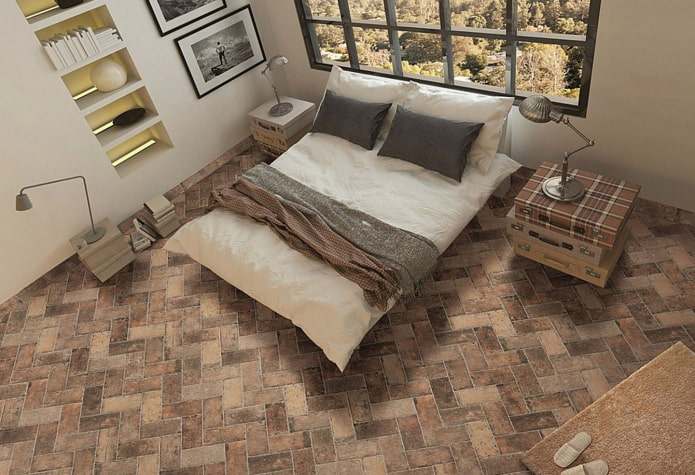
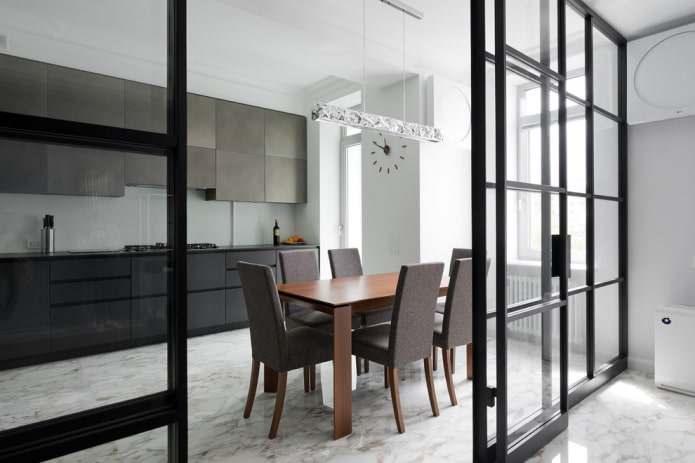
The photo shows a kitchen interior with white marble-imitation linoleum.
Patterns
A perfectly smooth liquid coating with voluminous three-dimensional images with colorful scenes has an incredibly beautiful, stylish, and fantastic appearance.

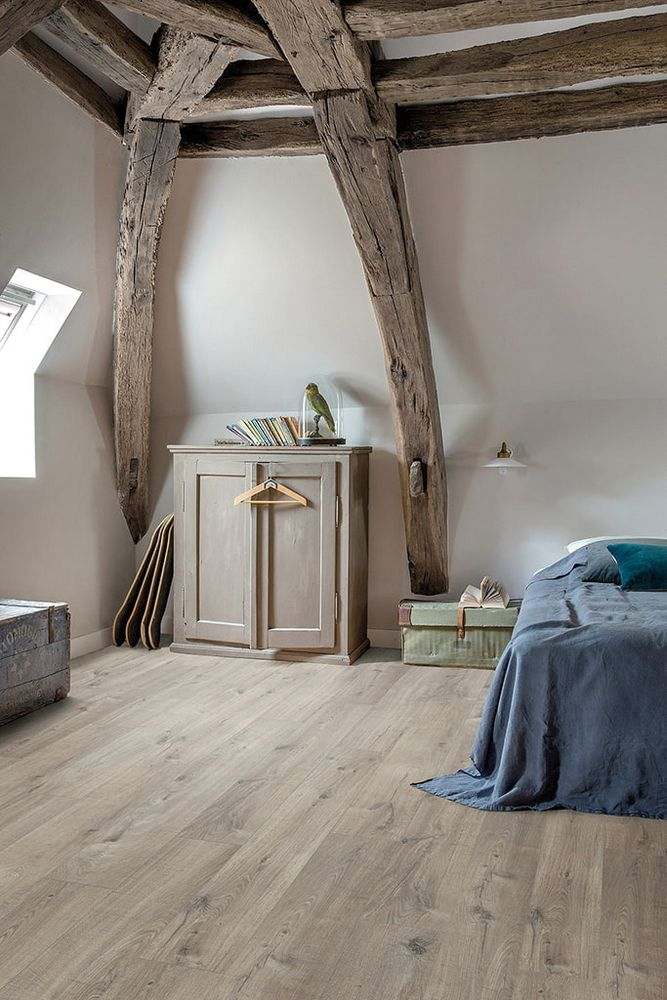
Wood effect
Thanks to its imitation of natural texture and color scheme, it has a very aesthetic appearance and has a beneficial effect on the surrounding atmosphere.

Patterns and ornaments
This type of design, in the form of small patterns or larger ornaments, will undoubtedly make the interior more interesting and colorful, drawing attention to itself.


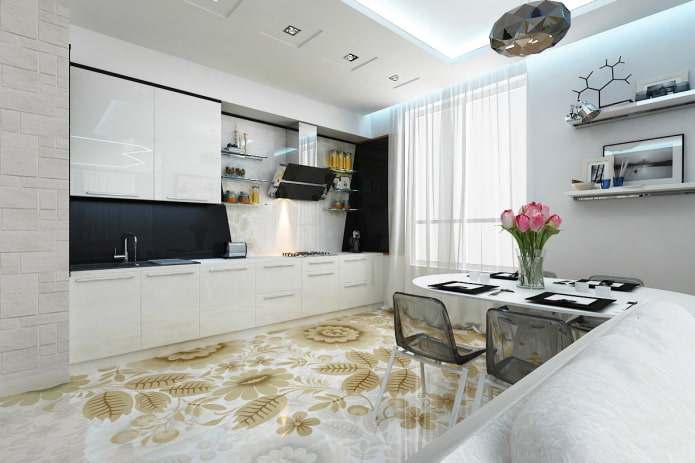
The photo shows light-colored linoleum flooring with floral patterns in a kitchen interior.
Unusual ideas
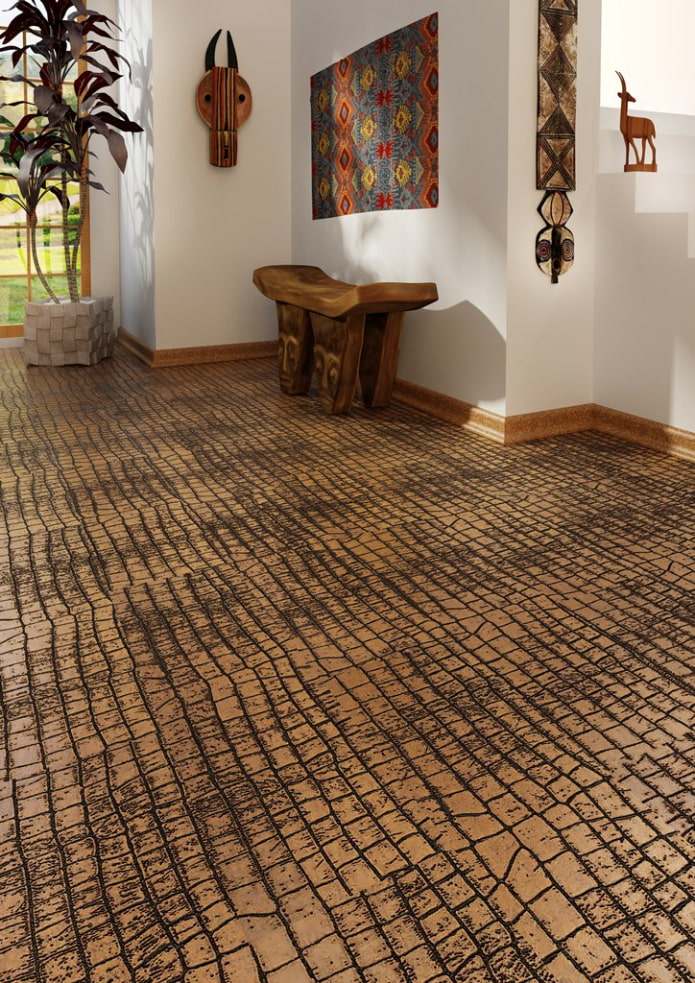
Coverings with imitation crocodile skin are quite original, giving the room's design a certain exclusivity, grace, elegance, and a touch of exoticism. Multi-textured linoleum or facing material that looks like real metal also looks no less unusual.

Patchwork
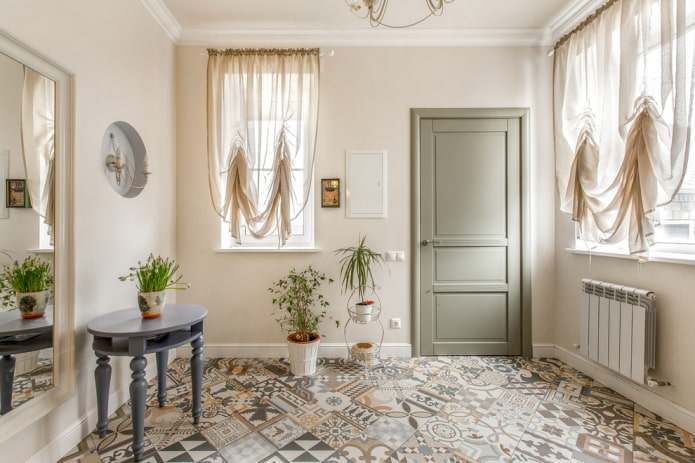
It will become the main interior highlight, and depending on the size of the details and color scheme, it will allow you to achieve a calm and delicate or more extravagant and expressive design.

Geometric prints
Linoleum flooring with geometric prints in the form of stripes, checks, squares, diamonds, or abstract patterns will accentuate the aesthetic appearance of furniture and decorative interior items and become a rather original and unusual design solution for any room.


Photos of linoleum in apartment interiors
With the help of well-chosen finishes, you can create a unique design for each room and give it a specific color scheme.
Ideas for the living room interior
Most often, a household type of flooring with imitation of noble wood species, laminate or parquet boards is used for the living room, which always looks very impressive. In a spacious room with a small amount of furniture, you can use a glossy coating with a shiny and radiant surface.

The photo shows linoleum flooring in the hall, imitating laminate flooring.

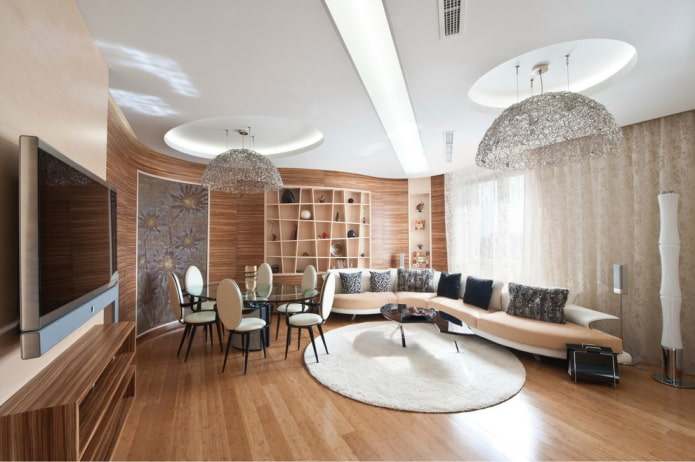
Since the living room contains heavy and massive furniture, it is better to choose high-quality floor linoleum that is thick and wear-resistant.


In the kitchen
To decorate the kitchen or dining room, you can use finishes with a wide variety of designs and color palettes. The main thing is that the flooring blends harmoniously with the overall interior and its elements.
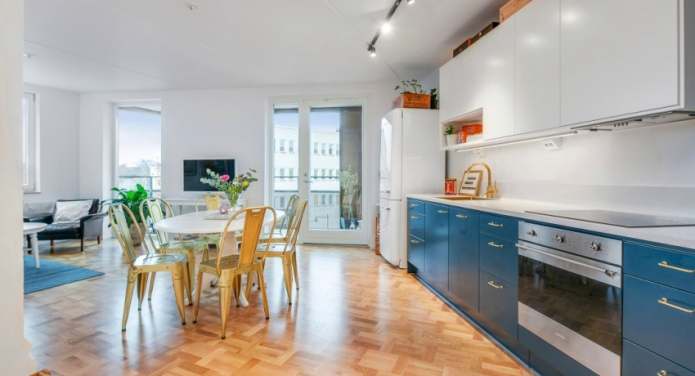
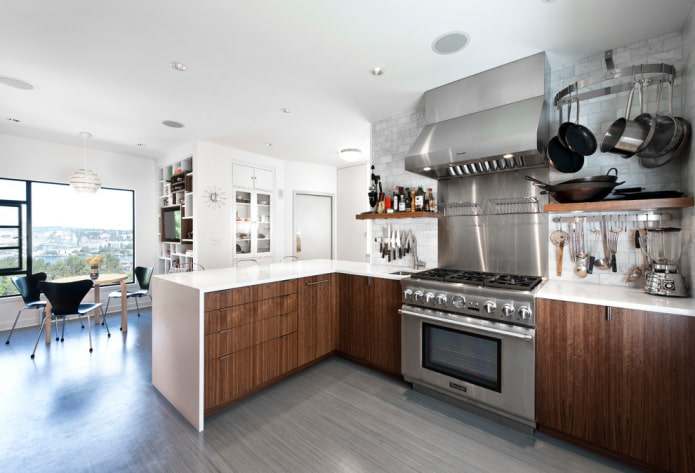
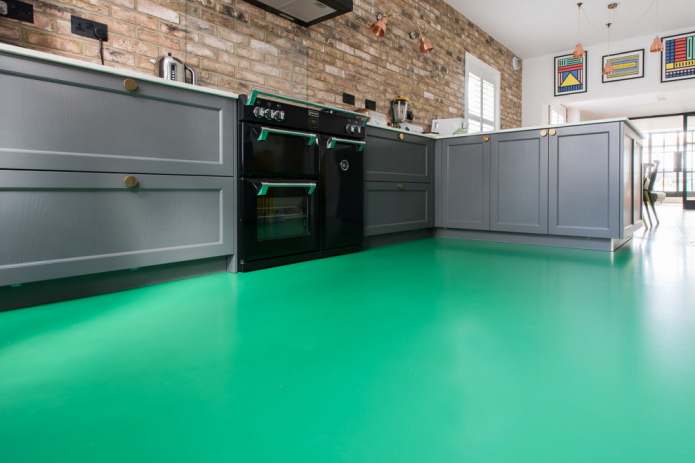
Photo in the hallway and corridor
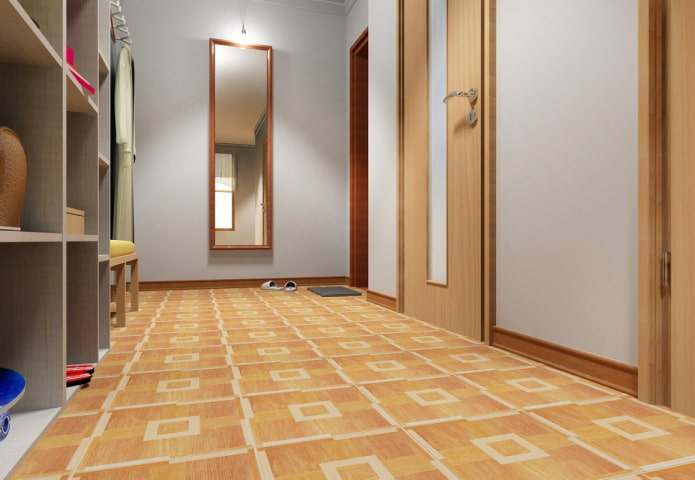
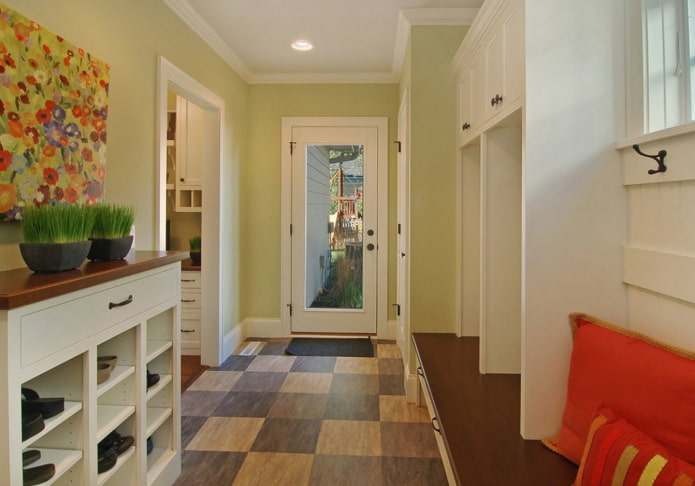
In the hallway or entrance hall, a colorful or speckled pattern would be particularly appropriate, as it would serve as an excellent cover for dirt.
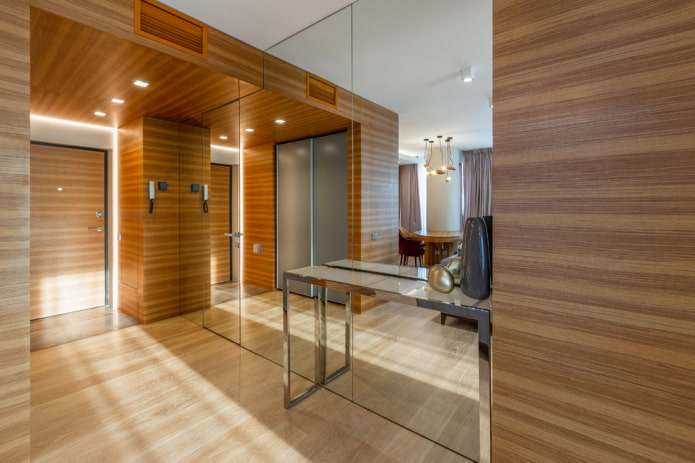
The photo shows the interior of a modern hallway with a floor covered with wood-effect linoleum.
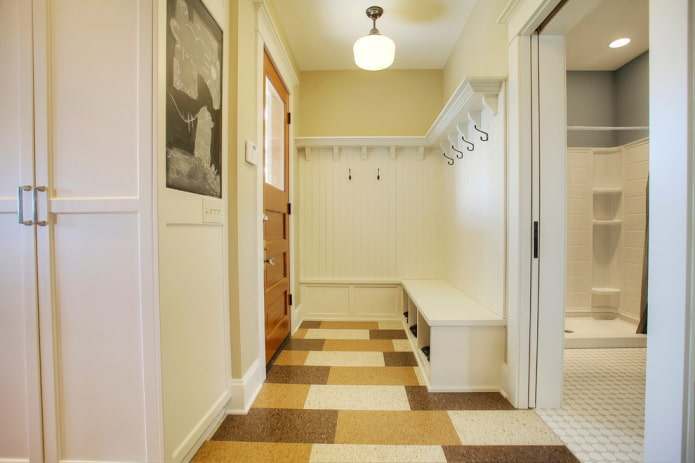

This passageway requires linoleum with additional protection and high performance characteristics. A commercial or semi-commercial type with a thickness of at least 3 mm is ideal here.
Linoleum in the bathroom
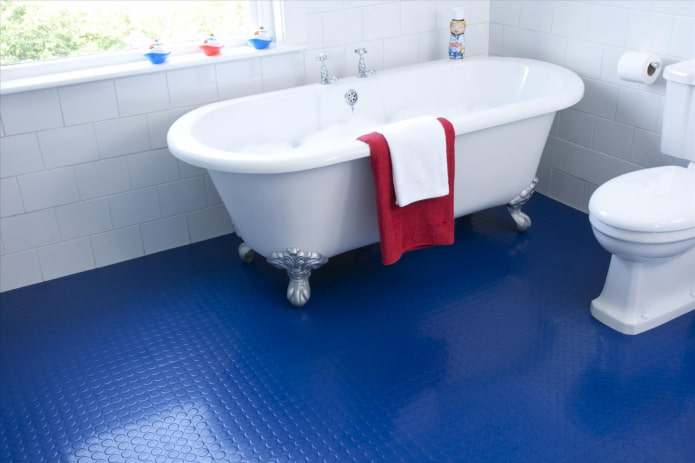
For bathrooms, non-slip coverings with a high level of moisture resistance are mainly used, which retain their original appearance for a long time and do not deform over time.

The photo shows linoleum with a small geometric print in the interior of a spacious bathroom.
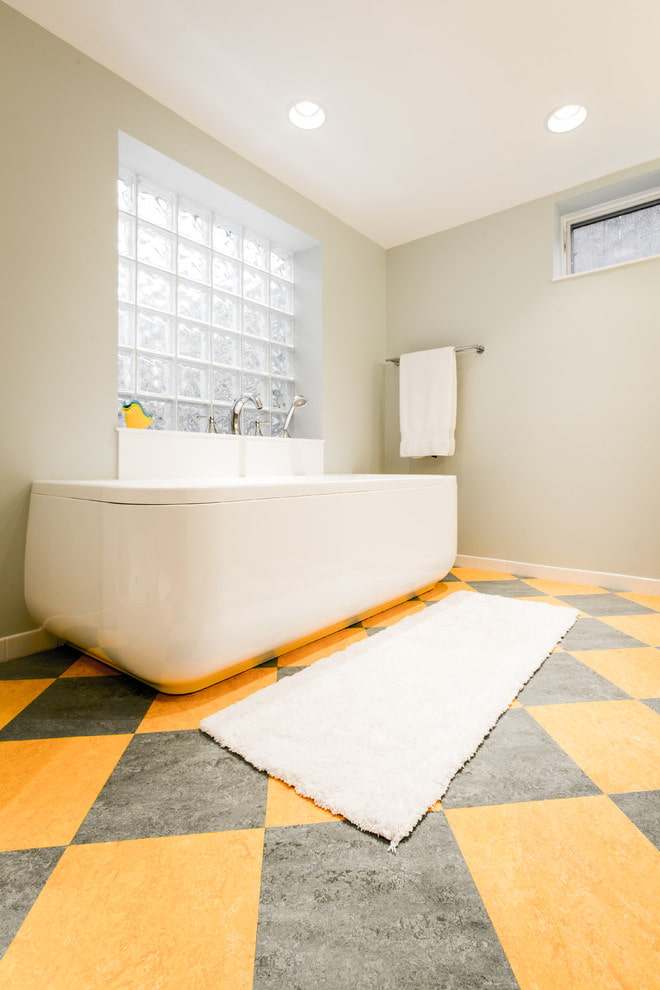
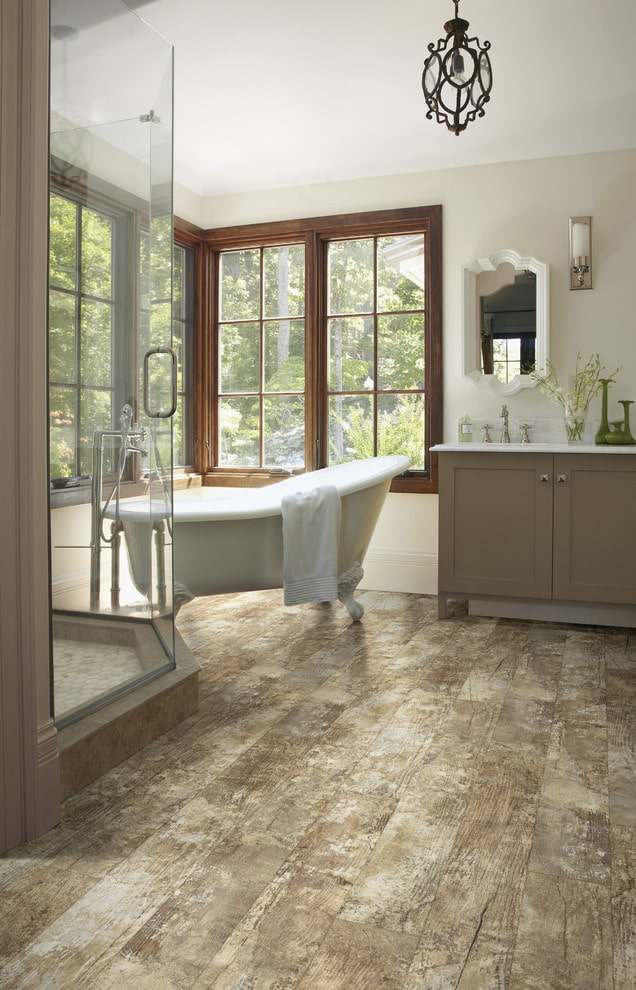
Rubber linoleum or homogeneous PVC flooring is an excellent solution for this room.
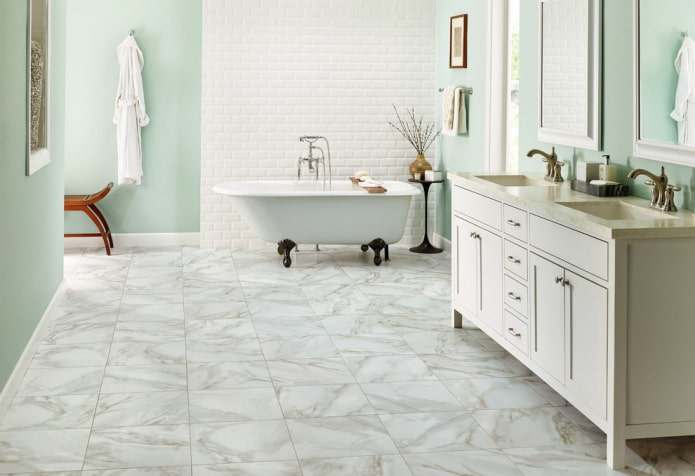
The photo shows a bathroom interior with light-colored linoleum imitating marble tiles.

Finishing on the balcony and loggia
Modern finishing materials are of high quality and can easily withstand temperature changes and humidity. Linoleum cladding with imitation marble, tiles, parquet boards, or laminate is especially common in the decor of balconies or loggias.


Examples in the interior of a child's room
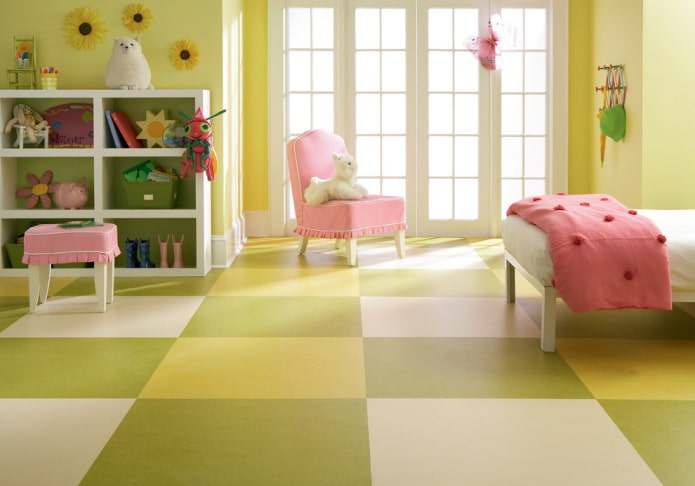
In a child's room, this type of flooring should primarily retain heat well, have antistatic properties, and be completely safe for children. It is best to use natural and environmentally friendly material in the form of seamless sheets to avoid injuries. For decoration, you can choose both bright and more muted shades or prints with geometric diamonds, squares, and zigzags, beautiful patterns, or even cartoon characters, heroes from fairy tales, and books.

In the bedroom
For the bedroom, choose a variety of designs, depending on the overall style of the room. Most often, lighter and warmer shades are used for cladding, such as beige, cream, milk, coffee, or coatings with wood or decorative patterns.

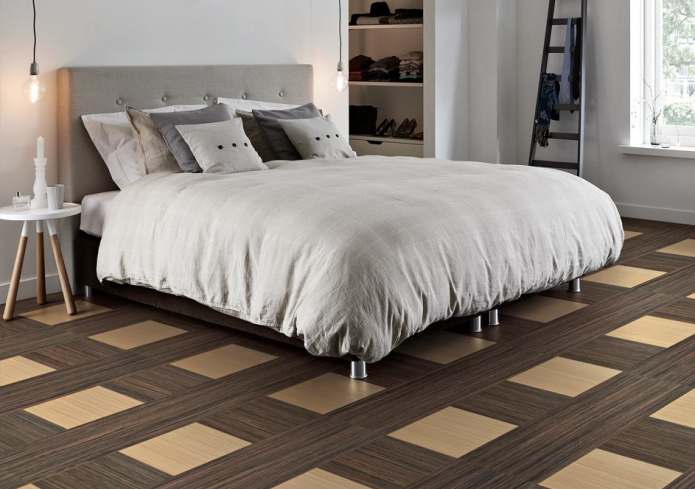

The photo shows a bedroom floor covered with linoleum that imitates parquet flooring.
In the bathroom
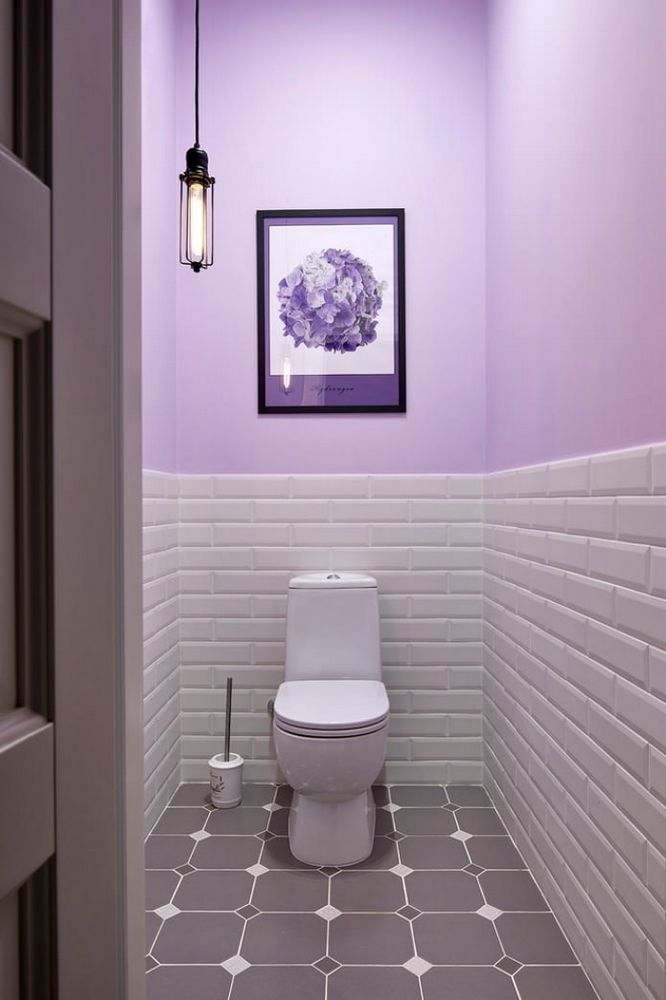
Since this room needs to be cleaned frequently with detergents, linoleum must be particularly resistant to their effects, as well as practical, moisture-resistant, and durable. For decoration, you can choose products that imitate ceramic tiles, laminate, parquet, stone, or limestone slabs.

Features of choosing for a cottage and country house
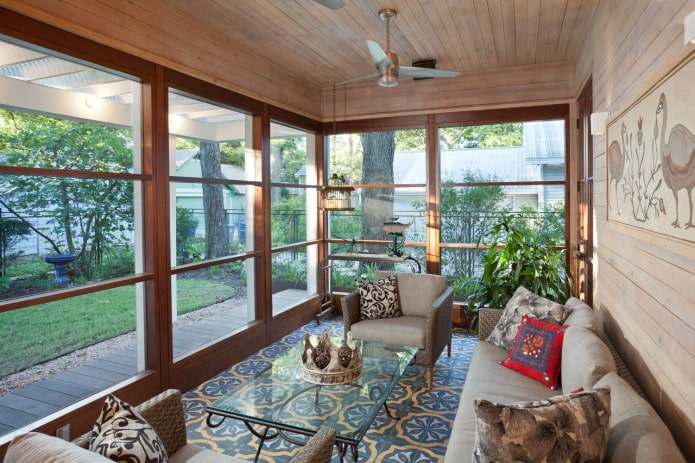
The best option would be a semi-commercial water- and frost-resistant product that can withstand temperature changes and cold weather if the country house or cottage is visited and heated from time to time.

The photo shows the interior of a country house with patterned linoleum flooring.

What does linoleum look like in different styles?
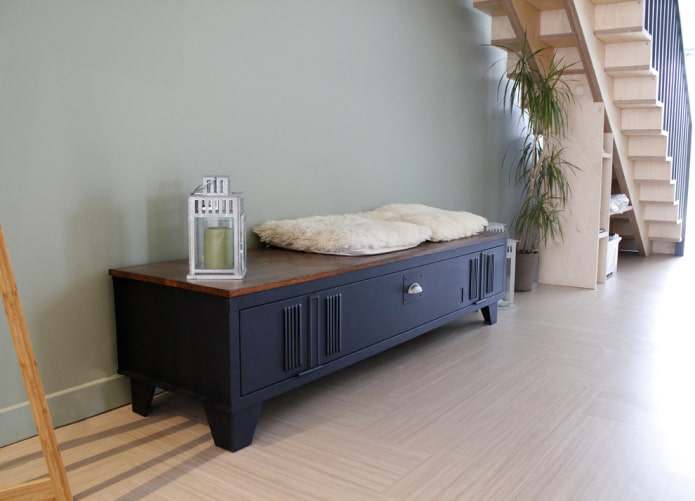
This flooring option can be easily incorporated into a room with any interior style, such as loft, Provence, country, shabby chic, Scandinavian, or modern design.

The photo shows linoleum with imitation wood parquet flooring in a Scandinavian-style children's room.

In a loft style, linoleum imitating concrete or parquet will look harmonious, while for a vintage shabby chic style, a variegated and pastel finish imitating parquet or ceramic tiles, which may have a slightly aged look with scuffs and cracks, is appropriate. A Provence-style interior can be decorated with finishes that imitate simple antique wooden boards laid in a herringbone, square, checkerboard pattern, or textured ornament. For a Scandinavian design, a light glossy coating that reflects light well or a wood-like product is particularly suitable.


Linoleum is a practical and stylish material that can form the basis of any interior. As can be seen from numerous photos, it can imitate expensive wood species, stone, or even create unique artistic compositions. The main thing is to choose the type, pattern, and color that will match the atmosphere of your home.
When choosing linoleum, keep in mind the purpose of the room. Wear resistance and moisture resistance are important for the kitchen and hallway, while in the bedroom you can afford more delicate and tactile options. Pay attention not only to the appearance, but also to the thickness, wear resistance class, and environmental friendliness of the material.
Don't be afraid to experiment. Modern linoleum offers tremendous freedom for design. With its help, you can zone the space, add bright accents, or create a calm, neutral background for the rest of the furniture. A well-chosen covering will serve you for many years, remaining beautiful and functional.


