
When it comes to decorating a living room, the ceiling often gets overlooked. But it's a huge surface that can set the tone for the whole room. Stretch ceilings for the living room aren't just a way to hide unevenness or pipes. They're a full-fledged design tool that lets you quickly and easily transform a space.
What are they? They are thin but durable sheets of PVC film or fabric that are stretched under the base ceiling onto a special profile. Installation takes only one day and does not require lengthy, messy repairs. But the main “trick” is the unlimited possibilities for creativity.
A stretch ceiling in the living room can create a unique atmosphere. Want a feeling of space and sky? A glossy, light-reflecting canvas will help. Dreaming of a cozy, intimate setting? Choose a matte texture similar to perfect plaster. And if your soul craves something unusual, photo ceilings with any landscape, satin coatings with a soft pearlescent sheen, or multi-level structures with hidden lighting come to the rescue.
In this article, we will look at how different types of stretch ceilings look in the interior of a hall in real photos. We will analyze how to choose the color and texture for your style, how to organize lighting correctly, and what techniques will help to visually change the proportions of the room. You will see that the ceiling can be not just a background, but a real highlight of your living room.
A little more about the material itself
A stretch ceiling is a structure made of a special fabric material stretched over a special frame. Before work begins, the film is heated to a plastic state and then inserted into the frame. The film cools, stretches, and acquires the necessary smooth surface. The main elements of the structure are:
- Polyvinyl chloride fabric. The material comes in various shapes, colors, and textures.
- Baguettes. A special fastening material installed in the form of slats that fix the fabric;
- Plugs and inserts. They are used to fasten the baguettes together.
- Lighting. In most cases, lamps need to be installed.

Designer: Victoria Smirnova
Advantages and disadvantages
Stretch ceilings, like any other material, have their pros and cons. Let's highlight the positive aspects:
- The ceiling has a completely flat surface. It has a pleasant aesthetic appearance.
- During renovation work, there is a minimum of dust and dirt, unlike other materials.
- Accelerated installation process. Usually, specialists can complete the job in one day.
- Only harmless materials are used to manufacture the fabric. Therefore, stretch ceilings can be safely installed in residential premises.
- The material does not absorb moisture and does not mold.
- Wiring and lighting fixtures can be installed between the ceiling and the fabric. Everything unnecessary will be hidden from prying eyes.
- The ceilings hide cracks and defects in the load-bearing slabs.
- If repairs are necessary, the material can be easily dismantled and then restored.
- The material is not affected by external factors such as house shrinkage and other changes.
Now for the cons:
- Temperatures above 65 degrees Celsius are destructive. The material will become soft and begin to sag.
- Too many lighting elements are unacceptable. The fabric loses its qualities.
- PVC fabric is easily damaged mechanically; it is a rather fragile material. Care should be taken when handling it.

Design: Natalia Tarkhanova
Matte stretch ceilings
Matte ceilings look great and are quick to install. They do not have a mirror effect, but their perfectly smooth surface is literally mesmerizing. They are also resistant to cracks. This type of ceiling goes well with any wallpaper pattern or plain decorative plaster. It is worth noting that the cost of such a ceiling is significantly lower than its plasterboard counterpart. A huge variety of colors will emphasize the style and perfection of the room. Any visible defects will be well hidden. Professionals advise seeking help and installation from highly qualified specialists. If you have the knowledge and experience, you can, in principle, do it yourself. It's up to you. PVC film is moisture-resistant and fireproof. Unlike drywall, it is not susceptible to fungus and mold. There are several care tips that are identical for all types:
- Once a week or every two weeks, wipe the surface with a damp soft cloth.
- To prevent streaks and marks from remaining on the ceiling, you need to purchase special cleaning products.
- Do not use strong chemicals for cleaning. This can cause deformation.
- Even if you don't have any special cleaning products, you can use plain soapy water.
- To reach the ceiling safely, use a stepladder.
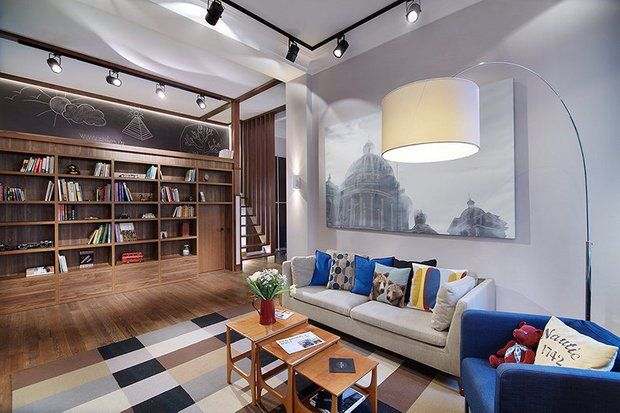
Glossy ceilings
The glossy coating is based on fused vinyl film. The surface is perfectly smooth, resistant to temperature and humidity changes, and will last a long time. Most often, glossy ceilings are made from PVC film. But there is also a satin version. This is a micro-rough fabric that looks similar to gloss but has the technical properties of a matte coating. Many homeowners choose a glossy coating for several reasons:
- Glossy coatings offer a wider range of colors to choose from. Patterns and designs can be printed on the surface.
- Quick installation that is hassle-free.
- Withstands up to 100 ml of water. Good protection against flooding;
- The reflective effect is undeniable. The room becomes brighter;
- Minimal cleaning time. Once every six months, it is enough to wipe it with a dry cloth.

Types of ceilings
- Single-level
A single-level ceiling is a covering applied in a single layer. This option is the easiest to install. It does not require any preliminary preparation of the space. Single-level ceilings have many advantages. They fit perfectly into the classic style of the hall, emphasizing conciseness and simplicity. Restraint, traditional forms, light shades – this is the ideal solution for the style. To prevent the ceiling from looking boring and the interior from looking monotonous, you can apply a pattern or design. Single-level ceiling panels allow air to pass through.
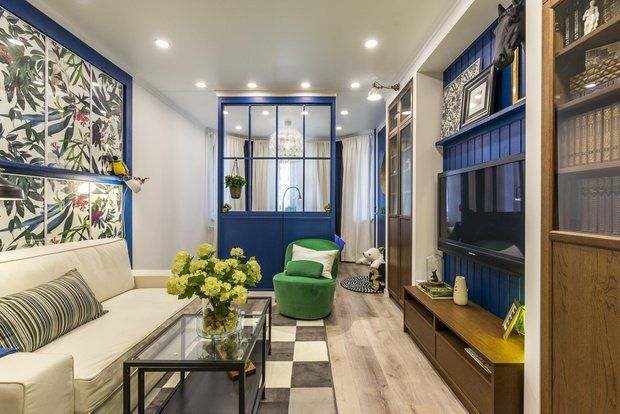
- Two-level
In this case, the use of drywall allows you to create a kind of additional structure that creates a pattern on the ceiling. The base of the structure is made of PVC film or fabric. A significant advantage of this type of covering is that it allows you to bring virtually any idea to life.

Materials for stretch ceilings
The material is divided into the following types according to its composition:
- Textiles made from knitted fabric are impregnated with polyurethane. Ready-made rolls, 5 m wide, are used by cutting the fabric to the parameters of the room. The seamless ceiling covering pleases with its perfectly flat surface. The fabric's resistance to cool and moderate temperatures makes it suitable for poorly heated rooms.
- Polyvinyl chloride film, which is made to the individual dimensions of the room. The film comes in a variety of colors and textures. Glossy, matte, and satin films are the most popular on the market. The material is very fragile and cannot withstand extreme temperature changes.
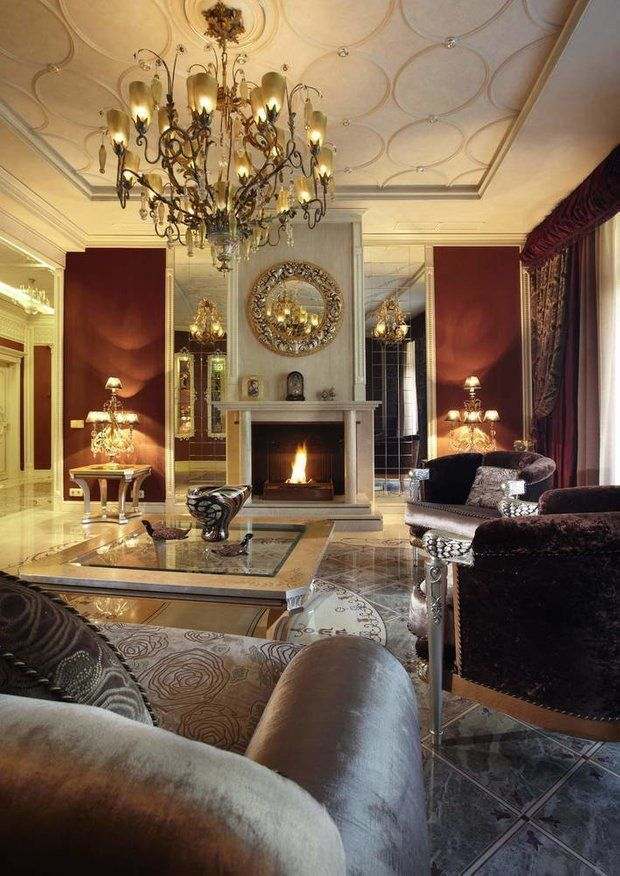
Surface texture
There are the following types of textures:
- Matte. No glare, smooth surface that does not attract attention.
- Satin. Similar to the previous one, but with a finer texture;
- Glossy. It reflects the entire interior and visually expands the room.
- Suede. No mirror effect, most often produced in a dark palette.
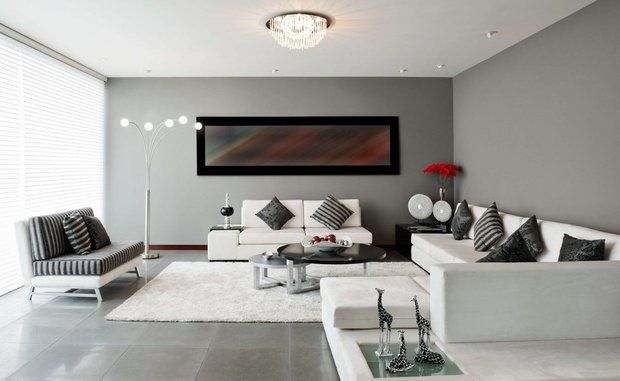
Stretch ceilings are an excellent choice for a hall because they quickly transform the space, look neat, and are available in different colors and textures. They are suitable for both classic and modern interiors, especially if you look at real photos — this makes it easier to imagine how the ceiling will fit into your room. They do not crack, sag, or protect against flooding from above, which is especially important in apartments. Installation takes a day, and it looks as if it took a long time and was expensive.
Color palette
Choosing a color is an important decision for homeowners. Decorators recommend following simple rules that will make the room cozy and respectable. It is important to remember that when choosing a matte texture, it is worth paying attention to light shades. They will visually expand the space. Dark ceiling colors are best combined with light walls. The room will look more spacious if you install a two-level ceiling in a light shade. Dark colors will make a small room look smaller. A mirrored canvas will fit perfectly into a large space, while a glossy one will suit a medium or small space.

Mounting options
There are several basic methods of fastening:
- Harp. The surface is joined using a harp.
- Staple. Using an aluminum base and a staple that is inserted into it;
- Wedge. The canvas is clamped using wedges.

Design
Photo printing on ceiling structures is a popular trend. Large-format printing allows you to realize many ideas: landscapes, paintings by famous artists, skies, flowers, fairy tale characters—all of this should blend harmoniously with the rest of the interior details.

Lighting
Lighting plays an important role. You should think in advance about the type and style of lamps and chandeliers to choose. Most often, a beautiful chandelier is hung in the center, and lighting is built into the perimeter of the ceiling.

So, stretch ceilings in the hall are a practical and stylish solution that helps to quickly transform the space. They allow you to implement a wide variety of design ideas, from classic monochrome options to complex combinations with photo printing and lighting.
The main thing is to approach the choice thoughtfully: decide on the material, texture, and color that will harmoniously fit into your interior. Do not forget about high-quality installation, because both the durability and the impeccable appearance of the ceiling depend on it.
Ultimately, a properly selected stretch ceiling can not only hide the flaws of the base ceiling, but also become a key design element that creates the desired atmosphere of comfort, solemnity, or modern conciseness in your hall.


