
Have you seen water droplets or moisture collecting on your plastic windows? Condensation is the cause of this phenomenon, which is sometimes referred to as sweating or crying windows. Water vapor condenses into liquid water when warm, humid interior air meets the cooler window glass surface. Many homes have this problem, particularly in the winter months.
If condensation on windows is not removed, it can cause damage to the surrounding walls and window frames in addition to being unsightly and fostering the growth of mold. Sustaining a healthy and cozy interior atmosphere requires an understanding of the causes and effective management of condensation.
There are several reasons why windows condense. The factors that contribute are temperature differentials between indoor and outdoor spaces, insufficient ventilation, and high indoor humidity levels. Due to their insulating qualities, plastic (vinyl) windows can still experience condensation even though they are more energy-efficient than older window types.
It is possible to address condensation on plastic windows in a number of useful ways. One way to lower indoor humidity is to improve ventilation. This can be done by installing trickle vents, opening windows on a regular basis, or using exhaust fans. Dehumidifiers can also be useful in places where there is a lot of moisture.
Increasing your windows’ thermal efficiency is an additional strategy. Installing double- or triple-pane insulated glass units (IGUs) can help achieve this because they lessen condensation by lowering the temperature difference between the window’s interior and exterior surfaces. Maintaining uniform interior humidity levels is further assisted by making sure that windows and doors are sealed properly.
You can successfully manage and lessen sweating or crying windows in your home by being aware of the causes of window condensation and putting these useful solutions into practice. By taking care of this problem, you can preserve the overall quality of the indoor air and the lifespan of your windows in addition to increasing comfort.
| Issue | Solution |
| Plastic windows sweat and cry due to condensation. | To reduce condensation, ensure good ventilation by opening windows regularly. Use a dehumidifier if needed. Install insulated curtains or blinds to reduce heat loss. |
- Why is this happening?
- When radical methods are needed?
- How to get rid of it: problem solving methods
- Fogs up inside the glass unit
- On glass from inside the room
- In winter
- PVC windows on slopes
- Folk remedies for condensation
- Possible difficulties and errors
- The importance of getting rid of fogging
- Consequences of moisture formation
- Useful video
- Video on the topic
- The windows are sweating!!! What to do??? /Windows are crying!!!/ Condensation on Windows!!!
- Condensation on windows. The windows are sweating! Simple and cheap ways to fight.Dew point
- Why do windows sweat? How to dry your house
- THE WINDOWS SWEAT! 3 proven methods! DO NOT FOG, DO NOT FREEZE, DO NOT CRY! No Condensation, MOLD
- "Crying" windows – what to do?
- FOGING OF WINDOWS, condensation elimination using a UNIQUE METHOD – sad result
- Plastic windows sweat or “cry” and there is no heat – there are solutions to these problems
Why is this happening?

Condensation most frequently occurs during the winter, when there is a discernible temperature difference between indoor and outdoor spaces.
The room’s high humidity level is the second factor. Drops descend onto the window sill and profile after initially appearing as dew.
Condensation can be removed for a number of reasons without having the structure rebuilt:
- Increased humidity in the room. The main factors that can lead to an increase in humidity are renovation work in the room, the condition of ventilation ducts and sanitary communications, roof leaks (top floor), steam in the basement (ground floor). After repair work, no special actions are required. It is enough to ensure ventilation and cleanliness in the room. If the plumbing is faulty, repair it yourself or call a professional. If ventilation is not working correctly, check the air flow using a thin sheet of paper. It needs to be leaned against the grille – if it is attracted, then the ventilation is working. You can repair the grill yourself; the channels should be cleaned by specialized services.
- Convection failure. This happens when installing window sills that are too wide, covering the window with thick curtains, or an excess of moisture-loving plants near the double-glazed window. In these cases, proper air circulation from the heating device to the window is disrupted. Similar reasons can also be removed without reinstalling the window. It is necessary to ensure proper air circulation from the window sill to the window. To do this, you can cut in ventilation grilles or replace the window sill with a smaller one. You should hang curtains made of loose fabric, move them away from the glass. Reduce the number of flowers by placing them at some distance from the frame.
- Using low-quality seals or fittings. Replacing parts will help here.
Such issues can be resolved without modifying the window structure.
More information about why plastic windows sweat can be found on our website in another publication.
When radical methods are needed?
There are other causes that call for drastic measures to be addressed. The primary factor is described in GOST 24866–99, the legislative document.
It is regarded as a design flaw if condensation has developed on the inside of the window. In this situation, making adjustments won’t help; reinstallation is required.
Should the window have incorrect parts or manufacturing flaws, the entire mechanism needs to be replaced. For instance, the design of a double-glazed window that is inappropriate for a cold climate. It will freeze quickly if it has one chamber and two glasses. This flaw can only be fixed by replacing the double-glazed window entirely.

Cracks or disassembly of a glass unit can cause depressurization. particularly if you disassemble it yourself. Insufficient expertise and understanding could lead to harm to the product.
Errors in installation can also cause condensation. Both the glass unit and the space between the frame and the wall depressurize as a result. You will have to take out the slopes and ebbs and reseal every joint in order to make things right.
How to get rid of it: problem solving methods
If the process is exclusively brought on by high humidity, you must make sure the room has adequate ventilation, ventilate it frequently, and make sure that all sources of excess moisture are eliminated. These activities typically cause condensation to evaporate.
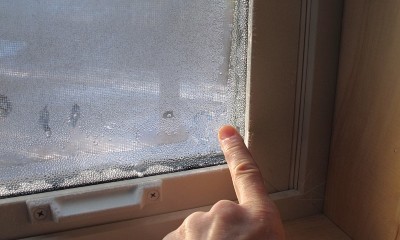
Finding out which side of the windows started to leak is also crucial. Simply move your hand over the glass. If it is damp, moisture has seeped in from the room’s side. If not, then outside or within the glass unit. Then, there are some subtleties that you need to consider.
Fogs up inside the glass unit
The glass unit experiences this phenomenon when it loses pressure. The explanation could be:
- Violation of technology during product production. Defects will appear only after installation and start of operation.
- Purchasing a design from a supplier producing defects. To prevent this from happening, it is recommended that you first read reviews from real customers.
- The glass unit is damaged during transportation, installation or operation. If they lead to the appearance of cracks or removal of the sealing layer, then gas or compressed air will definitely escape. The glass unit will no longer perform its functions efficiently.
- Independent disassembly and assembly of double-glazed windows with violations. In this case, gas escape and depressurization also occurs.
Replacing the glass unit is the only way to address any of these issues. If completed by a professional, the replacement procedure doesn’t require a lot of time or money.
On glass from inside the room
Because of the room’s high relative humidity (above 60%) and the building’s inadequate thermal insulation, condensation forms on the inside of the window. An apartment or home must have its air humidity reduced; to do this, moisture sources must be eliminated. For instance, stop using the space for drying clothes, cut back on the amount of plants that like moisture, repair any broken plumbing, and regularly ventilate the space to enhance ventilation.
The alternative is to install an energy-efficient double-glazed window in place of the current one.
The product must be chosen with consideration for the region of residence’s climate and orientation to the cardinal points.
In winter
The temperature differential between indoor and outdoor spaces becomes more pronounced during the winter season.
The window cools down when it is exposed to the cold air. The glass unit or frame comes into contact with the steam in the room. It also changes into a liquid state at that moment. This is the formation of "winter" condensation.
Maintaining indoor microclimate standards is crucial to keeping windows from leaking in the winter. The ideal ranges for air temperature and humidity are 18°C to 22°C and 30% to 45%, respectively, according to the Sanitary and Epidemiological Service. During the warm season, window installation is also advised.
PVC windows on slopes

Most frequently, moisture covers slopes when:
- poor ventilation and high humidity in the room;
- severe frosts and freezing of the wall;
- improper installation of the structure;
- installing a window in the cold part of the opening.
A valve can be used to install ventilation. Numerous valve options that offer continuous ventilation without heat loss are available for purchase.
However, you must first determine whether this approach is effective. For micro ventilation, opening the window is sufficient. You can open it for regular ventilation for at least 30 minutes if this mode isn’t available. The cause has been identified if the condensation disappears. If not, you should search for another one, such as one with a wide window sill, inadequate insulation, or none at all (especially outside).
If slopes are the issue, you either need to choose a different material with better heat resistance or insulate. You’ll need to build new slopes and demolish the old ones in order to accomplish this. This is not necessary when insulating; adequate slope insulation suffices.
If condensation is causing your plastic windows to sweat or even cry, this is a common problem with a few easy fixes. When warm, humid air from within your house comes into contact with the window’s chilly exterior, condensation forms and water droplets appear. You can address this by using extractor fans or frequently opening windows to increase ventilation. Using a dehumidifier is another efficient way to lower the humidity levels inside. Further measures to help maintain a more stable temperature and lessen condensation include the installation of thermal curtains or the addition of insulation around the windows. Comprehending these basic procedures can significantly enhance the comfort and upkeep of the plastic windows in your house.
Folk remedies for condensation
Conventional approaches ought to be categorized as preventative measures. They sometimes make it difficult for you to solve the issue entirely. used more frequently as a stopgap fix for issues before launching major initiatives. For instance, in the lead-up to the anticipated delivery of a new window or prior to the acquisition of the required components.
You can use folk remedies for weeks or even months at a time. List of steps and elements:

- Medical alcohol. A mixture of alcohol and glycerin should be prepared in a ratio of 10:1. To prevent fogging, it is enough to wipe the glass with this composition 2 times a month. Another option for using alcohol. It is suitable for cold rooms. You need to add a little alcohol to a container of water and apply it to the glass.
- Toilet soap. Use a dry bar of soap to draw a fine mesh pattern on the glass. Rub with a clean cloth until shiny. The fabric should be cotton or microfiber.
- Salt. Fill a cloth bag with dry salt. Place between window frames. Change as moisture is absorbed.
- Decorative candle. Place several candles on the windowsill and light. The method is applicable when glass fogs up from inside the room. Candles should burn for several hours.
- Ready-made product “Secunda” + several newspapers. Apply the spray to the foggy area of the window and spread over the entire glass. Use newspaper to remove the product, rubbing the glass until it shines.
There are multiple ways you can switch between them.
Possible difficulties and errors
Getting proper ventilation back when dealing with condensation on plastic windows can be challenging. You won’t be able to handle the issue on your own if blocked ventilation ducts are the cause. Making contact with the appropriate organizations is essential, but it can occasionally take a long time.
The primary error will be for the window owners to only consider improper installation after condensation starts to show. During the installation stage, it is essential to keep an eye on each stage’s development.
Closing off all the gaps to ensure "it doesn’t blow" is another mistake. Conversely, frequent ventilation of the room is required to combat condensation.
- blowing from the slopes;
- from under the window sill;
- from the hinges;
- from under the glazing bead;
- or seal.
The importance of getting rid of fogging
It is far more difficult to solve an advanced problem if you do not address it promptly. As time goes on, identifying the primary cause of condensation becomes more challenging, so you must rule out all other possibilities.
Consequences of moisture formation

On the slopes of plastic windows, mold and fungus start to grow after extended periods of moisture accumulation.
This indicates an unfavorable microclimate in the room and has a negative impact on the residents’ health. Individuals with allergies should avoid contact with mold.
Additionally, condensation ruins the window’s appearance by taking away its ornamental qualities. It’s hard to see what’s going on on the street through the drops. Dust that has settled causes curtains to get wet and unclean.
The lifespan of the window is shortened as a result of moisture collecting in the microcracks on the frames and window sills.
Useful video
Here are some suggestions for handling condensation that forms on plastic windows:
Although condensation on plastic windows can be annoying, managing this problem effectively can be achieved by being aware of its causes and taking preventative measures. Condensation develops when the cold surface of the window glass comes into contact with warm interior air. During the colder months, when there are noticeable temperature differences between indoor and outdoor spaces, this phenomenon is more prevalent.
Keeping adequate ventilation is essential to reducing condensation. By letting moist air out of your house, you can lessen the chance that condensation will build up on your windows. Even small changes, such as occasionally opening windows or using extractor fans in bathrooms and kitchens, can have a big impact.
Keeping the humidity levels inside under control is another useful tactic. Lowering humidity with a dehumidifier can be beneficial, especially in places where moisture buildup is common. Using a hygrometer to measure humidity and maintaining it between 30% and 50% can greatly reduce the likelihood of condensation on plastic windows.
Enhancing window insulation can also reduce temperature variations that cause condensation. Making sure windows are tightly sealed and thinking about adding thermal blinds or curtains can help maintain more constant interior temperatures, which lowers the chance of condensation developing.
Finally, it’s critical to take care of underlying problems like leaks or insufficient insulation around windows. Decrease condensation by keeping warm, humid interior air from making direct contact with the colder glass surface by checking for and caulking any gaps or fractures around window frames.


