
When choosing an apartment, many people face a difficult question: which building is better to live in? Everyone has heard the historical names “Stalinka,” “Khrushchevka,” and “Brezhnevka,” but what do they mean in practice? And are modern new buildings really as good as they are portrayed in advertisements?
In this article, we will compare all these types of housing without embellishment or rose-colored glasses. We will weigh the pros and cons of each option, from wall thickness and ceiling height to layout and utilities. We will not be talking about dry theory, but about real life, comfort, and possible surprises that await residents.
Our goal is to give you an honest picture so that you can make an informed choice. After all, a house is not just square meters, it is a place where you will spend years of your life.
Stalin-era buildings: when square meters decide everything
Apartments in Stalin-era buildings still hold the status of elite housing on the secondary market. High ceilings of three meters or more, thick brick walls, large rooms of 20-25 square meters, and separate bathrooms. In some buildings, the ceilings reach four and a half meters, and the thickness of the exterior walls is up to one meter.
Soundproofing in Stalin-era buildings really works. You can barely hear your neighbors, and this is not an advertising gimmick, but physics: half a meter of brickwork muffles sounds more effectively than any modern panels. Thermal insulation is also up to par, keeping apartments warm in freezing weather without additional heating.
The standard service life of pre-war buildings is 125 years, and post-war buildings even longer, at 150 years. This means that even the oldest Stalinist buildings have not yet reached the end of their useful life.
Arranging furniture in a studio apartment is a real creative challenge. The main thing to remember is to strike a balance between comfort, free space, and functionality. Don't try to cram everything in at once; sometimes less is more.
The main barrier for the buyer is the price. Stalin-era buildings are 20-30% more expensive than other apartments in the same area. At the same time, banks are reluctant to give mortgages on housing older than 50 years with wooden floors. If you don't have enough money to pay in full, this option may not be available to you.
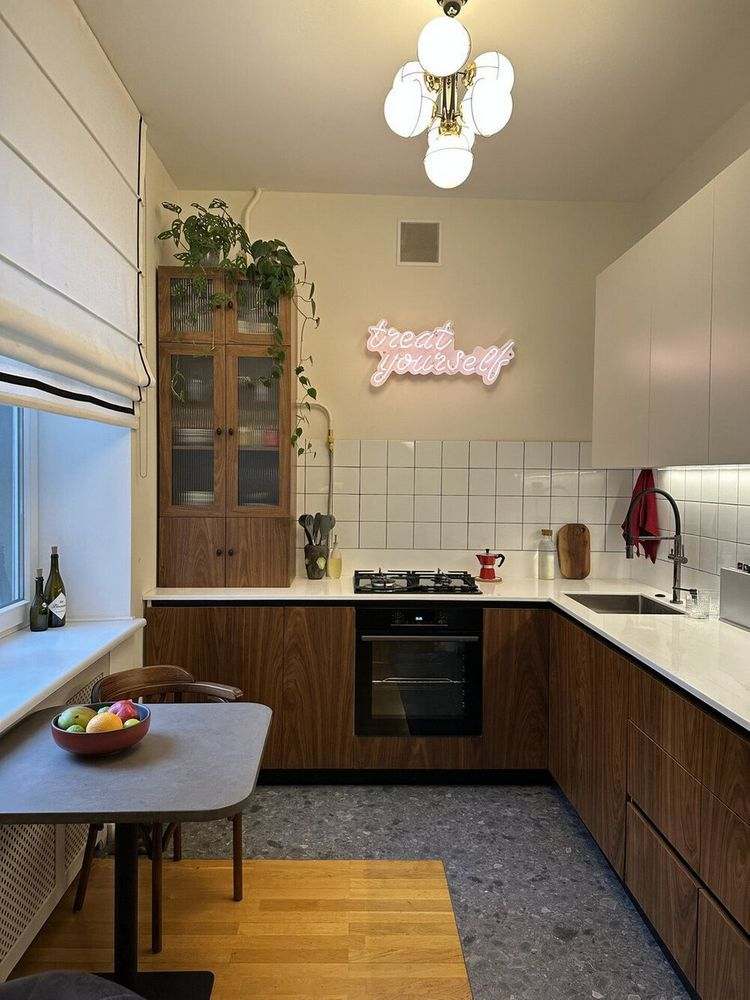
Choosing between a Stalin-era building, a Khrushchev-era building, a Brezhnev-era building, and a new building is like weighing the pros and cons of different eras. Old buildings are often sturdier, with good sound insulation and spacious rooms, but they are worn out, with outdated utilities and repair issues. New buildings are clean, with modern layouts and amenities, but they are built quickly, sometimes in remote locations, and the quality is often questionable. No era is perfect — it all depends on what is more important to you: history and character or convenience and freshness.
Khrushchev-era buildings: cheap, but not free
Five-story buildings from the Khrushchev era were built as a temporary solution to the housing crisis. Low ceilings of 2.5 meters, and sometimes 2.2 meters, small kitchens of 5-6 square meters, combined bathrooms, and walk-through rooms. All this is familiar to anyone who has ever been in such apartments.
- Price remains the main and often the only advantage. The average cost per square meter in Khrushchev-era buildings is almost half that of the secondary market as a whole. For young families or those buying their first home on a minimal budget, this is a real chance to get their own apartment.
- Utility bills are also pleasing: small square footage and low ceilings mean fewer cubic meters to heat. Compared to Stalin-era buildings and new constructions, the savings are significant.
- The infrastructure in Khrushchev-era neighborhoods is usually well developed. Schools, clinics, shops, and public transportation stops are within walking distance because the neighborhoods were designed as comprehensive complexes.
- Now for the downsides. The standard service life of prefabricated Khrushchev-era buildings is 50 years, and for demolished series, it is only 25 years. Most of these buildings were constructed between 1959 and 1967, which means that they have formally reached the end of their useful life. With normal use and major repairs, they will last another 15-20 years, but buying such housing is a gamble that the building will not be declared unsafe before you plan to sell it.
- There is virtually no sound insulation in panel Khrushchev-era buildings. You can hear everything: neighbors' conversations, the TV through the wall, footsteps above. In winter, corner apartments are cold, and in summer they are hot because the thin panels do not retain heat well.
The only perk for owners of Khrushchev-era apartments in big cities is the renovation program. If your building is slated for demolition, you can get an apartment in a new building. But the timing is unpredictable, and the wait can drag on for years.
Brezhnevka: a compromise between eras
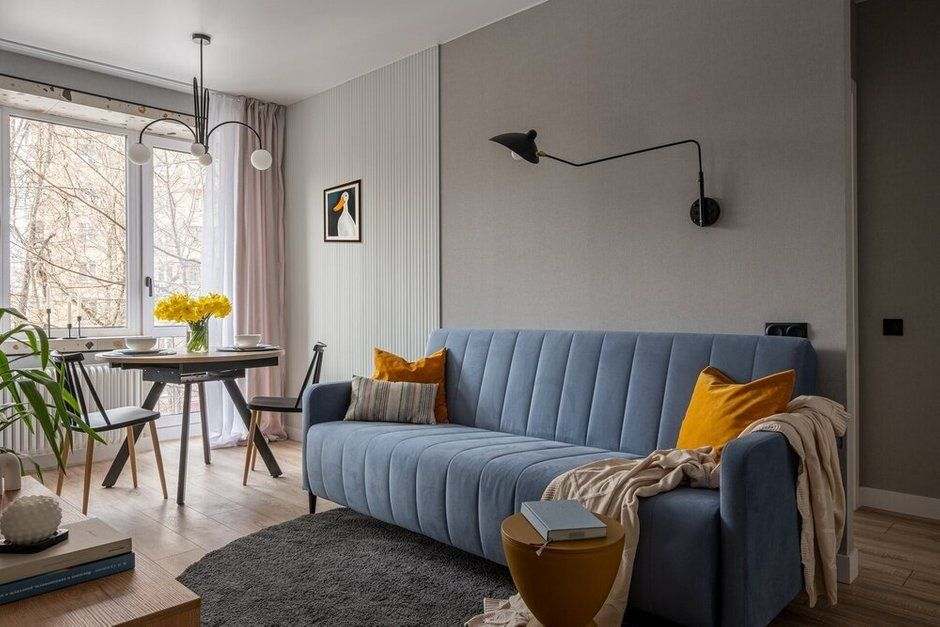
Houses from the Brezhnev era became an improved version of Khrushchev-era apartments. Isolated rooms and separate bathrooms appeared, and kitchens grew to 6-7 square meters. Elevators and garbage chutes were added to multi-story buildings. Ceilings became slightly higher, and layouts became more convenient.
- Brezhnevka apartments are only 5% more expensive than Khrushchevka apartments in the same area. At the same time, the comfort of living is significantly higher. The standard service life of 9-16-story panel buildings is 80-100 years, which means that most of these buildings will remain standing for several more decades.
- The infrastructure in Brezhnev microdistricts is also well developed. They were built according to the same principle as Khrushchev neighborhoods: with kindergartens, schools, and shops right from the start.
- The main disadvantage of Brezhnev-era buildings is noise insulation. The panels used were thicker than those in Khrushchev-era buildings, but still insufficient for complete silence. You can hear your neighbors, although less than in the previous generation of five-story buildings.
- Compared to modern comfort-class new buildings, Brezhnev-era buildings do not have many advantages. The layouts are outdated, the utilities require attention, and the thermal insulation leaves much to be desired. But if your budget is limited and you want something more decent than a Khrushchev-era building, a Brezhnev-era building is a reasonable choice.

New buildings: not all that glitters is gold
Modern housing is marketed as the epitome of comfort. New utilities, modern layouts, the opportunity to buy at the foundation stage with a discount, and preferential mortgage programs. According to standards, the service life of monolithic and brick houses is 125-150 years, and panel houses 100-120 years.
But the reality is more complicated than advertising brochures.
- Sound insulation in new buildings is often worse than in Soviet brick houses. Experts agree: the quietest apartments are in brick houses, followed by monolithic frame buildings, with the worst sound insulation in new panel buildings. Internal partitions in monolithic buildings are made of aerated concrete or foam blocks, which allow sound to pass through easily. Walls between apartments are sometimes constructed from thin materials with low sound insulation coefficients.
- The settling of a new house lasts from one to three years, depending on the construction technology. Monolithic houses settle faster, in a year or two. Panel houses settle more slowly, in two to three years. Brick houses, being the heaviest, settle the most and take the longest to stabilize. It is risky to do expensive repairs in the first year after completion: cracks may appear on the walls and ceiling.
- The first years in a new building turn into a test with jackhammers. Neighbors are renovating on all sides, which is normal, as everyone is moving in at about the same time. But you have to live with this accompaniment for a long time.
- Infrastructure in new residential complexes often appears with a delay. They promise a school in two years, a clinic in three, but in the meantime, you have to drive your children across the entire district and stand in lines at overcrowded institutions.
- The quality of materials used in economy-class homes raises questions. Developers save on everything, and only time will tell whether such homes will last the claimed 100 years. Modern economy-class panel homes are built from the most inexpensive materials, and this is no secret.
- The price of new buildings is higher than that of comparable options on the secondary market. Even with a preferential mortgage, the overpayment for “new” can be significant.
So, what to choose? There is no clear winner because it all depends on your personal goals and budget. This is not a competition, but rather a selection of tools for a specific task.
If you are looking for character, space, and durability in the very center of the city, your choice is a “Stalinka.” For this, you will have to pay a high price and be prepared for serious, often expensive repairs. For many, this is a conscious choice in favor of atmosphere and prestige.
Khrushchev-era and Brezhnev-era buildings are a classic, time-tested option for the economy and middle classes. They offer straightforward but modest conditions for relatively affordable prices. This is a rational choice for those who want to quickly settle in the city without unnecessary risks but are willing to put up with cramped conditions and outdated layouts.
Modern new buildings are a bet on comfort here and now and for the future. New engineering systems, underground parking lots, car-free courtyards, and modern layouts. But this bet is associated with long waits, risks for shareholders, and constant expenses for maintaining the entire infrastructure of the building.
Arranging furniture in a studio apartment is not that difficult if you approach it responsibly. Only after all the furniture has been arranged correctly will the interior of a small apartment become cozy, stylish, and practical.


