
A building’s comfort and energy efficiency can be improved by insulating its floors. Using expanded clay for floor insulation is a popular and efficient technique. This technology makes use of expanded clay aggregate, which is lightweight and well-known for its superior acoustic and thermal insulation qualities.
Natural clay is heated to high temperatures to create expanded clay, which is made up of tiny, light pellets. Because of their porosity, these pellets offer acoustic insulation by reducing sound waves and thermal insulation by retaining air inside their structure.
Expanded clay is usually applied as a layer between the finishing floor surface and the structural floor when used as floor insulation. By preventing heat loss through the floor, this layer helps to keep interior spaces warmer in the winter and cooler in the summer. Additionally, it lessens sound transfer between floors, making living quarters cozier and quieter overall.
Spreading the expanded clay evenly over the structural floor is the installation procedure. The thickness of the insulation layer can change based on the unique needs and circumstances of the structure. The expanded clay is then carefully compacted into place to create a level, stable layer that will support the finished flooring material.
Expanded clay floor insulation is generally favored for its long-lasting thermal and acoustic insulation qualities, lightweight design, and simplicity of installation. By using natural materials, it provides an environmentally friendly solution and helps lower building energy consumption. This approach is especially helpful for renovations and new construction projects that aim to increase indoor comfort and energy efficiency.
- How does insulation work and why is it needed?
- Pros and cons of expanded clay as insulation
- Faction selection
- Application area
- Insulation technology
- Floor on the ground
- Insulation of basement or underground floors
- Insulation of the attic floor
- Features of laying expanded clay
- Video on the topic
- Expanded clay screed
- floor screed using beacons on expanded clay bedding
- How to make a light screed based on expanded clay? Beacon Mounts!
- Ground screed. Why expanded clay?
- Expanded clay. Floor insulation with expanded clay. Expanded clay screed.
- Expanded clay floor screed. ALL STAGES. Repair in Khrushchev
How does insulation work and why is it needed?
The best material for thermal insulation is air. Only inert gases, which essentially don’t react with the surroundings, can rival it. These gases are used, for instance, to fill the chambers of double-glazed windows, but total tightness cannot be guaranteed in simple building structures.
Every type of thermal insulation has a porous structure. Heat loss is stopped by air retention in the pores. The material will function more effectively the lower its density. Insulation can be applied in bulk, rolled, slab, or sprayed. Bulk is the least expensive and most readily laid by hand, but it also has the least effective thermal insulation.
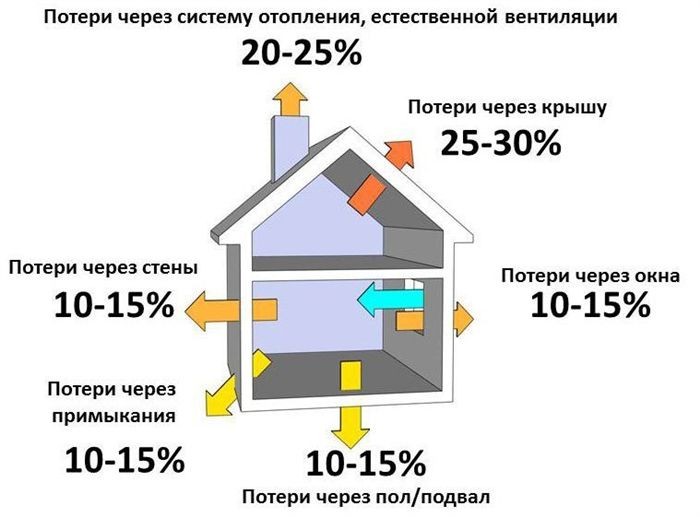
For the following reasons, insulation is required in cold attics, on the ground, and on floors above basements:
- ensuring comfortable living in the house;
- reducing heating costs;
- protecting structures from condensation, which leads to the formation of fungus and mold;
- improving sound insulation.
If insulation is not installed, major issues with the house’s operation will occur.
We examine a useful and affordable way to improve home comfort and energy efficiency by investigating expanded clay floor insulation. This article describes expanded clay’s installation procedure, advantages (such as better soundproofing and thermal regulation), and how it functions as insulation step-by-step. Knowing this technology can help you make wise decisions to create a more sustainable and comfortable living environment, whether you’re building a new home or remodeling an older one.
Pros and cons of expanded clay as insulation
An expert verifies the strength and thermal calculations of building structures when constructing apartment buildings. In this instance, expanded clay insulation for the floor is not utilized because it is not a very effective material. Installing bulk insulation in a private home is the most profitable option.
Among its benefits are:
- easy DIY installation;
- low cost;
- environmental Safety;
- creating a level base for the floor pie;
- resistance to temperature changes;
- Possibility of use for insulating floors that will be subject to heavy loads in the future, for example floors of industrial facilities.
The material’s reduced capacity for thermal insulation in comparison to expanded polystyrene and mineral wool is one of its drawbacks.
It’s important to decide on the layer thickness before using expanded clay to insulate the floor. Since the bulk material has twice the thermal conductivity of mineral wool, its thickness ought to be doubled. The best choice will typically be a size of 200 mm.
Faction selection
Special clay is used to make expanded clay, and when heated, it swells. There are three factions that represent it:
- Expanded clay sand. It is added to dry mixtures to improve their thermal insulation characteristics;
- Expanded clay crushed stone. Represents larger particles with sharp edges;
- Expanded clay gravel. It is the best material for insulation in a private home. It has the same size as crushed stone, but has a rounded shape. The pores are protected from the outside by a layer of sintered clay.
To guarantee that expanded clay reaches all of the hard-to-reach areas, it is best to buy it with granules of varying sizes.
Making sure there are as few damaged granules as possible in the entire volume is crucial because that is when the insulation will work best.
Application area
When insulating floors in the home, there are numerous ways to use the material:
- insulation of floors on the ground under the screed;
- filling the space under the boardwalk when installing floors along joists;
- attic floor insulation.
It is crucial to keep in mind that the floor pie varies significantly in each of the three scenarios. Expanded clay insulation for attics can be installed under a screed or over joists, depending on the floor plan.
Insulation technology
You must adhere to the work procedure in order to competently carry out actions to enhance the floor’s heat-protective qualities with your hands. The layers and where they are located differ depending on the kind of insulated floor in the house.
Floor on the ground
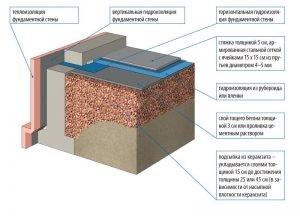
The tasks are completed in the following sequence:
- compaction and leveling of the base;
- adding sand and crushed stone for additional compaction and leveling;
- laying waterproofing material (in case of high groundwater levels);
- laying and leveling the expanded clay layer;
- installation of a footing made of lean concrete;
- laying vapor-waterproofing material, which can be used as ordinary polyethylene film;
Your hands will be used to perform insulation on the ground, and then you will pour a reinforced cement-sand screed and lay a clean floor on top of it.
Insulation of basement or underground floors
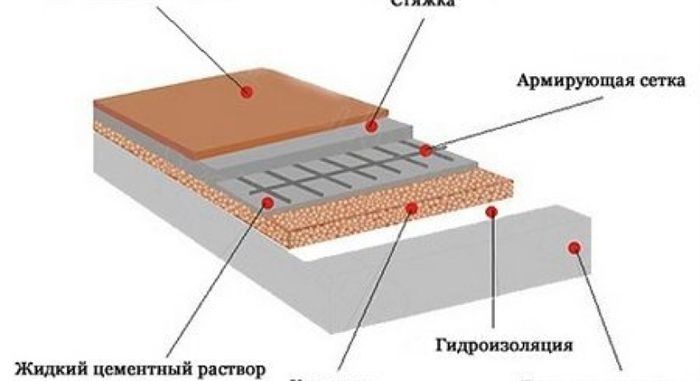

Expanded clay can be used to insulate a wooden floor with or without joists. Each layer must be applied in the specified order:
- ceiling installation;
- laying a layer of waterproofing;
- if necessary, install and secure the logs;
- bulk material is laid;
- leveling expanded clay;
- vapor barrier layer – polyethylene film;
- installation of a clean floor or screed.
It is crucial to install the vapor barrier and waterproofing in the right order when working with insulation.
Insulation of the attic floor
Each layer is set up slightly differently for the attic:
- floor design;
- vapor barrier – polyethylene film;
- when laying insulation along joists – installation of wooden blocks;
- filling of expanded clay;
- waterproofing;
- clean floor or cement screed.
Features of laying expanded clay
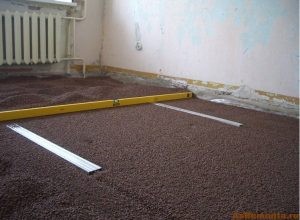
It is important to consider the properties of the material being used when performing manual heat protection measures for the floor. When using expanded clay to insulate a floor, you should be aware of:
- To obtain a flat surface, beacons are used. The smaller the installation step of the beacons, the greater the chances of perfectly laying expanded clay with your own hands.
- When laying along joists, all wooden elements must be treated with antiseptic compounds.
- The minimum layer of material is 10 cm.
- It is best to install wooden flooring when using expanded clay.
- Operation of the floor is possible 7 days after completion of construction or repair work.
Screed installation technology on enlarged clay:
Expanded clay insulation allows you to do do-it-yourself projects at a low cost without sacrificing quality.
Expanded clay flooring insulation is a practical approach to raise a home’s comfort and energy economy. Lightweight expanded clay pellets can be used to fill the spaces between floors, creating a thermal barrier that helps keep interiors cooler in the summer and warmer during the colder months.
Excellent thermal insulation qualities are one of the main benefits of using expanded clay for floor insulation. Expanded clay’s porous structure traps air, which functions as a natural insulator to lessen heat loss through the floor. Over time, this can result in significant energy savings because less heating and cooling will be required.
The material’s light weight reduces structural load while maintaining strong floor support, which is an additional advantage. Expanded clay is a lightweight, easily installable material that can be used for both new construction and renovations.
Expanded clay is also well-known for being resilient to mold and moisture, which guarantees longevity and preserves indoor air quality. This makes it a dependable option for floor insulation, particularly in humid or damp areas.
To sum up, the application of expanded clay as floor insulation presents a viable approach to augment thermal comfort, optimize energy efficiency, and extend the longevity of building structures. Because of its lightweight, insulating, and durable qualities, it can be used in both residential and commercial settings, making it the best material for sustainable building techniques.


