
Homeowners frequently have to deal with window cracks, but it’s critical to take quick action to stop additional damage. A number of factors, including aging, shifting weather patterns, and structural problems, can cause cracks. Not only can they detract from the overall appearance of your house, but if left untreated, they may also result in energy inefficiency and possible water damage.
The first thing to do when you see window cracks is to determine how severe the damage is and where it is. Small hairline cracks are typically superficial and easily fixed with do-it-yourself techniques. Larger cracks or those close to the glass’s edges, however, might need professional attention to guarantee that they are appropriately repaired and do not jeopardize the window’s integrity.
There are DIY repair kits available that can help fill in minor cracks and stop them from getting worse. Usually, these kits come with epoxy or resin that can be poured into the crack and allowed to dry, creating a seal that strengthens the glass. To obtain the best results, it’s critical to carefully follow the manufacturer’s instructions.
It is advisable to seek advice from a professional window repair service if the cracks are large or if you are unclear of how to proceed. They are equipped with the knowledge and resources necessary to precisely evaluate the damage and suggest the best course of action. Additionally, they can guarantee that any repairs meet safety regulations, which is crucial for windows since they contribute to the insulation and security of your house.
In addition to maintaining the aesthetics and functionality of your house, you can also guarantee energy efficiency and safety by fixing window cracks as soon as possible. Frequent window maintenance and inspection can help spot possible problems early on and enable prompt repairs that can prevent future, more involved and expensive repairs.
It’s critical to fix window cracks as soon as you discover them in order to stop additional damage and preserve your home’s energy efficiency. This article examines doable actions that homeowners can take to recognize various kinds of window cracks, comprehend their causes—such as temperature variations or structural stress—and offers precise instructions on how to fix or replace broken windows. You can increase the comfort and value of your house by making sure your windows stay safe, weatherproof, and energy-efficient by paying attention to these tips.
- Blows between the window and the wall. Blows from below the window sill, between the frame and the slopes
- Gap between window and slope. Why is a mounting seam needed??
- Is it possible to do without it??
- How to seal gaps between a PVC frame and a concrete wall. How to seal a gap in a plastic window
- How to seal cracks in plastic windows
- Video on the topic
- It"s blowing from the window, what should I do??
- Blows from a Plastic Window – does not press against the Bottom of the Sash. Adjusting Plastic Windows with your own hands.
- After this, THERE WILL BE NO BLAST FROM THE WINDOW ANYMORE
- PUDDLE on the windowsill. What to do. Window tragedies-40.
Blows between the window and the wall. Blows from below the window sill, between the frame and the slopes

If the builders follow the installation technology and the subsequent finishing is incorrect, you will notice a draft in this area if the window was installed relatively recently. It is necessary to carefully fill the gaps under the window sill profile and the space between the window frame and the opening with foam.

The foam needs to be covered from the inside as well as the outside after it has polymerized. If not, the foam might collapse too soon due to outside influences, which would result in blowing.

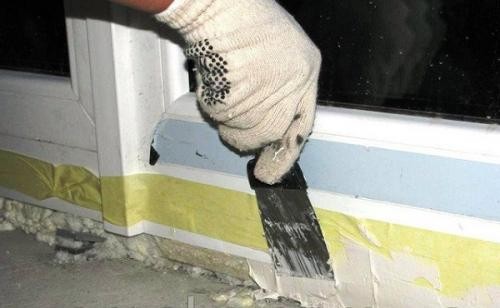
It makes sense to insulate the slope further in areas with exceptionally cold temperatures. This will lessen the room’s cooling effect, slow down the convective air movement near the window, and stop mold and condensation from growing.
Long-term building openings need to be maintained on a regular basis because finishing materials, particularly those on the exterior, can deteriorate over time. Ideally, during the warm season, this should be taken into consideration beforehand. If the issue needs to be resolved in the winter and there isn’t time or desire to plan extensive repairs, you can use sealant to temporarily cover any cracks that surface.
There are through holes in the space between the window frame and the opening, as indicated by blowing from the intersection of the window sill and the frame. You could confine yourself to cosmetics in this case, meaning you could apply sealant to the see-through area.

In order to resolve the issue, the window sill must be taken out, the old plaster and damaged foam must be removed, the foam must be replaced, and the joint must be sealed using any remaining finishing materials.
Gap between window and slope. Why is a mounting seam needed??
When the window unit is operating, the installation seam is required to accomplish the following objectives:
- Ensuring the required energy efficiency of the space being used.
- Sealing the joint between the frame profile and the opening material, which minimizes the risk of blowing through the enclosing structure and eliminates drafts.
- The seam material prevents the penetration of precipitation into the room, freezing of slopes and window sills.
- Compensation for errors during the construction of external walls and the construction of the opening – mounting foam laid in the seam allows deviations from the geometry of up to 3 mm along any side of the structural element.
- The seam also serves to install vapor and waterproofing membranes with a self-adhesive surface, which prevent the formation of condensation on the inner plane of the glass.
- Compensation for the movement of the lintel from the permissible deflection, the possibility of minor movements of the window unit due to wind pulsation. This requirement is especially relevant when installing translucent elements at a height above 30 m.
The window unit will not provide the necessary resistance to television transmission if there is not a gap of the minimum allowable width. It may also become deformed and collapse when the outer wall moves over time.
Is it possible to do without it??
Many owners of real estate are curious about the possibility of eliminating an installation gap. Installation of this structural element is prohibited for the following kinds of objects:
- Frame houses made of wooden blocks – when sealing, it is enough to use clamping strips to frame the slopes.
- Cold contour of terraces, verandas, porches and other attached premises to private houses.
- Glazing of loggias and balconies on the top floors, provided there is no top floor slab, which can cause deflection and deformation of the glazing.
- Stained glass structures that have their own compensation clearances between profile elements. In such situations, fastening to the elements of floors and walls is carried out using hinged joints.
Vital. Building structures are subject to stricter requirements to guarantee a perfectly flat plane and installation area of the translucent element in the absence of an installation gap.
How to seal gaps between a PVC frame and a concrete wall. How to seal a gap in a plastic window
The windows are among the most exposed areas in the house and are where heat loss happens most frequently. Although it is obviously impossible to provide perfect insulation against noise and heat in this place, everyone can try to minimize heat loss and noise. The problem is that the window cracks are what’s causing the noise and heat loss to increase.
You use a sealant to do this. However, gaps in PVC windows typically result from worn-out rubber seals; in this case, a new seal just needs to be installed.
All that’s left to do is clear the dust from the grooves, remove any worn material, and replace the seals with new ones. It needs to have silicone spray applied to it once a year to prolong its service life.
The identical sealant is used to hide the fissures in wooden windows. For such windows, it is preferable to replace any rotten glazing beads first. Using synthetic adhesive tape to seal the spaces created between the sashes and the frame—or the glass and the frame—is also a good idea.
Several issues arise from installation errors. You should first get in touch with knowledgeable experts to avoid them.
-
Why did a gap appear between the frame and the slope?? Most likely the foam layer was not adequately protected. What to do? To solve the problem.
This concerns the matter of how to conceal plastic window cracks from the exterior. Naturally, it is best to seek professional assistance if you lack the necessary skills to perform repairs.
What kind of sealant should be used to coat and seal plastic window cracks? Bitumen, polyurethane, or acrylic sealant can all be used. The most important thing is to avoid using silicone sealant because it can roll up and become useless due to temperature changes.
- Silicone sealant is the most popular.
Benefits: Color hardly changes as one ages. never gets smaller. incredibly flexible. reasonably priced. Cons: When installed, the majority of silicone sealants have an unpleasant vinegar-like odor. A barely noticeable layer of silicone is applied to the surface. It starts to peel off and hang in such rags over time.
The entire seam follows them when you attempt to remove them. The most repulsive thing about silicone is that, in addition to occasionally humming and whistling in time with the wind, the sealant film between the frames and the slope also does this. Customers complain about the "whistle of the window," and for seemingly trivial reasons, there are occasionally a lot of calls!
- Acrylic is rarely used now
Benefits: smellless. Additionally elastic. When necessary, you can remove it with ease. Cons: Draws dust almost instantly, gathers all the dust, and quickly turns gray.
- The most common synthetic is Quilosa.
Positives: No odor. After application, it can be easily removed with water, making it convenient for reapplication if needed. retains elasticity even after hardening like glue. Does not peel off and cleans well, even with a sponge. There is no blowthrough of the seams. Drawbacks: When it dries, it shrinks a little. You thus pass through substantial seams twice. becomes slightly yellow as it wears. Not available in every retailer.
How to seal cracks in plastic windows
We discovered which putty works best for both interior and exterior projects. We’ll go into more detail now on how plastic windows of today are sealed. There won’t be any unique challenges to completing this procedure.
If the plastic slopes are already in place, gather supplies such as sponge, construction tape, window putty syringe specifically made for the purpose, napkins, and any comfortable container you can use to hold water.
-
The procedure for sealing seams is given below:
It’s imperative that you fix window cracks as soon as you find them in order to stop additional damage and preserve the energy efficiency of your house. Using weather-stripping or specialized window sealants, small cracks can often be fixed to help seal the gaps and stop drafts.
It is advised to consult a professional for larger cracks or those that compromise the window’s structural integrity. They are able to determine the extent of the damage and make recommendations regarding the need for replacement or repair. Ignoring cracks can result in higher energy expenses and possible safety risks, particularly in the event of severe weather.
Window maintenance and inspection on a regular basis can help detect cracks before they get worse. This entails looking for wear indicators, such as loose frames or broken seals, and taking quick action when necessary. Maintaining your home’s windows not only improves their appearance but also increases their overall energy efficiency.
You can guarantee that your windows will continue to offer the best insulation and protection for many years to come by being proactive in repairing cracks in them. Maintaining your windows is an investment in the sustainability and comfort of your house, whether you choose to hire a pro or do it yourself.


