
A metal garage can be made more comfortable and energy-efficient, increasing its year-round usability, by adding insulation. Appropriate insulation can make a big difference whether you use your garage as an extension of your living area, a workshop, or just storage. This post will walk you through the crucial procedures and factors to take into account when insulating your metal garage, with an emphasis on do-it-yourself fixes that are workable.
Prior to beginning the insulation process, it is important to comprehend the benefits of insulation for metal garages. Temperature extremes can occur inside metal garages because they tend to transfer heat and cold more easily than other building materials. By keeping the area warmer in the winter and colder in the summer, insulation helps control these temperatures. In addition to improving comfort, this also helps shield equipment and stored goods from sharp temperature changes.
Regarding insulation options for your metal garage, there are various materials and methods that you can choose from. Various options have advantages and things to consider based on your intended use of the garage, climate, and budget. Choosing the appropriate material is essential to achieving effective insulation, whether using contemporary foam board insulation or more conventional fiberglass batts.
This guide will take you step-by-step through the entire process of insulating your metal garage, including preparation, material selection, installation methods, and more. You can guarantee a more comfortable and useful space while reducing insulation costs by using these do-it-yourself techniques. These useful suggestions will support you in getting the best insulation possible, whether you’re upgrading an old garage or installing a new one.
| Insulation Material | Consider using reflective foil insulation or foam board insulation for effective heat retention and temperature regulation in your metal garage. |
| Installation Steps | Start by cleaning and preparing the garage interior. Measure and cut insulation panels to fit wall and ceiling spaces. Secure them in place using adhesive or mechanical fasteners. Seal any gaps with tape to maximize insulation. |
- What you need to know about insulating a metal garage
- Types of insulation that are used to insulate a metal garage
- Insulation of metal garage walls
- Insulation of garage doors
- How to insulate a garage roof
- Video on the topic
- The whole TRUTH about INSULATING A METAL HOUSE
- Insulating a Metal GARAGE with Foam Plastic is the easiest option. Garage made of corrugated sheets
- How to quickly and efficiently insulate a metal box or garage| PPU Polynor
- Insulation of a metal iron garage with polystyrene foam.
- Insulation of a metal garage
- DO NOT INSULATE YOUR GARAGE UNTIL YOU WATCH THIS DIY VIDEO
- How to insulate an iron garage? /We insulate the garage with our own hands.
- insulation of metal garage. foam insulation. #garage54
What you need to know about insulating a metal garage
First, let’s review the essential knowledge regarding garage insulation:
-You can never do too much when it comes to garage insulation. In the winter, +5°C is the ideal temperature to store an automobile. A significant discrepancy in temperature between the exterior and interior of the room can cause condensation on the paint, which is detrimental to the car’s finish. It is preferable to increase the temperature in the garage to a positive level, but there shouldn’t be much of a difference from the street.
-When insulating a garage, many people make sure to seal all gaps and crevices, including the ventilation ducts. Foam made of polyurethane is typically used for this. This is a typical error that could have disastrous effects on the vehicle’s body. When parked in a garage after rain or snow, the car’s body is quite wet. It shouldn’t be closed because the excess moisture should evaporate and let in natural ventilation. Furthermore, vapors from fuel and other automotive chemicals can cause poisoning in a garage without proper ventilation.
-Whether to insulate an outside or inside metal garage is a common question. The latter choice will undoubtedly result in less usable space, which is crucial in a conventional design. Furthermore, since they encourage combustion, some types of insulation should not be used indoors.
Let’s now examine the process of insulating a metal garage.
Types of insulation that are used to insulate a metal garage
At the moment, a variety of materials are utilized for garage insulation; each has unique characteristics, installation features, and costs.
Glass wool. This insulation has long been known to be effective for attic and pipeline thermal insulation. There is a slight cost difference between glass wool and mineral wool. It cannot, however, withstand moisture. You can easily discard the insulation if water gets on its surface. As such, you should ensure that it is waterproof when laying it. The installation of glass wool presents another issue. Only with goggles and goggles can you work with it; otherwise, accidents cannot be prevented.
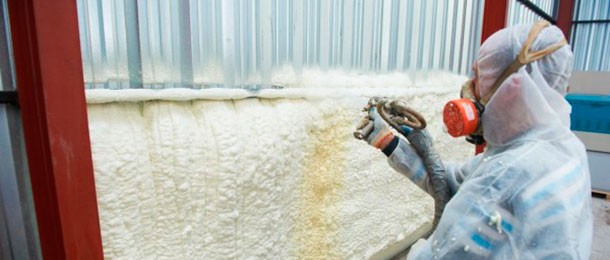
Wool with minerals. among the most widely used insulating materials nowadays. It not only provides insulation but also lets the walls "breathe," which lessens the chance of condensation building up on the walls. A vapor barrier layer needs to be installed before installing mineral wool inside a metal garage. This material works really well for insulation, both inside and out. In the first example, a denser material (up to 220 kg/m3) is used; within, cotton wool with a density of up to 180 kg/m3 is permissible. Of all the insulating materials, basalt wool is regarded as the best.
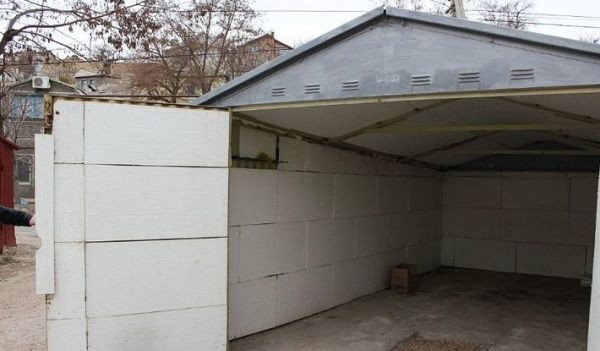
Styrofoam. Ideal for external insulation of buildings and garages. It is lightweight, easy to install, and, most importantly, costs less than alternative insulation materials. The moisture resistance of polystyrene foam is especially appreciated, as well as its easy processing. The most preferred type of polystyrene foam is extruded. It has greater density, does not allow steam to pass through, and can last up to 30 years. Expanded polystyrene has several disadvantages. It is afraid of exposure to sunlight, so a layer of plaster must be applied to its surface. In addition, it supports combustion, so it is not advisable to insulate a garage with it from the inside. For interior decoration, you can use self-extinguishing polystyrene foam PSB-S. In the absence of a flame source, it dies out within 4-5 seconds.
Insulation that reflects light. They are different in that they have a layer of foil on the front that reflects infrared light into the space. Because of this, the insulation thickness is significantly lower than that of mineral wool, which is crucial for metal garages. It is rather expensive, though, and it cannot stop heat loss through convection.
Paint with thermal insulation. This kind of insulation is among the most cutting-edge in terms of technology. It’s an acrylic paint enhanced with heat-insulating polymers and rubber fibers. This is the best kind of insulation for a metal garage. It offers thermal insulation equivalent to 50 mm of mineral wool with just a 1 mm layer. This cuts down on unused space considerably. But it’s important to remember that this kind of insulation will come at a hefty price.
Insulation of metal garage walls
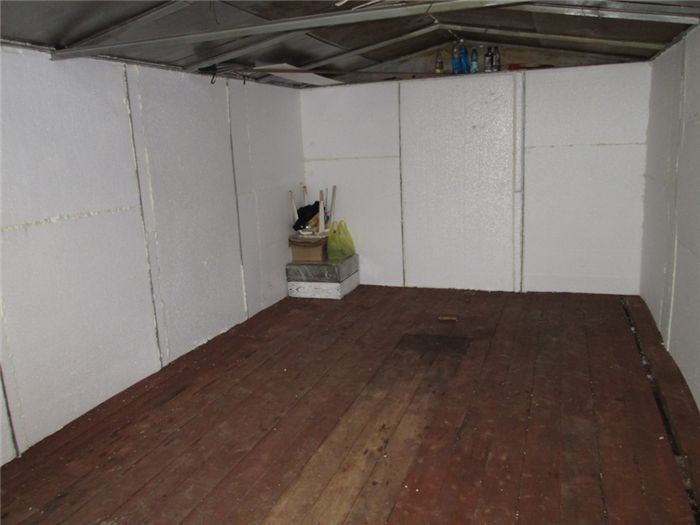
Foam plastic is typically used for external wall cladding in garage insulation projects. When considering its cost and performance attributes, this is the best choice. Mineral wool should be used in place of the foam, though, if the garage is heated by additional stoves or other appliances that can reach high temperatures.
The following is the process for applying polystyrene foam insulation to the exterior of garage walls:
1. The garage needs ventilation installed first and foremost. This means that a second fan that can create forced air circulation needs to be installed. It is possible to avoid the occurrence of material sheets cracking in the winter months due to a significant temperature differential between the room and its exterior walls by installing adequate ventilation.
2Next, the garage’s exterior walls are cleared of dirt, dust, and outdated coating. Using a plaster mixture, any cracks or other surface imperfections should be fixed.
3. Primer needs to be applied to the cleaned surface. Primers usually only need to be applied once, but occasionally more coats might be needed. The working surface with the adhesive composition, to which the foam sheets are affixed, adheres more firmly because of the primer layer.
4. Next, decide on the wall cladding material. It is required to use polystyrene foam sheets with a minimum surface thickness of 50 mm and high strength.
5. Using a spatula, an adhesive composition is applied to the surface of each foam sheet. A checkerboard pattern is used to arrange the material. Beginning with the bottom row, lay. It is important to install polystyrene foam with as little space between the sheets as possible.
6. The foam sheets still need to be fastened with dowels after the glue dries. Next, a putty mixture is applied to the foam’s surface. Use putty reinforced with fiberglass mesh to accomplish this. The putty layer is "pressed" into the mesh.
7. Applying a layer of decorative putty is the final step. High-quality facade plasters are used for this purpose. After that, facade paint is applied to the work area. Two to three layers of the paint mixture should be applied.

The garage is insulated with mineral wool, plastic, moisture-resistant gypsum fiber sheets, and siding using the same technique. In this instance, a prefabricated metal frame is attached to siding, plastic, and drywall.
Let’s now examine a low-cost interior garage insulation project:
1. First, you should set up forced ventilation in the garage using a fan, just like in the case of insulating walls outside. Consequently, the space will always be filled with clean air. The work surface has to be cleared of all debris, dust, and remaining coating after that.
2. Next, a plasterboard framework is constructed, which will eventually be covered with a facing thermal insulation layer. The UD and CD profiles are installed 250 mm apart, to which plasterboard sheets are attached. Fiber made of asbestos can be used in place of drywall.
3. As a heat insulator, mineral wool or other cotton insulation is used. They need to be pressed firmly into the space created by the drywall sheets and the garage wall.
4. The heat-insulating layer is covered in a vapor barrier. A suitable vapor barrier is a membrane. It is installed near the layer of mineral wool.
5. After that, heat-insulating paint is applied and the faced surface is plastered.
6. If required, polyurethane foam should be blown out to seal any cracks that occurred during the installation of the drywall sheets.
Consider other options for applying insulating paint, polyurethane foam, or the potential to attach foam sheets to the walls if you are interested in choosing insulation for the garage walls as an alternative to drywall.
Insulation of garage doors
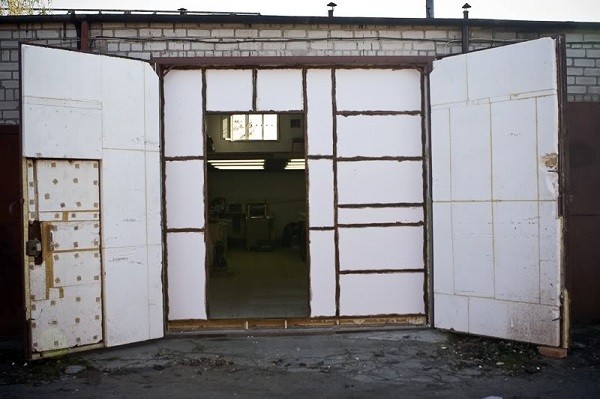
Because there are significant gaps and cracks here that allow cold air to enter the room, the insulation of garage doors should be handled carefully.
The following is the process for insulating garage doors:
1. It is worthwhile to first cut a second door into one of the gate leaves. It will be necessary to enter the garage without having to open the main gate.
2. It is advised to use thin plastic or foam to insulate the gate. Furthermore, it is best to use thick plastic film to seal the garage door opening. It will keep the garage’s leftover heat. Furthermore, the film won’t obstruct the car’s exit.
3. Thin, 25 cm-wide strips of polyethylene film are cut to shield the entrance from chilly air. A construction stapler is used to secure the strips to the top. The canvases shouldn’t have any spaces between them. On the other hand, a 1-cm overlap between the strips is preferable.
4. A frame is initially outfitted, similar to what happens with external insulation for garage walls, in order to attach foam plastic to the garage door panels. OSB sheets would be a great material to build a frame out of. Adhesive tape or polyurethane foam are used to seal the spaces created between the foam sheets.
5. You can place a waterproofing layer in between the foam sheets and the sheathing. It is advised to use rubber seals for this purpose.
How to insulate a garage roof
How to insulate the roof of a garage:
1. Examine the floor structures in the garage. It is recommended to use dowels or nails to secure the foam panels if the floors are composed of wooden blocks.
2. You will need to install sheathing if the floors are concrete, after which you can affix foam sheets. The frame is constructed with metal corners. Dowels and self-tapping screws are used to secure them.
3. Fiber insulation is an additional choice for garage roof insulation in addition to polystyrene foam. In this instance, applying a layer of vapor and waterproofing is required.
4. A mixture of antiseptic materials is applied on top of the thermal insulation coating.
5. A putty mixture is used to seal the joints where the facing material sheets are joined. After that, decorative plaster is applied to the entire surface and it is painted.
It makes sense to insulate a metal garage to improve comfort and shield your possessions from chilly temperatures. You can efficiently control heat gain and loss and create a more useable space all year round by selecting the appropriate materials and adhering to a methodical approach.
Consider your climate when determining the insulation needs for your garage. In warmer climates, the emphasis may be on keeping the interior cool, but in colder climates, thicker insulation may be needed to keep heat from escaping. Foam board or reflective foil insulation are suitable choices for metal surfaces because they provide moisture control and thermal resistance.
In order to avoid air leaks, which can undermine insulation efforts, gaps and joints must be sealed. Seal around windows, doors, and any wall gaps with caulking or spray foam. By taking this step, insulation and energy efficiency are both improved.
To further guard against the accumulation of moisture inside the garage, think about installing a vapor barrier. Installing this barrier on the warm side of the insulation will help prevent condensation, which over time can cause mold growth and structural damage.
Finally, put safety first by installing equipment according to the manufacturer’s instructions and wearing the appropriate protective gear. When handling insulation materials, wear goggles, a mask, and gloves to prevent skin and respiratory irritation. Insulating your metal garage can greatly increase its usability and comfort for many years to come with careful planning and execution.
This conclusion should effectively summarize the key points of your article, providing readers with practical insights and guidance on insulating their metal garage.
We’ll go over all you need to know in this guide to properly insulate a metal garage. We’ll cover everything, from selecting the best insulation materials to providing detailed installation instructions. Insulating your metal garage lowers energy expenses while simultaneously enhancing temperature control. Whether your goal is to turn your garage into a workshop or just make your space more comfortable, this post will offer helpful advice and insights to help you complete the task quickly and effectively.


