
Tired of looking at a wilted pot with a plant that you forgot to water again? You are not alone. With today's fast-paced lifestyle, it can be difficult to regularly care for your green pets. But that doesn't mean you have to give up the comfort and clean air they provide.
Fortunately, nature has created true Spartans of the plant world. There are indoor plants that can tolerate long periods without watering, cope with a lack of light, and do not require complex care. They steadfastly endure our business trips, busy schedules, and simple forgetfulness.
In this article, we've gathered together plants that can survive in almost Spartan conditions. These plants are the perfect start for beginners and a lifesaver for those who are always short on time. They will prove that you definitely have a “green thumb,” even if you doubt it.
- Sansevieria (“Mother-in-law's tongue,” “Snake plant”)
- Zamioculcas (“Dollar Tree”)
- Chlorophytum (“Spider Plant,” “Green Lily”)
- Epipremnum (Scindapsus)
- Spathiphyllum (“Lady's Luck”)
- Tolstyanka (“Money Tree,” Crassula)
- Aspidistra (“Cast Iron Plant”)
- Haworthia and Gasteria
- Kalanchoe Degremona or Feathery
- Aglaonema
Sansevieria (“Mother-in-law's tongue,” “Snake plant”)
What makes it indestructible: An absolute record holder. It can tolerate complete drought, dry air, drafts, deep shade, and direct sunlight. Only frequent watering can kill it.
Key care rules:
- Soil: Light, well-drained, for cacti.
- Watering: Once every 3-4 weeks in winter, once every 2-3 weeks in summer. The main principle: it is better to underwater than to overwater.
- Lighting: Any, from deep shade to bright sun.
Safety: Contains saponins, which can cause nausea, vomiting, and diarrhea if ingested. Keep away from animals that like to chew on leaves.

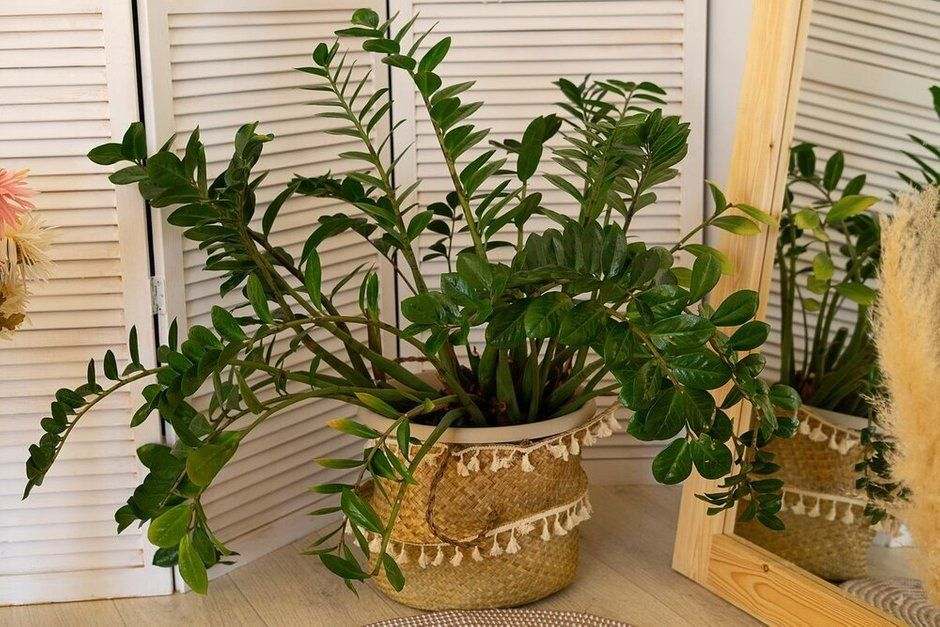
Zamioculcas (“Dollar Tree”)
What makes it indestructible: It accumulates moisture in its tuberous roots and succulent petioles. It tolerates shade, drought, and poor soil.
Key care rules:
- Soil: Loose, with sand and good drainage. Soil for cacti is suitable.
- Watering: Rarely, but abundantly. Allow the soil to dry out completely between waterings. In winter, watering can be reduced to once a month.
- Lighting: Best in partial shade, but will survive in full shade.
Safety: Poisonous. The plant's sap causes irritation of the mucous membranes and digestive upset. Wear gloves when handling and keep out of reach.
Chlorophytum (“Spider Plant,” “Green Lily”)
What makes it indestructible: Grows quickly, propagates easily with “babies,” tolerates cool temperatures (down to +10°C) and irregular care. Excellent natural humidifier and air purifier.
Key care rules:
- Soil: Any universal soil.
- Watering: 1-2 times a week in summer, once every 7-10 days in winter. If the soil is too dry, the leaves may fade, but they will quickly recover after watering.
- Lighting: Bright diffused light, but will tolerate partial shade.
Safety: Completely safe for humans and animals.

Epipremnum (Scindapsus)
What makes it indestructible: A fast-growing vine that survives under artificial lighting and is not afraid of changes in humidity and temperature. Effectively purifies the air.
Key care rules:
- Soil: Light and loose universal soil.
- Watering: After the top layer of soil has dried out by 3-4 cm.
- Lighting: Ideal — partial shade. Direct sunlight burns the leaves.
Safety: Toxic to cats, dogs, and humans if ingested. Causes swelling and gastrointestinal upset.

If you often forget to water your plants or simply don't have enough time to care for them, don't worry. There are plants that will survive even with minimal attention: they can easily tolerate drought, shade, and irregular care. These “indestructible” green helpers will not only liven up your interior, but also lift your spirits without requiring much effort in return. Here are the 10 most resilient indoor plants, ideal for those who are busy, forgetful, or simply love simplicity.
Spathiphyllum (“Lady's Luck”)
What makes it indestructible: An unpretentious beauty with white flowers. Clear indicator of thirst: leaves wilt when water is lacking, but quickly recover after watering.
Key care rules:
- Soil: Universal, slightly acidic.
- Watering: Abundant, when the top layer of soil (2-3 cm) dries out. Likes spraying.
- Lighting: Partial shade. Leaves turn yellow in direct sunlight.
Safety: The sap contains calcium oxalate crystals, which can cause burning, swelling, and difficulty swallowing. Place it higher up.

Tolstyanka (“Money Tree,” Crassula)
What makes it indestructible: A classic succulent. Its fleshy leaves store water. It is easy to propagate from leaves and cuttings.
Key care rules:
- Soil: Essential for cacti and succulents, with a large layer of drainage.
- Watering: Once every 7-10 days in summer, once every 3-4 weeks in winter. The main danger is overwatering.
- Lighting: Bright, with direct sunlight.
Safety: Considered non-toxic to humans and animals. According to the ASPCA, it is not listed as a poisonous plant.

Aspidistra (“Cast Iron Plant”)
What makes it indestructible: Lives up to its name. Grows in the darkest corners, tolerates dust, tobacco smoke, drafts, and infrequent watering.
Key care rules:
- Soil: Dense, heavy, nutritious.
- Watering: In winter — once every 2-3 weeks, in summer — once every 10-14 days.
- Lighting: Deep shade or partial shade.
Safety: Safe for everyone.

Haworthia and Gasteria
What makes them indestructible: Compact succulents with stiff, patterned leaves. Ideal for small spaces, tolerant of cramped pots.
Key care rules:
- Soil: Same as for cacti, with added perlite.
- Watering: Once every 10-14 days in summer, once a month in winter.
- Lighting: Bright diffused light. Direct sunlight can cause burns.
Safety: Completely safe.

Kalanchoe Degremona or Feathery
What makes it indestructible: A viviparous plant. Hundreds of “babies” form along the edges of the leaves, which easily take root in any neighboring pot. Very resilient.
Key care rules:
- Soil: For succulents.
- Watering: Like all succulents, after the soil has completely dried out.
- Lighting: Bright, loves direct sunlight.
Safety: Toxic to animals and humans. Contains cardiac glycosides.

Aglaonema
What makes it indestructible: A variegated beauty that tolerates shade and irregular care. Grows slowly, so it retains its decorative appearance for a long time.
Key care rules:
- Soil: Light and loose universal.
- Watering: 1-2 times a week in summer, once every 10-14 days in winter.
- Lighting: Partial shade. The more variegated the leaves, the more light is needed.
Safety: Like Spathiphyllum, it contains calcium oxalates. May cause irritation and swelling.

So, even if you think you have a “heavy hand,” there are plants that are willing to forgive you for infrequent watering and lack of attention. Cacti, succulents, sansevieria, or “mother-in-law's tongue” are the true Spartans of the plant world. They don't just survive, they maintain their attractive appearance, content with very little.
When you choose this green pet, you get much more than just decoration. It is a small island of calm and nature in your home that will not be a source of stress. You can safely go on a business trip or simply forget to water them for a week — nothing bad will happen to them.
Start with one or two species from this list. Gradually, you will gain confidence and may even want to expand your collection. The main thing is to find a green friend that suits your lifestyle. Good luck, and may your home be filled with more greenery without any extra hassle!


