
The wall behind the dining table is more than just empty space. It is your personal canvas, which you and your guests see every day. The right design will turn an ordinary meal into a small celebration, create a mood, and show your character.
Often we don't know where to start. After all, we want it to be beautiful, stylish, and not banal. There can be so many ideas that it's easy to get lost in them.
We have collected 13 options that will help breathe life into this important area. From simple photo galleries to bold accent solutions. You are sure to find something here that will appeal to you and make your breakfasts and dinners a little cozier.
Paint or decorative plaster
One of the easiest ways to create an accent in the dining area is to paint one of the walls in a contrasting color. This option is suitable for those who are just starting to renovate and are leveling surfaces for painting. Rich shades are self-sufficient, so they often do not need additional decorations, but a poster or wall sconce will help complete the composition.
For the kitchen, you need to choose a durable paint that can withstand mechanical stress. Such compounds are more expensive than conventional ones, but they are resistant to detergents and are easy to maintain.
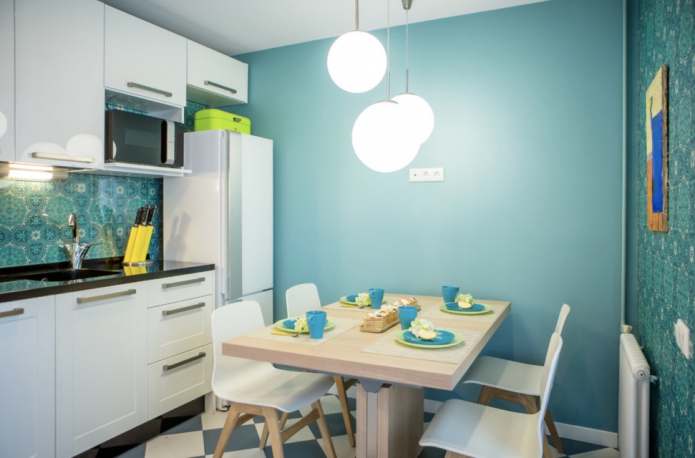
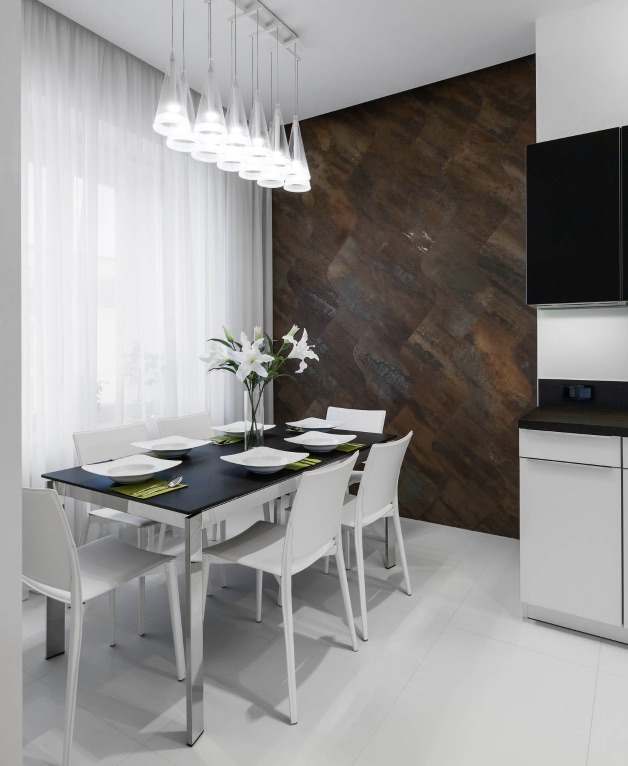
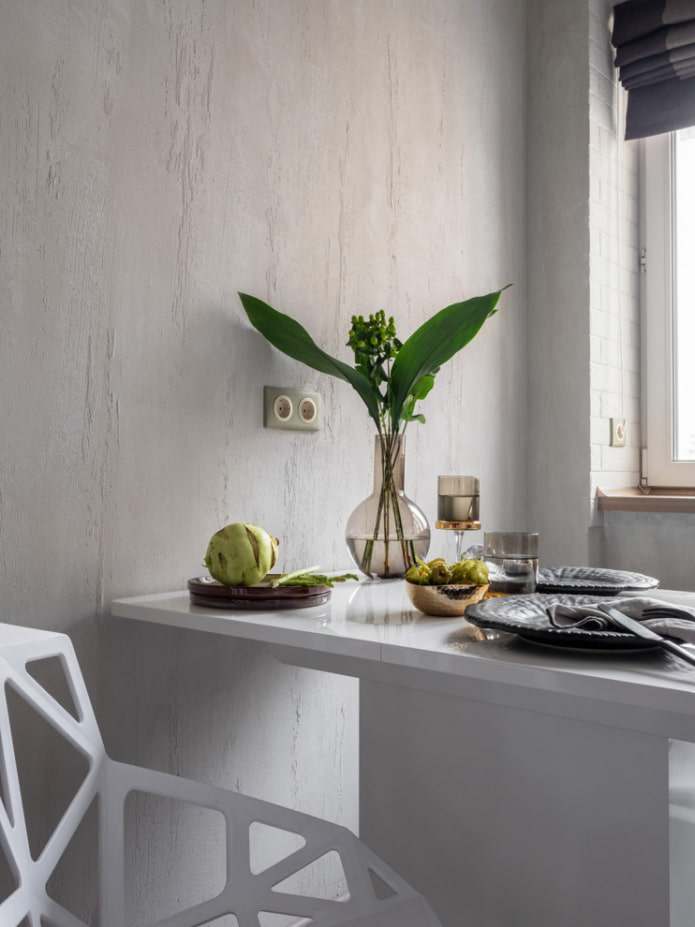
Another good solution is decorative plaster that imitates the texture of fabric, paper, stone, or concrete. It looks appropriate in both classic kitchens and those in country, Provence, loft, and minimalist styles. The material is durable, moisture-resistant, breathable, and easy to apply.
Slate coating
Black paint, on which you can write with chalk, came into home interiors from schools and public catering establishments. It is practical and multifunctional, making it ideal for highlighting the dining area.
You can write notes, favorite phrases, menus, and draw patterns on the wall. The dark color scheme adds depth to the room and looks original and bold.

It is not difficult to make a chalkboard coating yourself. To do this, you need to purchase black acrylic paint and mix it with dry plaster, putty, or tile grout. Use 1 teaspoon of powder per 100 g of mixture. Before painting, it is recommended to test the mixture on a small area.

Wallpaper
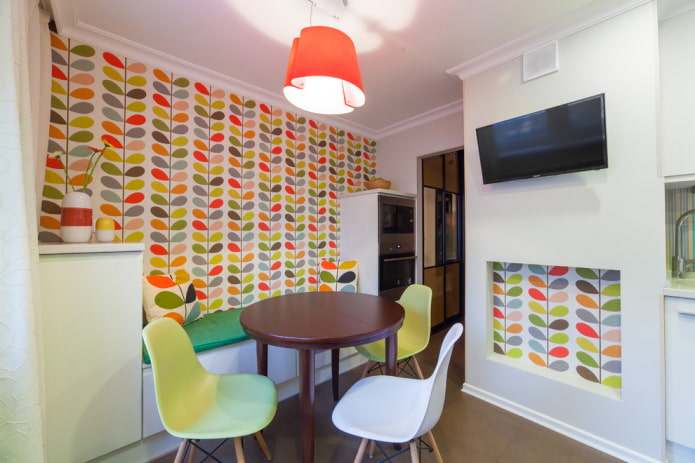
Another traditional way to decorate the kitchen wall above the table is to highlight it with accent washable wallpaper. It perfectly divides the room into zones and gives the interior a homely feel. The remaining surfaces are usually painted or covered with plain companion wallpaper.
This is an ideal option for a small kitchen. To create an environment that looks more expensive than it actually is, it is worth purchasing one roll of expensive designer wallpaper and decorating the dining area with it.

Wallpaper is suitable for decorating walls with protrusions or niches. But if the surface is large and smooth, it can be complemented with moldings, framing the wallpaper: this technique is especially relevant for the classic style. In a more modern setting, it is better to use canvases with bright prints that will look good on a white background.
Brickwork
This design looks great in loft or Scandinavian styles. Both authentic brickwork stripped of plaster and high-quality imitation in the form of clinker tiles are appropriate. The brick can be natural, aged, or painted in any shade, depending on the overall interior design concept.
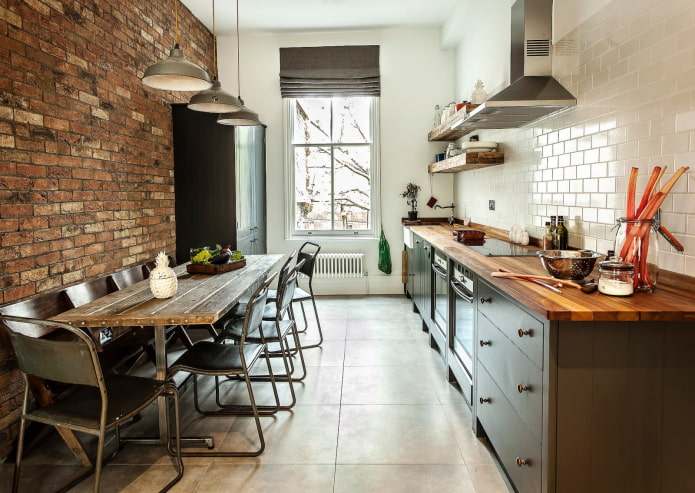
The photo shows a spacious loft-style kitchen with metal elements, a natural wood table, and brickwork.
A brick wall above the dining area is a standalone decoration if it has a rich texture. A textured surface covered with plain white paint needs to be complemented with a lamp, clock, or poster.
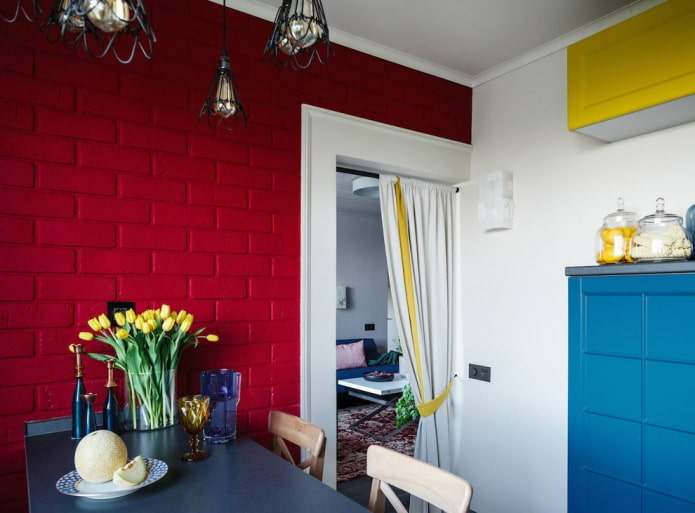
The photo shows a brick wall, made by hand using plaster and painted in a coral shade.
Wood or imitation wood
Wood textures add a cozy feel to the interior, soften the coldness of light finishes, and attract attention. Treated barn boards look luxurious, contrasting with a neutral background. A simpler and more budget-friendly option is paneling, which will add texture to a Provence-style kitchen.
Decorative panels or laminate flooring, which often continues up the wall from the floor, are suitable for imitating wood. There is also wallpaper with a wood pattern, but it should be understood that this stylization cannot replace the warmth and nobility of natural materials.
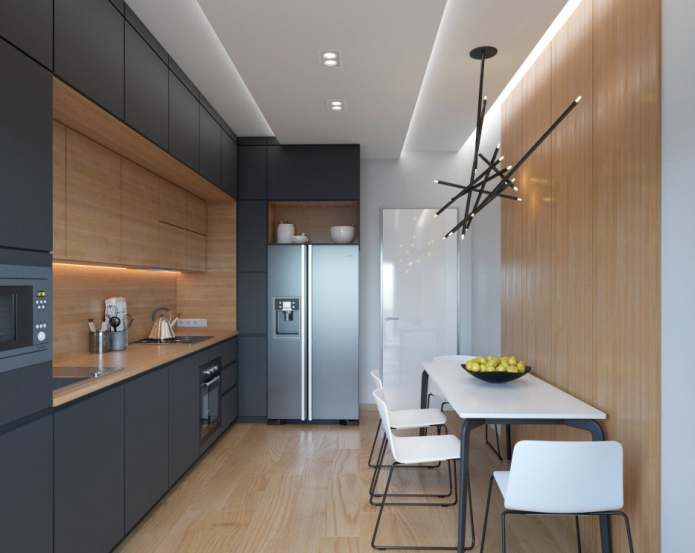
Photo wallpaper or fresco
A great solution for small kitchens is to use canvases that visually expand the space. If your gaze rests on a blank wall, the room seems smaller, but when it slides “deep” into the image, the opposite effect occurs.
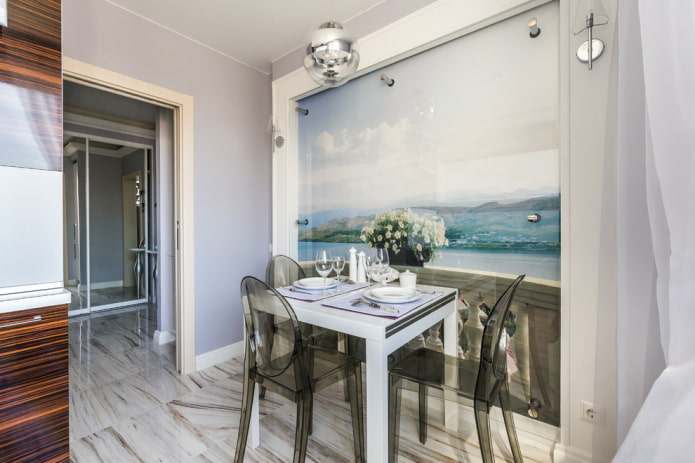
The photo shows a wall near the dining table decorated with wallpaper featuring a seascape. Thanks to the glass installed, the panel appears deeper, imitating a window.
To make the covering look stylish, the elements on it should echo the details of the kitchen interior—textiles, aprons, or facades. The canvas looks more expensive if it has a slight texture.
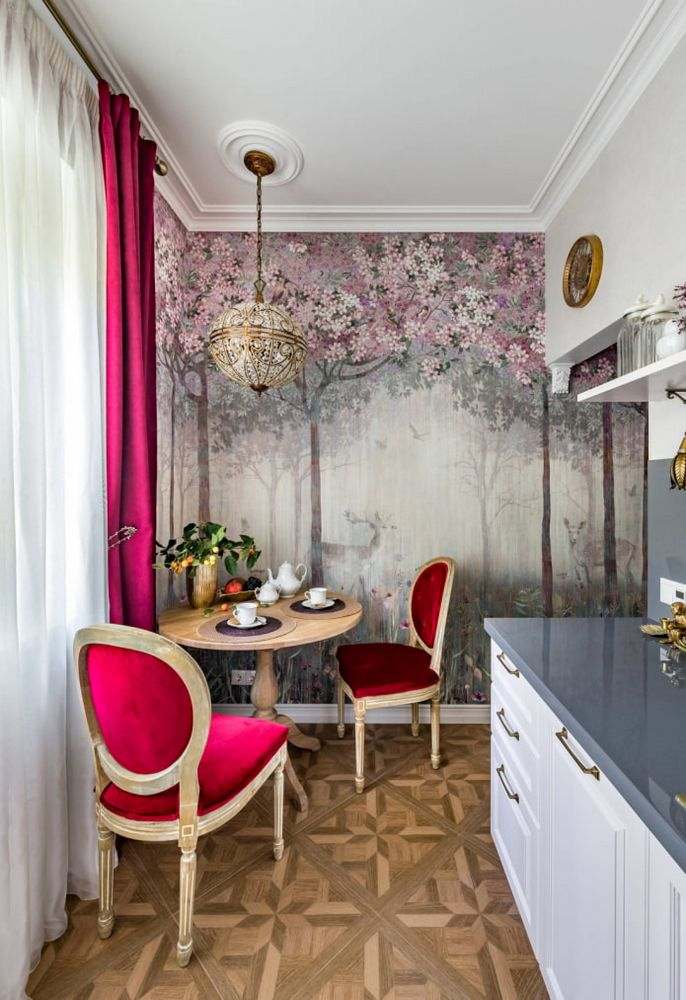
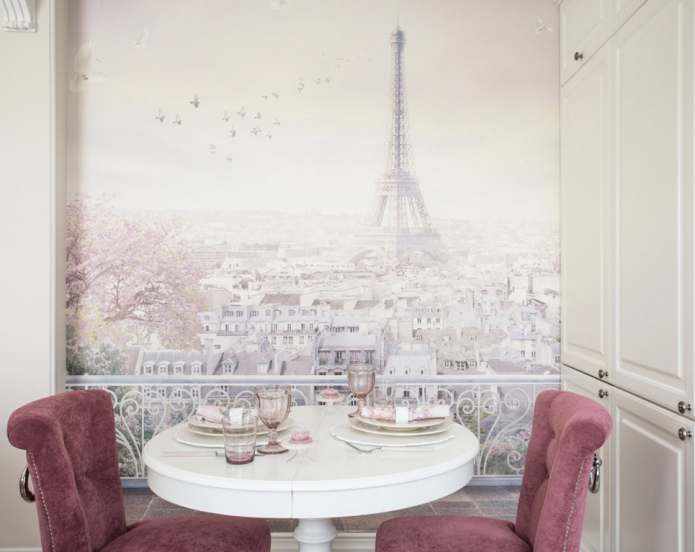
The wall next to the dining table is not just a backdrop, but an opportunity to add comfort and expressiveness to the area where the family gathers and guests meet. Instead of a blank wall, you can hang beautiful paintings, make photo wallpaper, install shelves with plants or decor, play with light, or even create a mini-garden of edible herbs. The main thing is to find a solution that suits your style, mood, and functionality so that every lunch or breakfast brings joy.
Light fixtures
Light sources in the kitchen should be located not only in the work area and under the ceiling, but also above the table.
It is not difficult to turn lighting into a decorative technique by hanging unusual swivel spotlights, garlands, or original wall sconces.
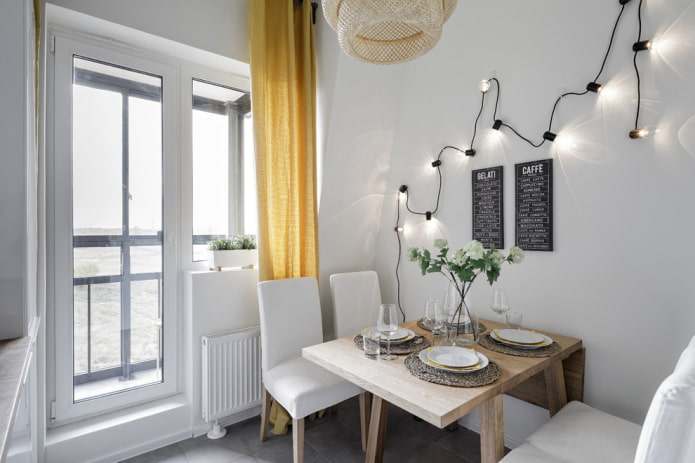
If the kitchen is decorated in a modern classic style, the area above the dining area should be highlighted with moldings, enclosing elegant lamps in frames.

Painting, photograph, or poster
The wall near the kitchen table can be easily decorated without much expense by hanging a poster or printing out a favorite photo. At the same time, it is important to observe the proportions: the more free space there is, the larger the decor should be. A contrasting image looks good on a light background, and black and white looks good on a bright or saturated background.

If you want your dining area to look more impressive, decorate it with a real painting in a carved frame. Reproductions and images from souvenir shops cheapen the interior, so we recommend choosing inexpensive paintings by emerging artists for decoration.
An even more economical way is to create an abstraction yourself, using the colors of the surrounding environment. There are many master classes on the Internet that describe in detail the technique of creating paintings from various materials.

Mirror
Decorating the wall near the dining area with a mirror is a non-trivial and functional solution. The mirror instantly enlarges the space, making it a great option for a small kitchen. The reflection gives the room an airy feel, complicates the geometry, and even increases the appetite.

A mirror in a decorative frame or several small metal-framed pieces will add elegance and a certain solemnity to the kitchen. Another obvious advantage of a mirror is that it multiplies the amount of light and therefore helps out when there is a lack of lighting.

Shelf or rack
Small kitchens often lack storage space, so the wall above the dining table can be used for ergonomic purposes. It is convenient to place items that are needed most often on the shelf: a sugar bowl, a jar of coffee, a salt shaker, and a pepper shaker.
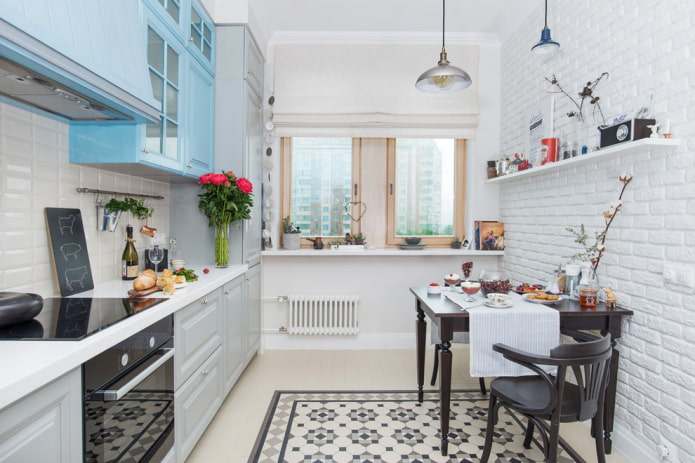
Thanks to the open shelving, the kitchen interior becomes more cozy and resembles a “room” design.
It is recommended to decorate the shelves with indoor flowers, books, or family photos—in general, anything that resembles living room decor. Or you can do the opposite and fill the shelves with baskets, bottles, and beautiful tableware, supporting the kitchen theme.
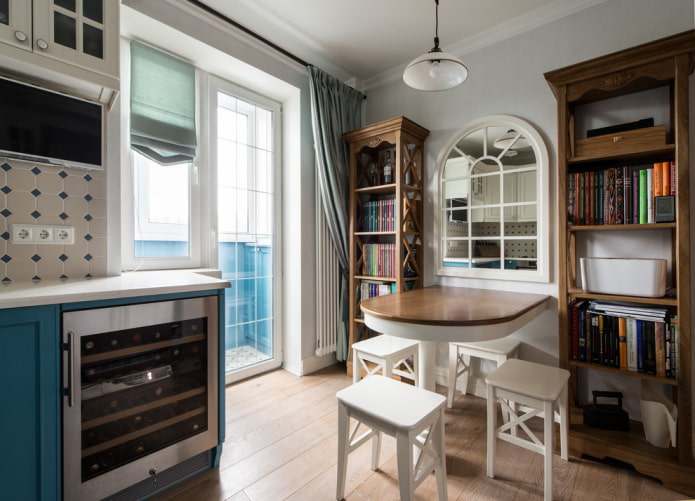
The photo shows a combination of open shelves and a curved mirror, which blend harmoniously with the dining set.
Niche
An artificially created niche, inside which a dining table is placed, helps to make the kitchen environment more expressive and private. The structure can be made of drywall and decorated with clinker tiles, or you can use shallow cabinets.
The second option is more practical, as it serves as an additional storage system for dishes or food preparations. However, this solution is only appropriate in spacious kitchens with an area of 9 square meters or more.


TV
Cooking will be more fun if you hang a TV next to the kitchen table. It is desirable that the device be mounted on a swivel bracket, then viewing will be convenient for every member of the household.
From a safety perspective, the wall in the dining area is the best option, as it is far from the sink and gas stove.

As you can see, the wall behind the dining table is not just a backdrop, but a full-fledged design element that sets the mood for the entire area. The main thing is that its design is in tune with your lifestyle, brings joy, and makes every meal a little more special.
Don't be afraid to experiment. You can start with one or two items, such as a shelf and a painting, and then gradually add new details. Remember that the setting should be comfortable and not overloaded so as not to distract from conversation and delicious food.
Let this wall become a place that brings the family together, inspires culinary experiments, or simply provides a feeling of comfort after a long day. Choose what resonates with you and create a space where you will feel truly comfortable.


