
It is essential to comprehend how heat travels through walls in order to ensure comfort and energy efficiency in buildings. The amount of heat that travels through a wall is mostly determined by a material’s thermal conductivity, or capacity to conduct heat. When choosing insulation materials and creating energy-efficient building designs, this computation is crucial.
The ease with which heat moves through the components of walls is what we mean when we discuss their thermal conductivity. Metals conduct heat considerably more quickly than materials like wood or insulating foam, for example. Different materials conduct heat at different rates. Builders and designers can choose how to insulate and build walls to minimize heat gain or loss by knowing the thermal conductivity of each material layer in the wall.
A number of factors must be taken into account when calculating thermal conductivity. First, since thicker materials typically resist heat flow better than thinner ones, the thickness of each layer of material in the wall is significant. Second, conductivity depends on the kind of material; insulating materials with low thermal conductivity, like fiberglass or some types of foam, are frequently selected.
R-values and U-values are two distinct measurements that engineers and architects use to estimate the overall thermal conductivity and thermal resistance of walls. The U-value represents the total thermal conductivity of a wall assembly, whereas the R-value quantifies a material’s ability to withstand heat flow. These numbers have an impact on decisions made regarding insulation techniques and building design by indicating how well a wall can stop the transfer of heat.
- Why do you need a calculation?
- What does thermal conductivity depend on?
- We carry out calculations
- Acceptable values depending on region
- Heat transfer indicators for various materials
- Calculation of a multilayer structure
- Sequencing
- Video on the topic
- Simple calculation of heat loss. How to estimate heating needs? / Long version / Gleb Green
- Thermal engineering calculation of walls, ceilings and windows in an online calculator
- Thermal calculation of a wall online
- Thermal calculation of the wall
Why do you need a calculation?

You must accurately calculate the thickness of the walls and the insulating materials that we will use during construction in order to reduce heating costs and contribute to the creation of a healthy indoor microclimate. The law of physics states that thermal energy escapes through the wall and roof when it’s warm inside and cold outside. Negative effects will result from calculating wall thickness incorrectly, making the walls excessively thin, and failing to insulate them.
- in winter the walls will freeze;
- significant funds will be spent on heating the premises;
- the dew point will shift, which will lead to the formation of condensation and humidity in the room, and mold will develop;
- in summer the house will be as hot as under the scorching sun.
To prevent these issues, determine the material’s thermal conductivity before beginning construction. You should also determine the wall’s thickness and the type of heat-resistant material to use for insulation.
What does thermal conductivity depend on?

The quantity of thermal energy that travels through a material with a 1 sq. m. surface area and a 1 m thickness, and a one degree temperature differential between the inside and outside, is used to compute heat conductivity. The duration of the test is one hour.
Thermal energy conductivity is dependent upon:
- physical properties and composition of matter;
- chemical composition;
- operating conditions.
Heat-saving materials are those having an index of less than 17 W/(m °C).
We carry out calculations

Thermal conductivity is a key consideration when calculating wall thickness in construction. The architect determines the wall thickness when designing a building, but this comes at an additional cost. You can determine how to compute the required indicators on your own to save money.
The constituents of a material determine how quickly heat is transferred through it. The heat transfer resistance needs to be higher than the minimum value mentioned in the "Thermal insulation of buildings" regulatory document.

Let’s examine how to determine a wall’s thickness based on the building materials used.
Δ is the wall’s construction material’s thickness;
Λ, a specific thermal conductivity indicator, is computed in terms of (m2 °C/W).
The thermal conductivity coefficient needs to be listed in the passport when you buy building supplies.
Residential building parameter values are found in SNiP 02/23/2003 and SNiP II-3-79.
Acceptable values depending on region
The table below shows the lowest heat conductivity value that is acceptable for each region:
| No | Thermal conductivity index | Region |
|---|---|---|
| 1 | 2 m2 • ° C/WT | Crimea |
| 2 | 2.1 m2 • ° C/WT | Sochi |
| 3 | 2.75 m2 • ° C/WT | Rostov – on -Don |
| 4 | 3.14 m2 • ° C/WT | Moscow |
| 5 | 3.18 m2 • ° C/WT | Saint Petersburg |
Every material has a heat conductivity indicator unique to it. More heat is transferred through this material itself the higher it is.
A key component of comprehending heat transfer through walls is figuring out thermal conductivity. Heat transfer rate is measured by a material’s thermal conductivity. With this knowledge, builders and homeowners can choose insulation materials that will efficiently control indoor temperature and save energy expenses. This article examines the fundamentals of thermal conductivity calculations and provides useful information about how the thickness and composition of various materials affect a wall’s capacity to retain heat or remain cool.
Heat transfer indicators for various materials
The following table shows the values for the materials’ density and heat conductivity:
| Material | The size of thermal conductivity | Density |
|---|---|---|
| Concrete | 1.28-1.51 | 2300-2400 |
| Oak wood | 0.23-0.1 | 700 |
| Coniferous wood | 0.10-0.18 | 500 |
| Reinforced concrete slabs | 1.69 | 2500 |
| Brick with voids ceramic | 0.41-0.35 | 1200-1600 |
The density and humidity of building materials affect their thermal conductivity. It is important to keep an eye on the coefficient in the instructions for the materials you use because different manufacturers may have different qualities for the same materials.
Calculation of a multilayer structure
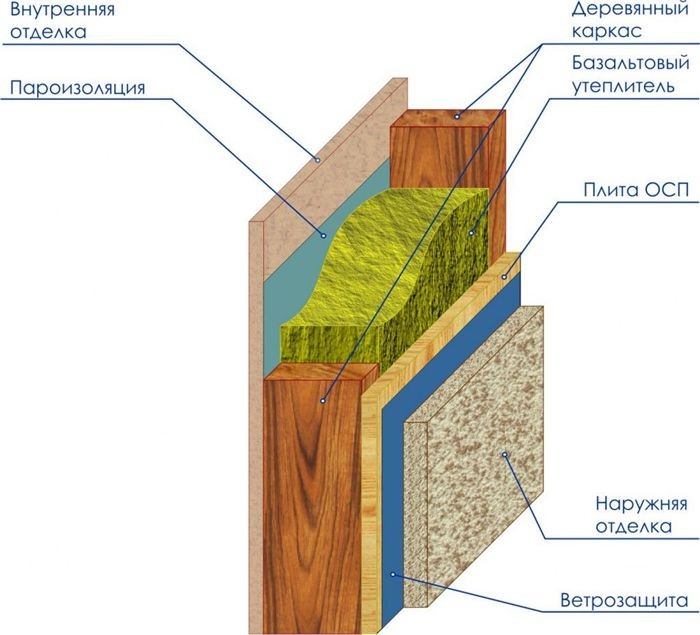
If a wall is constructed using a variety of materials, such as plaster, mineral wool, and brick, the values for each material should be determined separately. Why add up the figures you were given?
In this instance, you ought to follow the following formula:
Rtot= Rn + Ra + R2 +… where:
R1–Rn represents the thermal resistance of various material layers;
Ra.l is the closed air layer’s thermal resistance. The values are listed in SP 23-101-2004’s table 7 on page 9. Not every wall construction involves the provision of an air layer. To learn more about computations, view this video:
These computations allow us to determine the appropriate thickness and whether the chosen building materials can be used.
Sequencing
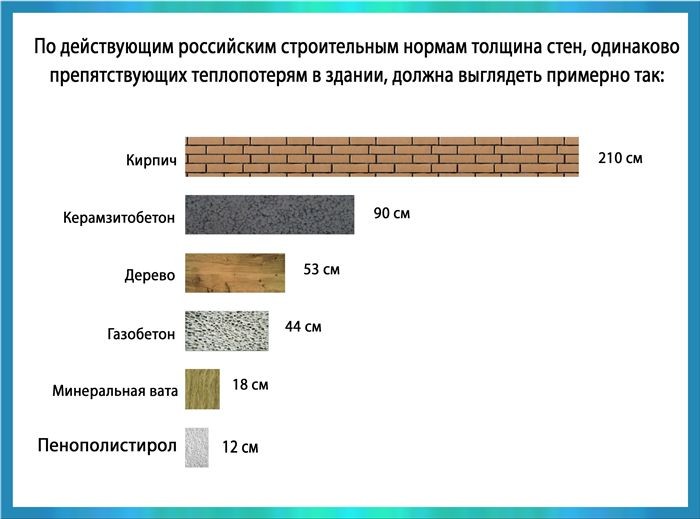
Prior to anything else, you must decide which building supplies to use to construct the house. Next, using the above-described scheme, we compute the wall’s thermal resistance. It is necessary to compare the obtained values with the information in the tables. It’s good if they match or exceed.
If the result is less than what is shown in the table, you should recalculate and thicken the wall or insulation. The layers between the air chamber and the street should not be considered if the structure has an air gap that is ventilated with outside air.
It is essential to comprehend wall thermal conductivity when designing comfortable and energy-efficient living environments. Builders and homeowners can choose the right insulation materials and methods by computing this property. The unit of measurement for a material’s ability to conduct heat is called its thermal conductivity, or lambda (λ). Better insulation is indicated by lower values, which means less heat escapes in the winter and less heat enters during the summer.
The construction materials must be taken into account when calculating wall thermal conductivity. Every material, including brick, concrete, wood, and insulation materials like foam or fiberglass, has a unique thermal conductivity value. Based on the thickness and configuration of the materials inside the wall, these values are combined. For instance, a wall with several layers of insulation will conduct heat less efficiently overall than a wall with little to no insulation.
Thermal conductivity can be estimated by builders and renovators using online calculators or mathematical formulas. These instruments provide a numerical value that indicates the amount of heat transfer through the structure by accounting for the thermal characteristics of each layer of the wall assembly. Professionals make sure that buildings meet energy efficiency standards and maintain comfortable indoor temperatures all year round by precisely calculating thermal conductivity.
Achieving optimal thermal conductivity in practice requires striking a balance between practical factors like budgetary and space constraints and the effectiveness of insulation. Careful planning of wall assemblies during new construction can save a building’s lifetime heating and cooling expenses considerably. Thermal conductivity calculations are an important tool for sustainable building practices because retrofitting existing structures with better insulation can also result in significant energy savings and increased comfort.


