
When you want to add soul, character, and warm Mediterranean energy to your interior, majolica comes to the rescue. It is not just a tile, but practically a miniature work of art. Each tile is hand-painted with bright, rich glazes that create a unique, lively pattern.
Majolica is easily distinguished from ordinary ceramic tiles by its hand-painted designs. The patterns on it are often floral motifs, geometric ornaments, or entire story pictures. Due to the manufacturing technology, it is almost impossible to find two absolutely identical tiles, and this is its main charm. It brings uniqueness and handmade warmth to the space.
Using majolica in your interior design is a bold and very effective accent. You don't need to cover all the walls and ceiling with it. Even a small panel on the kitchen backsplash, a frame around the mirror in the bathroom, or a separate insert on the countertop is enough. It instantly becomes the center of attention, filling the room with color and a special mood, as if letting a piece of the sun and sea into the house.
- The history of majolica
- How it is made
- Properties of majolica
- How much does it cost
- Majolica in interior design
- Professional tips: how to use majolica in interior design
- 1. Fireplace cladding
- 2. Majolica for the shower
- 3. Exterior motifs for the hallway
- 4. Window frames and slopes
- 5. Mosaic steps
- 6. Tiles for the kitchen
- Carving and inlaying are always done in contrasts—a dark frieze on a light background. Or vice versa—it looks bright and impressive. Ceilings can be decorated in different ways:
The history of majolica
Tiles made using the majolica technique appeared several thousand years ago in Egypt, Babylon, and Assyria. These colorful oriental tiles found their way to Europe via the Spanish island of Mallorca, from where they got their name. Europeans developed their own tiles much later: at the end of the 16th century, white tiles with hand-painted blue designs began to be produced in Delft, Holland. The images were not ornamental, but representational and even genre-based, depicting entire scenes from everyday life.
Tiles also appeared in Russia in the Middle Ages, where they were used to decorate facades and line stoves. And from the 18th century, majolica began to be produced industrially in Russia – at the Grebenshchikov factory in Moscow and in workshops in Gzhel and Yaroslavl. But Italy remained the largest European center of majolica production for a long time: in Florence and Naples, Siena, Urbino, and Caltagirone, the majolica technique was used to make not only tiles, but also sculptures and bas-reliefs. During the Renaissance and the beginning of the Modern Era, many artists used majolica primarily to create sculptural compositions.
How it is made
Majolica is a coarse ceramic, and ordinary red clay is suitable for its manufacture: white enamel and two layers of glaze are applied to the product: the first under the pattern, the second after painting. Majolica is also fired twice: first to set the shape, and then to set the design, at a temperature of about 1000 °C. The paint for painting is made from glaze with the addition of tin oxide.
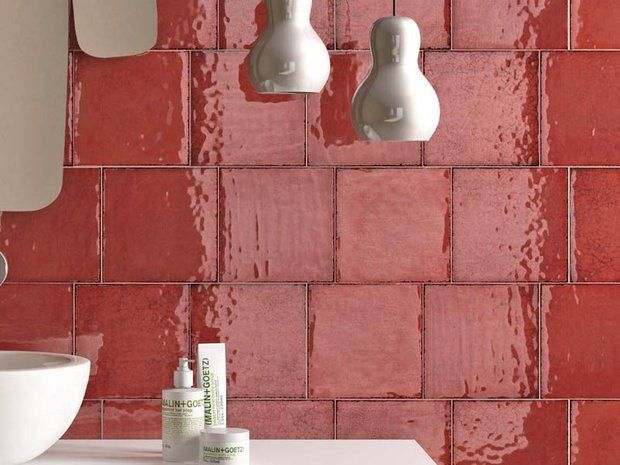
Today, plain tiles made using the majolica technique are popular—in this case, the entire surface of the tile is covered with paint and glaze over the enamel. During firing, the glaze and paint fuse together, creating a unique surface relief and (sometimes) color nuances—no two identical tiles made using the majolica technique can be found. The tiles are usually square (except for borders) and small in size, ranging from 5 to 20 centimeters per side.
Properties of majolica
Majolica, like all clay products, is an absolutely environmentally friendly material. In addition, majolica is the most durable ceramic tile. Since ancient times, tiles have been famous for their high thermal conductivity and slow cooling, which is why they are still actively used today for cladding stoves and fireplaces. Majolica retains heat well and does not accumulate static electricity.

How much does it cost
Majolica is traditionally an expensive pleasure. Manufacturers charge between 1,000 and 7,000 rubles per square meter for plain tiles. Prices for painted tiles start at 10,000 rubles per square meter. You can save money by buying individual elements of large tile panels: since it is difficult to assemble the pattern, they are discounted. However, such tiles look good when used in patchwork cladding, glued in a random pattern.
Majolica is a beautiful glazed ceramic tile, handmade with bright patterns, which adds warmth and character to any interior. It is often used in kitchens, bathrooms, and hallways—on walls, backsplashes, or as accents. Thanks to the variety of shapes, colors, and patterns, majolica fits easily into both classic and modern designs, making the space lively and cozy.
Majolica in interior design
Majolica has a textured surface, uneven, with bumps and pits, which causes the glaze to glisten and reflect light in all directions. Thanks to this, painted majolica looks good next to rough matte country materials such as wood, plaster, and stone. Plain tiles are good for minimalist spaces in an eco-style. Monochrome relief tiles or Delft-style majolica tiles are most often found in classic interiors.
Professional tips: how to use majolica in interior design
In any case, majolica attracts attention, which means that you can use a minimum amount of material to create an impressive effect. We asked designer Inessa Ternova how to use such tiles in a budget-friendly way when decorating an apartment or house, and received some professional advice.
Inessa Ternovaya is an interior designer who originally trained as a teacher and psychologist. After graduating from the International School of Design, she started her own business in 2007. She works in Russia and Italy. She uses her own unique “art-psychological” approach: according to Inessa, an interior should reflect the inner world of the client and inspire them.
1. Fireplace cladding
Historically, tiles were primarily used for stoves. Therefore, the main place for using majolica in a modern interior is still the fireplace. If you own a country house, add majolica to the portal cladding: a few bright tiles on a white background or a frame around the niche are enough.
City apartment dwellers dream of fireplaces and even build portals without a chimney to put a biofireplace or ordinary candles in them. Majolica on such a fireplace will turn the imitation into an exquisite design pun.

2. Majolica for the shower
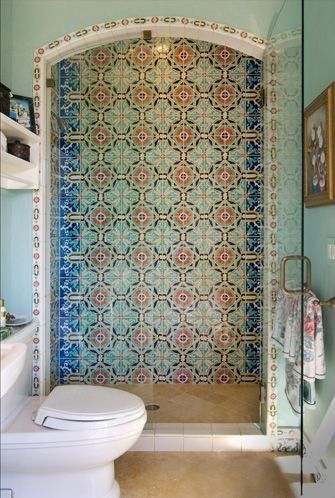
Who said that a bathroom must be completely tiled? It is enough to buy a couple of square meters of precious majolica to decorate the walls only in the shower area and above the sink. The remaining surfaces can be painted with moisture-resistant paint in a shade that harmonizes with the tiles.
3. Exterior motifs for the hallway
Majolica tiles are often found right on the streets of ancient Mediterranean cities. Therefore, it would be great to decorate the entrance hall with them—exterior elements always look appropriate at the threshold of an apartment. Lay out a beautiful frieze on top—you will need very few tiles for it. You can also divide the wall with a horizontal border using majolica. Use porcelain stoneware and decorative plaster for the remaining surfaces (at first glance, this expensive covering can actually be made by hand from inexpensive materials). The result will be an entrance hall reminiscent of a Neapolitan alleyway.

4. Window frames and slopes
Continuing the theme of exterior elements in the interior, we must not forget about doorways and windows. Majolica framing around the edges will give them incredible charm. Window slopes can also be successfully decorated with patterned glazed tiles. For a complete look, lay the same material on the window sills – a Mediterranean feel is guaranteed.

5. Mosaic steps
Designers suggest tiling the walls along staircases. I used a more economical option in my own home: I laid a majolica border along the wall of the staircase. The result is an openwork baseboard that makes the steps look airy. But you can choose the most common option and decorate the risers with tiles—such staircases can be seen in Mediterranean cities.

6. Tiles for the kitchen
Furniture interior in the house

Carving and inlaying are always done in contrasts—a dark frieze on a light background. Or vice versa—it looks bright and impressive. Ceilings can be decorated in different ways:
The same technique can be used for flooring as for walls. Since the Moroccan style in interior design originates from hot countries, the flooring is designed to create a cool atmosphere in the room. Therefore, it is preferable to use clay tiles or stone. In our climate, it is better to lay linoleum with imitation parquet flooring or equip the tile floor with electric heating. Laminate or parquet flooring will also work.
The ideal option in Moroccan style for high ceilings is cedar with hand-painted or carved decorations. This is an expensive and labor-intensive technique, but it is well worth the cost. Thin branches and twigs of eucalyptus or oleander are laid across the ceiling beams and painted with lime to prevent the growth of mold, fungus, or insects.
Wooden ceilings painted in a color appropriate to the style.
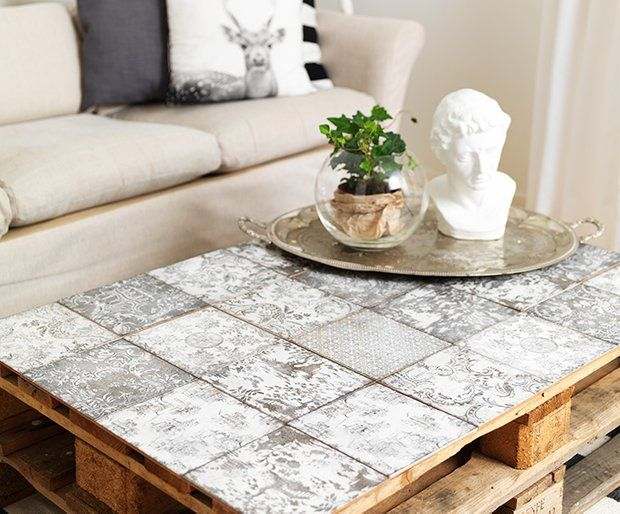
It can be used in a variety of ways in a modern space. The classic option is a kitchen backsplash or bathroom decor. But you can use your imagination: lay out a panel in the living room, decorate a fireplace mantel, or even decorate a coffee table top. The main thing is not to overdo it, so as not to create a gaudy look.
Majolica tiles go perfectly with natural materials. Wood, stone, simple white plaster, or brick will serve as an excellent neutral backdrop. This combination highlights the beauty of the tiles and makes the interior harmonious and cozy.
When you choose majolica, you choose art. Your home is filled not just with decoration, but with character and personality. It is a bold and very emotional decision that transforms an ordinary room into a place with its own history and mood.


