
In order to improve the windows’ aesthetic appeal and functionality, decorative elements are added when castings are installed on plastic windows. These castings, sometimes referred to as window moldings or trims, come in a variety of styles and materials and have both aesthetic and functional uses.
These castings, which are usually composed of PVC or wood composite, are fitted specifically to match the windows’ design and the house’s overall aesthetic. In addition to being ornamental elements, they also improve insulation around window frames and cover up gaps.
The material, degree of design complexity, and installation scope all affect the cost of these window castings. Basic PVC moldings are typically less expensive, but because of their customized designs and superior materials, custom wood or composite options may cost more.
It is important to factor in the cost of labor as well as materials when installing window castings. Professional installation maximizes the visual appeal and practical advantages of these additions to your plastic windows by ensuring correct fitting and alignment.
- Definition
- What are they for??
- Requirements
- What are there for PVC structures??
- Galvanized steel
- Polyester
- Aluminum
- Plastic
- Criterias of choice
- Tools and devices
- How to install it yourself?
- Possible difficulties and errors
- Average prices in the Russian Federation
- For the finished product
- For installation
- Video on the topic
- How to install ebb on a PVC window
- Installation of window sills. Do-it-yourself ebb installation on a plastic window. PVC ebb
- how to install a window sill. ACCORDING TO GOST
- Correct installation of street tide
- Correct installation of window sills. So as not to rattle from the wind🤓
Definition
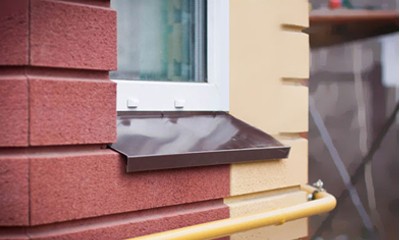
The plastic window is made up of numerous components, each of which has a specific purpose.
A crucial component that guarantees the window structure’s dependability and long-term functionality is Explorer. It keeps moisture from rain from getting inside the house’s walls or window frames.
The section keeps the lower slope dry by covering it entirely. It is attached obliquely with a slight protrusion beyond the façade to guarantee snow and water drainage. Installed at the base of the window on the exterior of the building, made from a profile. must have a bend that perfectly complements the window’s style.
Crucial! When parameters are mismatched, the element is incorrectly fastened.
The product has side and bottom bends to guarantee quick water drainage.
What are they for??
The element’s primary purpose is to shield the structure from precipitation. The ebb tide is used to divert moisture to one side, where it drains to the ground. The product’s second purpose is to give the window a polished, aesthetically pleasing appearance. If you select the appropriate material and part appearance, you can safely classify it as a decorative element.
The flashing shields the polyurethane foam and seams from sunlight in addition to the walls. This keeps the facade and window structure from being prematurely destroyed.
Should you fail to install the product correctly, then:
- moisture will begin to collect on the windowsill;
- finishing materials will be destroyed;
- the plaster will fall off;
- window frames will become unusable.
Even so, a lot of PVC window owners bemoan the sound of raindrops hitting their glass at low tide. It begs the question: Is it possible to not install the product? In one situation, where the window is installed flush with the facade and does not recess into the wall, you may choose not to install a low tide. The canopy above the window then assumes the protective role and prevents water from building up on the windowsill.
Requirements
The following requirements are taken into consideration during the manufacturing process before an order is placed:
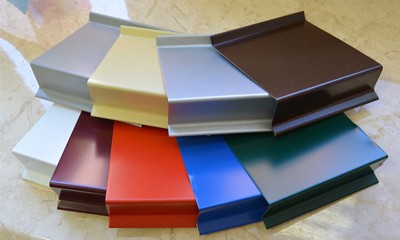
- Width calculation ebb is performed depending on the width of the opening. This is a dependent quantity. Then you need to add 3-4 cm (protrusion) + a slight slope. As a result, the minimum width of the part should not be less than 90 cm.
- Length calculated based on the distance between the outer side edges of the window opening. To the resulting measurement you need to add 4 cm on each side. When finished, the length of the ebb should not be 7-8 cm greater than the original measurement.
- Appearance and parameters of the window sill differ for windows in a frame, panel or brick house. The configuration of the part must correspond to them.
- Optimal colors shimmer is similar to the frame color or a shade darker.
Technical prerequisites consist of:
- increased resistance to corrosion;
- resistance to negative natural factors – precipitation, temperature changes, solar activity;
For a plastic window, the chosen ebb tide option must fulfill each of the specified conditions.
What are there for PVC structures??
The range of materials used in their creation is what primarily distinguishes the products from one another. All kinds of sills have a long lifespan if they are produced well and installed correctly. However, every material has unique properties of its own.
Galvanized steel
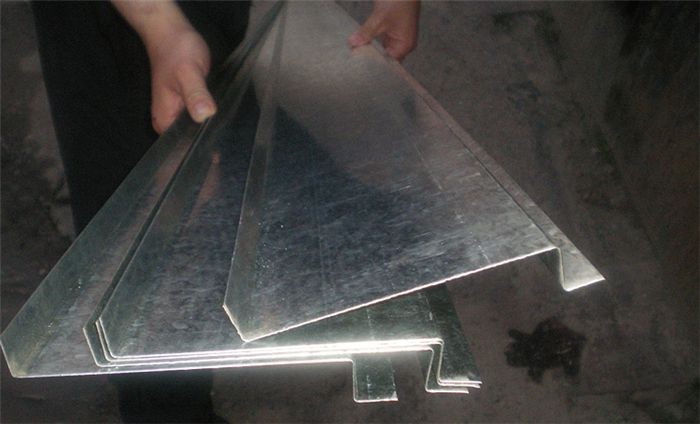
There are numerous benefits associated with this material. Ebbs come in a variety of shapes and widths from the manufacturers.
Benefits of the content:
- high corrosion resistance;
- resistance to mechanical damage;
- easy to cut and bend, which makes it possible to make a ebb for a plastic window yourself;
- easy to maintain;
- the material is painted in any color.
Drawbacks:
- the initial shine of the steel quickly fades;
- the geometry of the ebb when made independently is much worse than the factory one;
- in urban conditions, the service life of the protective zinc layer is much lower – rust appears;
- the noise from raindrops is clearly audible.
Suggestions. Use vibration-absorbing materials or securely fasten the ebb to lessen the noise effect.
Polyester

This is merely synthetic enamel over galvanized steel. Polyester serves as the coating base. Any shade of the coating is acceptable.
Benefits of the content:
- polyester resists aggressive weather conditions better than galvanized steel;
- the presence of a vibration-absorbing layer on the back side of the ebb.
Minuses:
- low mechanical strength – requires careful installation;
- the material is more expensive.
Please take note that after installing the product, any protective polyethylene film that may have been applied to the part’s front surface should be removed.
Aluminum
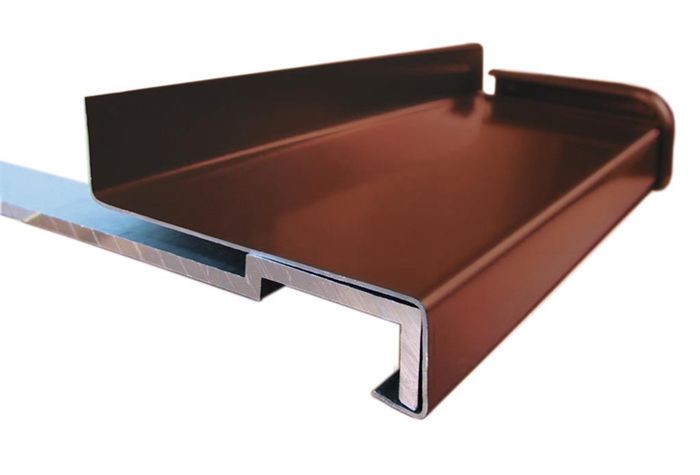
Aluminum is a common material for modern flashings.
Advantages:
- excellent rigidity;
- durability;
- not afraid of acid rain.
Minuses:
- price;
- impossible to bend without special equipment;
- complex painting technology, limited color range.
Reference: Special connecting elements and end caps are needed to lengthen the part.
Plastic
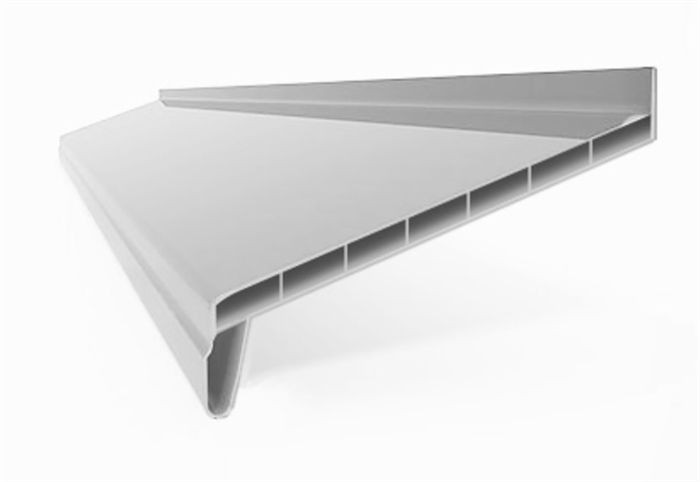
Plastic windows work well with this material.
Advantages:
- durability;
- weather resistance;
- good noise-absorbing properties;
- versatility – possibility of installation at the bottom of the window and at the top;
- ease of installation.
Minuses:
- high coefficient of thermal expansion;
- price.
The quietest products for plastic windows are plastic moldings. At the moment, tides can be artificial or made of natural stone.
Crucial! It is not advised to install these products on your own.
We go into the definition of casings, their function, and the materials and installation costs in our comprehensive guide, "Installing Casings on Plastic Windows." Casings are crucial for improving plastic windows’ appearance and usefulness. They add a final detail that harmonizes with the outside and interior of your house. We examine the various kinds of casings that are out there, ranging in price from straightforward patterns to more complex styles. Knowing these specifics enables homeowners to ensure both quality and affordability in their home improvement projects by assisting them in making well-informed decisions when replacing their windows.
Criterias of choice
In an apartment building, if you are replacing or installing a plastic window, you should select an external sill that resembles the ones that are already there.
Before making a purchase, the owner of a private residence needs to consider the following factors:

- Material. For a plastic window, it is recommended to take plastic sills. A galvanized steel part is more suitable for a wooden frame.
- Difficulty of maintenance. It is better to choose low tides that do not require careful maintenance. During operation, the external ebb gets dirty, so cleaning is a must. The main thing is that this process can be done with minimal effort and cost.
- Low weight. A product that is too heavy will put a lot of stress on the facade. And it will need a supporting structure.
- Is there a special coating. It is recommended to choose ebbs with a platinum coating. It increases the strength of the part and improves the appearance.
- Manufacturer"s brand. Well-known suppliers value their reputation and supply high-quality products.
It’s important to consider the ebb’s color as well. It ought to blend in with the facade. Technological factors to consider when selecting a sheet include length, width, and the ability to install special plugs.
Tools and devices
You will have to get ready a set of:
- drill;
- diamond disk;
- tape measure;
- hammer;
- scissors for cutting metal;
- self-tapping screws with a special drill tip;
- a screwdriver and a special attachment to work when there is a ledge under the window;
- marker;
- level;
- polyurethane foam;
- tip.
This list is adequate for installing ebb and flow on a plastic window, whether done professionally or on your own.
How to install it yourself?
The external part’s installation is not thought to be a difficult task. A diligent novice can accurately set the low tide. Only You have a few subtleties to pay close attention to:

- First, clean and properly trim the outer window sill. Both of its edges must overlap the slopes of the window opening by at least 1 cm. During operation, you need to slightly bend the edges upward – this technique will increase the service life and protect against condensation in the winter.
- Check the width of the structure. If the value is equal to the width of the slope, then the ebb will not perform a protective function and water will fall on the wall of the building. The width should be 3-4 cm larger than the slope.
- Will prepare the slopes. It is necessary to seal their lower part with vapor-permeable tape. To do this, the tape must be carefully glued to the frame lining with one edge, and to the cleaned end of the opening with the other. If the slopes are finished with mortar, it is necessary to cut the external window sill into them 1 cm on each side.
- Make a low tide cushion on the window. For this purpose, polyurethane foam is used, which must be carefully blown under the external window sill. A cement-sand mortar is considered a more reliable base.
- Attach the ebb with self-tapping screws, but pre-treat the joints with the frame with sealant. Start fastening from the middle of the window frame. The distance between the screws is 30 cm.
- Check the horizontal line with a level so that rain streams do not accumulate in one place. Tilt angle – at least 10°.
- Treat all joints with sealant.
Crucial! Strict adherence to installation technology is required for the part’s maximum service life.
Watch this video to learn how to install a low tide by hand:
Possible difficulties and errors
Even though the product is simple to install, a lot of people make the following common mistakes:
- Failure to meet installation deadlines. If the installation of the low tide is postponed indefinitely, then in the future the facade will have to be repaired (due to moisture ingress). This will increase the cost of installation and improvement of the appearance of the window.
- Refusal to install a stand profile. This reduces waterproofing and reduces the quality and service life of the window.
- All joints are not sealed. The ebb tide will not perform protective functions, and moisture will penetrate onto the façade of the building.
- Wrong choice of waterproofing materials. For example, copper or galvanized flashing cannot be tightly attached to brickwork. Therefore, the tightness of the structure will be compromised.
- Setting the Incorrect Angle. Such a mistake is difficult to correct, and its consequences have serious. Moisture will accumulate on the windowsill or flow inside the window.
Suggestions. When installing the ebb, the aforementioned subtleties must be kept an eye on.
Average prices in the Russian Federation
Let’s examine the cost of products and installation across the nation.
For the finished product
The pricing policies of manufacturers are very detailed. The final product’s price is determined by:
- supplier brand;
- the material from which the part is made;
- water coating;
- the presence of additional elements;
- delivery region;
- product colors.
The estimated cost of each product ranges from 480 to 5,000 rubles.
For installation

The state of the area affects the approximate cost of installation. For instance, it will cost more to install ebb tides in Moscow than in Voronezh.
In addition, the cost varies based on the material, casting width, and list of services. Turnkey installation will set you back between 900 and 1500 rubles.
A ready-made tint with installation is available for purchase. The lowest price starts at 2000 rubles.
| Aspect | Details |
| What are castings? | Castings, also known as window sills or ledges, are parts installed around plastic windows to improve aesthetics and protect the building from water and drafts. |
| Types of castings | There are different types of castings, including internal and external ones, made from materials like PVC, aluminum, or wood. |
| Installation process | Installation involves measuring the window, cutting the castings to size, and securely fixing them in place with screws or adhesive. |
| Average prices for materials | Prices for castings vary, b |
One of the most important things you can do to improve the look and feel of the windows in your house is to install casings on plastic windows. These casings have functions beyond aesthetics; they are usually composed of aluminum or PVC. They enhance insulation, offer more defense against the weather, and may even raise your home’s overall energy efficiency.
When thinking about installing casings, it’s critical to comprehend the associated expenses. The material selected, the size of your windows, and the difficulty of the installation procedure are just a few of the variables that can affect prices. Although homeowners should budget for a moderate amount of money, the long-term advantages in terms of durability and energy savings frequently exceed the outlay.
Selecting the appropriate contractor is essential to guaranteeing a seamless and efficient casing installation procedure. Seek out seasoned experts with a strong reputation in your community who specialize in window treatments. Making an informed choice can be aided by reading reviews and contacting references.
All things considered, adding casings to your plastic windows is an excellent investment that will greatly improve the functionality and aesthetics of your house. These casings add value and aid in creating a more comfortable living space all year round by enhancing insulation, providing protection, and possibly lowering energy expenses.


