
Knowing the various materials’ thermal conductivities is essential when it comes to insulating our homes. A material’s ability to conduct heat is measured by its thermal conductivity. Foam insulation is a common option because of its adaptability and light weight. It consists of materials with different thermal performances, such as extruded polystyrene (XPS) and expanded polystyrene (EPS).
Compared to other materials, EPS foam has a moderate thermal conductivity and is frequently used in construction because of its reasonable cost and passable insulation qualities. It works well to slow down the transfer of heat, lowering energy expenses and preserving comfortable interior temperatures.
Another kind of foam insulation with a denser structure is called XPS foam, and it provides a higher thermal resistance. Because of its density and decreased thermal conductivity, XPS works well in colder climates where keeping a warm interior is essential.
The thermal conductivity of foam and more conventional insulation materials, such as fiberglass or mineral wool, can be compared. The density and thickness of glass fiber, which is used to make fiberglass, affect how much heat it conducts. Although the thermal performance of mineral wool, which is made from real minerals, varies, it often has good insulating qualities.
| Foam | Other Materials |
| Foam insulation, such as expanded polystyrene (EPS) or extruded polystyrene (XPS), has a low thermal conductivity, making it effective at reducing heat transfer. | Other materials like fiberglass and cellulose insulation also offer varying degrees of thermal resistance, but may differ in installation ease and environmental impact. |
- What is polystyrene foam and its performance characteristics
- Main characteristics of thermal conductivity of foam plastic
- Comparison of thermal conductivity of foam with other materials
- Comparison of styrene with penoplex
- Features of choosing foam sheets for insulation
- How chemical composition can affect thermal conductivity
- Why is it important to remember about vapor permeability?
- Features of application and numbers in markings
- Video on the topic
- Which insulation is better? We test mineral wool, polystyrene and NPE Tepofol
- Comparison of wall insulation. Penoplex or PPU.#penoplex #ppu#production
- Insulation test. PPS, EPPS, Mineral wool. Comparison of heat-saving properties of popular insulation materials.
- Penoplex. Comparison with other materials
- Ch-1, Foam plastic 2cm or 4cm. Comparison of thermal conductivity at -12 outdoors (32)
- Calculation of thermal conductivity of building materials – table with examples
- COMPARISON OF THERMAL CONDUCTIVITY OF BUILDING MATERIALS
- Ch-3, Foam plastic 2cm or 4cm. Comparison of thermal conductivity at -12 outdoors (34)
What is polystyrene foam and its performance characteristics
The slab known as polystyrene foam, or simply polystyrene foam, comes in different thicknesses. Foamed polymer serves as this material’s primary raw material. The air between and within the granules of the material ensures the insulation’s thermal conductivity. The gas that makes up 95–98% of polystyrene foam actually holds heat.
Because there is sufficient air in the intermediate layers of the raw material, polystyrene foam has a low specific gravity and minimum density. Furthermore, the internal air layer offers effective sound absorption.
The polymer itself and the procedures followed during the material’s manufacturing determine the final density and other properties of the thermal insulation material. It is possible to produce foam plastic with uneven densities and varied levels of mechanical stress resistance by using different production-stage conditions.
Main characteristics of thermal conductivity of foam plastic
Prior to determining the thermal conductivity of polystyrene foam, it is necessary to comprehend the meaning of this parameter.
Thermal conductivity is a measurable property of foam plastic, or any other material, that assesses how well a certain body conducts heat. This parameter’s unit of change is W/mS. Each designation in this instance is described as follows:
- Watt is the amount of thermal energy;
- Meter—distance of heat conduction through oneself;
- C – a certain temperature for a certain time.
We recommend taking a look at an illustration of thermal conductivity. Assume for the moment that we have a sheet of PSB-S 50 polystyrene foam. It has a 50 kg/m3 density. The factory determines this raw material’s heat transfer parameter. This leads to the conclusion that 50 mm foam has a thermal conductivity of 0.041 W/mS. Note that this kind of indicator will only work if the temperature stays between 20 and 30 degrees.
Speaking of which, Only when comparing the values of polystyrene foam’s heat penetration parameter with those of other thermal insulation materials is it worthwhile to take note of it.
Comparison of thermal conductivity of foam with other materials
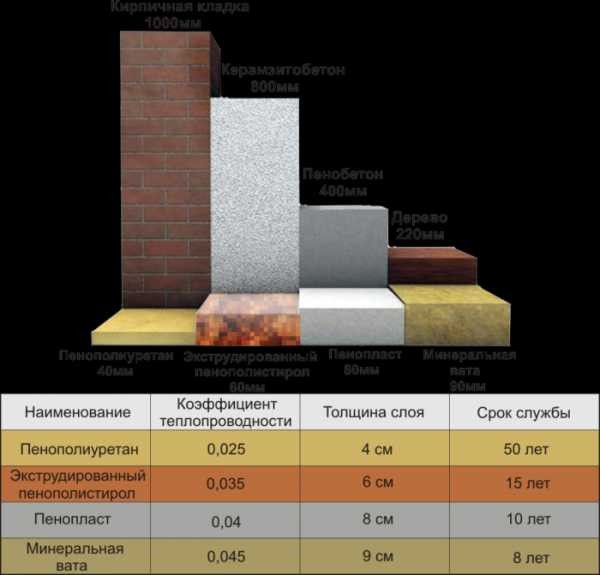
It is evident that the thermal conductivity indicator fluctuates between 0.037 and 0.043 W/ms when the thickness of the polystyrene foam varies. For instance, there won’t be much of a difference in terms of indicators when compared to raw materials like mineral wool.
Additionally, in order to ascertain the ideal parameter, the building materials utilized to construct the structure’s walls are considered in addition to sheet heat insulators with various fillers.
Red brick is not insignificant when it comes to building a house’s walls. Its relatively high level of heat transfer (0.7 W/ms) is related to this. In comparison to foam polystyrene, this is nearly 19 times greater. That is to say, a wall that is at least 80–85 cm thick must be built in order to avoid the need for a heat insulator. Building meter-long load-bearing structures will be required in the case of sand-lime brick.
Houses are also frequently constructed with wood. It is marginally more competitive with foam than red brick. Wood has a thermal conductivity of 0.12 W/mS. This turns out to be three times more than foam made of polystyrene. It turns out that in order to achieve the same thermal conductivity indicator as PSB with a thickness of 5 cm, you will require a log house up to 23 cm thick when building a wall made of solid wood.
Crucial! The qualities of the wood and the way a wall is constructed can affect how well heat is transferred through a wooden wall.
Comparison of styrene with penoplex
Utilizing the same granules, penoplex and polystyrene foam are essentially the same materials. The gluing technology is the only thing that differs, and it produces surprising results when comparing indicators.
The truth is that high temperatures and pressure are applied to styrene balls during the penoplex production process. The end product is a durable and homogenous plastic mass that freezes. The residual air bubbles are dispersed uniformly over the slab’s whole surface.
The material that has already been put into the mold is just sprayed with steam to create foam. It acquires a "popcorn" structure as a result, and the bonds separating the loose granules become significantly weaker.
This indicates that extruded polystyrene foam has a better thermal conductivity, corresponding to 0.028-0.034 W/mS. For every 40 mm of traditional foam, only 30 mm of this material will be required.
Crucial! When a high level of strength is not required for the insulated wall, you can safely choose low-cost polystyrene foam. It is true that you should first ascertain the ideal thickness, which will depend on operational and climatic factors.
Features of choosing foam sheets for insulation
Priority one when purchasing polystyrene foam is the quality certificate. It will determine whether or not the thermal conductivity indicator matches the actual value that was previously discussed.
It takes place when a producer uses both its own specifications and GOST to manufacture a product. Technical parameters, such as the heat transfer rate, may change in these circumstances.

Therefore, you must ask the seller in the store to produce a document verifying the technical characteristics of the material of the exact brand you have chosen if you want to use the purchased material with the anticipated effect.
Note: Specific symbols, typically printed on the side of each material sheet, indicate the document’s correspondence to the type of polystyrene foam.
We examine the differences in the insulating properties of different materials, such as foam, as we investigate thermal conductivity. Making wise decisions during building and renovation projects requires an understanding of this. Foam insulation is a competitor to more conventional materials like fiberglass and cellulose because of its low weight and affordability. Each material has advantages and disadvantages. Foam, with its closed-cell structure, is excellent at reducing heat transfer, while fiberglass is more versatile and less expensive. Recycled paper is the source of cellulose, which offers environmental friendliness but needs to be installed carefully. We can compare these options to see which best balances cost, environmental impact, and effectiveness for various project needs.
How chemical composition can affect thermal conductivity
The foam is guaranteed not to ignite by the manufacturer. However, there is still a certain combustion coefficient to this raw material. Thus, self-extinguishing is a parameter that you need to consider when selecting a material.
The thermal conductivity of polystyrene foam with index "C" is noticeably higher than that of polystrene foam brands with traditional markings.
Why is it important to remember about vapor permeability?
It is advisable to keep in mind polystyrene foam’s vapor permeability when choosing to use it as insulation for your own home’s walls. The heat insulator will function better if this indicator is lower.
The truth is that a lot of insulating materials can’t keep steam from penetrating them. It transforms into moisture with time and gets deposited in material layers. As a result, the latter degrades and loses its quality attributes. Additionally, thermal conductivity is negatively impacted because the foam starts to transfer heat through itself and discharge it into the street.
Features of application and numbers in markings
Both indoor and outdoor settings can benefit from the use of foam insulation. The coefficient of thermal conductivity can be used to determine this. For instance, if the product name includes the number 15, then these sheets can be adhered to indoor vertical structures using glue. This raw material won’t take up any valuable space because of its tiny thickness.
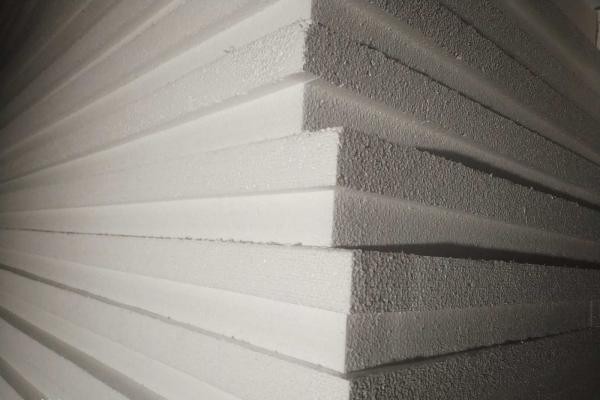
Additionally, there is a higher quality insulation coefficient denoted by the number "25," which is only applied to the thermal insulation of the house’s exterior walls. In attics and basements where a higher degree of thermal insulation is necessary, it is also frequently utilized. In multi-story apartment buildings and the private sector, expanded polystyrene with this coefficient can be used to insulate interfloor ceilings and roof slopes.
The foam plastics with the marking "35" on them have the lowest value of thermal conductivity. These kinds of materials are used to insulate runways, highways, underground foundations, and other industrial capital structures. Using such boards for insulation in a house is absurd.
Knowing thermal conductivity is essential when selecting insulation for your house. Comparing foam insulation to more conventional materials like fiberglass and cellulose, materials like polystyrene and polyurethane offer superior thermal resistance. Better heat retention in the winter and cooling in the summer result from this, saving energy expenses.
The minimal heat transfer through walls and roofs is ensured by the low thermal conductivity of foam, which is measured in W/mK. Because of its efficiency, it is a recommended option in contemporary construction, where energy efficiency is crucial. Foam retains its insulating qualities over time, in contrast to materials that are prone to settling or absorbing moisture.
Even though foam insulation has excellent thermal performance, it’s crucial to take the environment and installation costs into account. Even though upfront costs could be greater, long-term energy bill savings frequently make up for this. Furthermore, foam’s carbon footprint is being decreased by developments in environmentally friendly formulations.
Weighing the benefits and drawbacks of insulation materials is essential for making educated decisions for both builders and homeowners. Foam exhibits exceptional thermal conductivity, making it a dependable barrier against heat gain and loss. Innovations in insulation continue to improve our living spaces’ sustainability and comfort as technology advances.


