
During the building or remodeling process, selecting the appropriate facade panels for your house is an important choice. In addition to adding to the visual appeal of your home, facade panels shield it from the elements. Facade panels come in a variety of forms and each has advantages and considerations of its own when it comes to exterior decoration.
Vinyl siding, which is renowned for being inexpensive and low maintenance, is a common option for facade panels. In addition to being strong and bug- and rot-resistant, vinyl panels are available in a variety of hues and designs. They are a favorite among homeowners searching for an affordable solution that needs little maintenance because they are comparatively simple to install.
Fiber cement panels present a strong choice for people who value sustainability. These cellulose fiber-based, cement-and sand-mixed panels are incredibly strong and fireproof. They have the appearance of wood or masonry without the upkeep issues that come with it, like termite or rotting damage.
Steel and aluminum metal facade panels are prized for their robustness and contemporary aesthetic appeal. These panels offer exceptional weather resistance and longevity despite their lightweight design. With the range of finishes they come in—painted, anodized, or coated—homeowners can attain a modern, sleek appearance.
The best option might be wood facade panels if you like a natural look. Wood can be sourced sustainably and has a timeless, rustic charm. To keep it from weathering and decaying, it needs routine maintenance. Wood panels offer versatility in design because they can be painted or stained to match your architectural style.
The choice of facade panels ultimately comes down to your maintenance preferences, desired aesthetic, and financial constraints. Prior to making a choice, carefully consider the advantages and disadvantages of each type of panel as they are specific. Whether cost, toughness, sustainability, or creative freedom are your top priorities, there’s a facade panel choice that will fit your requirements and improve the aesthetics and usability of your house.
| Facade Panel Type | Features |
| Vinyl Panels | Low cost, lightweight, easy to install, variety of colors, minimal maintenance. |
| Fiber Cement Panels | Durable, fire-resistant, insect-resistant, low maintenance, can mimic wood or stucco. |
| Metal Panels | Modern aesthetic, durable, weather-resistant, recyclable, can be costly. |
There are a number of options available when selecting facade panels to decorate a house’s exterior, each with advantages and considerations of their own. This article examines and contrasts popular facade panel types, including metal, wood, fiber cement, and vinyl, with an emphasis on each material’s cost-effectiveness, durability, and aesthetic appeal. Homeowners can improve the appearance and longevity of their homes’ exteriors by making educated decisions by being aware of these factors.
- Facade panels for home
- Advantages and disadvantages of facade panels
- Advantages
- Flaws
- Types of facade panels
- Wooden facade panels
- Metal
- Glass
- Composite
- Polymer
- Sandwich panels
- Video on the topic
- #ЯФасад panels – the best inexpensive exterior finish. Price. Everything is in your mind
- How to decorate the facade of a country house? Finishing materials for the facade and cost. Build Yourself a House.
- How to cover the outside of a house? TOP 4 best inexpensive materials for facade finishing
- Facade of a frame house: what material to choose? / 16 options for facade decoration of the house
- Finishing is 8 years old! Is it worth taking façade panels made of polypropylene??
- How to cover the outside of a house? Cladding a house, what material to choose? All the pros and cons.
- Brick-like facade panels. Review of materials, comparison and prices
Facade panels for home
The house’s facade structures are independent components fastened to a wood or metal frame. Certain sections lack ventilation gaps between the cladding and the wall and are glued together.
There are no spaces between the cladding elements where dust, debris, or moisture can enter because the panels are securely fastened together with unique fasteners.
The imitation of wood logs, boards, brickwork, and real or artificial stone gives façade structures their decorative quality.
There is no need to level the house’s walls or prepare them for wall-mounted cladding. Facade slabs come in a range of textures as well as materials (metal, ceramics, PVC, wood), and they can be installed either vertically or horizontally.

The range of sheets is offered in a number of colors in addition to a range of textured patterns and designs.
Advantages and disadvantages of facade panels
Facade curtain structures are common, but they have different benefits as well as drawbacks.
Advantages
Suspended structures have several advantages, such as:
- ensuring protection of walls from external factors;
- structural strength;
- many panels are fireproof;
- possibility of installing insulation outside the building;
- durability;
- help increase the soundproofing properties of walls;
- minimal care;
- many panels are distinguished by their ability to self-clean in the rain;
- the ability to retain its properties over a wide temperature range;
- mold and mildew do not form on the façade panels;
- help ensure a normal microclimate in the house.
Furthermore, a lot of hanging structures have a long service life, so replacing a damaged section won’t affect the structure as a whole.

Flaws
Because some panel types are heavy, the walls and foundation must be strengthened before installing the panels.
Costly materials are challenging to install by hand, especially the heavy (ceramic) varieties; labor is needed.
Installing façade panels is impractical in homes with a variety of wall shapes and architectural styles because curtain cladding installation necessitates standard rectangular walls covering a sizable area.
Types of facade panels
Facade panels are categorized based on the type of material used in their construction, as well as their shape and fastening technique.
The elements that make up the facade’s shape are:
- rectangular;
- modular;
- in the form of long rectangular strips.
Based on the coloring technique, there may be:
- under natural stone;
- under the tree;
- with tile imitation;
- under brick;
- painted on the front side in a single color.
The cladding elements’ structure can be either conventional (bare) or insulated (sandwich panels).

Additionally, there are components with and without locking fasteners. Moreover, materials can be used to make curtain wall cladding components:
- wood;
- metal;
- glass;
- composite;
- polymer materials (vinyl and polyurethane).
The demand for and features of one type of cladding panel over another are the clear benefits.
Wooden facade panels
Compressed sawdust or wood fibers, when compressed, form a fairly durable and environmentally friendly material that is used to make wooden sheets or slabs.
Wooden components are treated with antiseptic and water-repellent materials to guarantee their quality. Wooden panels are in demand due to their unique qualities.
Benefits
Key signs of quality for wooden curtain cladding include:
- environmental friendliness;
- durability;
- resistance to temperature changes;
- resistance to deformation;
- provides thermal insulation and sound insulation of facade walls.
Installing wooden panels is very simple, and the foundation does not need to be further reinforced.
Drawbacks:
It is preferable to avoid using wooden cladding in areas with high humidity and precipitation. The choice of facing material may be impacted by a high fire risk. Wooden panels cost a lot of money.

Metal
Aluminum or galvanized steel panels covered with a polymer layer on the exterior make up metal cladding (it provides reliable anti-corrosion protection).
Color of coating may differ. Metal components can be perforated, corrugated, smooth, or have extra corners (ribs).
Benefits
The following are some benefits of metal cladding:
- durability;
- fire resistance;
- UV resistance;
- moisture resistance;
- mechanical strength;
- stability over a wide temperature range.
Metal components aid in offering strong defense against outside influences.
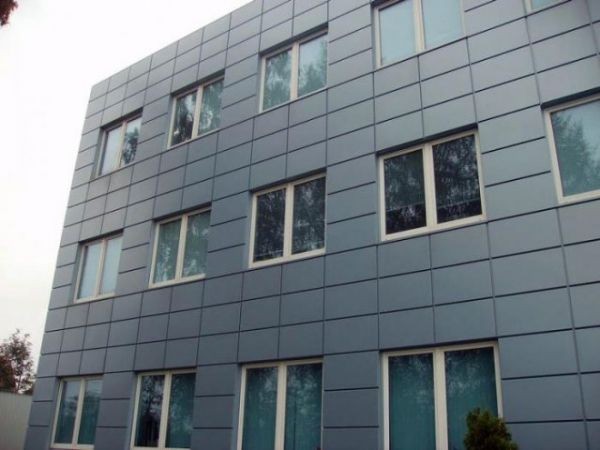
Drawbacks:
The substantial weight of the structure is a major drawback of steel sheets. In hot weather, the metal becomes extremely hot in the sun, raising the average room temperature.
The panel needs to be replaced with a new one if the metal is mechanically damaged because the panel’s structure cannot be repaired.
When calculating the material and its installation, this factor needs to be considered.
Glass
These kinds of designs are typically found in opulent, pricey mansions and respectable office buildings.
Benefits
Among glass systems’ benefits are:
- UV resistance;
- protection from precipitation;
- sufficient impact strength;
- durability.
Suffice it to say that glass elements have a decorative effect: tinted glass fills the facades with light while protecting against overheating.
Drawbacks:
The primary drawback of a glass facade is the expense of the materials required for installation and design.

Composite
Because of their extensive range, composite panels are highly sought after. Their multilayered structure is characterized by variations in the filler type (mineral, aluminum, polymer) and the outer layer composition (fiber cement, porcelain stoneware, clinker).
Although the material has unique properties of its own, such slabs are rarely used in private construction; their production is more focused on production design.
Benefits
The following are some benefits of composite panels:
- strength;
- durability;
- ease of care;
- resistance to external factors;
- easy installation.
Drawbacks:
A lot of the content is falsified. If the panel is presented without an insulating layer, installing composite systems requires laying insulation (as with clinker types).
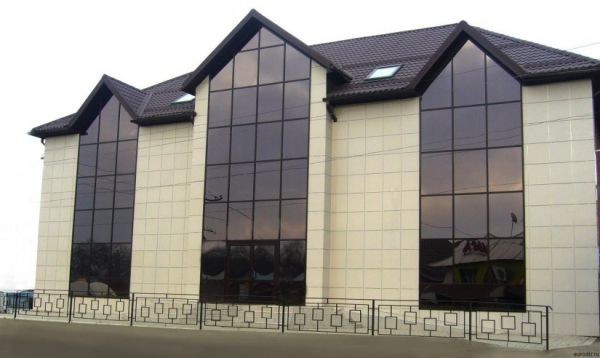
Polymer
The polymer cladding is displayed as
Benefits
The following are some benefits of the polymer curtain façade:
- moisture resistance;
- thermal conductivity;
- ease of installation;
- durability.
Furthermore, the design is lightweight and simple to assemble.
Drawbacks:
Low color fastness and fragility at low temperatures are the drawbacks of polymer materials.

Sandwich panels
The components comprise a multilayered structure consisting of two or three layers. The panel itself is typically made of aluminum sheets between which polystyrene or polyurethane foam is placed as insulation. These hanging systems are more frequently utilized in industrial construction than in private home remodeling.
Benefits
Sandwich plates have several benefits, including:
- independence of installation from the time of year;
- high installation speed;
- savings on interior decoration.
Painting or additional decoration are not necessary for wall-mounted cladding.
Defects
Sandwich boards have the drawbacks of potential freezing at the joints and insulation peeling in cold weather.

Selecting the ideal facade panels for the outside of your house is an important choice that affects both appearance and usability. As was mentioned, every kind of facade panel has particular advantages and things to keep in mind. Fiber cement panels are a sensible option for long-term dependability because of their reputation for durability and minimal maintenance. They are a wise investment because of their resistance to moisture, fire, and pests.
Natural wood panels, on the other hand, give your facade a warm, timeless charm. They have an organic aesthetic appeal that gets better with age. To preserve their beauty and guard against weathering, they need more maintenance.
Modern versatility is provided by metal panels made of steel and aluminum, which come in a variety of colors and finishes. They require little upkeep, are extremely weather resistant, and are lightweight but strong. Their streamlined design complements modern architectural forms.
To optimize benefits, composite panels combine multiple materials. For example, they can combine the durability of fiber cement or the strength of metal with the beauty of wood. This hybrid method frequently strikes a balance between aesthetic appeal and affordability.
The choice of facade panels ultimately comes down to your priorities, including cost-effectiveness, durability, aesthetics, and maintenance needs. To determine which option is best for your particular climate, architectural style, and budget, think about speaking with an expert. You can guarantee long-lasting protection and satisfaction in addition to improving the curb appeal of your home by choosing the appropriate facade panels.


