
With its distinct charm and character, decorative stone finishing can completely change any area. Whether you’re building a new home or remodeling an old one, stone can provide a classy and long-lasting touch. However, why is decorative stone such a well-liked option? Let’s dissect it.
First off, different types and finishes of decorative stone each have their own unique appearance. Stone finishes range from smooth, contemporary designs to rough, organic textures, catering to a wide range of aesthetic tastes. Because of its adaptability, you can design a unique style that is ideal for your area.
In addition to being very attractive, stone is very durable. It is perfect for high-traffic areas since it resists abrasion well. Additionally, the inherent qualities of stone can aid in controlling temperature, keeping your house warmer in the winter and colder in the summer.
Another important component is maintenance. Decorative stone requires less maintenance than other materials, but it still needs to be maintained occasionally. Its beauty can last for years with the right sealing and periodic cleaning.
Decorative stone gives long-lasting value to your design in addition to improving its aesthetics. This versatile material can be used for accents, floors, or walls. It blends style and utility well.
| Type of Decorative Stone | Description |
| Granite | Durable and available in various colors. Ideal for both indoor and outdoor use. |
| Marble | Elegant and smooth. Commonly used for high-end interiors and surfaces. |
| Limestone | Soft and versatile, often used for both modern and traditional looks. |
| Slate | Unique textures and colors. Good for both flooring and wall cladding. |
| Travertine | Textured and warm, often used in classic and rustic designs. |
- What does the material consist of??
- Raw materials for artificial cladding
- Which ones are most common??
- Cement
- Gypsum mixtures
- Flexible
- Self-production
- Equipment
- Advantages
- Video on the topic
- Decorative stone from gypsum, #forms #stone #repair #training
- Decorative stone for wall decoration
- DIY decorative stone, #stone #Repair #Forms #Learning #gypsum
What does the material consist of??
Natural origin products are distinguished by a consistent, solid material structure. Because stones are extracted from quarries located in various locations, even the same material can have variations in color, pattern, and other characteristics while still being a member of the same group.
Solid rocks are cut into briquettes of various sizes, which are subsequently processed in various ways:
- grinding;
- circumcision;
- glossing, etc. P.
A specific breed’s inherent texture and ornamentation are maintained at the same time.
The price of the processed material is very expensive, and the cost of one square meter of installation is nearly equal to the price of the stone. This is because of the elements’ substantial weight, which makes laying challenging and necessitates specialized knowledge and abilities.
Natural decorative stones are very strong and dependable due to their solid, homogeneous structure and low amount of flaws or foreign inclusions. This is reflected in how long the cladding lasts.
Raw materials for artificial cladding
There are numerous artificial decorative stone varieties that mimic the texture of real materials. They come in a greater variety of colors and textures, but they are not as robust as their natural counterparts.
Depending on the material to be imitated, different materials are needed for the production of artificial cladding.
Which ones are most common??
Cement
To produce, you will require:
- cement grade not lower than M 400;
- fine-grained river sand;
- plasticizer;
- coloring pigment.
The strength of the cladding increases with the cement grade. White Portland cement is recommended by craftsmen because it allows you to use any color for decoration.
Light colors won’t have any effect if you choose standard gray cement, so you should only select more saturated and dark colors.
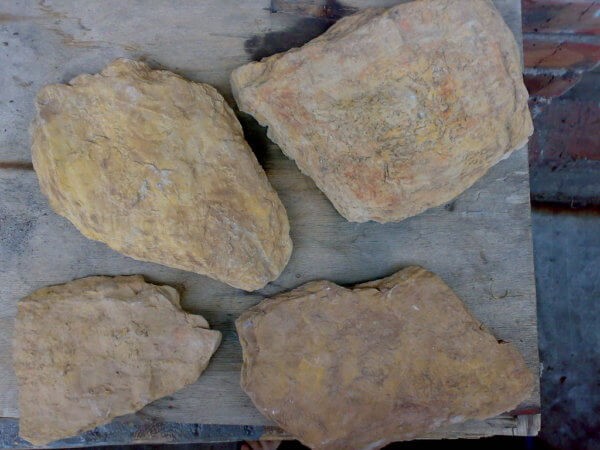
Use washed river sand with at least a few third-party inclusions to create tiles that are both beautiful and durable. A large proportion of clay and earthen inclusions can be found in quarry bulk materials, making them ideal for simulating sandstone or shale.
Our grandfathers used PVA glue, which works well as a plasticizer. It is dependable and easily available. The ratio of 25 g of glue to 1 liter of solution must be added. While there are many different types of coloring pigments, acrylic dyes work best.
Gypsum mixtures
Fluff, or slaked lime, gypsum "G5", and regular clean water are used to make products. You must combine gypsum, lime, and water in a 10:2:7 ratio to create the solution. The concentration of coloring pigments needed to create the cladding can be added.
Gypsum cladding should not be used in high-humidity rooms unless it is coated specifically. Moisture will quickly erode the finish’s structural integrity if gypsum decorative stones are not impregnated with a deep penetration primer and coated with a specific varnish.
Flexible

This is a roll of material that has chips of real stone on it. Applying it to surfaces with intricate geometry, corners, and other areas that are difficult to finish with traditional slab materials is very practical (how to veneer a corner with decorative stone?). To produce, you will require:
- high-strength fabric base or fiberglass canvas;
- polymer binders (silicone-acrylic or pure acrylic glue);
- dust or chips of natural stone (sandstone is more often used).
Stone chips or dust must be evenly sprinkled onto the adhesive’s surface and then pressed with a sturdy plate to create an even layer of cladding.
Decorative stone finishing is a popular option for both indoor and outdoor projects because it lends a sense of elegance and durability to any area. This material offers more than just aesthetic appeal; it also has useful properties like resistance to wear and weather. This post will discuss the various types of decorative stone, their composition, and applications for improving the aesthetics of your house while making sure it endures over time.
Self-production
Painting can be done on any DIY cladding product either during the mixing process or after the element has dried. Repairing chips or scratches will be more obvious in the first instance.
Guidelines for creating ornamental cement stones:
- For the solution, sift 3 parts of sand, add 1 part of cement. When dry, the components are thoroughly mixed. Dye is added if it is in powder form.
- Water with a plasticizer is added to the mixture, thoroughly kneaded with an electric drill with a mixer attachment. If the coloring pigments are in a liquid state, then they need to be added at this stage.
- Half the volume of the workpiece is poured into prepared molds moistened with soapy water, on top of which a serpyanka or reinforcing mesh is placed.
- Then the solution dries a little.
- Then the form should be filled to the brim, leveling the surface with a spatula.
- When the blocks have been standing in a dry, warm place for a day, you can take them out, but very carefully.
The elements must have a smooth back surface because this will determine how easy they are to install and how much glue they use. Applying a random pattern 1.5–2 hours after pouring will guarantee improved stone adherence to the mortar.
Guidelines for creating ornamental gypsum stones:
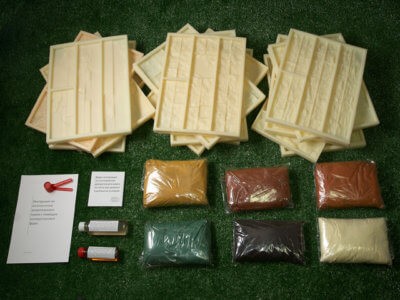
- The coloring pigment is added to water, where it dissolves well.
- The required amount of gypsum is added to the colored liquid.
- The corresponding proportion of lime is added to the creamy mixture, thoroughly mixed with an electric construction mixer or a drill with such a nozzle.
- Since the gypsum sets after 20-30 minutes, it is necessary to very quickly fill the prepared forms installed on a perfectly flat surface.
- To make the tiles easier to remove and prevent them from sticking to the form, it must be lubricated with a soapy solution and water.
Use ready-made dry mixtures like "Kamnedel" in place of regular gypsum and lime. This will result in stronger, higher-quality tiles.
Guidelines for creating pliable ornamental stones:
- A solid base made of fiberglass canvas is spread out on a flat, cleaned surface.
- Take silicone acrylic or pure acrylic glue and apply it to the fabric base with a layer of approximately 2 mm.
- Depending on the pattern, several colors of stone chips or dust are selected. It is poured onto the surface of the glue in the order required for decoration.
- To make the surface smooth, you need to press the layer of the mineral component with a flat plate.
Equipment
Different sets of tools and readily available materials will be needed depending on the type of finishing material and the components needed for its manufacture.
Regarding gypsum tiles and cement stones:
- form – silicone or polyurethane;
- container for mixing the solution;
- a water container to make it convenient to add the right amount;
- electric mixer or drill with screw attachment;
- trowel or spatula for leveling the solution.
Regarding pliable stone:
- tools for working with liquid glue;
- metal scissors or regular scissors (depending on the brand and material of the fabric base);
- a small container with a dispenser for sprinkling stone dust or crumbs;
- durable plate with a smooth, hard surface.
Advantages
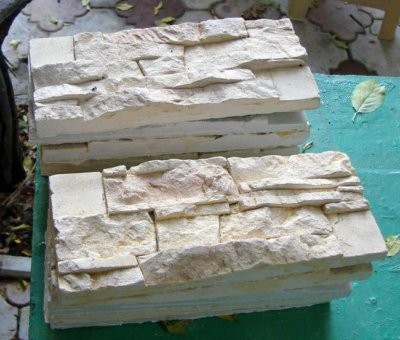
The following are the primary benefits of artificial cladding:
- low price when manufacturing a product or purchasing a ready-made product;
- choice of color – when making the material yourself, you can choose an almost ideal palette;
- fewer flaws, defects, inclusions that are characteristic of natural materials;
- due to the denser surface, care is reduced to removing dust or cleaning with a damp cloth;
- delivery is significantly cheaper, since the location of the plant or even independent production eliminates long transportation from the production site;
- if additional quantity of material is required, then you can purchase any volume of exactly the same stone;
- simplified repair;
- the weight of stone blocks with the same texture is approximately 1.4-1.5 times lower than their natural counterpart, which greatly facilitates installation;
- The artificially aged surface serves perfectly for many years, and for a natural product means rapid destruction;
- installation is also simplified due to additional elements.
Decorative stone finishing gives a classic appearance that improves any area. This material offers both beauty and durability, making it perfect for creating a chic feature wall inside your home or adding a dash of elegance to the outside.
The versatility of decorative stone is one of its main draws. You can find the ideal match for any design style thanks to the wide variety of textures, colors, and patterns available. Decorative stone can be tailored to your vision, whether it’s for modern sophistication or rustic charm.
Plus, it’s a sensible decision. It has a fantastic appearance in addition to being durable and low maintenance. Because of its resilience to weather and normal wear and tear, it’s a wise investment for any remodeling project.
Decorative stone can completely change the look of your room and give it a timeless appeal. It’s understandable why this material is still a favorite among designers and homeowners alike given its abundance of options and useful qualities.


