
St. Petersburg is not just a formal portrait with endless facades and austere avenues. Behind its official, “official” appearance lies a lively, ever-changing city. It can be read like a book, where each era has left its mark — from imperial luxury to Soviet modernism and contemporary graffiti.
The design code is an attempt to decipher this language. It is not just a set of rules on how to paint facades. It is a view of the urban environment as a holistic system, where everything is important: from the shape of a lamppost and the color of a bench to the rhythm of windows and street signs. It is an understanding that it is these details that make up our everyday perception of St. Petersburg.
In this article, we invite you to look at the city not through the eyes of a historian or tourist, but through the eyes of designers, architects, and concerned citizens. They piece together this visual puzzle, noticing things that we often overlook. Their observations help us understand what the real, unvarnished St. Petersburg looks like today and how we want to see it tomorrow.
St. Petersburg is not only about architecture and history, but also a special sense of style that is felt by those who live in the city and create around themselves. The design code of the Northern capital is a combination of restrained elegance, the industrial charm of old factories, the coziness of courtyards, and the austerity of avenues. Designers, architects, and urban activists see inspiration in this urban rhythm: they transfer it to interiors, signs, furniture, and even digital projects. Their perspective helps us understand that the true St. Petersburg style is not about following fashion, but about the ability to feel the character of the city and speak the same language.
Interior designer
St. Petersburg has a humid, cool climate, so you always want to make it warmer. If possible, a fireplace is a must. Especially if it is a historic building where it can be either preserved or restored—a fireplace as a dominant feature is always welcome in St. Petersburg.
I, for example, often use enfilades – a bridge from St. Petersburg's past to the present. Clients often ask me to “create a St. Petersburg apartment,” but there is no such thing as a unique style. All of these are interpretations of French, Italian, and a little Dutch interior design, adapted to our reality. The St. Petersburg style as such has not yet taken shape — it is more of a mixture of European traditions, as it has always been.
Before you start organizing storage, you need to do an inventory. Take the time to sort through all the things on the balcony. Be ruthless: if you haven't used something in over a year, you probably don't need it. Sort your belongings into three categories: “keep,” “throw away,” and “give away.” This will help free up space for the things that really matter.
A few well-thought-out steps will help you tidy up, protect your belongings from moisture and cold, and even create your own mini-haven. As a result, you will stop perceiving this corner as a burden and will easily find everything you need there. Boxes, crates, containers: choosing the right “packaging”
Yes, this is an absolutely realistic and, I would even say, necessary strategy. We have really learned to work from home — and this has given us a sense of freedom, flexibility, and control over our own rhythm. To bring people back to the office, a formal “come back” is no longer enough. It is not necessary to go to the office to answer emails or discuss an important issue. Today, the office competes not with other offices, but with homes, restaurants, cafes, libraries, hotel lobbies — virtually any place with internet access. Therefore, office space is forced to change; it must become valuable.
When it comes to trends in office design in St. Petersburg, perhaps the most important one is awareness. An office in St. Petersburg always starts with its location, and the view from the window is not just a backdrop, but part of the space, its emotional frame. The visual context in St. Petersburg is so strong that the interior must always be in dialogue with it.
Another characteristic trend for St. Petersburg is the redevelopment of former industrial and historic buildings. Offices in former factories, warehouses, and workshops are not just about architecture, they are about identity. St. Petersburg residents have a keen sense of the history of a place, so the task of design is not to “rewrite” the space, but to find new meanings for it while preserving its DNA.
Another important feature is the attitude to color. We do not crave novelty for novelty's sake, we do not chase fashionable contrasts. St. Petersburg fosters restraint — and that, in my opinion, is wonderful. We all grew up surrounded by facades painted according to the standards of the famous “Leningrad palette,” developed back in the 1960s. Hence our love for complex, “lively” shades. We can distinguish between dozens of shades of gray, dusty pink, and marsh green.
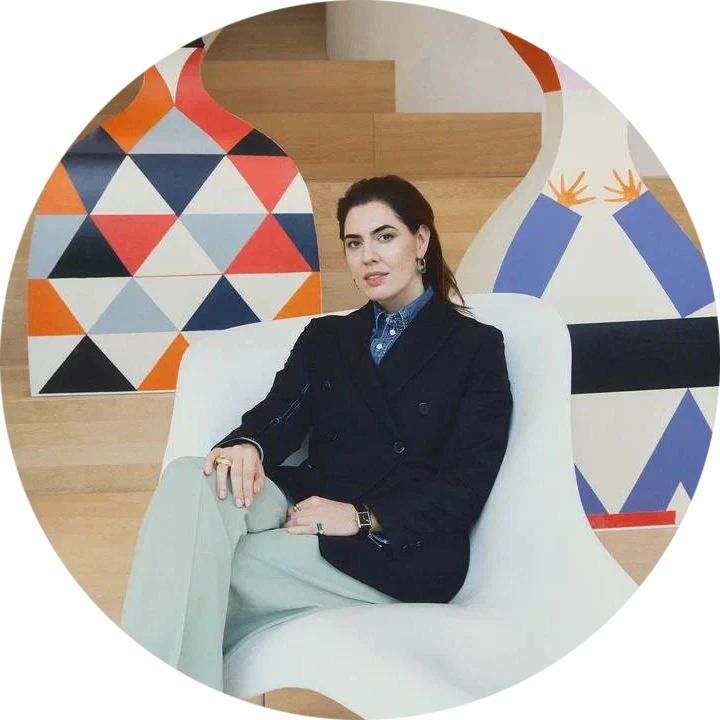
Creative Director, Founder of Designic Studio
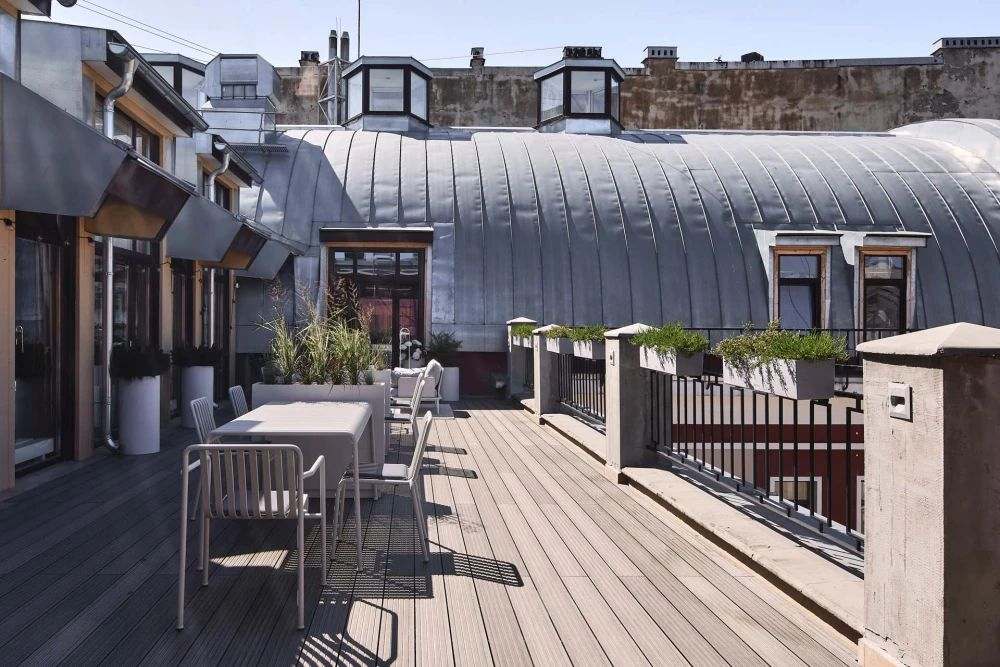
"The Designic studio office and terrace overlooking the roofs of Petrogradka give you a feel for the city not through postcards, but through everyday life in St. Petersburg. We deliberately did not block the view, but on the contrary, let it in and made it part of the office space. The terrace has become a focal point (albeit only for a few months of the year): you can work, relax, hold meetings, or simply watch the light change throughout the day there."
When it comes to a modern office in St. Petersburg, two things are essential: competent lighting and art. And we're not talking about technical options or decorative accents, but real, systemic things that affect how people feel in a space.
Biodynamic lighting is particularly important in St. Petersburg, where it is often gray outside and it feels like it is almost always dusk. If the lighting is not well thought out and tailored to human biorhythms, it will simply be tiring. Properly adjusted lighting — lively, adjustable throughout the day, with changing temperatures and accent scenarios — literally “revitalizes” the space and sets a good working rhythm. And if you want to be one step ahead, I recommend placing sensors on the facade of the building so that the interior lighting automatically adjusts depending on the weather outside.
The second relevant and inspiring trend is art in offices. I am very happy that it is finally gaining momentum. We had a project that literally started with an art object—the client came not with a request for a layout or style, but with an idea: “This sculpture is the starting point.”
Comfort in the everyday environment is not about visual clichés, but about feeling. And most often the reason lies in the nuances: how the light works, how silence sounds, how materials are perceived tactilely, how the space responds to your rhythm. We grew up looking to Alvar Aalto — his approach to lighting and natural materials really resonates with our understanding of a comfortable environment. He talked about the “kindness of space,” and that's probably the best definition of true comfort. We have adopted a lot — and adapted it in a good way. For example, our love of vintage is not stylization, but respect for objects with history.
Ergonomics and behavioral architecture are extremely important for everyday comfort—how people move through a space, where they can retreat and think, where, on the contrary, they can gather in a large group for a meeting, where they can talk privately. It's about the balance between privacy and openness, and it's especially important in modern offices and public spaces.
We no longer create rigid plans with identical desks and corridors. We create life scenarios: where it is appropriate to be alone, where you want to get together, where you can relax, where you can concentrate. It is important for people to have a choice. The feeling that you can choose your degree of involvement is freedom within a space.

Designic Studio Office
In my opinion, there have been no radical shifts in St. Petersburg's cultural life recently—as before, it moves along two parallel lines that harmoniously do not intersect. On the one hand, there is institutional, museum history. Here, of course, the palm of supremacy is held today by The Russian Museum. With the arrival of Olga Manilova, the new director, the museum's activities have taken on the structure of a well-thought-out, large-scale business project. For the first time, all of the museum's departments began to work as a single living body, focused on creating blockbuster exhibitions. And, as surprising as it may sound, the Russian Museum surpassed the Hermitage in terms of attendance for the first time.
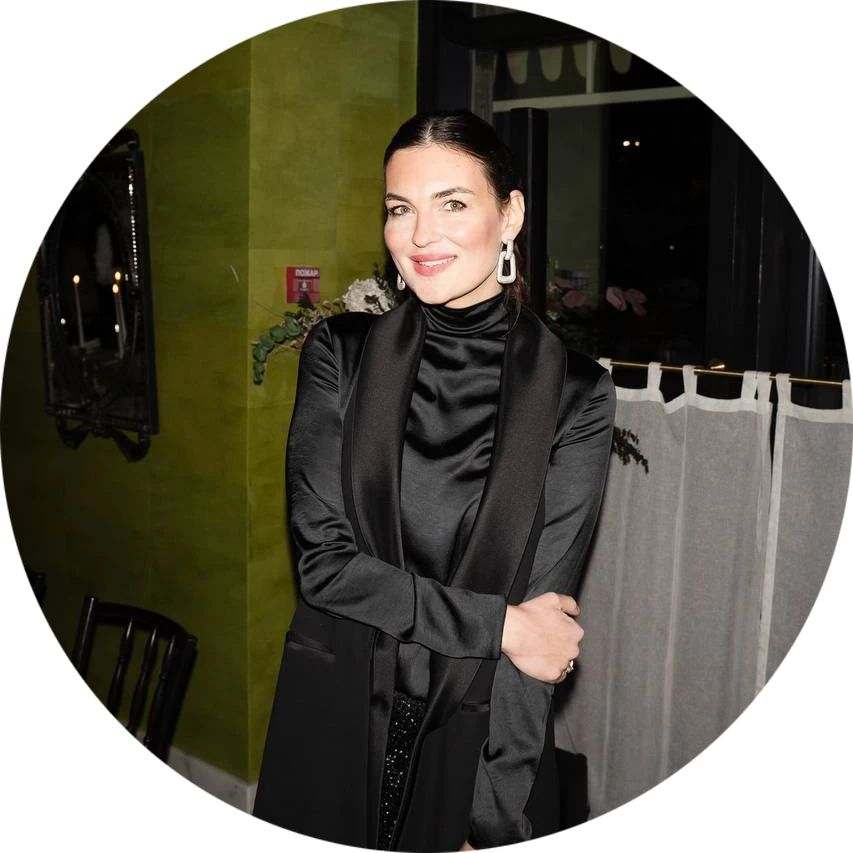
Gallery owner, founder of K-Gallery

State Hermitage Museum.
When it comes to gallery activity, it is here that the most interesting shifts have taken place. First of all, there has been a noticeable increase in interest in the fair format, both from the public and the art community. Particularly noteworthy is the emergence of Yarmarki 1703. Incidentally, in addition to St. Petersburg artists and galleries, virtually all major and influential players in the Moscow art market are participating in the fair.
At the other end of the spectrum — the contemporary art fair. Third Place Art Fair, is organized by an initiative group in the “Third Place” space on Liteiny Prospekt. The atmosphere here is completely opposite—intimate, almost friendly, often bold and underground. But that's exactly what makes it so valuable! Its organizers have created not just an exhibition space, but a living, constantly changing environment. Here, names that no one knew yesterday are being revealed — and this is exactly what St. Petersburg needs.

Third Place
Unobvious but very St. Petersburg places to feel the spirit of the city:
· Kolomna and its surroundings. We take a tour from Lev Lurie's house and go to explore it.
· Ôpetit coffee shop in the former Pelia pharmacy on Gorokhovaya Street.
· The museum and workshop of sculptor Anikushin.
· The Botanical Garden on Petrogradka.
· The apartment-museum of poet Alexander Vvedensky.
· And, of course, KGallery — until July 5, the gallery is hosting an exhibition dedicated to the 120th anniversary of Daniil Kharms.
For me, the design code of St. Petersburg is definitely the cover of the Melancholia catalog for Arkady Ippolitov's exhibition.

The exhibition “Why, why am I better than everyone else?” at KGallery
St. Petersburg is experiencing an unprecedented boom, mainly thanks to domestic tourism. To get into a popular restaurant on a Friday night, you now have to book a table a week in advance. In my opinion, restaurants have clearly divided into those where you go for breakfast, those where you go for lunch, and those where you dress up on Friday night. For example, at Zoe, you can't buy your favorite almond cream croissant at 2-3 p.m. — they've already been eaten for breakfast.
Another observation: whereas St. Petersburg used to be associated with a huge number of bakeries, now for every bakery there are two shot bars.
I always follow what my colleagues are doing with interest, especially in St. Petersburg, because a very special style has developed here. In many ways, it is born not from abundance, but on the contrary, from limitations. When the budget is limited, you have to be as creative as possible, but it is in such conditions that the most daring and unconventional solutions emerge. It's nice to see the projects of the Apa design bureau — the guys have great professional intuition and excellent taste and style.

Designer
Prices! But seriously, the restaurant “Food of the Ming Dynasty” was a real breakthrough for me. It's one of those places where everything is perfect, from the unexpectedly designed bathroom to the “snowy moon gingerbread with cream and raspberries” on the menu. It's not just a restaurant, it's an experience. You can feel the uncompromising attention to detail, even in the most unexpected places. The space seems to have been specially created to make you feel slightly disoriented — but at the same time, everything works. It strikes a very rare balance between aesthetics, concept, and, most importantly, true gastronomic fantasy.

Chinese snack bar and bar “Food of the Ming Dynasty”
Meaningfulness is probably the most important thing. Everything should be about the idea: the cuisine, the presentation, and the interior. A pretty picture alone no longer works—what works is the atmosphere, the story, the feeling that remains after a visit.
I think we will continue to flirt with the aesthetics of the 1960s, 1970s, and 1980s for a few more years, but in a modern, adapted interpretation. It's not about stylization, but about mood, shapes, materials, and color combinations in a new interpretation. There is also an obvious global trend toward minimalism — in the sense of focus. Interiors are becoming simpler, calmer, but much deeper in meaning. The focus is shifting to food, serving, and tactile sensations — and this, in my opinion, is a very correct direction.
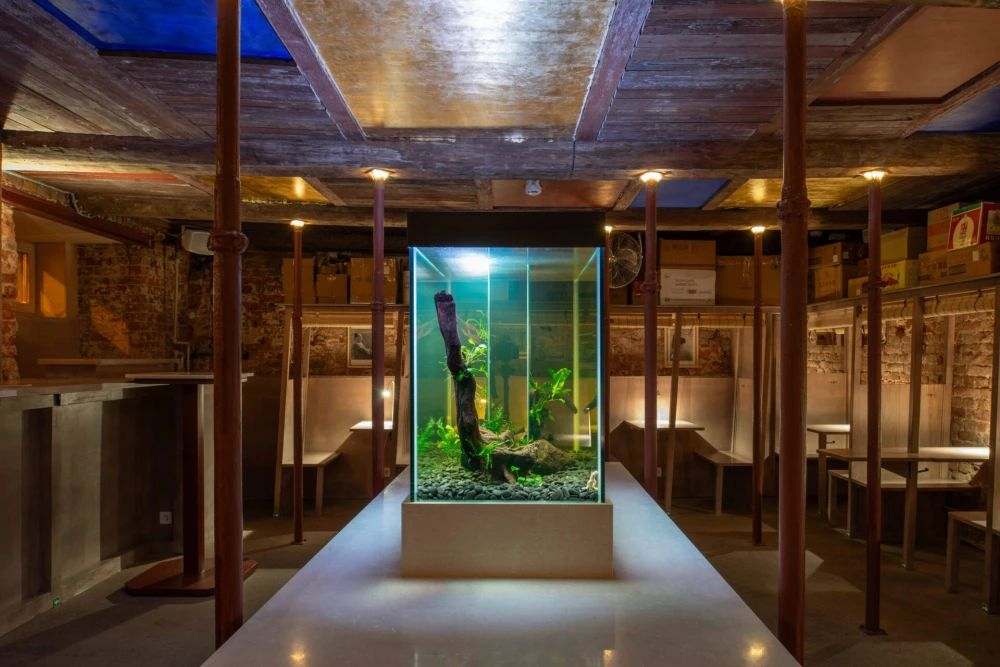
Chinese snack bar and bar “Food of the Ming Dynasty”
It seems that one of the main trends in St. Petersburg's cultural industry today is the noticeable rejuvenation of its leaders. And it's not so much about age as it is about dynamics. A number of institutions, such as Podpisnye Izdaniya, have already passed the formation stage and now find themselves in the role of incubators: the young people who once came there simply to work as book sellers are now launching their own projects. This is an organic process: the maturation of institutions leads to the maturation of the people within them. And Podpisnye is, of course, not the only example here. There is Masters, which is also an important point of growth. Many who started there are now moving on with their own projects. There are more and more such stories, and they clearly show how the cultural ecosystem is beginning to reproduce itself without destroying itself.
Among the projects that are particularly interesting to follow right now, I would highlight maxim Levchenko's initiatives at the Murusi House. The museum “One and a half rooms”, restaurant and cultural spaces—all of these appeared under his curatorship. I would like to mention Yulia Senin separately. As far as I know, she came to Poltoray Komnaty as a research assistant, and over time became the head of oBERIU museum in Vvedensky's apartment. I'll keep an eye on that too: it seems like it could turn out to be something very precise and lively. And, of course, the documentary film studio building. LANDOCK we are currently working on a large project there. In the future, the building will undergo a major transformation. I won't go into details, but the changes will be noticeable — and, I think, important.

This discussion of St. Petersburg's design shows that our city does not have a single face. Its image is made up of many voices: the strict harmony of the historic center, the brutal beauty of industrial areas, and the bold experiments of contemporary architects.
It is important to note that this code is not a set of rigid rules from the past. It is a living language that the city speaks to us in today. Noticing how old facades coexist with street art and how front courtyards become places for socializing, we begin to read this language and understand the mood of St. Petersburg.
Ultimately, the design code is an invitation. An invitation to look around more carefully, to appreciate the beauty that already exists and to create new beauty responsibly. It is up to each of us whether St. Petersburg remains simply a museum exhibit or becomes a comfortable, inspiring, and cozy home for future generations.


