
A key component of real estate and property law is land ownership. When purchasing, selling, or managing land, it can be extremely important for all parties involved to comprehend the various kinds and forms of land ownership rights. Depending on the legal system in effect, these rights can vary greatly and dictate how land can be used, transferred, and inherited.
Freehold is one of the most popular types of land ownership, in which the owner has perpetual full control over the land and its use. With the greatest degree of freedom to make decisions regarding the property, this form of ownership offers the most rights. Leasehold, in which the land is leased for a predetermined amount of time, is another popular type. The conditions of the lease agreement restrict the leaseholder’s ability to use the land.
Apart from freehold and leasehold, various other forms of land ownership rights could be relevant. Easements, for instance, permit someone to use a section of someone else’s property for a driveway or utility access, among other uses. Additionally, there are co-ownership agreements, in which several people share responsibility and ownership of a plot of land. The rights and responsibilities of each owner must be managed by explicit agreements under these arrangements.
Navigating the intricacies of property law requires an understanding of these diverse forms and categories of land ownership rights. Knowing your rights and obligations is important for everyone, including investors, developers, and homeowners, as it will enable you to make wise decisions and stay out of trouble with the law. You can make sure that your land transactions and usage meet both legal requirements and your personal or professional objectives by becoming familiar with these concepts.
- Laws of the Russian Federation on forms of ownership
- Basic forms
- State
- Federal subjects
- Municipal
- Private form
- Types of possessions
- Permanent (unlimited) use
- Life-long inheritable possession
- Rent
- Easements on land plots
- Video on the topic
- Concept, forms and types of land ownership
- Lecture 6.1. Own. Forms and types
- Concept, forms and types of land ownership
Laws of the Russian Federation on forms of ownership
The following basic laws define land users’ rights:

- Constitution of the Russian Federation, Art. 8, 9, 36. Article 8 establishes equal values for different forms of ownership. In st. 9 and 36 explain the concepts of private land ownership.
- Civil Code of the Russian Federation, ch. 17 considers the emergence of real rights to land, including different forms of ownership, transactions with plots, lease, perpetual use, easement, etc.d.
- Land Code of the Russian Federation (current edition since 2019) in chapter 3 art. 15-19 regulates in detail the emergence of rights to use land plots and the disposal of this property by owners. They can be a state, a subject of the Russian Federation, a municipality, citizens and legal entities.
Citation! These laws establish the rights of land ownership, including possession, use, and disposal of the property, as well as the ability to reap benefits from its use.
Knowing the different kinds and forms of land ownership rights is essential in the world of building and remodeling. This article examines the various legal frameworks—such as freehold, leasehold, and commonhold—that specify the types of land ownership. It clarifies the obligations and rights related to each kind, assisting developers and property owners in navigating complex legal issues. Understanding these ownership models will help you make well-informed decisions that meet your objectives and legal requirements, whether you’re planning a new construction, renovation, or real estate investment.
Basic forms
There are four different types of land plot ownership recognized by Russian law. The aforementioned articles of the Constitution guarantee all types of land ownership.
The fundamental ideas are outlined in the Russian Federation’s Land Code, which also specifies which lands are exclusively municipal or state-owned.
The basic forms of subjectivity and ownership are displayed in the table.
Types of land plot ownership
State
Federal possessions, or the lands that belong to the Russian Federation and its component entities, are included in this form.
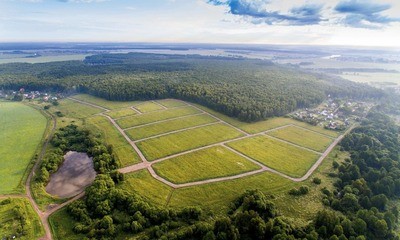
Plots of land that have not been transferred to other owners are under federal ownership.
These are areas designated for the exercise of governmental authority, national security and defense requirements, and other purposes. Ownerless storage devices are prohibited from existing under federal ownership.
Land is managed by federal agencies, and all plots are not required to be used. The lands that make up the Russian Federation’s constituent entities are marked with ownership boundaries.
Crucial! When allowed by law, memory can be moved to legal entities for their disposal. The people’s interests are served by the rent that is obtained from this.
Federal subjects
These are areas that fall inside the subjects’ territorial bounds. The goal is to offer answers for the issues that the area, territory, or republic is facing.
Between municipal and federal lands, dressing is done. Land plots are managed by state and local self-government organizations through the adoption of legal documents.
Plots of land are used economically by unitary state enterprises, to which the authority to dispose of land in the constituent entity’s economic interest in order to address social issues has been delegated. The allocation of a portion of the rent in the form of land tax benefits the regional budget.
Municipal
Administrative-territorial units own these lands. sections of land in prefectures, cities, rural communities, and districts.
Their aim is to meet the socioeconomic requirements of the local population. The plots’ intended purposes are strictly followed when using the land.
Private form

Plots of land can be privately owned by both natural persons and corporations.
They utilize and dispose of the land as they see fit.
However, landowners have obligations prior to other private owners and the government because their land is assigned to resources that are especially valuable.
There are two forms of private land ownership: collective and individual.For instance, the space beneath a residential building. This category can be compared to other types of land ownership, such as shared, general, and others.
Types of possessions
Different concepts apply to the type and form of land property. The legal status of a land plot and the authority to decide on its future destiny are among the things that are meant to be mentioned when discussing the various types of property.
According to the information on the register in the Rosreestr, the land ought to legally belong to the owner. This holds true for both collective and individual owners (both real and legal entities).
Citation! Individuals and legal entities may exercise the specific right to use the land plot even in the event that they are not registered with Rosreestr.
Permanent (unlimited) use
An agreement on this kind of land use can be made between the plot owner and a citizen (legal entity). This document needs to be approved by a higher authority that oversees the plot of the owner.
A cadastral number and registration are required for the plot. The way that land is used is governed by how well economic activity complies with the terms of the agreement.

Unrestricted usage denotes the ability for a person or organization to utilize the plot indefinitely, but inheritance is not permitted.
Plots that are not registered as property are owned by state organizations, presidential centers, budgetary authorities, and budgetary authorities at different levels.
Plots of property must be registered using the state’s encouraging and straightforward procedures for those who have the right to use land prior to 2001, when the Russian Federation’s Land Code came into effect.
Life-long inheritable possession
The Russian Federation’s Civil Code, which was updated on December 16, 2019, governs this right. A land plot acquired by inheritance gives the heir the right to possess and utilize the plot, according to Article 266, Part 1. After gaining ownership of it, he is able to erect houses on it as well as other real estate structures.
Crucial! The testator does not own the plot in and of itself. By inheritance, the right to own the plot for life is passed down. In conformity with inheritance laws, this right is generally inherited.
Rent
This is a limited-time permit to use the plot, not ownership of it. It is made official by a contract that lays out the obligations and rights of the lessor and the lessee. Plots may be leased by any owners (state, municipalities, private parties, and legal entities).
Compensation, payment, and repayment are the three primary components of renting a storage unit. That is to say, the contract is in place for a specific amount of time, you have to pay to use the site, and when that time comes to an end, you have to return it to the owner in the manner and condition agreed upon.
Easements on land plots
This is the right to use a plot of someone else’s property for limited personal use.
Easements have the following characteristics:

- the owner retains the right to dispose of the plot, transfer, sell, lease;
- entering facts of encumbrance into cadastral acts;
- the possibility of the owner receiving payment for the use of the site;
- other parties to the transaction are deprived of the opportunity to acquire ownership rights to this land plot.
There are two types of easements: private and public. There are variations among them:
- A public easement is issued on the basis of regulations of municipalities or regions.
- A private encumbrance is a consequence of an agreement between the parties or a court order.
- According to a public agreement, the use of land is free of charge. A private individual can impose monetary compensation for land use.
Crucial! A broad spectrum of interested parties are accommodated by the easement’s public version. A private easement is a contract between two particular parties.
Governs legal relationships under the Russian Federation’s Land Code (as amended in 2019). Article 23 outlines the fundamentals of regulation and addresses the authority to impose limitations.
| Freehold | Ownership of land and buildings with no time limit. |
| Leasehold | Rights to use land or buildings for a specified period under a lease agreement. |
It is essential for anyone working on building or renovating projects to comprehend the different kinds and forms of land ownership rights. These rights control the use, development, and transfer of land, which shapes the nature and extent of any construction project. Understanding the differences between freehold, leasehold, and other forms of ownership can have a big influence on your choices, whether you’re a developer, investor, or homeowner.
The greatest rights are conferred by freehold ownership, which gives the owner complete ownership of the land and any buildings erected on it. Maximum control and flexibility are offered by this kind of ownership, enabling owners to make adjustments and advancements without facing major constraints.
Conversely, owning a property under a lease agreement with the freeholder for a predetermined amount of time is known as leasehold ownership. Leaseholders are free to use and occupy the property, but they also have to abide by the conditions stated in the lease, which may include limitations on renovations and alterations.
Alternative ownership structures like commonhold and cooperative ownership are available and might be a better fit for some development projects or shared living arrangements. In a larger property or development, a commonhold allows for both shared and individual ownership of the common areas. When a community’s residents collectively own a property and work together to manage and maintain it, this is known as cooperative ownership.
Every kind of land ownership has different consequences for building and remodeling projects. Knowing your rights is essential if you intend to construct a new home, renovate an old one, or invest in real estate. It will help you stay compliant with regulations, make wise choices, and successfully safeguard your capital.


