
In the realm of remodeling and building, rubber facade paint is becoming more and more common. This kind of paint has a number of special advantages that make it a desirable option for many builders and homeowners.
Rubber facade paint’s durability is one of its main benefits. It produces a flexible and waterproof coating, in contrast to conventional paints. This means that it won’t peel or crack when exposed to extreme weather, which makes it perfect for surfaces like these.
Its capacity to conceal small surface imperfections is an additional advantage. Because rubber paint is thicker than other paints, it can fill in small cracks and smooth out uneven areas. This can reduce the need for surface preparation costs and time.
Rubber facade paint does, however, have certain disadvantages. The fact that it is more expensive than ordinary paints is one of the key issues. For projects with a tight budget, the higher initial investment may be the deciding factor.
Rubber paint application also takes more time and expertise. It’s more complicated than using traditional paints, and errors may be more difficult to correct. This implies that it may be necessary to hire a professional, which would raise the overall cost.
In conclusion, rubber facade paint provides outstanding coverage and durability, but it’s crucial to balance these advantages against the higher costs and more difficult application. Having a clear understanding of these benefits and drawbacks will enable you to plan your building or renovation project wisely.
- What is rubber paint
- Features of rubber facade paint
- Rubber paint structure
- Advantages and disadvantages
- Specifications
- Can latex and silicone paints be classified as rubber paints?
- Main types and companies of rubber paint for facades
- "Universal"
- Why is latex and rubber paint not considered rubber??
- What surfaces is rubber paint suitable for?
- Surface preparation
- Technology of painting facades with rubber paint
- Roof application technology
- Useful video
- Video on the topic
- RUBBER PAINT ! A YEAR PASSED WHAT HAPPENED TO HER?
- Top paint Farbex Rubber! Real review
- Rubber paint. Rubber paint composition. Scope of application of rubber paint.
What is rubber paint
It is well known that the extraordinary elasticity of the film that forms after the painted surface dries is where the term "rubber" paint originates. It can be stretched multiple times before returning to its initial shape without causing the coating’s integrity to be compromised. These characteristics render structures painted with such paint resistant to mechanical influences such as vibrations and temperature fluctuations, shrinkage, and dimensional changes that can harm conventional paint types.
The level of elasticity depends on the content of certain components.
Fun fact: The term "rubber" is used loosely because many types of rubber paint don’t really contain latex or rubber. Elasticity is provided by an acrylic copolymer, known as acrylate latex, which is present in the composition in an aqueous dispersion. The molecules unite to form a strong, highly elastic coating when applied to the water’s surface.
Features of rubber facade paint
In addition to its typical qualities, rubber facade paint is an excellent material for exterior finishing because of its increased elasticity. This feature enables the coating film to adjust for a variety of surface dimensional changes (such as variations caused by heating or cooling), house shrinkage, and seismic movements.
Providing dependable waterproofing that can shield the surface from moisture was one of the primary goals for which this material was created. Furthermore, the coating film emits no harmful substances and is especially environmentally friendly.
Because of the material’s high vapor permeability, moisture can be taken out of dry structures like walls. The substance is derived from acrylic compounds and contains a higher concentration of special type latex derivatives.

Paint includes:
- Water.
- Latex resin (main film former).
- Coalescent (a substance that acts as a catalyst for film formation).
- Pigment (a substance that gives the material the required color).
- Special additives – antifreeze, preservative, fillers.
Even though the material has just recently hit the market, customers are already aware of its unique qualities. Rubber paint is becoming more and more popular, and real-world use validates all of its claimed benefits.
Rubber paint structure
Depending on the manufacturer, the steps involved in creating rubber acrylic paints can differ, but these fundamental elements always are:
- acrylate latex is the main component that gives the coating the necessary elasticity and strength;
- water is a solvent that maintains a fluid consistency for application to a surface;
- coalescent – a special chemical compound that catalyzes the formation of a film during the evaporation of water;
- antifreeze – a component that ensures the elasticity of the coating at low temperatures;
- preservative – a chemical substance that prevents mold and bacteria from growing in a sealed jar;
- pigment – a finely dispersed substance that gives a certain color.
The majority of rubber paint formulations are one-component, water-based acrylate latex paints. Because they don’t require specialized training, they are simple to use. On the other hand, industrial bitumen-latex emulsions in two components and organic solvent paints are available. Specialized tools and professional training are needed to work with them.
It’s also crucial to remember that paints made with natural latex, which is derived from the sap of the rubber tree Hevea, are not considered rubber paints because they have entirely different qualities. Furthermore, silicone-based paints have much less elasticity than acrylate-based paints, so you shouldn’t use them here.
Advantages and disadvantages

Advantages of rubber paint include the following:
- High elasticity.
- Waterproof.
- High vapor conductivity.
- Fast drying.
- Environmentally friendly material.
- Can be used on almost all surfaces and materials.
- Resistance to external manifestations.
- High temperature resistance.
One drawback is that the material has relatively high requirements for application technology adherence, which if broken could result in the coating peeling off.
Specifications
The following are the technical attributes of rubber paint:
- Consumption – from 120 g/m2.m. up to 250 g/m2.m. (Prepared surfaces – bare concrete, plaster, etc.P.).
- Drying time 30-60 minutes, complete drying requires 1.5-3 hours.
- Operating temperature range from -50° to +60°.
- Dry residue – minimum 45%.
- The service life of the coating is 8-10 years.
- High elasticity of the material allows the film to stretch by 400%.
- Warranty period – 24 months from the date of manufacture (check the date of manufacture on the packaging).
- Environmental safety film coating. The material was first developed as a specialized means of finishing medical and children"s institutions.
The advantages and disadvantages of rubber facade paint are mixed. Positively, it is extremely strong, flexible, and waterproof, which makes it ideal for shielding buildings from inclement weather. It also gives a smooth finish and aids in hiding cracks. For the best results, it must be applied carefully and can be more costly than conventional paints. Builders and homeowners can make well-informed decisions about the use of rubber facade paint for their projects by being aware of these benefits and drawbacks.
Can latex and silicone paints be classified as rubber paints?
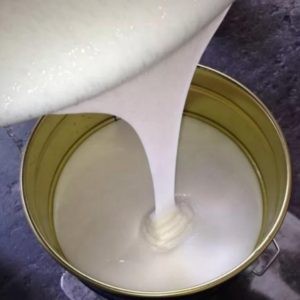
There are paints that don’t belong in this category even though they share certain traits with rubber. Latex compositions are a familiar sight to many. Usually, they are made of natural latex, which is the thickened juice of plants like hevea.
At the beginning, latex paint is a transparent, yellowish, or even orange mass; however, by adding bleaches and different pigments, it can take on any color, including white. It has numerous beneficial qualities and is universal.
But latex paint is not "rubber," even though latex is naturally rubbery.
Paint with a silicone base is also not included in this group. It is strong, multipurpose, and able to create amazing décor. However, it is not as resilient and long-lasting as rubber paint. Furthermore, its water resistance is subpar. Consequently, it is not possible to classify the listed paints as "rubber." Next, we’ll examine the properties and real-world applications of water-based paints that use acrylic copolymer as a binder.
It’s important to note that rubber paint can be distinguished by appearance. It is not like other acrylic compounds; instead, it is more akin to a sealant or mastic.
Main types and companies of rubber paint for facades
The product is manufactured in a fully usable state; the most that could be needed is a 5% water dilution. The user only needs to choose the preferred color; the composition doesn’t need to be tinted because all colors are created instantly at the manufacturer.
There are packaging options for elastic facade paint ranging from 1 kg to 40 kg. Given that the technology demands constant stirring of the material and lifting to a height (scaffolding), the container is best suited for work on the job site.
Among the most well-known producers of the substance are:
- Mizar.
- Technoprok.
- SUPER DECOR.
- ProColor.
- NovBytKhim.
From overseas:
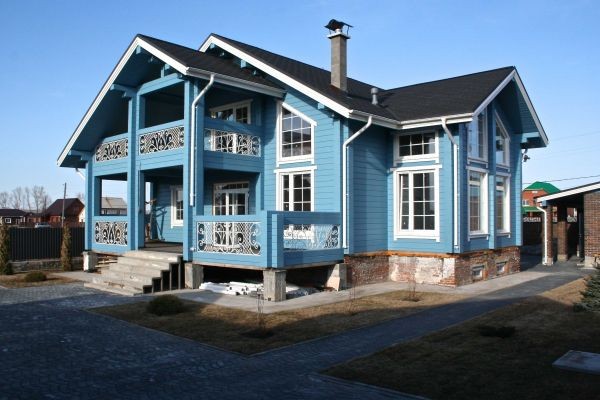
It is important to consider the relative novelty of the material; as it becomes more popular among consumers, more manufacturers of rubber paint will follow.
"Universal"
The "Universal" model ("Universal") from the St. Petersburg company "Mitsar" is one of the most well-liked contemporary environmentally friendly facade rubber paints in Russia. This manufacturer produced the first materials of this kind in our nation. Currently, a lot of businesses add cheap styrene-acrylic latex to rubber paint to lower the price.
As a result, the coating gradually loses its ability to prevent deformation from exposure to sunlight or from periodic contact with water. After application, the paint crumbles, cracks, and becomes brittle in less than a month. Yet these paints are less expensive. Conversely, "Universal" by "Mitsar" has improved resistance to moisture and water and can be utilized in artificial reservoirs and swimming pools.
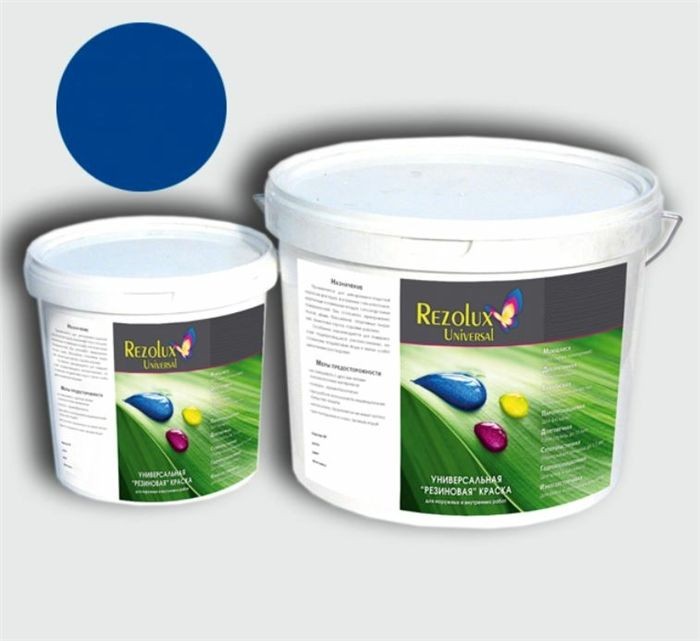
Despite the term "facade," this coating is also successfully used for interior decoration because of its many useful qualities, including its odorless nature and versatility in application. Grease and other dirt can be easily removed from walls and ceilings painted with "Mitsar-Universal," as can remnants of "children’s pranks" like watercolor paint and felt-tip pens. The rubber paint "Universal" by "Mitsar" requires up to 150 grams to paint one square meter of surface. which is three to four times less than equivalent products at the same price.
For example, the same Super Decor Rubber. That is, painting the same area with paint from another manufacturer will cost almost four times more. With comparable or even better characteristics, the products of the Russian company Mitsar always have a lower price. Due to more compact and less resource-intensive production. That is why Mitsara paint and varnish materials are actively supplied to enterprises within the framework of the State Defense Order. That is, for application to defense products. What does it mean? The paints, enamels and other materials used in such production must not only meet the strict requirements of the customer, but also – which is necessary – cost less than offers from other manufacturers.
Mizar paints satisfy these requirements. We also observe that the company has a great deal of experience in creating coatings that are more resilient to harsh chemical environments and challenging weather conditions like wind, rain, sun, and extreme heat or cold. As a result, a variety of special enterprises, such as the state-owned United Shipbuilding Corporation, the State Unitary Enterprise Vodokanal, Lenenergo, and Metrostroy of St. Petersburg, actively use Mitsar materials.
Why is latex and rubber paint not considered rubber??
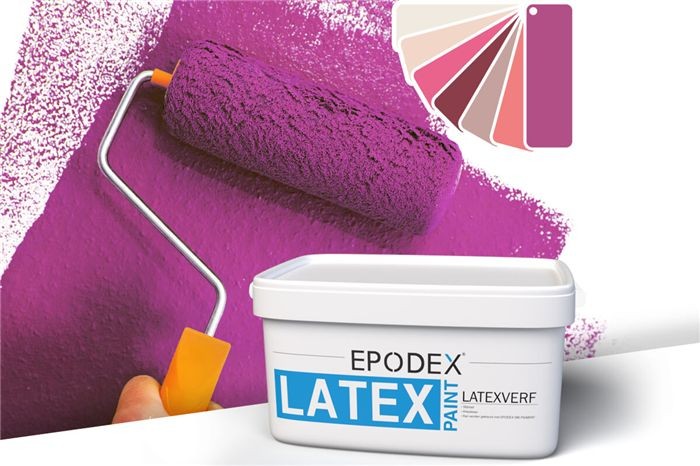
In this classification, the final coating’s properties—rather than its composition—are what matter. It is evident from a combination of properties like elasticity, resilience, and water resistance that paint with an acrylic base performs better than compounds with a rubber, silicone, or latex base. Put differently, even though they are composed of "rubber," they lack the same "rubber" qualities as acrylic.
Furthermore, it’s important to realize that rubber, silicone, and latex all need the use of organic solvents as opposed to the water base needed for acrylic copolymer. Despite the wish to refer to rubber paint as "rubber," these are two entirely distinct kinds of paint that cannot be grouped together under a single term.
What surfaces is rubber paint suitable for?
Rubber paint is an expert in base movement compensation and waterproofing. Higher elasticity and adhesion are necessary for these qualities. As a result, the material has an extraordinarily broad range of applications.
You can use rubber paint on:
- Concrete.
- Brick.
- Natural or artificial stone.
- Galvanized or black iron.
- Wood.
- All types of plaster.
- Gypsum.
- Plastic, etc.d.

Rubber paint is a versatile finishing product with many applications because it can interact with so many different kinds of materials.
Surface preparation
Initially, all customary pre-work needs to be completed:
- Clean the old surface from layers, debris, dirt or old coating.
- Remove all hanging elements that interfere with work – lights, brackets, fastenings, air conditioners and other structures. It would be a good idea to remove the trim from window or door openings and gutters during the work.
- Inspect the surface and determine how to repair possible flaws – For small cracks or potholes, putty is enough, in difficult cases, you will have to make a continuous leveling plaster layer from cement mortar.
- For porous surfaces, pre-treatment with a universal primer is required.
- If there are greasy stains, the surface must be degreased.
- Smooth surfaces should be made matte using sandpaper. It is also recommended to wash them with a soda solution, rinse with water and dry thoroughly.
- Wooden parts should be impregnated with an antiseptic, metal parts should be cleaned of rust.

The quality of the preparatory work determines how long the facade coating will last in service, so the initial steps must be done with the utmost care and responsibility.
Technology of painting facades with rubber paint
- Before applying the paint, mix it thoroughly. If necessary, dilute with water (no more than 5-10%).
- Work is carried out in dry, preferably calm weather. Air temperature – from +5° to +30°.
- Paint is applied manually (roller, brushes), or mechanically – spray gun, air or airless sprayers.
- Paint is applied in several layers (usually 2 or 3 layers, more if necessary). The material is applied in thin layers.
- It is necessary to stir the paint from time to time.
- Fresh coating can be washed a week after application.
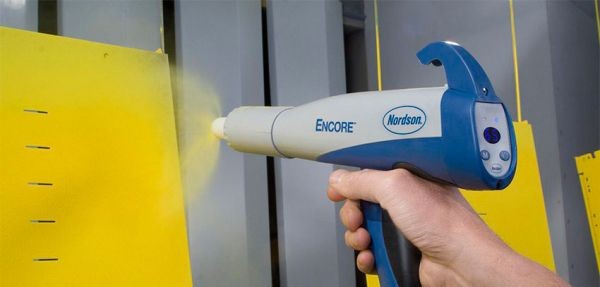
Applying a single, thick layer is not advised as this will cause damage to the coating’s surface and cause it to lose its properties.
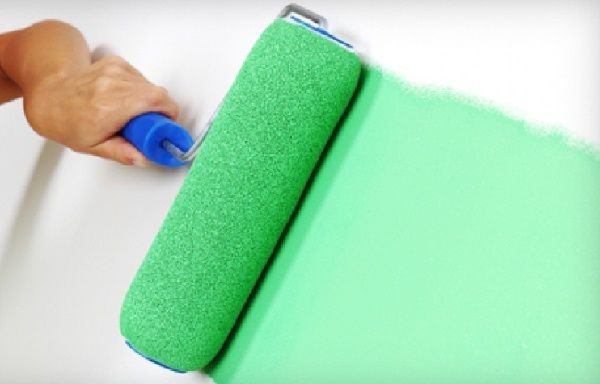
Roof application technology
Update a flat roof that has a lot of vents. deflectors, aerator housings with intricate levels, can occasionally be challenging to install with roll membrane assistance, particularly without expert assistance.
Once more, liquid rubber saves the day. It can be applied cold, with a brush or roller, or even with your hands. Furthermore, in negative temperatures as well as during the expansion and contraction of the roofing base brought on by temperature variations, the strength characteristics of this type of waterproofing will be greater than those of rolled waterproofing.
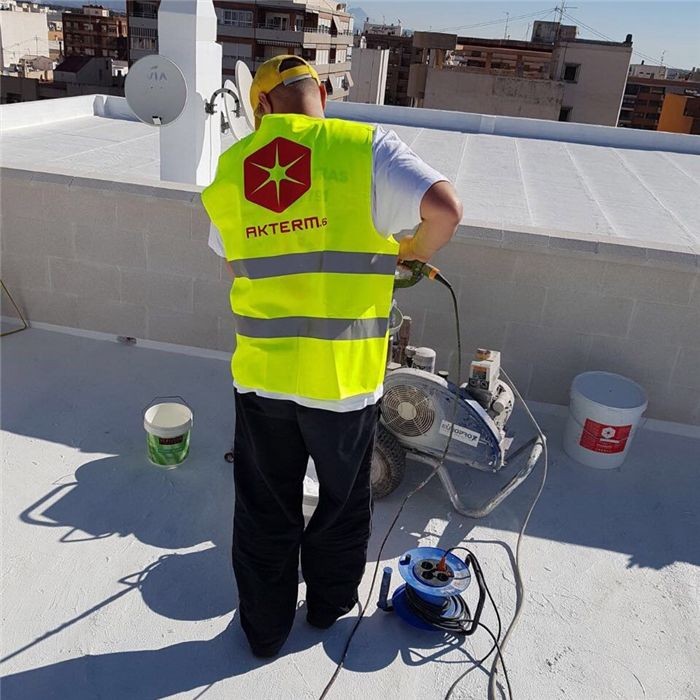
Akterm GidroStop is the most widely used product on the market for primary and repair waterproofing of roofing materials, including fiber cement, reinforced concrete roofs, aluminum, steel, and tile roofs. It functions as a waterproofing membrane to protect both building facades and plinths from external moisture in addition to being a waterproofing for roofing.
AKTERM HydroStop is a one-component, water-dispersion paint that resembles a homogenous paste and is resistant to precipitation, UV light, and temperature changes. It is based on latex.
The material is applied in even, thin layers of one millimeter using a notched trowel, roller, and brush. Apply the subsequent layers in a crosswise direction once the first layer has dried (this may take one to two days, depending on the environment’s humidity and temperature).
For the mastic layer to form a dense, elastic, and continuous layer on the surface, its final thickness needs to be at least 2 mm.
Highly porous surfaces should ideally be primed with acrylic primer beforehand. A waterproofing coating can only form when the outside temperature is at least +7 °C.
Useful video
Review of facade rubber paint in a video:
| Pros | Cons |
| Highly flexible and can stretch without cracking | Usually more expensive than regular paint |
| Water-resistant and helps prevent moisture damage | Can be harder to apply and requires proper surface preparation |
| Durable and long-lasting, withstanding harsh weather | Limited color options compared to traditional paints |
| Offers good protection against UV rays | May require more coats to achieve the desired finish |
| Easy to clean and maintain | Some types may have a strong odor during application |
Rubber facade paint is a compelling option for certain projects, but it is not a suitable choice for all due to its distinct set of benefits and drawbacks. Among its many advantages are its elasticity and flexibility, which enable the paint to expand and contract in response to temperature changes. This makes it a sturdy option for buildings in regions with large temperature swings by reducing the likelihood of peeling and cracking.
Its waterproofness is yet another significant benefit. Rubber facade paint creates an impermeable barrier against moisture, extending the facade’s lifespan and reducing the risk of water damage. Because of its strong adherence, it can adhere to a wide range of surfaces and leave a consistent, long-lasting finish.
The drawback of rubber facade paint is that it can cost more than conventional paints. This additional expense may be a major consideration for larger projects or those with limited funding. Furthermore, even though it is strong, it might not be as aesthetically pleasing as other paint kinds, which is something to keep in mind for projects where aesthetics are very important.
In conclusion, rubber facade paint is a durable and useful option for external surfaces, particularly in areas subject to severe weather. Its benefits for waterproofing and durability are noteworthy, but you should consider the higher price and possibly less attractive finish. To decide whether rubber facade paint is the best option for your project, take into account your unique requirements and priorities.


