
Globally, edged timber, a basic component of building and renovation projects, is essential to the shaping of structures. This kind of wood, which is characterized by its exact, squared-off edges, provides dependability and versatility in a range of applications. Its technical attributes, including dimensions and quality ratings, dictate which projects are appropriate for it.
Edged timber comes in a number of varieties, each designed to satisfy a particular purpose in construction. Hardwood and softwood varieties are frequently utilized; each has unique qualities with regard to strength, durability, and visual appeal. Hardwoods like oak and maple are valued for their resilience and eye-catching grain patterns, while softwoods like pine and spruce are frequently preferred for their affordability and ease of use.
The price of edged timber is determined by a number of factors. The type of wood, quality level, size, and state of the market can all affect prices. Softwood edged timber is typically less expensive than hardwoods, which makes it a better option for large-scale projects where cost effectiveness is crucial. Conversely, hardwoods are more expensive because of their strength and aesthetic appeal.
- Features of sawmill material
- Varieties
- By type of processing
- By cross-section
- By length
- By grade
- Specifications
- Application
- Advantages and disadvantages
- Average prices in the Russian Federation
- Video on the topic
- What does a rubberized board look like 1-3 varieties
- The cheapest wiped board, variety 4
- The whole truth about the beam of 1-3 varieties: Brus review 150x150x6000 mm
- Board 1 variety, true and deception
- Toleled board. Varieties. Types of deception.
Features of sawmill material
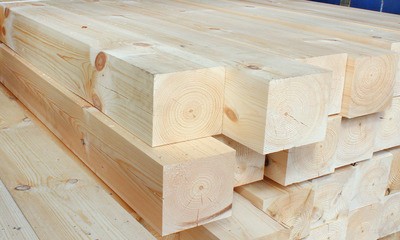
This log is basically normal, but it has been processed on both ends. After the bark is removed, a square or rectangular section is cut off during the process. A solid log serves as the blank for the edged beam. Lumber that is composed of separate planks is referred to as laminated veneer lumber.
Because they are cheap, simple to process, and have good performance qualities, pine and spruce are the most common tree species used to make lumber. Although less commonly used in construction due to its high cost, larch timber is still utilized. In a similar vein, ash and aspen timber products are made to order.
A circular saw is needed to cut the material longitudinally in order to obtain edged timber. The workpieces’ dimensions vary, but they typically don’t go below 100 mm in either height or width.
The lumber is also treated with an insect deterrent and antiseptic. Since the wood is typically not dried, its moisture content is natural.
The material has the following benefits, which make it popular in the building and industrial sectors:
- natural and environmentally friendly;
- in comparison with brick or stone – lightweight, which facilitates installation and transportation work;
- has geometric shapes, has planes and angles, so it fits together easily;
- “breathes”, has good thermal insulation;
- lasts a long time, as it is treated with special means.
Additionally, lumber has drawbacks. Strict guidelines for storage conditions is one of them.
The timber will eventually lose its quality if they are disturbed. Additionally, the product needs to be treated with protective agents to stop it from rotting. The fact that the wood burns well does not rule out the possibility of fireproof impregnation.
Varieties
Consider the size and type of the edged wood before buying it. Let’s look at the qualities that are used to categorize lumber.
By type of processing
Three categories exist:
- Two-edged. In the construction industry, it is better known as a carriage. Characteristic feature – 2 planes, opposite to each other, cut.
- Three-edged. With 3 processed surfaces.
- Four-edged. 4 processed planes.
The final variety is thought to be the most widely used for building construction.
By cross-section
It may be rectangular or square in shape. Although the rectangular portion is more aesthetically pleasing, the first type is utilized more frequently.
By length
The typical length of lumber derived from deciduous trees is one to five meters. The length of the coniferous variety reaches six meters. In construction, 3-meter products are typically utilized. Additionally, there are made-to-order non-standard dimensions available.
By grade
The material’s state and any flaws are evaluated in order to assign a grade. This determines the cost of the wood and the range of applications for it:

- Selected variety. This is a lumber that has no flaws. The product refers to elite, since all its sides are clean – without damage. It is used as a decorative element that decorates facades and interiors.
- First. In such bars, small cracks, knots and chips are allowed. The main thing is that they are within the normative limits.
- Second. This variety may have damage, and outside the norm. The second-rate product, respectively, is cheaper, but still finds use in construction.
- Third fourth. There are a lot of defects in such lumber. It is practically not used, except as an auxiliary product.
Control the way that materials are categorized according to various state quality requirements.
It is imperative to comprehend the technical specifications, various types, and average pricing of edged timber when it comes to construction and renovation. This adaptable material provides a range of options appropriate for different building projects. It is well-known for its precise dimensions and smooth surfaces. Through an examination of its attributes and associated expenses, individuals, whether homeowners or professionals, can make knowledgeable choices regarding edged timber selection, guaranteeing cost-effectiveness and high quality in their building projects.
Specifications
Indicators of dimensions:
- The length of the timber (standard) is 6000 mm, but material from 2000 to 9000 mm can be cut to order.
- Thickness – 100 – 250 mm (step – 25 mm).
- Width – 100 – 275 mm.
150 mm cross-section lumber is the most sought-after type in the construction industry. The edged timber can be made longer and larger if needed, but this will make transportation more difficult.
Depending on the rock, the thermal conductivity coefficient (W/(m*C)) is:
- cedar – 0.095. The warmest material;
- spruce – 0.110;
- birch, pine, fir – 0.150;
- poplar – 0.170;
- maple – 0.190;
- oak – 0.200.
Indicators of strength:
- The average value of the ultimate strength in longitudinal compression is 500 kgf/cm 2 .
- Tensile strength along the fibers – from 1100 to 1400 kgf/cm2.
- When bending = 1000 kgf/cm 2 .
Density of wood species (kg/m3):
- larch – from 650 to 800;
- pine, fir, cedar, spruce – from 500 to 600;
- hardwood – from 500 to 800.
There is no restriction on the quantity of freezing cycles for solid natural wood. Despite having a porous structure, the material has inherent resistance to frost.
Application
A common building material is edged timber. The variety determines the extent of use:
- Selected. Used for roofing work, when installing supporting structures, laying floor joists.
- 1st grade. Relevant in agriculture, car and shipbuilding.
- 2nd grade. Suitable for civil and private housing construction.
From this material
- make sheathing;
- hollow walls are reinforced with it;
- erect buildings for household purposes, for example, cabins.
It can also be used as an interior detail and to create flights of stairs, doors, gates, and windows.
Advantages and disadvantages
Among the benefits are:

- Environmental safety. Natural lumber does not emit harmful substances; in addition, long-term living in a log house has a positive effect on health.
- Optimal vapor permeability. Wood “breathes”, which means natural air circulation is ensured. There will always be a comfortable microclimate inside the house.
- High thermal insulation. Natural beam 250 mm thick is 1 meter with a brick wall with a thickness of 1 meter.
- Minimum stress on the foundation. Wooden houses are relatively light, so they do not require arranging a massive foundation.
- Visual attractiveness. The tree has its own unique texture, so many leave the walls as it is, without additional finishes.
- Life time. The log house can stand 200 – 300 years.
- High strength. The material is elastic, therefore resistant to mechanical and seismic loads.
- Availability.
Drawbacks:
- Shrinkage. After the construction of the box, you must wait for 1-2 years.
- Material combustible. Even antipypees do not guarantee fire safety, so in a wooden house you first need to take care of high -quality wiring.
- Small biological resistance. If you do not treat surfaces with an antiseptic, over time they may develop fungi and mold.
- The difficulty of arranging a bathroom and a kitchen room. The tree does not like high humidity, as it is destroyed in such conditions. Solution – the use of hydrophobic coatings.
Average prices in the Russian Federation
Pilomaterial is processed in facilities with mostly automated workflows. Costs per cubic meter:
- 200 x 200 x 6000 – 9200 rubles (4 pcs);
- 150 x 150 x 6000 – 9200 rubles (7 pcs);
- 100 x 100 x 6000 – 9200 rubles (16 pcs).
Due to its technical qualities and variety, edged timber is a versatile material that is frequently used in construction and renovation projects. It comes in a variety of sizes and wood varieties, such as oak, spruce, and pine, each with special qualities appropriate for a range of uses.
Considerations like load-bearing capacity, moisture resistance, and durability are important when choosing edged timber for your project. Due to their workability and affordability, pine and spruce are popular choices for framing and structural components. Oak is the material of choice for more demanding applications like flooring and furniture because of its strength and durability.
The cost of edged timber can differ greatly based on the kind of wood and the necessary measurements. Spruce and pine are typically more affordable options, with average costs between $1 and $3 per linear foot. Because oak is denser and more durable, it costs more—usually between $3 and $7 per linear foot.
Selecting the proper edged timber requires weighing the particular needs of your project against its cost. Whether you’re building a new framework, remodeling interiors, or making custom furniture, knowing the features and cost ranges of edged wood will help you make decisions that satisfy both functional and aesthetic requirements.


