
Weighing different building materials is necessary when thinking about constructing a new home or remodeling an old one. A well-liked choice is the vinyl block house, which is sometimes contrasted with traditional log homes due to its distinct benefits and certain intrinsic disadvantages.
Vinyl block houses are made of vinyl materials rather than real wood logs, but they have a similar appearance to log cabins. This option has a number of clear benefits. To begin with, vinyl is less maintenance-intensive and much more durable than wood. Because it doesn’t rot, warp, or crack over time like wood can, it’s a sensible option for people looking for longevity and low maintenance.
Furthermore, vinyl block homes are frequently less expensive than log homes. The material can save money in the long run because it is less expensive initially and requires less care and maintenance over time. This is why vinyl block homes appeal to homeowners on a tight budget who want a rustic look without having to pay the premium cost of real wood.
The energy efficiency of vinyl block homes is another benefit. Compared to wood, the material offers superior insulation, which helps maintain year-round comfort inside while possibly lowering heating and cooling expenses. By lowering overall energy consumption, this energy efficiency can also help create a more environmentally friendly home.
Vinyl block homes do have some drawbacks despite these benefits. Their appearance in comparison to conventional logs is one disadvantage. Vinyl is meant to resemble wood, but some wood enthusiasts might feel that it doesn’t have the same warmth and authenticity. This subjective aesthetic choice is based on individual preferences and architectural objectives.
Furthermore, even though vinyl is strong, over time it may become damaged by harsh weather, such as hail or strong sunlight. It’s vital to take into account that maintaining vinyl siding over time may be more difficult than maintaining wood, requiring specific skills and supplies.
- Description
- Advantages and disadvantages
- Specifications
- Kinds
- Manufacturing companies
- Installation
- Useful video
- Video on the topic
- Acrylic siding block House
- Imitation timber or Block House? Section: Frequently asked questions
- Vinyl block house Holzblock
- block house installation
- Block house problems after winter
- Siding Alta-Profile, Blockhouse
Description
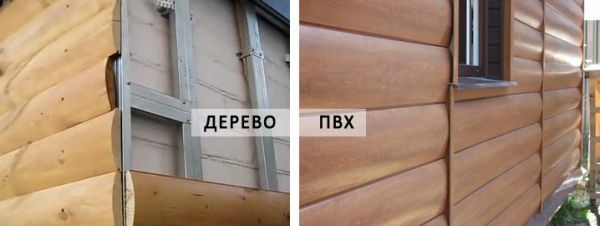
Vinyl Block House is a panel that is used to face the exterior of the home’s walls. Panels made of PVC are produced. From the outside, the house’s outdoor decoration panels resemble a log or a galvanized log. Both the shape and the type of wood that is used repeat at the same time.
Coestrusia is the term for the technological process that underlies the production of products. This process consists of sending two components that have been chosen for production to a special press and pressing them at high temperatures. As a result, you can obtain a two-layer product design.

The material gains mechanical stress resistance and precise geometric shape as a result of the inner layer. The protective qualities of the outer layer shield the body from the damaging effects of the environment. Furthermore, the product has a certain decorative appearance due to its outer layer.
Vinyl powder, which is regarded as the main raw material of PVC, is used to construct block houses. This material is used as a foundation because it helps create a design that is uniform in both its aesthetic and physical attributes.
Advantages and disadvantages
Vinyl block houses are a popular material for facing work because of their many benefits.
- despite the fact that the thickness of the material does not exceed 2 mm, it is characterized by the ability to withstand dynamic shock loads;
- block house is resistant to corrosion processes, the material does not rot or decompose;
- is an environmentally friendly product;
- it also does not encourage the formation of various microorganisms and is not attractive to insects and pests;
- has good fire resistance and in case of fire will not produce smoke. This is achieved by adding special substances to the composition;
- operating temperature can vary from -50 to +60 degrees Celsius, at the same time, the products will not lose their performance properties. Considering this fact, the use of a vinyl block house can be carried out in any region of the Russian Federation;
- coating for wall cladding is quite resistant to the negative effects of ultraviolet rays. The product retains its color for a long time;
- service life is 50 years or more;
- the product is light in weight;
- the installation process of a vinyl block house does not require the use of special equipment, and it can be installed on the facade of the house even independently;
- by choosing a vinyl type of block house for facing work around the house, it is possible to carry out measures to heat and sound insulate the house;
- the material is also an ideal option if it is necessary to create a modern ventilated facade system;
- using a block house, you can hide all the unevenness of the walls or any other defects.
The following are some of the product’s drawbacks:
- despite the fact that the material is not flammable, it begins to melt if the temperature is too high. If there is an open fire close to the wall surface, the coating will be damaged;
- coating for finishing a PVC facade does not have insulation properties, unlike a similar product made of wood.

Specifications
The following characteristics of the vinyl block house:
- the length of the product is 3.66 m;
- width 0.24 m;
- thickness is 1.1-2 mm;
- the area parameter for one element is 0.88 m 2 .
Given that every manufacturer creates products with unique specifications, the aforementioned parameters are only suggestions. They are, nevertheless, fairly near to those stated.
There are 20 elements in one package, weighing 39.2 kg.
It is important to consider the advantages and disadvantages of vinyl block homes versus log homes. Vinyl blocks are a great option for homeowners on a tight budget who like a modern aesthetic because they are inexpensive and require little upkeep. Compared to traditional logs, they are more insect and moisture resistant, which lowers long-term maintenance costs. But some homeowners value the natural insulation and rustic charm of solid wood logs, and those things may be lacking from them. Homeowners can make well-informed decisions based on their priorities regarding cost, upkeep, aesthetics, and environmental impact by being aware of these variations.
Kinds
Vinyl block houses come in a variety of styles, which are determined by the product’s dimensions and appearance.
Based on the imitation, surfaces are separated into items that resemble:
- log;
- rounded timber.
The material’s width can be:
Vary in length from 3 to 3.8 meters.
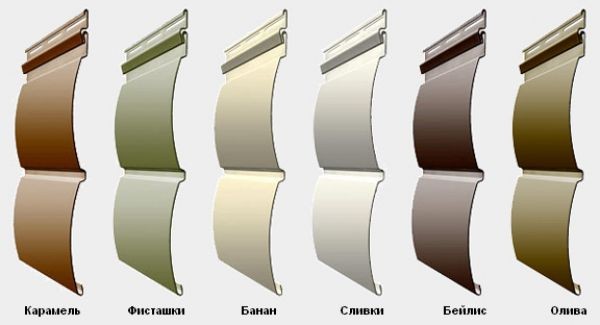
Regarding appearance, the product colors are:
- banana;
- dark walnut;
- caramel;
- light oak;
- olives;
- baileys;
- cream;
- pistachios.
Its texture is incredibly varied, mimicking the textures of many different types of trees, such as alder, spruce, pine, golden oak, etc.
Manufacturing companies
There are a good number of businesses that manufacture vinyl block homes.
The following are the most well-liked and superior ones:
- Deke. This company is one of the highest quality. Production takes place in Germany. Products manufactured by the company imitate logs. Panels are presented in 16 shades, the element width parameter is 0.24 m;
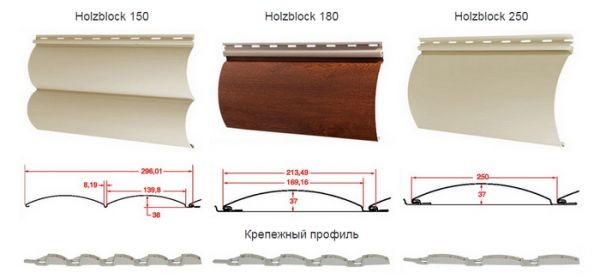
- Holzplast. A vinyl variety of block house imitating a wooden covering, this manufacturer calls it Holzblock. Products are manufactured in several series. In the 250 series, the panels look like a log, both natural and painted. The length of the product is 3.66 m, the width is 0.25 m. In the 180 series, there is a block house, which in appearance resembles a log of medium or large radius. Different from the previous series in width, which is 0.18 m. Versions 150 products imitate two logs of small diameter, the products differ in width, it is 0.297 m;
- Tecos. Company combines technologies from Belgian and Russian production. The panels imitate one or two logs, are 3.76 m long, 0.2 m wide.
- Alta profile. Relatively young domestic company. It produces products equal in length to 3.1 m. If the product imitates a single log, the width of the elements is 0.2 m; if there is an imitation of a double log, then the width of the element is 0.32 m. Available in various colors and textures (10 varieties);
- Terna Polymer. Also a domestic company, the block house of which is represented by the “Feinberg” series. In appearance, the products are represented by two logs, the length of which is 3.66 m and the width is 0.2 m.
The selection of materials affects the house’s performance attributes and appearance in addition to its overall look.
Installation
You must consider the features of any vinyl block house before making a purchase.
Nonetheless, the following algorithm governs how the installation procedure is carried out:
- initially you need to build a base in the form of a sheathing. It is necessary for attaching panels to walls. In turn, it is also necessary to prepare and clean the walls for the lathing;
- install metal or wood strips on the wall surface in a vertical direction. In this case, it is recommended to maintain a step between the slats of 40 cm, but it is better to start from the size of the purchased product (its width);
- Next, they begin measures to provide the walls with insulation and waterproofing coating. Do this only if necessary;
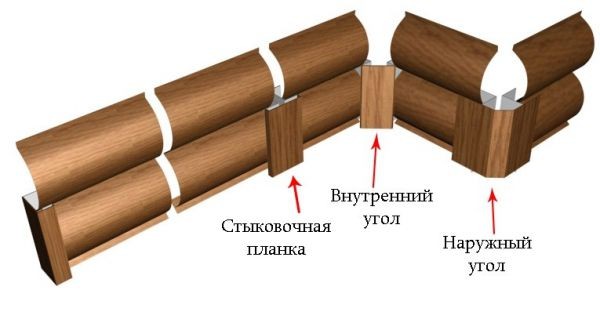
- the installation process begins with fixing the corner elements, and also installing window and door slopes, vertical joining profiles;
- Having measured the height at which it is necessary to install the starting bar, attach it;
- the whole process is carried out from the bottom of the house to the top, following the direction from left to right;
- In the process of fixing each panel, it is very important to take into account the possibility of its displacement. This is necessary to prevent the process of deformation in case of thermal expansion;
- To do this, it is necessary not to tighten the fasteners half a turn (in case of self-tapping screws). If nails are used, they should not be driven in close to the surface of the panel;
- when it is necessary to fasten elements together, then a small gap should be left both vertically and horizontally. Its size is 3 mm, but not less if the work is carried out during the warm season. If the house is sheathed in winter, then the gap is left with a size of 6 mm;
A precise perpendicularity to the plane is required when screwing or driving in components for fastening. Additionally, this can only be done in holes that are made especially for it.
The center of the holes with a slot shape must be where the fasteners are placed. This will give both directions the required play.

- installing the first element, you need to attach it to the starting bar using a locking connection. In this case, it is important to hear a characteristic click, which indicates that the panel is fixed;
- after this, the element is secured with self-tapping screws or nails to the sheathing;
- the next panel is installed in the same way. The lower part of the subsequent element is attached to the upper part of the previous one using a lock. Afterwards, it is fixed with self-tapping screws to the sheathing;
- At the end of the installation, platbands, soffits and wind strips are attached.
Useful video
Comprehensive video guide on how to install vinyl panels:
| Vinyl Block House | Advantages and Disadvantages |
| Advantages | Easy to maintain; resistant to rot, insects, and weather; cost-effective compared to traditional log homes. |
| Disadvantages | May lack the natural aesthetic of real wood; potential for color fading over time; limited customization options. |
A vinyl block house or a classic log cabin depends on a number of important considerations. Block homes made of vinyl have many benefits, including low cost and minimal maintenance. In comparison to logs made of natural wood, they are frequently less expensive to construct and require less care. For homeowners looking for a smaller initial investment and lower ongoing maintenance costs, this can be especially alluring.
Vinyl block houses can also be made in a wide variety of colors and textures. They can have a rustic charm without the problems of natural wood, like rot, pests, and weathering. They can resemble traditional logs in appearance. Because of its adaptability, homeowners can take advantage of contemporary building materials while still achieving the visual appeal of a log cabin.
However, it’s crucial to take into account a few possible disadvantages of vinyl block homes. Although they are strong and resistant to moisture, they might not insulate as well as solid wood logs. This may have an effect on thermal comfort and energy efficiency, particularly in harsh climates. Furthermore, some people might prefer the genuine appearance and texture of real wood, which vinyl block homes might not be able to perfectly capture.
In conclusion, a person’s preferences, financial situation, and desired level of maintenance will ultimately determine whether they choose a log cabin or a vinyl block house. Because of their superior affordability, low maintenance requirements, and adaptable design, vinyl block homes are a sensible option for a lot of homeowners. But nothing quite matches the authenticity of solid wood construction for those looking for the classic charm and cozy feel of traditional log cabins.


