
Plastic corners are a crucial element in finishing the slopes of windows and doors. These adaptable and strong materials not only improve the visual appeal of your house but also offer the edges the essential protection they need. The final appearance and durability of your finishes can be greatly impacted by selecting the appropriate kind of plastic corner.
There are many different styles and materials of plastic corners, and each is appropriate for a particular use. There is a wide range of choices, from bendy solutions that can readily adjust to uneven surfaces to strong corners that provide strong protection. Making an informed decision for your project will be made easier if you are aware of the various types that are available.
Among the most popular varieties are acrylic corners, which have a sleek, contemporary appearance, and PVC corners, which are renowned for their strength and moisture resistance. Because each type has a unique set of benefits, it’s crucial to take your space’s particular requirements into account before selecting one.
Plastic corners differ not only in composition but also in dimensions and form. There are products made to fit your needs, whether you want a straightforward finish with a basic L-shaped corner or a more intricate profile to fit special architectural details. You can guarantee a neat, polished finish that endures by choosing the appropriate plastic corner.
- Advantages and disadvantages
- Types, sizes
- Corner L
- U-profile
- F-profile
- T-shaped corner profile
- Varieties by type of finish
- Installation
- Price
- Video on the topic
- … instant GRIP and SUPER STRENGTH. The glue we ALWAYS USE for corners and sills.
- Angarsk masters.our feature with corners for wallpaper
- The use of plastic corners in plastering works
- Plastic corners. Everything you need to know.
Advantages and disadvantages
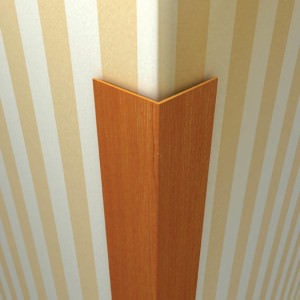
The majority of decorative elements used to finish room openings are based on polyvinyl chloride, or the polymers used to make the majority of modern plastic products.
This material is very versatile, so any corner profile made of it has standard advantages over counterparts made of other materials:
2. A vast array of sizes, colors, and shapes.
3. Simple to assemble using any method—even just glue or screws or nails.
4. Extended service life without sacrificing fundamental qualities.
5. Reasonably inexpensive.
6. Free of charge service.
Because they can be made of any color, they complement any interior design without detracting from it and giving the room’s overall aesthetic a sense of completion.
They are unaffected by even UV radiation, so even if they are in the sun all the time, they won’t fade for many years. Since they come in standard sizes, it won’t be difficult to find the materials you need in the necessary sizes.
Types, sizes
Plastic corners come in various sizes and varieties, each intended for installation in a particular spot:
Corner L
Its two subtypes—universal and starting—allow it to be used in more situations than others. Typically, this profile is used to form an edge in corner joints and to conceal spaces where various materials join together. It is also used to create an edge when sheet finishing materials are used.
U-profile
Installing it at the outset of slope fastening makes sense. It is meant to cover spaces between loosely fastened panels, prevent deformation of exterior corners, and decorate and frame slopes.
F-profile
It is simple to attach, even without glue, to the end sides of PVC panels because of the unique jumper. Its ability to be readily disassembled for a short period of time—for instance, to reattach wallpaper—explains its usefulness. Its primary function is to seal the seam where the panels meet the wall. It also serves as a platband to encircle openings and frame windows and doors.
T-shaped corner profile
It is the most effective way to produce the appearance of a smooth transition between two distinct finishing materials. Attaching it to any material is simple. They serve the purpose of enhancing the unevenness of the tile when it comes into contact with a flat surface of the floor or wall, and are utilized, for instance, to make the process of installing ceramic tiles on the floor easier.
Products are made in 5 millimeter increments, and the length of these sides ranges from 10×10 to 50×50 mm. Frequently, the angle between the sides is 90 degrees. Typically, they are utilized in the design of window and door slopes.
It is advised to use finishing elements with a standard size greater than 20 mm when installing them in areas subject to the strong influence of external factors. Additionally, tiny corners blend inconspicuously and comfortably with the room’s interior design.
Varieties by type of finish
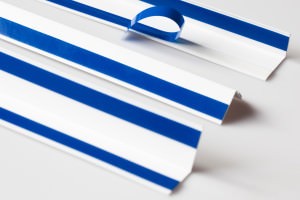
PVC corners vary from one another and from the kind of finishing work they are designed for. There are two types of them: internal and external. The external ones can have an angle of either 90 or 105 degrees.
The 90-degree one is mounted so that only one strip is visible from the outside, and the other one is set back into the opening in the window frame. Additionally, both shelves of the version with a 105-fold turn are attached outward.
The self-stick variant has achieved remarkable success. It is adaptable because glue doesn’t need to be purchased separately for it. Additionally, they are flexible for simple installation.
One more benefit of this kind of product is that it can be purchased in roll-type packaging up to 50 meters long, so you can buy nearly any length needed in each particular situation to prevent joints.
Installation
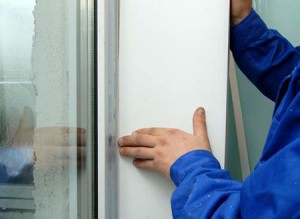
Installing plastic corners is a task that can be completed independently and does not require extensive knowledge of construction.
The following supplies and equipment are needed for this:
1. A metal-cutting pair of scissors or a sharpened stationery knife.
2. Expert in liquid nails or glue.
4. The actual angle profile is composed of plastic.
It is highly advised to measure all slopes and openings where finishing elements are to be installed before making any tool or material purchases.
It is not advisable to add all measurements to the required material’s total length as this will only make the error larger.
Separate calculations are preferable. This will have two benefits: you can choose materials of various colors and sizes for a particular area of the interior, and there won’t likely be any needless joints.
1. The initial stage involves priming the opening’s surface by trimming any extra, projecting sections of wallpaper, plaster, or polyurethane foam that obstruct the decorative element’s ability to be fastened.
2. After the surface is prepared, the corner is given the ideal amount of glue—enough to ensure that it adheres, but not too much. If not, the glue will seep out from underneath and discolor the nearby area. There’s also the self-adhesive version, which requires only removing the film to make it ready for installation right away.
In order to avoid having to reposition the material by smearing glue onto the work surface, it is crucial to apply the material precisely from the start. Self-adhesive products only require one attempt to ensure high-quality installation. The most important thing in this situation is to precisely cut and join the corners with as few spaces as possible, if possible. Filling a failed joint with silicone is a simple way to hide it.
Consequently, decorating any window or door opening is simple. The plastic corner profile is simple to maintain with any damp cloth or napkin, and it complies with all environmental regulations. It also maintains its color and doesn’t release any smells.
This article examines the various kinds of plastic corners that are utilized in building and remodeling projects to finish the slopes of windows and doors. Plastic corners are robust and adaptable, offering solutions for slope edge integrity maintenance that are both aesthetically pleasing and practical. Understanding the variety of options available can help builders and homeowners make well-informed decisions to achieve both functional and aesthetically pleasing results in their interior spaces. These variations range from standard L-shaped profiles to more specialized variants designed for specific needs like moisture resistance or enhanced insulation.
Price
The primary benefit of this material is that it is significantly less expensive than comparable products made of other materials. This, along with an almost endless service life, makes PVC corners the most widely used choice for filling in openings and slopes.
What factors are involved?
1. First, it depends on the kind and form of the area as well as the size of the shelves; the more money used to make the plastic corner and the costlier the product, the larger the shelves.
2. Secondly, self-adhesive corners come pre-coated in glue, which is included in the price, depending on how they are fastened.
| Types of Plastic Corners | Description |
| 1. External Corners | Designed to protect and neatly finish external edges of slopes, providing a clean transition between different surfaces. |
| 2. Internal Corners | Used to reinforce and finish inside corners of slopes, ensuring durability and a professional look to the junction. |
Plastic corners combine practicality and visual appeal in a highly adaptable solution for finishing window and door slopes. These corners suit a variety of architectural styles and functional requirements, and they come in an assortment of profiles and colors. There is a plastic corner to fit every taste, whether you like rounded edges for a softer finish or sharp angles for a more contemporary appearance.
Plastic corners are a great option for humid areas like kitchens and bathrooms because of their strength and ability to withstand moisture. Plastic corners are strong and lightweight, offering long-lasting performance without the risk of rot or corrosion, in contrast to more conventional materials like wood or metal. This durability translates into less upkeep needed, providing homeowners with long-term cost savings on repairs and peace of mind.
Plastic corner installation is easy and frequently only requires a few basic tools and do-it-yourself abilities. Professionals and do-it-yourselfers alike will find them to be a hassle-free solution because they are simple to cut to size and fasten with screws or adhesive. Because of its ease of installation, renovation projects can be completed more quickly and with lower labor costs, increasing overall efficiency.


