
Choosing a good orthopedic mattress is not just buying a sleeping accessory, but investing in your own health and quality rest. It determines how you will feel in the morning, whether your back pain will disappear, and how sound your sleep will be.
Today, the market offers many models with different fillings: from classic latex and coconut coir to modern memory foam materials. Each of them has its own characteristics and advantages and is suitable for different needs.
The right size is equally important. A mattress that is too small or narrow will not only cause discomfort, but can also negate the entire orthopedic effect. Let's figure out how not to get confused in all this variety and find the option that is ideal for you.
Choosing an orthopedic mattress: key factors
For sleep to be peaceful and deep, the body must be in a comfortable position. The function of a mattress is to support the spine and ensure the correct body position. But, in addition, a person should be comfortable while sleeping—the body should not be compressed, the skin should be able to breathe, the springs should not squeak, etc. These are the two main factors to consider when buying a mattress.
- Support. The ability of an anatomical mattress to bend to a degree corresponding to weight ensures correct spinal alignment, as the mattress bends more under heavier parts of the body and less under lighter parts. The higher the firmness, the less pronounced this ability is, so it is very important to choose a mattress with the right firmness. It is best to consult with an orthopedic surgeon to assess the condition of your skeletal system and the level of support you need.
- Comfort. It is not enough to ensure the correct position of the body; it must also be comfortable for the person themselves, so that individual parts of the body do not “slip” and the mattress does not press anywhere. At the same time, the materials from which it is made must allow air and water vapor to pass through so that you do not sweat while sleeping.
In addition to these two factors, pay attention to other features of orthopedic mattresses that are equally important:
- Hygiene. The mattress must be well ventilated, which is important for maintaining optimal body temperature and humidity during sleep. Some manufacturers report the presence of a well-designed ventilation system. Pay attention to the covering layer, which can be universal or designed for a specific season. Some mattresses are produced as “versatile” — the material on one side is designed for winter, made of wool, and on the other side — for summer, made of cotton.
- Hypoallergenicity. It is good if the mattress is made of environmentally friendly materials, in which case it will not release substances into the air that can cause allergies. This factor influences the choice of an orthopedic mattress, especially if it is intended for a small child or an elderly person.
- Deformation transfer. If two people sleep on the bed, the ability of the mattress to transfer deformation becomes important. When one person gets out of bed, the other person's sleep should not be disturbed. Dependent spring blocks are characterized by a high degree of deformation transfer.
- Edge stability. The edges of the mattress are its “weak” spot; they are easily deformed, most often if you have a habit of sitting on the edge or sleeping close to the edge of the bed. Good manufacturers additionally reinforce the edges with a frame made of polyurethane foam or steel rods.
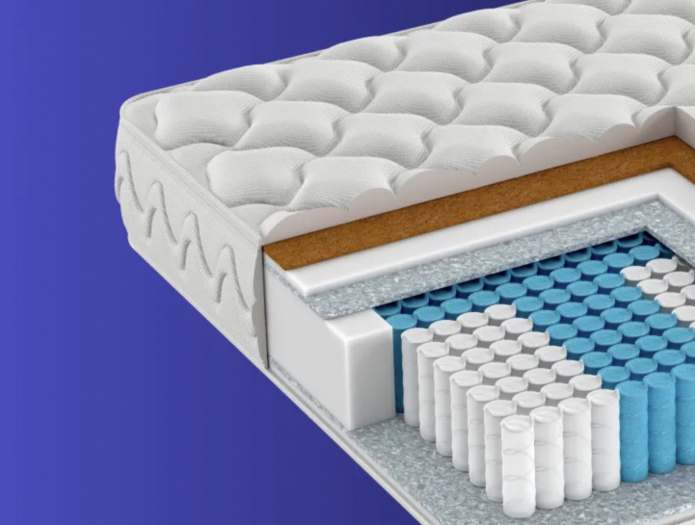
Choosing the right orthopedic mattress is the key to sound sleep and a healthy back. The main thing is to find a balance between firmness, body support, and comfort so that your spine remains in a neutral position while you sleep. Mattresses come with different fillings: spring blocks provide good support, while springless ones — for example, made of coconut, latex, or foam — are suitable for those who prefer a more even surface. It is important to consider not only your feelings, but also your weight, height, and bed size — the mattress must strictly correspond to the sleeping area. It is best to choose after consulting with your doctor or testing several options in the store.
The firmness of orthopedic mattresses
The quality and degree of spinal support is determined by the firmness of the mattress you sleep on. There are three groups of firmness with different purposes:
- Soft. These mattresses are designed for people with low body weight, as well as for the elderly. They are not suitable for those whose skeletal structure is still developing.
- Medium firm. Medium firmness is suitable for most healthy people.
- Firm. These mattresses are designed for children and young people whose skeletal systems are still developing. People who are very heavy, especially those who are obese, are not recommended to sleep on them.
How to choose an orthopedic mattress with the right firmness for you? To do this, you need to lie down on it. It is better if someone watches you and determines how evenly you are lying and whether your spine is straight.
- Normal. A mattress with the “right” firmness takes the shape of the body, resulting in the spine forming a straight line parallel to the floor. In this position, the muscles relax and the body gets a good night's sleep.
- Softer than necessary. If your spine bends, you will feel like you are in a hammock — the mattress is too soft, and your back may hurt after spending the night on it.
- Firmer than necessary. The line of the shoulders and hips appears raised. This means that the mattress is too firm, and the body will be “pressed” against it, disrupting normal blood and lymph circulation. The next morning, you may experience swelling and a feeling of “stiffness” in your neck, legs, and arms.
Another criterion for selection is weight.
- Up to 60 kg – low firmness
- 60–90 kg – medium firmness
- Over 90 kg – high firmness
This applies only to healthy middle-aged people.
Tip: To check whether you have made the right choice, lie on your back. Slide your hand under your lower back. Does it fit freely? The mattress is too firm. Roll from side to side. Is it difficult? The mattress is too soft.
Comfort level
Comfort is a special feeling, and it is not always easy to understand what makes it possible. In the case of a mattress, it is easy to determine: if it presses on the protruding parts of the body, such as the hips and shoulders, when you lie on your side, it means that sleeping will be uncomfortable. The larger the area of contact between the body and the mattress, the less pressure you feel, as your weight is distributed more evenly.
When deciding which orthopedic mattress to choose, it is best to focus on artificial and natural latex, as well as memory foam, as they provide the most comfortable sleeping conditions. If you prefer spring mattresses, choose one with a higher number of spring blocks per unit area, as this will distribute the load more evenly.
Types of orthopedic mattresses
There are two types of mattresses that provide proper back support.
- Spring
- Springless
The first type of mattress uses springs as filling. They can vary in the type of steel they are made of, the number of coils, and the method of attachment—they can be connected to each other or independent. The second type of mattress uses sheets of elastic material or a combination of sheets of different materials, varying in density and elasticity, as filling. Both types come in all degrees of firmness and can provide a good night's sleep.
Spring orthopedic mattresses, in turn, are divided into two types:
- Dependent. Springs in the shape of a double cone are arranged in rows and interlock with each other. The main advantage is their low price. They have a short service life (no more than 7 years). The orthopedic effect is rather weak. They are not recommended for people who are overweight (over 100 kg), as well as for couples with significantly different weights.
- Independent. Each spring is placed in a separate cover. The springs are connected into a single block by sewing the covers together. These mattresses are more expensive but last longer—up to 10 years. The orthopedic effect is quite pronounced.
The main indicator of the quality of spring models is the density of the blocks, measured in units per square meter. An indicator of 200 is the minimum for high-quality models. In addition, springs can vary in size and be distributed in the mattress in different ways. Accordingly, there are several groups:
- Pocket Spring (TFK, S-500). The most budget-friendly option for an independent spring block. The springs have a diameter of about 6 cm, a density of 220-300, and a permissible load of up to 120 kg per sleeping place.
- Multipocket (S-1000). The diameter of the springs is slightly smaller—about 4 cm—and there are more of them (density 500). Withstands up to 130 kg per sleeping place. Provides better orthopedic support and greater comfort than Pocket Spring.
- Micropocket (S-2000). The diameter of each spring is 2–2.6 cm, and the density is 1200. This type of mattress springs less than others and is very elastic, which increases sleeping comfort.
- Hour Glass. Another name for this is an hourglass. The springs are made in an unusual shape, similar to an hourglass, which achieves optimal firmness. The main advantage is that they are suitable for people of any weight.
- Dual Spring. The special properties of an orthopedic mattress are provided by double springs, which allow people with a weight difference of forty kilograms to sleep comfortably on the bed. The maximum weight of one partner is 150 kg.
- Reinforced. Wire with an increased diameter is used to manufacture the springs in these mattresses. The blocks themselves are installed alternately, in a “checkerboard” pattern.
- Firmness zones. Installing springs of different firmness in different areas of the mattress allows for a more even distribution of weight and ensures comfort for people of different builds. There are three, five, and seven-zone mattresses. The mattress can also be divided into two sleeping areas with different degrees of firmness for partners who have very different weights.
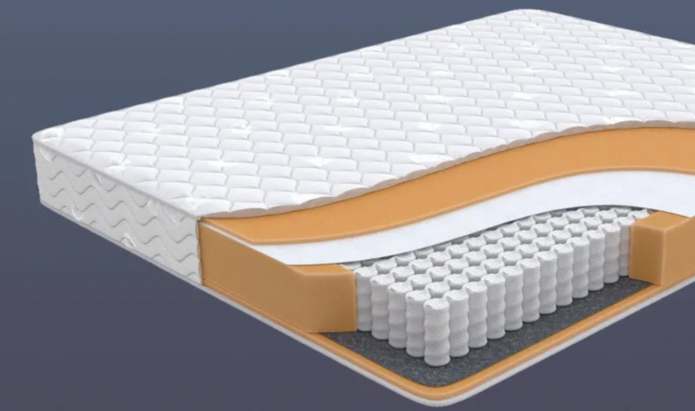
Fillers for orthopedic mattresses
Springless mattresses are made from various materials, both natural and artificial. In particular, exotic fillers such as sisal or horsehair can be used. Let's take a closer look at the most popular options, their pros and cons.
PPU
Foam made of synthetic polyurethane foam. It has other names (foam rubber, orthofom).
Pros: Low cost, affordability.
Cons: Poor air and moisture permeability, short service life, can accumulate odors and retain them for a long time.

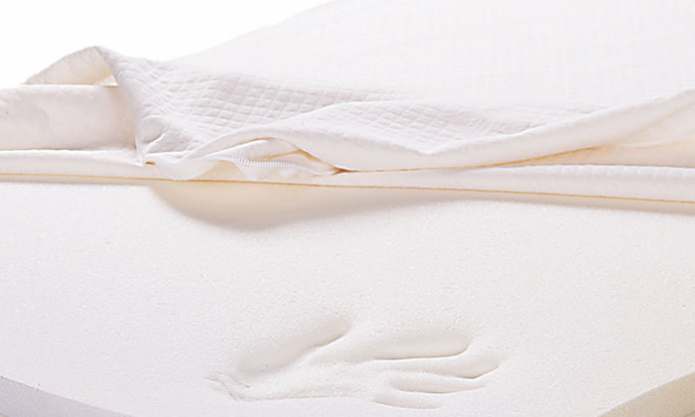
Memory foam
Foam made from modified polyurethane foam with a memory effect. Brand names: Memory Foam, Memorix.
Pros: Returns to its original shape after the load is removed. Exerts less pressure on the body, promoting better blood and lymph circulation in the body.
Cons: Poor air permeability.
Latex
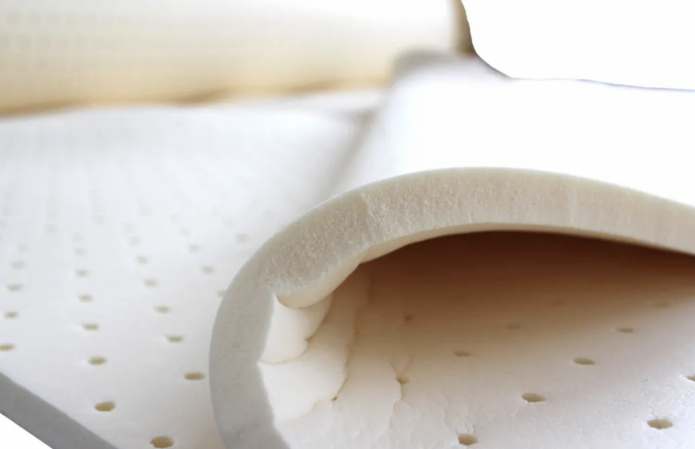
Foam obtained from the sap of the rubber tree (a type of palm tree).
Pros: Completely natural and very environmentally friendly material. Easily changes shape under pressure, gently “hugs” the person lying on it, provides comfort and proper thermoregulation. Does not absorb odors or moisture. Service life up to 20 years.
Cons: The only drawback is the high price, which, however, pays for itself with a long service life.
Artificial latex
Made from polyurethane foam that has been treated in a special way.
Pros: Of the popular materials for orthopedic mattresses, this one can be considered the best in terms of price-quality ratio. Withstands heavy weight.
Cons: The service life of such mattresses does not exceed 15 years.
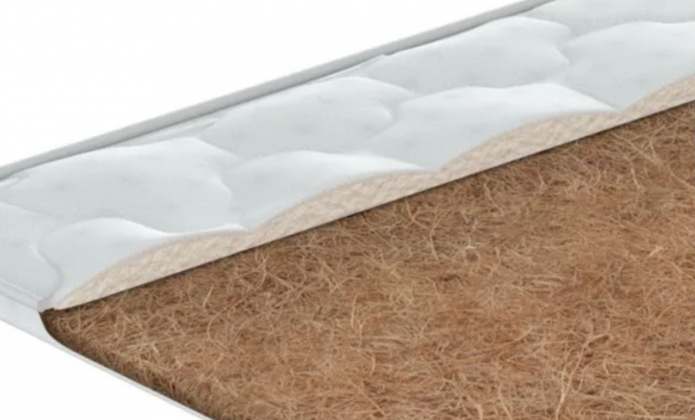
Coir
This material is obtained from fibers extracted from the mesocarp of coconuts. It is a completely natural material with high elasticity. Each coir fiber can be considered a mini spring.
Pros: Resistant to moisture, does not harbor germs or mold, and does not rot.
Disadvantages: Quite a hard material, which needs to be combined with softer materials for comfortable rest.
Struttofiber (periotech)
Made from synthetic polyester threads, sometimes with the addition of natural cotton, bamboo, wool, and linen threads, without the use of adhesives or resinous substances.
Hollofiber
Made from polyester fiber. It has good air permeability, does not clump together, and holds its shape well.
Techno-gel
Similar in properties to memory foam, but with a gel-like structure. This allows it to distribute pressure in all directions, reducing pressure on the body. The main drawback is its very high price.
Exotic natural fillers:
- Horsehair. An expensive material considered one of the best fillers. It is additionally impregnated with latex. It can be used to make hard and semi-hard mattresses with very good orthopedic support.
- Sisal. Obtained from the leaves of the Agava sisolana plant (sisal agave). It is also subjected to additional impregnation with latex. Sisal is a harder material than coir, but more durable.
Sizes of orthopedic mattresses
Manufacturers offer a wide range of standard sizes, among which you can choose a model for any bed. In addition, it is always possible to order a non-standard size, although it will cost a little more. The main difficulty is deciding what size mattress you need. Use the following tips when choosing a mattress:
- Measure your height and add at least 15 cm—the length of the mattress should not be less than the resulting value, and it is better if it is 5 cm longer.
- Lie on your back, put your hands behind your head, and measure the distance between your elbows. This is the width of the mattress you need. If you sleep with a partner, you should take the same measurements for them. Again, allow for a few extra centimeters.
- Don't forget to measure the size of your bedroom to get an accurate idea of the possible mattress size.
Standard mattress sizes
The most common and popular mattress models have the following dimensions:
- width: 80, 90 cm (single), 120 cm (one and a half), 140, 160, 180, 200 cm (double).
- length: 190, 195, 200 cm.
| Category | Width | Dimensions (Length × Width) |
|---|---|---|
| Children's | 60 cm | 60×120, 60×190, 60×195, 60×200 |
| 65 cm | 65×125, 65×190, 65×195, 65×200 | |
| 70 cm | 70×140, 70×190, 70×195, 70×200 | |
| 75 cm | 75×190, 75×200 | |
| 80 cm | 80×160 | |
| Single | 80 cm | 80×190, 80×195, 80×200 |
| 85 cm | 85×190, 85×195, 85×200 | |
| 90 cm | 90×190, 90×195, 90×200 | |
| 95 cm | 95×190, 95×195, 95×200 | |
| One and a half | 100 cm | 100×190, 100×195, 100×200 |
| 110 cm | 110×190, 110×195, 110×200 | |
| 115 cm | 115×190, 115×195, 115×200 | |
| 120 cm | 120×190, 120×195, 120×200 | |
| 125 cm | 125×190, 125×195, 125×200 | |
| 130 cm | 130×190, 130×195, 130×200 | |
| 135 cm | 135×190, 135×195, 135×200 | |
| Double beds | 140 cm | 140×190, 140×195, 140×200 |
| 145 cm | 145×190, 145×195, 145×200 | |
| 150 cm | 150×190, 150×195, 150×200 | |
| 155 cm | 155×190, 155×195, 155×200 | |
| 160 cm | 160×190, 160×195, 160×200, 160×205, 160×210 | |
| 165 cm | 165×190, 165×195, 165×200 | |
| 170 cm | 170×190, 170×195, 170×200 | |
| 180 cm | 180×190, 180×195, 180×200, 180×205, 180×210 | |
| 200 cm | 200×190, 200×195, 200×200 | |
| Round | — | Diameters: 200, 210, 220, 230, 240 cm |
Choosing an orthopedic mattress is an investment in the quality of your sleep and, as a result, in your health and vitality throughout the day. Don't rush into a purchase based solely on price or appearance. It's better to take the time to listen to your body and understand its needs.
Remember that there is no such thing as the perfect mattress for everyone. What suits your friend may not suit you. Your weight, favorite sleeping position, and individual preferences are the main factors to consider. Be sure to lie down on the model you choose for a few minutes in the store to feel how it supports your spine.
Let your new mattress become a reliable foundation for rest for many years to come. A sound and healthy sleep is worth it. Sleep comfortably and wake up full of energy!


