
Ondulin is unique among roofing materials in that it is easy to install and has a long lifespan. To guarantee longevity and efficacy, it needs to be properly waterproofed and equipped with vapor barriers, just like any other roofing solution. This is especially important to avoid moisture build-up and water infiltration, which over time can cause structural damage and health problems.
Under ondulin, waterproofing is crucial for shielding your house from the weather. It serves as a barrier, keeping precipitation from penetrating the roof and creating leaks. No matter how much rain falls, this layer of defense makes sure that your living area stays safe and dry. It also contributes to preserving the roofing material’s integrity, extending its life.
The vapor barrier, which is equally significant, is essential for controlling moisture in the roofing structure. Without a suitable vapor barrier, moisture from the inside of the house may ascend and condense on the roof’s colder surfaces. This may result in the growth of mold, rotted wood, and damaged insulation. You can successfully stop this moisture migration and maintain the integrity of the roof structure by installing a vapor barrier.
We’ll look at the best ways to install vapor barriers and waterproofing under ondulin in this article. We’ll go over the supplies required, the detailed procedure, and advice for a flawless installation. Whether you’re a professional or a do-it-yourselfer, knowing these components is essential to building a sturdy, moisture-resistant roof.
- Ondulin vapor barrier
- Waterproofing
- Ondulin
- How to install vapor and waterproofing
- Do-it-yourself installation of insulating materials
- Video on the topic
- Workshop construction – part 7 (waterproofing, sheathing, ondulin)
- Use of Ondutis films when installing roofing made of Ondulin
- Installation of ONDUTISS waterproofing on an uninsulated roof 2026
- Installation of a superdiffusion membrane and ONDUTISS vapor barrier on an insulated roof with one ventilation gap
- Roof without vapor-moisture barrier film, after 13 years.
Ondulin vapor barrier
The humidity level in the house’s interior air is high throughout. All of the house’s walls, ceilings, and other structures are constantly affected by it when combined with increased air pressure. The situation with the roof is far more complicated if such an impact is not critical for floors because most surfaces are inside an air bubble and do not experience pressure drops, and because the outer walls have a significant thickness and strength.
The pressure of the internal air gradually "blows through" the insulation layer, leaving moisture inside the material and reducing its effectiveness. Furthermore, damp insulation that comes into contact with the rafter system’s material rots and damages it, necessitating a total roof replacement.
The installation of a vapor barrier layer is the fix for the issue. Usually, there is a large selection of film material available. Before sheathing with sheet materials, the vapor barrier underlay under ondulin is placed on top of the insulation, preventing it from coming into contact with the interior atmosphere. As a result, the threat is removed and the insulation begins to function at its best.
Waterproofing
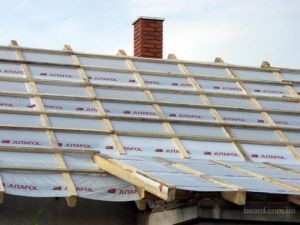
A waterproofing layer needs to be positioned between the insulation layer and the roofing material. It is required because the material of the roof acts as a barrier between two regions of varying temperatures, resulting in the surface condensation of water vapor.
Conversely, during the summer, when the under-roof components are in the shade and considerably colder, they may experience heat-related sweating and moisture buildup due to the sun’s heat.
In any case, the moisture content is intolerable, and the solution is to apply a waterproofing layer before adding insulation. In this case, there are some guidelines that need to be closely adhered to. To prevent water from seeping into the crevices, a waterproofing film made of polyethylene and PVC is first applied in overlapping strips.
In order to prevent the insulator from making physical contact with the roof and to allow air to flow, a minimum of 2 centimeters must exist between the roof and the insulator sheet. This allows the film’s surface to dry. The requirements are straightforward but necessary for waterproofing to function normally.
Ondulin
Ondulin is a bitumen-impregnated cellulose roofing material. From the outside, it appears to be slate, which it actually is. It comes in a variety of colors and offers several benefits.
- Light weight. Convenient to transport, easy to lift to the installation site.
- Simplicity of installation work. Ease of cutting and processing.
- Relatively low price.
- Not susceptible to mold or mildew.
- Chemically resistant to acids or alkalis.
However, ondulin has a number of detrimental effects.
- According to him you can"t walk.
- Low warranty period, the material is considered a temporary coating.
- Can be bitumen stains, which, according to manufacturers, are not defective.
- Wet ondulin sags and loses its shape; if there are irregularities on the sheathing, it will repeat them. Material is flammable, it cannot be used for roofing schools, hospitals, etc.P.
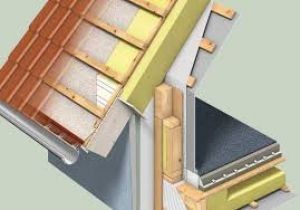
All of the material’s drawbacks stem from the fact that its primary component is cellulose, or waste paper that has been bitumen-impregnated and combined with fiberglass and sand.
It is evident that a composition like this does not add to the material’s exceptional strength and longevity. You should consider the difficulty of roof repair when selecting ondulin.
But, because it doesn’t require a lot of labor to install, it’s good for standalone use.
Maintaining the integrity and longevity of your home requires installing a vapor barrier beneath your Ondulin roofing and making sure that waterproofing is done correctly. By taking these precautions, moisture intrusion is prevented, which can prevent the growth of mold, damage to structures, and decreased insulation efficiency. Through comprehension of optimal techniques for installing vapor barriers and waterproofing, homeowners can avert expensive repairs and augment the resilience and coziness of their living areas.
How to install vapor and waterproofing
Installing ondulin is advised following the installation of the roofing pie and thorough surface preparation for roof laying. Nonetheless, it is frequently necessary to perform maintenance on an existing roof. Vapor and waterproofing must be installed before installing underlay carpet for ondulin.
- Do you need waterproofing for ondulin?? Needed, t.To. Moisture from the outside may penetrate through joints and nail holes. The waterproofing film is attached onto the prepared sheathing. Its value takes into account the area of the roof and its angle of inclination of the slopes; the larger the area and the smaller the angle, the more space should be provided for air movement. Read about the sheathing step here.
- Film strips are overlapped from top to bottom from the roof ridge, all joints are either soldered with a construction hairdryer or glued together with special tape.
- A prerequisite is the integrity of the canvas, any hole in the film is a source of condensation and a place for destruction of the rafters, which is dangerous because all the problems will not be noticeable immediately.
- Do you need a vapor barrier for ondulin?? Yes, it is necessary if you plan to install insulation. A vapor barrier layer is attached over the installed insulation. The most successful choice for solving the problem would be to use a membrane, which ensures that steam is cut off from the outside and allows its unhindered escape from the thickness of the roofing pie. This arrangement of the membrane cuts off steam from the room, but does not prevent the insulation from drying.
- The vapor barrier is laid on the insulation and attached to the rafters using nails and thin strips or glazing beads. The fabric is taped at the joints, the overlap must be at least 10 cm.
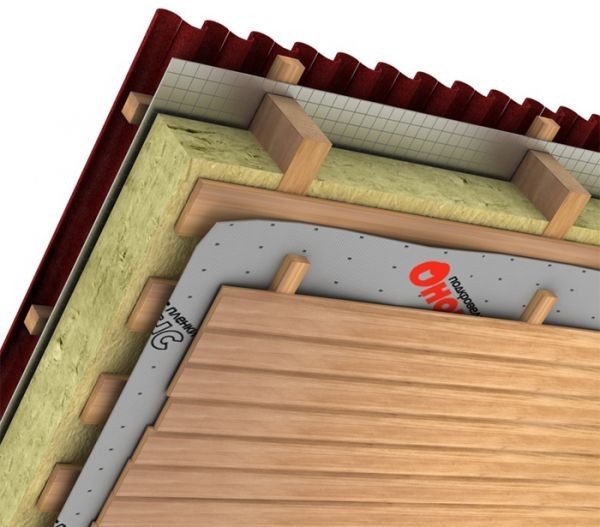
Roof waterproofing beneath the ondulin (roofing pie diagram)
Do-it-yourself installation of insulating materials
Not so much skill as a correct understanding of the fundamentals of the operations being performed is needed to carry out installation. A hammer, a knife for cutting film, nails, or screws are used for all tasks. As a result, independent installation is not technically challenging, but it does need precision and diligence.
Ondulin waterproofing is essentially the same as work involving other roofing materials. The components and mechanism of the roof pie remain unchanged; the only variations are those that directly affect ondulin operations.
Think about attaching insulation to the installed roof from the inside.
- First of all, it is necessary to provide the necessary gap between the layer of film and the roof. If there is a continuous crate, then an additional ventilation, 2 cm thick, is installed between the rafters. In this article you can read about the installation of ondulin.
- The distance between the lambs of the crate takes into account the width of the film, to fix the joints. Installation is carried out from top to bottom. All joints are glued with tape.
- After that, a layer of insulation is installed according to the technology for the selected material. Then the vapor barrier membrane is installed. How a vapor barrier is laid sideways under ondulin? Each type of vapor barrier has its own instructions on this matter, usually the fleecy side is directed inside the building.
- Installation of layers is similar to installation of waterproofing, but the order of arrangement is the opposite – from bottom to top. The installation is completed by covering the slopes with sheet materials and finishing.
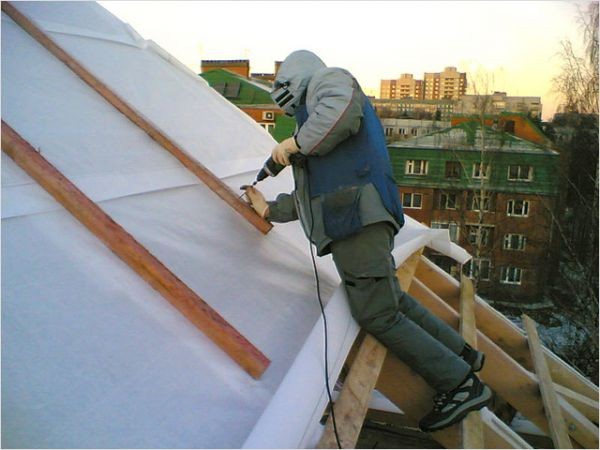
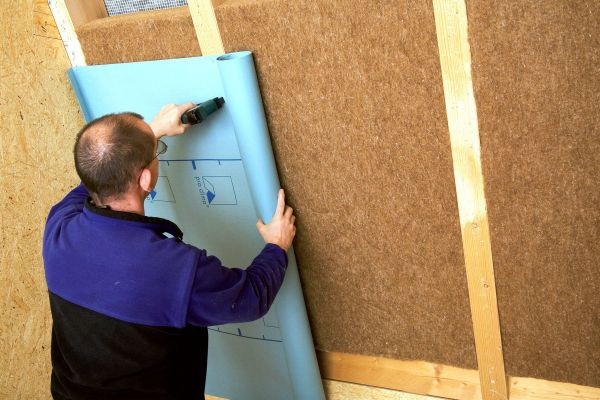
The vapor barrier membrane being laid
| Aspect | Description |
| Waterproofing | Protects the roof from water leaks and prevents moisture from getting into the house. |
| Vapor Barrier | Stops moisture from inside the house from reaching the roof structure, which helps prevent mold and rot. |
| Materials | Commonly used materials include plastic films, rubber sheets, and special membranes. |
| Installation | Must be installed carefully to ensure there are no gaps or overlaps, usually placed under the ondulin sheets. |
| Maintenance | Regularly check for any damage or wear and repair promptly to maintain effectiveness. |
Maintaining the longevity and effectiveness of your roofing system under Ondulin requires making sure that the vapor barrier and waterproofing are installed correctly. These layers guard against moisture damage to the structure, which can result in expensive repairs and compromised structural integrity. You can avoid problems like wood rot, mold development, and insulation degradation by making an investment in high-quality materials and appropriate installation methods.
Waterproofing acts as a barrier to keep outside elements like snow and rain from getting inside the roof. In areas with heavy rainfall or severe weather, this layer is particularly crucial. Water will be diverted from the roof and into the drainage system by a properly installed waterproofing layer, keeping the interior structure dry and secure.
On the other hand, vapor barriers are essential for managing moisture that enters the building. They keep condensation from forming and building up inside the roof, which is crucial to preserving the insulation’s effectiveness and the house’s overall energy efficiency. Installing vapor barriers correctly lowers the possibility of moisture-related issues while also assisting in maintaining a comfortable interior atmosphere.
In conclusion, vapor barriers and waterproofing are essential elements of a strong and effective Ondulin roofing system. Your home will be more durable, comfortable, and energy-efficient in the long run if you take the time to learn about their functions and make sure they are installed correctly. When organizing your roofing project, don’t forget about these important components; they’ll keep your investment safe and your roof functioning for a long time.


