
Because of its strength and longevity, concrete is an essential building material. But one of its natural flaws is that it is porous, which over time can allow water to seep in and cause damage. The structural integrity may be jeopardized, necessitating expensive repairs.
Waterproofing is crucial to extending the durability and resilience of concrete structures. Concrete impregnations and additives that increase water resistance can be used to accomplish this. Buildings can be effectively protected from moisture-related problems by incorporating these solutions.
Usually used on the surface of concrete, impregnations create a water-repellent barrier. By penetrating the surface, these products seal pores and stop water seepage. Conversely, before the concrete hardens, additives are added to it to improve its water resistance and reduce porosity, thereby offering internal protection.
Depending on the particular requirements of your project, you can use these approaches separately or in combination. Each has clear advantages. Concrete structures can be made much more durable and effective by learning and using these waterproofing techniques.
- Types of water repellents
- Differences in usage
- Differences in water repellents by composition
- Organic based
- Water-based (usually mineral)
- Features of use
- Recommendations for selection
- Aquasil
- Bionic MVO
- Penta
- Polyfluid
- Spectrum 123
- Tiprom U
- Video on the topic
- How to make concrete strong. Additives, additives, impregnations, fibers.
- How to make waterproof concrete yourself?
- ➤ What is added to cement mortar ➤ Advice from Professionals ➤ Tested by time and practice
- What are the types of additives (plasticizers) and toppings for concrete?
- home-made impregnation for concrete, / the secret of concrete durability.!
Types of water repellents
Let’s examine the variations in composition and application methods for water-repellent additives.
Differences in usage
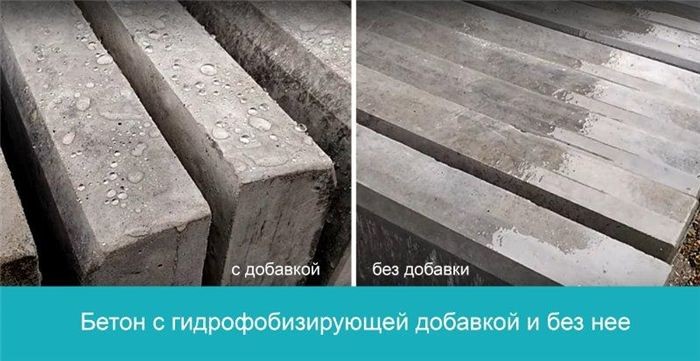
There are two categories of concrete water repellents:
- Surface, otherwise called impregnations (film or penetrating waterproofing for concrete). Applied to ready-made concrete, including for finishing. Film impregnations last 5-15 years, then they need to be renewed.
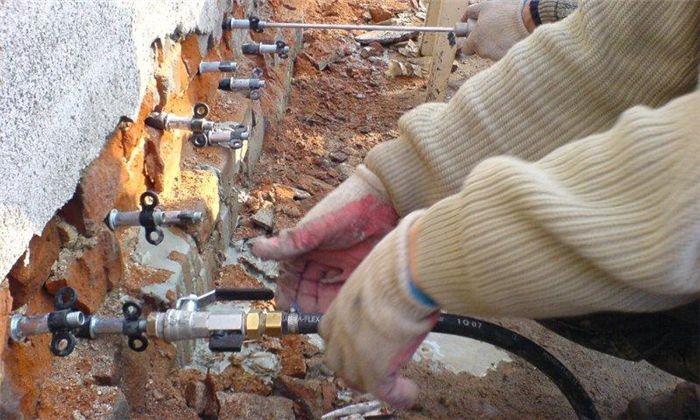
- Volumetric (additives). Protect concrete throughout its entire volume, curing occurs more evenly. There are two options: the additive is added directly to the mixture at the preparation stage, or holes up to 30 cm deep, 0.2-0.35 mm in diameter, at an angle of 45° are drilled in the finished concrete, where it is injected with construction syringes. This method is called injection waterproofing, it is more expensive, but it allows you to restore the water tightness of any type of foundation if it is impossible or due to high repair costs by other methods.e. when there"s nothing else left. Shrinkage cracks are also filled. Sometimes the method is used in emergency cases to eliminate a leak, for example, in a hydraulic structure.
- Combined method. Combines the two previous methods. The most effective technology, but more expensive. Usually one of the methods is sufficient.

Additionally, there are penetrating impregnations that reach about 300 mm down into the concrete. Since they are applied to wet concrete, they take part in the cement’s hydration, or hardening reaction. Crystals grow and block pores. This implies that the concrete will keep water out even if there is damage to the surface. It also gains the ability to withstand heat, reaching temperatures above 120°C.
Differences in water repellents by composition
Let us state up front that silicone and silicate impregnations (as well as additives) are not the same thing. They are classified into two distinct chemical groups, and they function in very different ways. The main classification of water repellents is based on their base.
Organic based
Polymers like silicone, acrylic, epoxy resin, or polyurethane may be present. They all create a film that closes the pores from above, which is what unites them. The film application method makes use of organic impregnations. Polyurethane or epoxy compounds are also commonly used for syringe injection.
However, concrete can also contain organic water-repellent additives. They form a film in a raw concrete mixture as well, but they enclose each particle; in this way, they function similarly to plasticizers. When they displace air, the solution’s density and workability rise as well.
Water-based (usually mineral)
This usually involves silicate as the active ingredient. The same piercing impregnations that grow and crystallize into concrete are these. You don’t have to apply them again later.
Not every water-based impregnation, though. There are materials like latex, whose primary constituent is an organic carboxylate compound. His molecules only have the same charge as water molecules, so they repel one another rather than filling the pores.
Similarly, costly silicates such as sulovsans and alkylalcoxisislans exist as a solution on an organic polymer as well as as a water emulsion. Potassium alkylicanates: less expensive substitutes.
Alkylicanates should really be used as an additive in a solution rather than as an impregnation.
The composition’s specifics don’t really matter; what matters is knowing what to anticipate from various current methods. Typically, the instructions specify the type of hydrophobisator.
Furthermore, there are complex water-repellent additives in addition to single-component ones. For instance, they might also include antiseptic, fungicidal, and anti-corrosion ingredients in addition to hydrophobic substances. This addition will improve the properties of concrete even further, as it already has good moisture resistance.
Check for yourself how much water repellent is necessary. Naturally, more dependable supplements will cost more. But investing in them will be worthwhile if you live in a low-lying, marshy area.
It is essential to use impregnations and additives to make concrete waterproof. By penetrating the concrete, these products form a barrier that stops water from leaking in and causing damage. While additives are mixed directly into the concrete for internal protection, impregnations are applied to the surface to block moisture. You can improve the longevity and resilience of your concrete constructions and shield them from the damaging effects of exposure to water by combining these techniques.
Features of use
Although supplements are premade, they are occasionally offered for sale as concentrates or dry powders. If the latter, they must be diluted with water in accordance with the guidelines. It is necessary to add the already-diluted additive to the concrete solution and mix it for ten minutes in a concrete mixer.
You will need specialized tools for the injection method, such as drills, hammer drills, and injection pumps. All you need is a brush or roller, depending on how wide the surface needs to be covered, to apply water-repellent impregnation.

Put on goggles, rubber gloves, and long sleeves before beginning work. After using the product, wash your hands with soap to avoid getting it on your mucous membranes.
Thus, the process is:
- Read the instructions. To what surface is the water repellent applied – dry or wet? Polymer compounds that form a film are applied to dry concrete. Silicate compounds are applied to wet concrete.
- Prepare the surface. Clean it from dirt, dust, degrease and dry it properly (or moisten, if necessary).
- Pour the water repellent into a paint tray.
- Then cover the concrete with the first layer.
- Wait 30 – 40 minutes.
- If the water repellent has been absorbed, apply more. Repeat until it stops being absorbed.
- Let the surface dry during the day.
Paint, tiles, and other materials can only be applied to the concrete after it has dried.
However, silicone impregnation will not work with this trick. It will adhere well, even to very fragile varnish. If you don’t like the way wall facades, for example, look, it makes sense to dye concrete.
Recommendations for selection
If at all possible, select water repellents that are specifically designed to work with concrete, or even just with a particular type of concrete, in a given climate. Before purchasing any one impregnation, it doesn’t hurt to look at and compare the consumption per square meter. Additionally, if you plan to use multiple products, make sure to ask your consultant if they can be combined. Let us examine the most popular water repellents among consumers.
Aquasil
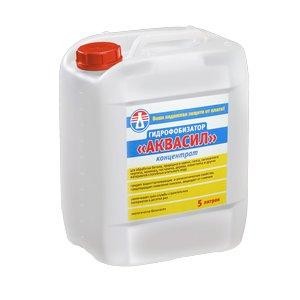
This silicone repels water from concrete, plaster, and wood. used as an additive and for impregnation. It has no smell, is breathable, and is not flammable. possesses the following benefits:
- plasticizing properties;
- fights mold;
- does not change the color of concrete;
- completely colorless;
- dust- and dirt-repellent properties;
- relatively low price.
Bionic MVO
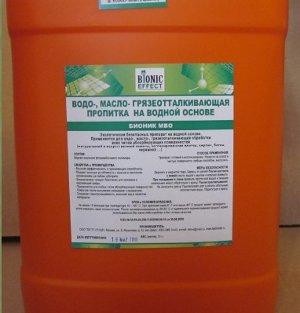
The foundation of this water-repellent impregnation is fluorocarbon. utilized for ceramics, wood, plaster, grout, and artificial stone. It also repels oils, dust, and dirt in addition to water. This tool’s features include:
- resistant to external influences, holds very firmly;
- does not deteriorate under the influence of UV rays;
- allows air to pass through.
Penta
Waterproof impregnation based on silicate. This product is neutral, safe for the environment, and safe to use on skin. Furthermore, it
- slows down corrosion;
- service life – 10 years;
- it can be used where the humidity is very high, for example in the basement.
Polyfluid
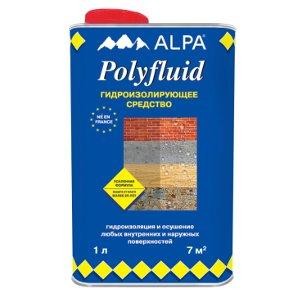
Hydrophobic, antibacterial, and antifreeze ingredients are included in this complex additive that is based on organic resins. Apply using an injection or surface technique. What’s good about it is this:
- it can be used on concrete that is already beginning to deteriorate – to restore cracks;
- penetrates deeply into pores and crystallizes, sealing them;
- pushes out moisture that is already in pores and cracks.
Spectrum 123
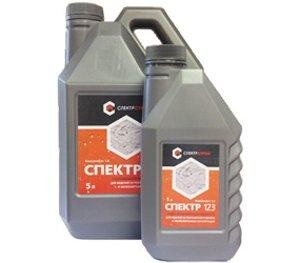
This hydrophobic impregnation with silicone base is sold as a concentrate that needs to be diluted with water according to the recommended ratios before using. It should be used at temperatures above zero on a surface that is totally dry. In which case:
- hydrophobization is completed within a day;
- reinforced concrete structures are protected from corrosion;
- mold and mildew also do not multiply due to impregnation.
Tiprom U

Compositionally akin to Aquasil. used frequently to shield brick facades from efflorescence.
Tiprom U’s incompatibility with non-porous surfaces is a drawback. Additionally, it is preferable to avoid using it in enclosed areas with continuous humidity. However, this remedy
- gives surfaces gloss, makes the color brighter (“wet stone effect”);
- penetrates deeply;
- environmentally friendly and odorless.
| Waterproofing Impregnations | Additives for Concrete |
| These are applied to the surface of cured concrete to prevent water from penetrating. They create a protective layer, reducing moisture absorption and enhancing durability. | Additives are mixed into concrete before it sets to improve water resistance. They can include substances like silica fume or waterproofing chemicals that help block pores and reduce water permeability. |
| Common types include silane, siloxane, and acrylic-based sealers. These are ideal for outdoor surfaces exposed to rain and moisture. | Examples of additives are water-reducing agents, superplasticizers, and integral waterproofing compounds. They enhance the overall structure and longevity of concrete. |
| Application is simple: clean the surface and apply with a brush, roller, or sprayer. Reapply as needed for continued protection. | Mix these into the concrete during preparation to ensure even distribution. Follow manufacturer instructions for optimal results. |
Concrete waterproofing is crucial for preventing water damage to buildings and increasing their longevity. Concrete can effectively withstand moisture penetration by adding waterproofing impregnations and additives, which lowers the likelihood of cracks and deterioration over time.
Impregnations function by piercing the concrete’s surface and creating a barrier that keeps water out. These treatments are especially helpful for already-existing structures because they can be added after the concrete has hardened, prolonging its lifespan and strengthening its ability to withstand adverse weather.
However, during the preparation phase, additives are incorporated into the concrete. These materials alter the internal structure of the concrete, improving its overall waterproofing capabilities. By using this technique, the concrete is strengthened and long-term resistance to water damage is guaranteed from the outset.
The performance of concrete structures can be greatly improved by builders and homeowners by selecting the appropriate blend of impregnations and additives. By lowering the need for frequent repairs and replacements, this proactive approach to waterproofing not only protects investments but also supports sustainable building practices.


