
Selecting the appropriate exterior material is essential if you want to give your house a modern, fresh appearance. Homeowners frequently think about two popular options: siding and facade panels. Both have many advantages, but which one is best for your house?
Siding has long been regarded as a reliable option. It is renowned for its resilience and range of designs, encompassing both conventional vinyl and more contemporary materials like fiber cement. Siding is a practical choice for many homeowners because it is comparatively simple to install and maintain.
Conversely, facade panels have become more and more well-liked due to their sleek, modern design. These panels provide a high-end finish without the expensive price tag by simulating the appearance of natural materials like stone or wood. Additionally, facade panels are made to be extremely weather-resistant, offering superior defense against the elements.
Every choice has a unique set of benefits and possible drawbacks. We’ll go over the salient characteristics of siding and facade panels in this post to assist you in making a well-informed choice for your remodeling project.
Your unique requirements and tastes will determine which siding or facade panels are best for you. Siding is a popular option for many homeowners wishing to quickly and effectively improve the exterior of their home because it is typically less expensive and simpler to install. Façade panels, on the other hand, allow for a more individualized and upscale appearance because they offer greater design flexibility and frequently come in a wider variety of materials and finishes. Each option has advantages and disadvantages, so when choosing between them, it’s important to take your local climate, maintenance needs, budget, and aesthetic goals into account.
- What is the difference between siding and facade panels??
- Types of siding
- The scope of application and types of facade panels
- Classification
- What"s better?
- Combination
- Video on the topic
- Which is better: facade panels or vinyl siding? Reviews of home owners.
- What is the difference between siding and facade panels?
- Types of Siding. Which siding is better. How to choose siding.
- How to sheathe the facade of the house? What should a buyer of siding know.
- Which siding to choose??? VINYL or METAL??? Pros and cons.
- Which siding is better? Part 2. Types of plastic siding (Vinyl, acrylic, foamed, FP)
What is the difference between siding and facade panels??
One-layer siding material, which shields the facade from moisture, UV rays, wind loads, dust accumulations, and exposure to caustic chemicals, is the primary distinction. In addition to offering the room’s sound and thermal insulation, facade panels are made up of multiple layers.
Additional variations
- Siding is mounted on a frame or sheathing, and facade panels are most often directly on the wall.
- Installation of siding phased – slabs for facing faces are mounted in the 1st stage.
- Facades cladding systems are used only for external work – siding is used for both external and interior decoration.
- Siding lamellas are mounted only in the vertical direction from the bottom up – the systems for facing facades are mounted in any direction.
- Siding lamps have the shape of a rectangle or strip – panels of panels for facing faces can be of any shape.
- Facade panels are made of more materials than siding.
- The maximum length of a strip of metal siding lamellas is 6000 mm; The width is 550 mm. Facade panels have no limitations in sizes.
- Siding is mounted only on even vertical surfaces – facade panels can be mounted on convex or concave surfaces.
- When installing facade panels, care must be taken not to damage the thermal insulation layer – the siding is mounted on a frame installed on top of the thermal insulation.
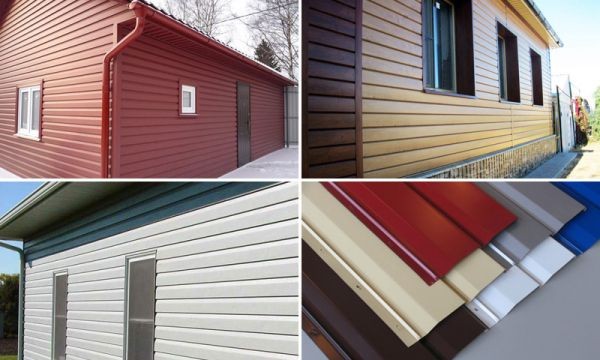
It’s critical to keep the following in mind:
- Metal siding with primer and a polymer layer is a siding element only if it is not possible to mount it directly on the wall.
- Glass products – only slabs for facade cladding.
- Vinyl products with a thickness of more than 2 mm are distinguished by shape: if the strip is siding; square or wide rectangle – facade slab.
Types of siding
The primary factor in siding selection is the lamella material. Climate and ultimate cost are taken into consideration when choosing the material.
They are identified based on the material used in their manufacture:
- PVC – vinyl or acrylic siding: average service life 50 years; operating temperature range – -50-+50; melting point – +381, non-flammable, maximum number of freezes and defrosts 100. Advantages: lightweight, low cost, does not conduct electricity, easy to maintain. Disadvantages – With sudden temperature changes, 15-20oC/h or more, it cracks, not shock-resistant, toxins are released when burning. The scope of use – external and interior decoration of the room. Color affects the price. Dark one is 15-20% more expensive than bright.
- Metal (from galvanized steel, aluminum). Advantages – high strength, life of more than 50 years, is not affected by temperature fluctuations. Disadvantages – high cost, rusts in case of violation of the integrity of the coating, at high temperatures it is hot, significantly increasing the temperature in the room.
- Fiber cement. The main advantage – withstands sharp fluctuations in temperature. Therefore, it is advisable to use it in regions with a sharply continental climate. Disadvantages – large weight, complexity of installation, small selection of colors.
- Wood. Advantages -has thermal insulation properties, frost resistance up to -50 OC. Ease of installation, environmental friendliness, relatively low cost. Disadvantages – a protective layer (varnish and paint) is required, requires periodic treatment with antiseptic impregnations, high flammability, high hygroscopicity. The scope of use – external and interior decoration of old wooden houses.

The original appearance of only metal siding is retained until the end of its service life. The lifespan of the operation and the length of time vinyl siding and facade panels are preserved visually differ by a maximum of 250%.
The service life is influenced by the quantity of defrosting and frost cycles as well as the air’s relative humidity at negative temperatures. The service life of any material used for external decoration is 30–40% shorter than the passport in areas with mild, wet winters.
The scope of application and types of facade panels
There are facade panels:
- For decorating and insulation of walls outside the structure;
- For waterproofing the foundation;
- for healing the overhang overhang;
- for sound insulation of the interior;
- For outdoor restoration of architecture memos.
Classification
Classification of facade panels:
- By design feature – single-layer, multi-layer (sandwich panels).
- According to the distribution of characteristics: with the same distribution of characteristics; with one or more enhanced characteristics, for example thermal insulation.
- According to the material of manufacture (the main attention is paid to the outer layer) – vinyl, metal, fiber cement.
- Imitation of material – like brick, wood, stone, etc.d.
Siding and the outer layer share the same characteristics.
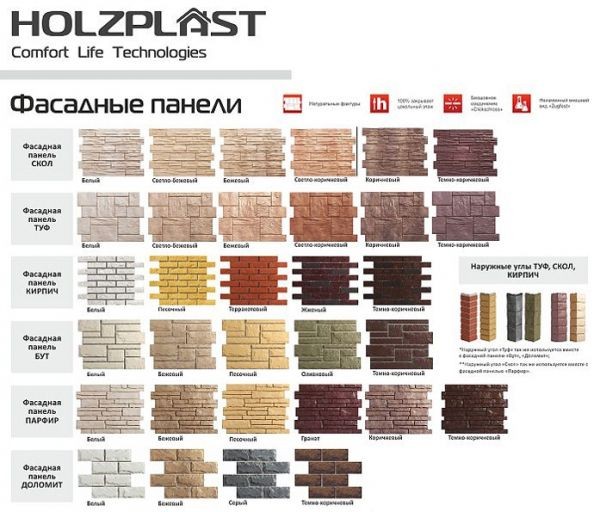
Extra resources:
- Polyurethane. Used for finishing uneven surfaces. Withstands temperature changes of more than 15oC per day. Operating temperature range -50-+50oC. Disadvantages – needs UV protection.
- Glass. Used for finishing office buildings, shopping centers and cottages. High strength, frost resistance -50+80, resistance to aggressive chemical compounds, except hydrofluoric acid. Disadvantages – relatively high cost, complexity of installation, heavy weight of the slabs.
- Polymer panels moisture resistant and not exposed to aggressive chemical compounds excluding hydrofluoric acid. Disadvantages – flammability, toxicity.
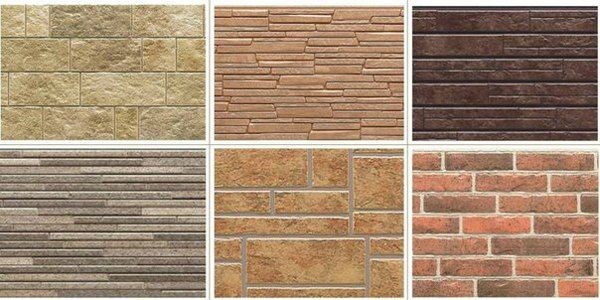
What"s better?
Siding composed of the same material costs three to eight times less than facade panels. Siding strips, installation of a frame or sheathing, and thermal insulation are generally 15–40% less expensive than slabs for facade cladding.
Siding is lightweight, so one person can install it; however, multiple workers are needed to install protective boards.
Additional components, which are necessary for facade panels, are not used when installing siding strips.
When the structure shrinks, the siding finish does not distort because of its numerous lamellas.
Facade cladding plates bear the majority of the weight in addition to the building’s durability.
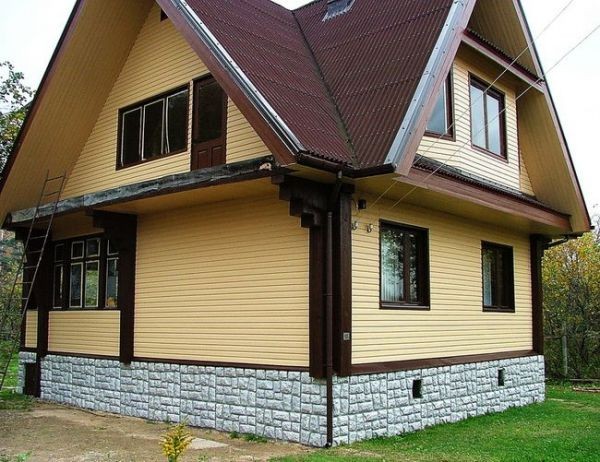
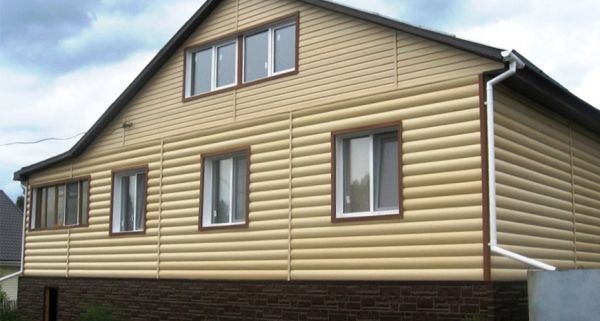
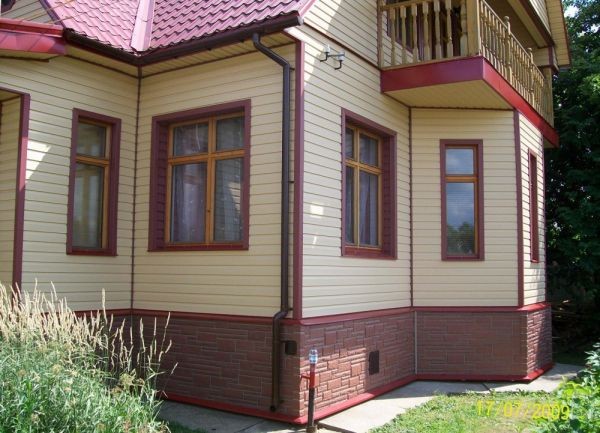
Combination
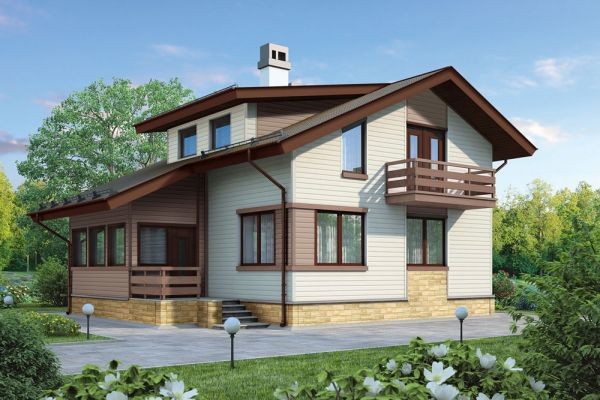
Façade panels and siding go together beautifully (see photo below):
| Aspect | Siding | Facade Panels |
| Durability | Highly durable, resistant to weather conditions | Extremely durable, often more resistant to impacts |
| Installation | Relatively easy to install | Can be more complex, might require professional help |
| Maintenance | Low maintenance, occasional cleaning | Also low maintenance, can be even easier to clean |
| Cost | Generally more affordable | Can be more expensive |
| Appearance | Wide variety of styles and colors | Often offers a more modern look with different finishes |
| Insulation | Provides some insulation, but usually less than panels | Better insulation, can improve energy efficiency |
Your unique needs and preferences will ultimately determine which siding or facade panels are best for you. Both choices have special advantages and can greatly improve your home’s durability and appearance.
Siding is an economical and adaptable option that is available in a range of materials, including fiber cement, vinyl, and wood. It is a popular choice among many homeowners due to its ease of installation and upkeep. Siding can increase the energy efficiency of your home and offer good protection from the elements.
Façade panels, on the other hand, are renowned for their strength and durability and provide a sleek, modern appearance. Facade panels are made to withstand inclement weather and offer superior insulation. These materials include metal, composite, and stone. Although they can be more costly and may need to be installed by a professional, the long-term advantages may exceed these expenses.
When making your choice, take into account aspects like your home’s unique requirements, your budget, and your aesthetic preferences. Façade panels and siding can both improve the outside of your house, so decide which option best suits your needs and goals.


