
The choice between a septic tank and a cesspool for managing household wastewater can have a big impact on the sanitation and upkeep requirements of your house. Although both systems are made to handle sewage, there are differences in their functionality and maintenance needs.
For homes that are not connected to municipal sewer lines, a septic tank is a popular option. It functions by separating wastewater’s solids from liquids and letting bacteria decompose the organic matter. After leaving the tank, the liquid effluent enters a drain field where it is absorbed into the nearby soil. Well-known for their effectiveness in treating wastewater, septic tanks normally need to be pumped out on a regular basis to clear out accumulated solids.
A cesspool, on the other hand, functions as a straightforward subterranean sewage storage facility. All wastewater is collected, with no separation of solids from liquids. Unlike septic tanks, the solids build up over time, decreasing the capacity of the cesspool and requiring more frequent pumping. Cesspools are less effective at treating wastewater, and if they leak or overflow, they could be dangerous for the environment.
A number of variables, such as the size of the property, the local codes, and the state of the soil, influence the decision between a cesspool and a septic tank. Due to their extended maintenance intervals and superior wastewater treatment capabilities, septic tanks are typically chosen. When soil conditions or available space prevent the installation of a drain field, cesspools may be an option; however, in order to avoid problems, they need more frequent maintenance and observation.
| Factors | Septic Tank |
| Odor | Less odorous due to sealed design |
| Maintenance | Regular pumping required |
| Environmental Impact | Less impact, treated effluent |
| Installation Cost | Higher initial cost |
| Long-term Cost | Lower operational costs over time |
When it comes to managing wastewater from homes, picking between a septic tank and a cesspool requires knowing each one’s unique advantages and drawbacks. Septic tanks are ideal for locations with regular maintenance capabilities and room for drainage fields because they provide effective sewage treatment and filtration. Conversely, a cesspool lacks the filtration power of a septic system and needs to be emptied more frequently despite having a simpler design. Which is better depends on a number of factors, including ease of maintenance, environmental effect, and local laws, guaranteeing the best wastewater management suited to individual household requirements.
- Advantages and disadvantages
- Septic tank
- Cesspool
- Performance Comparison
- Video on the topic
- That"s why you can"t put a SEPTIC HERE! Where is it PROHIBITED to place a septic tank on the site??
- Cesspool, septic tank or biological station. What"s better?
- ABOUT FREE (prohibited) cesspools and the installation of sewer pipes to them.
- How to make an ETERNAL SEWER from concrete rings WITHOUT PUMPING
- Cesspool or septic tank – WHICH IS BETTER?! MAIN PROS AND CONS
- Septic tank or cesspool Which is better for a home or cottage?
Advantages and disadvantages
In order to select the appropriate wastewater receiver, it is necessary to comprehend the distinctions between a cesspool and a septic tank. We will research the benefits and drawbacks of every kind of sewage system in order to achieve this.
Septic tank
The primary distinction between a typical cesspool and a septic tank is the biological sewage treatment system. Specialized microorganisms that feed on waste are placed in containers meant for reception and filtration, where they purify water.
The liquid that goes through the station can be used for domestic purposes, such as washing the car or watering the garden. In certain systems, the cleaned liquid disperses on its own within the soil.
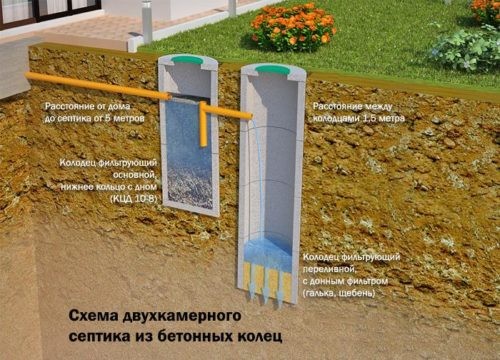
Septic tanks are divided based on how many chambers they have:
- Single chamber. They resemble a cesspool, but due to active microorganisms, waste in the sump is processed faster and with better quality. This septic tank can treat up to 1 cubic meter.m. sewage per day, so for a large house with more than 2 residents, it is not suitable.
- Multi-chamber. If the family has more than 2 people, it is advisable to install two -chamber septic tanks that can cope with the volume of sewage up to ten cubic meters. Such devices are divided into two cameras. Personents from the house fall into the first. Large and solid particles settled, and the clarified liquid treated with bacteria flows into the second section, from where it seeps into the soil through the filtration bottom. Excess purified water can be used for watering.
Installing septic tanks with three or more cameras and the capacity to process more than ten cubic meters per day is advised for large summer cottages occupied by more than five people.
It won’t work to build such a septic tank by yourself. A completed product is more profitable and simpler to order and install. For terrain with heaving soils, it is especially crucial to select a dependable design with extra stiffeners and an anchor attachment system. When temperatures fluctuate, a septic tank of this kind won’t squeeze from a fixation point.
Septic tanks have several benefits, such as:
- high level of sewage cleaning;
- lack of pungent odors on the site;
- durability;
- High strength in factory products.
Similar to cesspools, septic systems occasionally require the removal of accumulated solid waste; however, this process should only be carried out once every two years.
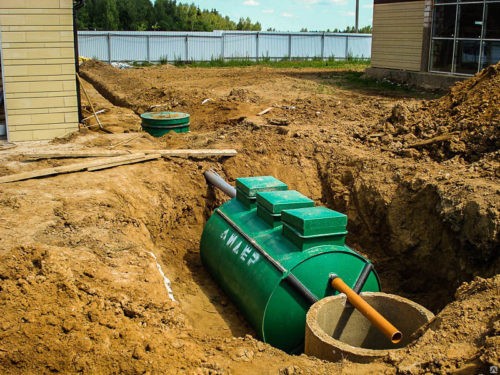
Disabilities related to septic systems include:
- high cost of finished products;
- complexity of installation;
- the need to constantly spend on the purchase of microorganisms for waste processing;
- the need to highlight a large area for the device of multi -chamber septic tanks.
Cesspool
The lack of the initial option for waste cleaning distinguishes a septic tank from a cesspool. Typically, a sewer pipe is installed to a concrete or brick drain well for the purpose of draining sewage. Some artisans make a draining fence out of old automobile tires. Such a device has sand and crushed stone covering its bottom so that liquid residues can enter the soil after first going through coarse filtration.
Periodically pumping waste into the drain tank is necessary. When the cesspool fills, homeowners must call for a sewer truck. Apart from this inconvenience, since the hoses can only extend up to 15-20 meters, the owners will also need to plan for easy access for the car.
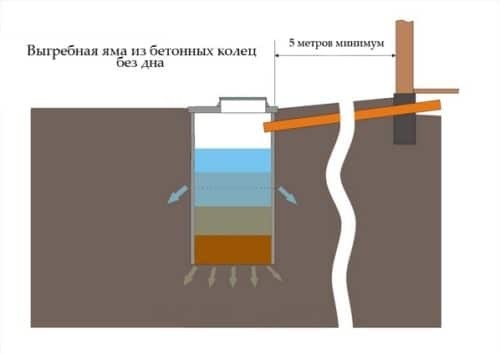
Since cesspools can only handle one cubic meter of sewage per day, they should only be used in buildings with no more than two occupants.
Consideration must be given to the local groundwater table when building a cesspool. The installation of a high level that surpasses the depth of the cesspool causes feces to seep into aquifers and contaminate nearby and local soil. A minimum of 1000 millimeters must separate the pit’s bottom from the closest groundwater aquifer.
Installing a cesspool on the property has the following benefits:
- low cost of materials;
- Simplicity of installation. An ordinary cesspool will be able to do it on his own.
The following are some of the census’s drawbacks:
- The smell of feces at the site of the pit equipment;
- Hanses have to be periodically repaired;
- the need for frequent cleaning of walls and the bottom of the cessation from silty deposits;
- the need for a frequent call of the assigned machine for pumping sewage;
- the possibility of soil infection when changing groundwater levels.
When using cesspools on the property, you can add ready-made active microorganisms to lessen the intensity of the odor. In this instance, bacteria will stop hydrogen sulfide from forming, but keep in mind that they do not survive very long in the closed space of the crook; therefore, frequent purchases of bacteria will be necessary to guarantee continuous cleaning.
Sealed plastic or metal containers are installed to lessen the chance of soil contamination; however, since excess water, which in a conventional cesspool travels through the bottom and into the ground, will remain inside the container, you will need to order a sewage truck more frequently.
Performance Comparison
Comparing the pros and cons of both options based on their primary features will help the homeowner determine which is preferable for a private residence: a septic tank or a cesspool.
The primary goal of suburban sewerage is to maximize wastewater purification, allow for environmentally safe discharge, and reduce the amount of non-recycled waste that needs to be removed. Based on these metrics, the septic tank emerges victorious:
- Wastewater treatment in these devices is carried out by 95%;
- treated water can be used for irrigation;
- the frequency of removal of non-recycled waste is 3-4 times less than that of cesspools.
When comparing a septic tank to a cesspool, the only real drawback is the cost of installation and purchase.
There are a few things to consider when choosing between a cesspool and a septic tank for the wastewater treatment in your house. Because they effectively separate liquids and solids, septic tanks are recommended for wastewater treatment and filtration. Anaerobic digestion is the process used in this system, in which solids are broken down by bacteria before liquids seep into the soil. While it does need periodic maintenance to pump out accumulated solids, it is a dependable option for long-term use.
Conversely, cesspools are easier and frequently less expensive to install at first. They don’t receive the same level of treatment as septic tanks and instead store wastewater underground. Because they have fewer parts, cesspools might seem more convenient, but if they’re not maintained properly, they can be dangerous for the environment. If the soil is not suitable for filtration, they may leak pollutants into groundwater and require frequent emptying.
The size, kind of soil, and local codes of your property all play a major role in your decision between a cesspool and a septic tank. Septic tanks are appropriate for locations where soil conditions allow for proper drainage because they are more ecologically friendly and provide better wastewater treatment. Where there are severe space or financial constraints, cesspools may be an option, but careful upkeep and monitoring are necessary to keep the environment safe.


