
You may have encountered spray foam guns when working on new construction or remodeling projects. Expanding foam, which works well for insulation, gap sealing, and even filling larger voids, can be applied with these practical tools. Gaining proficiency with a spray foam gun can facilitate your work and guarantee a more polished outcome.
The accuracy that a spray foam gun provides is one of its primary benefits. It is easier to apply foam in confined spaces and intricate areas with a gun because it gives you control over the foam’s flow and direction, unlike canned foam. Better coverage and less waste are possible outcomes of this precision, which is always advantageous.
Spray foam guns are designed to be precise as well as reusable. Long-term cost savings are possible when using the same gun for several projects as long as it is properly maintained. These tools’ increased adaptability is further enhanced by their capacity to modify the foam type and nozzle settings.
It’s critical to use the gun correctly if you want the best results. Gaining proficiency in these methods will enable you to apply foam in a neat and efficient manner, from tool setup to uniform application. We’ll go over each spray foam gun’s features and provide expert usage advice in the sections that follow.
- Types of foam
- Features and advantages of the gun
- What types of pistols are there?
- How does a pistol work??
- How to use the gun?
- Beginning of work
- Problems with the pistol
- Sealant application process
- Shutting down and storing the gun
- Video on the topic
- Foam gun | How to choose? And how to use it correctly?
- Eternal gun for polyurethane foam
- Foam gun. How to choose and how to use?
- How to use a foam gun
- Foam gun. How to properly use a spray foam gun.
Types of foam
Regarding polyurethane foam, there are two choices:
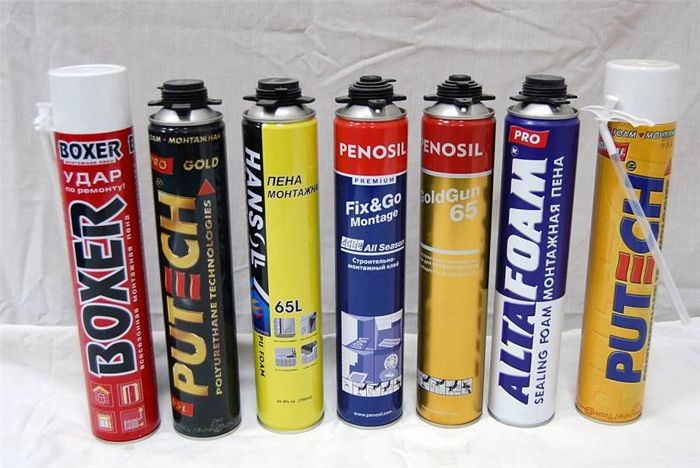
- Regular – universal. It can be used anywhere. Suitable for use even by those who have never used this sealant. A tube is sold along with the cylinder, which is screwed onto the container.
- Professional. Its peculiarity is that a gun is used for its application. Such foam is durable and resistant to external influences. But, in comparison with the usual composition, it is more difficult to use.
The three seasons in which the foam is used—winter, summer, and demi-season—also vary. The substance’s range of applications, which includes pipeline joints, insulation, and the installation of metal-plastic structures, is also visible on the cylinder.
Features and advantages of the gun
The most common applications for this material are in window and door installations. Because it can be difficult to apply manually, builders use a specialized gun. This gadget can vary in terms of both appearance and design. Since they fit all kinds of foam cylinders and are universal, you can purchase any.
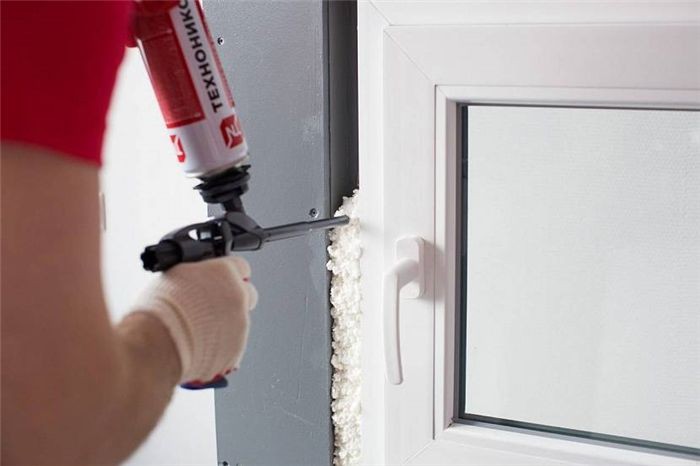
The design of the pistol is rudimentary. Nevertheless, it will be very helpful when doing repairs. Wear safety glasses and gloves before you start foaming the gap.
The following are some benefits of buying this device:

- the ability to dose foam and use it after a long break, thanks to protection against drying out;
- ensuring reliable sealing and thermal insulation of seams;
- saving material.
What types of pistols are there?
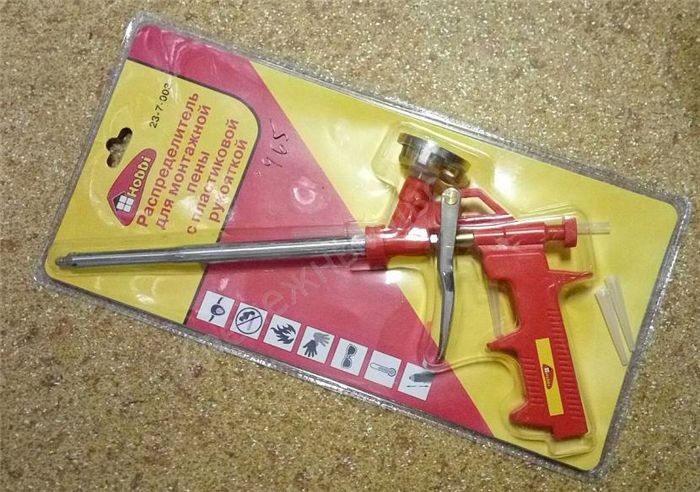
Their reach is incredibly wide. They vary, to start with, in the material that goes into making them. These days, plastic models are the most affordable and widely available. However, they cannot be referred to be durable because they do not contain any metal elements. They either crack or get obstructed by foam. Such a device cannot be fixed, so in the event that it malfunctions, you will need to purchase a new one. Having a plastic gun included, they can provide extra tubes. However, you must realize that this design cannot be removed, making cleaning it impossible.
The plastic tool works well for small-scale repairs and is simple to use. Those who don’t want to deal with cleaning up after using the gun also purchase it. A plastic tube can be used as an alternative to this design. It is very inexpensive, and the outcome is exactly the same as with a pistol.

Since the metal gun is reusable, it can be disassembled and cleaned as needed. If handled carefully, this device can be used continuously for several years. Professional installers and builders of metal-plastic structures who handle a lot of work tend to use these models. The work can be completed to the best quality possible because of this gun.
Additionally, there are options that combine metal and plastic components. Typically, this barrel is made of metal, and the handle, adapter, and other components are made of plastic. Combination pistols have the benefit of being very strong and light in weight. It will be able to sustain an impact and keep working even if dropped from a height, something that cannot be said of a product made entirely of plastic.

However, the most crucial factor to consider when selecting a combined product is that it must be foldable; otherwise, its only distinction from a plastic one will be its cost. A Teflon-coated gun would be the best choice because it is easy to clean, incredibly unlikely to fail, and has the longest possible lifespan. The price will be the only downside.
How does a pistol work??
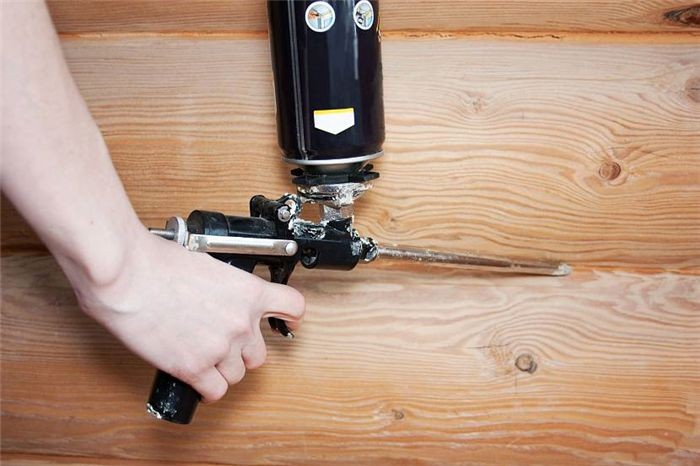
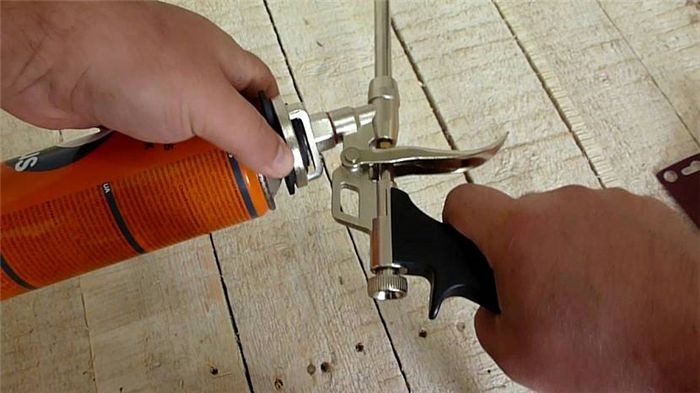
Spray foam guns come in a variety of simple designs. Even the priciest products with the greatest number of structural components have an easy-to-use interface. Whatever the device’s kind, its primary components will include the following:
- body or base;
- a barrel through which foam is supplied;
- lever;
- nozzle;
- kernel;
- trigger that opens the valve;
- ball-type adapter for fastening;
- an adjusting screw that fixes the needle and regulates the volume and speed of foam supply;
- a screw equipped with a gasket to prevent material from leaking out.
The screw can be removed to allow foam to flow freely. The screw’s flow completely stops when it is closed.
It’s very easy to use the gun; just follow the guidelines. It is crucial to shake the can before using. It needs to be warmed to room temperature before working in a chilly space.
How to use the gun?
When using the device, you have certain guidelines to follow:
- Do not point the charged cylinder towards people or animals. If the substance ends up on fur, hair or clothing, it will be extremely difficult to clean it up. Contact with eyes can be very dangerous.
- You need to wear gloves and safety glasses when working.
- If the cylinder was in a cold room, before the start of its use, it is necessary to warm up. To do this, it is placed in a warm room or container with warm water (not higher than 30 degrees). Using foam in the cold or in the heat, a special protective cover is put on the cylinder. If it is not, then an ordinary fabric is suitable, which is wrapped with a foam container.
- You can not use the cylinder next to heat sources or open fire. When storing foam, it is necessary to protect the container from the hit of the sun rays.
- If the room where the mounting foam is used is too dry, the balloon is moistened with water.
- In the room where the mounting foam is used, you need to ventilate well.
Beginning of work
The cylinder needs to be put into the gun at the beginning. Follow this algorithm when doing this:
- The cylinder shakes. The protective cover falls from it.
- The gun is held with the handle down, screwing on it a container with foam until it stops.
- The adjusting screw turns left ¼ turn. In this case, the tube must be directed towards the trash can. Gently pull the trigger.
- Having achieved the optimal consistency of the substance, you can begin work.
Problems with the pistol
Occasionally, the tube may not be completely filled with foam. There are a few possible causes for this:
- the shelf life of the substance has expired;
- the device is broken.
Whatever the cause, though, the apparatus will need to be disassembled and, if needed, cleaned.
The inlet valve may be damaged if there are no noises produced when the cylinder is connected to the apparatus and foam does not enter the tube. In this instance, you must remove the adapter and rinse the ball on the spring with a solvent. Use a toothpick or cotton swab.
If there is foam seeping out of the nozzle, the device might not function. If the wand or tip becomes clogged, this may occur. Use a solvent, rag, wrench, and pliers to solve the issue. You must act in the following manner:
- disconnect the cylinder and clean the adapter;
- remove the mass from the body;
- disconnect the tube from the body and clean all its elements;
- Having done this, you can assemble the tool.
Sealant application process
If you follow the guidelines, using foam is usually not too difficult. To use the necessary composition:
- moisten the surface where the substance will be applied;
- you need to hold the gun in such a way that the container with foam is at the top;
- the nozzle turns towards the place that needs to be foamed;
- the trigger is gently pulled;
- In order for the layer to be uniform, it is necessary to ensure that the trigger is released as little as possible;
- if it is necessary to reduce the amount of substance supplied, the adjustment screw is turned to the right;
- to seal vertical seams, use the direction from bottom to top, for wide ones – zigzag movements;
- the space can only be filled 1/3, due to the fact that the foam will expand;
- shake the container from time to time, since the components of the substance tend to settle at the bottom;
- when processing hard-to-reach places, take an extension adapter in the form of a hose.
Shutting down and storing the gun
You can extend the gun’s useful life by adhering to these rules:

- After finishing using the tool, the screw regulating the supply of foam is closed. All contaminants are removed from the body.
- If the cylinder is not screwed in completely, it can still be used for a month. If a longer break in work is expected, the cylinder is removed from the gun, which must be washed. To do this, put a special container filled with solvent on it.
- When the cylinder needs to be used again, the adhering substance is removed from it. The foam container itself is shaken and emptied for a few seconds.
| Feature | Advantage |
| Precision Application | Spray foam guns allow for precise application of foam, reducing waste and ensuring an even coverage. |
| Adjustable Nozzle | The adjustable nozzle lets you control the foam output, making it easier to tackle different sizes of gaps and cracks. |
| Ease of Use | Using a spray foam gun is straightforward, which speeds up the application process and makes it more efficient than manual methods. |
| Durability | Spray foam guns are built to last, with sturdy materials that can handle regular use without frequent replacements. |
| Consistency | The gun provides a consistent foam density, which helps in achieving better insulation and a more professional finish. |
The efficiency of your sealing and insulation projects can be greatly increased by using a spray foam gun. Compared to conventional methods, this tool’s precision and control enable a cleaner application. A spray foam gun makes it easier and faster to achieve a more polished finish when caulking gaps or insulating areas.
Using a spray foam gun has benefits that go beyond improved outcomes. You may save time on your projects by using it to expedite the application process. Furthermore, you can use precisely the right amount of foam for each job thanks to the adjustable flow and thickness, which helps you use less material and save money.
It’s critical to adhere to a few fundamental rules if you want to get the most out of your spray foam gun. To keep your gun functioning properly, always make sure it is cleaned properly after each use. To maximize your results, familiarize yourself with the various settings and how they impact the application of foam. You’ll discover that employing a spray foam gun can significantly improve the effectiveness and caliber of your work with a little practice.
Applying foam insulation is quick and easy with the help of a spray foam gun, which is a multipurpose tool. It is perfect for filling in gaps and cracks in walls, ceilings, and other surfaces because it provides precise control over the amount and direction of foam. This post will discuss what makes spray foam guns useful for insulation projects, how to use one correctly to get the best results, and what characteristics make them effective.


