
Gypsum blocks are becoming a common option in construction because they provide a cost-effective and adaptable way to construct walls and partitions. These blocks are a popular choice among builders and homeowners due to their superior performance and ease of use.
Gypsum blocks are lightweight, which makes them simple to handle and install. This is one of their main advantages. This lowers labor costs while also accelerating the construction process. Gypsum blocks provide strong, long-lasting walls that can tolerate normal wear and tear despite being lightweight.
The exceptional fire resistance of gypsum blocks is yet another noteworthy benefit. Water is naturally present in the crystalline structure of gypsum, which aids in containing fires. Because of this, gypsum blocks are a great option for improving building safety, especially in residential and commercial settings.
Additionally effective as acoustic insulation are gypsum blocks. By successfully lowering noise transmission between rooms, they contribute to the creation of a calmer and more comfortable living or working environment. This feature is especially useful for hotels, offices, and apartment buildings.
Gypsum block use is also advantageous for the environment. Natural and non-toxic, gypsum is a material that can be recycled and used again. In addition, gypsum blocks have a lower carbon footprint than some other building materials because their production requires less energy.
In general, gypsum blocks are a useful and environmentally responsible option for building walls and partitions. Their ease of use, fire resistance, and sound insulation properties make them a preferred option in modern construction. For both new construction and renovation projects, gypsum blocks offer the necessary performance and durability.
- What are tongue-and-groove and standard gypsum blocks??
- What they look like?
- Regulatory Requirements
- Can it be used for construction?
- Requirements for gypsum block walls
- Dimensions and specifications
- Production technology
- Description of masonry technology
- Possible errors and difficulties
- Pros and cons of use
- Prices
- Video on the topic
- Installation of tongue-and-groove slabs from A to Z
- GGP installation
- How to prepare walls made of tongue-and-groove slabs GGP for wallpaper
- Silicate tongue-and-groove wall block, what is it? Pros and cons characteristics reviews
- Gypsum plaster EIGHT MISTAKES
What are tongue-and-groove and standard gypsum blocks??
The primary building material used to create GSB is gypsum. It wasn’t the manufacturer’s choice at random. Numerous wall materials are in competition with it due to its complete fire resistance, high environmental safety, and gas and vapor permeability. Plaster walls are resistant to fungus and putrefaction, and because of their good "breathing" qualities, they help control the humidity levels in homes.
Design-wise, GSBs are categorized as standard and tongue-and-groove, filling-wise as monolithic and with voids, and moisture-resistant-wise as regular and waterproof.
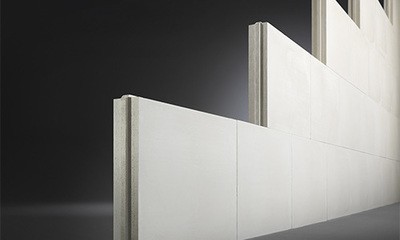
Standard and tongue-and-groove GSB are manufactured from monolithic, rectangular-cross-section natural gypsum. The latter are different in that they are connected using a tongue and groove mechanism. There is a unique protrusion on the block’s end, and a ridge is on the other side. These components are made in trapezoid and rectangle shapes.
Because it makes building walls easier and makes joining individual blocks to each other better, the lock in GSB is crucial.
Take note! During product production, gypsum is treated at a low temperature to improve the original material’s strength. Hydrophobic components are added to the molding mass by the manufacturer in an effort to produce GSB blocks that are resistant to moisture. The waterproof and regular GSB are painted a light green color to make it easy for the buyer to tell the difference.
What they look like?
GSB is made in both solid and hollow forms, with a rectangular cross-section. The second ones are lighter, which is advantageous for the masonry process and the house’s foundation, but the first ones are denser and stronger.
Two width variations (75 and 125 mm) and the same length (667 mm) and height (500 mm) are available for GSB partitions. Three GSB wall modifications exist, each with a width of 200, 350, or 450 mm and the same height and length restrictions as partition blocks.
Regulatory Requirements
It is quite amazing how many regulations there are governing the release, control, transportation, installation, and use of GSB. The two most significant publications are thought to be SP 55-103, which was published in 2004 and clarifies requirements for structures made of gypsum blocks, and GOST 6428, which was published in 2018 and establishes Technical Specifications for gypsum blocks for partitions.
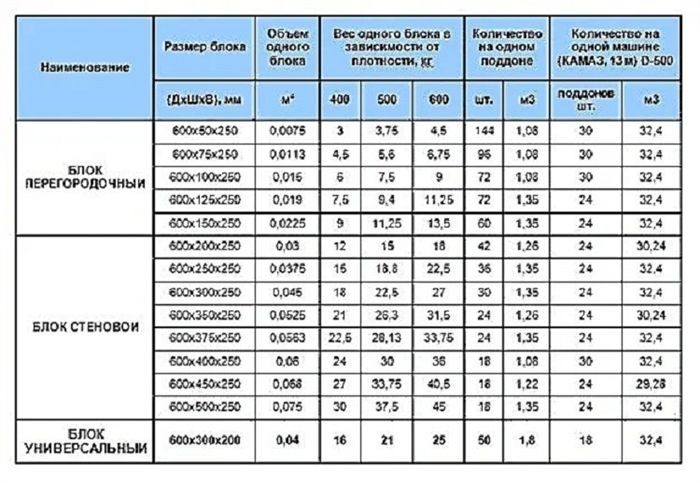
Standard specifications for State Security Service regulations:
- Environmental safety, it is allowed to use pure gypsum of grades G-4 and G-5 as initial materials.
- There are restrictions on the size of walls made of GSB: length no more than 6 m, height up to 3.5 m. In this case, the manufacturer of such blocks can guarantee the calculated strength of the partition.
- The outer surfaces of the wall stone must be smooth and free from grease or other contaminants.
- The density of the slabs is set at 1100 kg/m3 for the highest quality category and 1350 kg/m3 for the 1st category.
- When selling, GSB should not have a moisture content higher than 12%.
- The blocks must provide a seismic load of up to 9 points
- The resistance of wall structures from possible impacts is guaranteed by installing protective corner profiles on the outer corners.
- Interior partitions should be single, and interior partitions should be double with an air gap and additional soundproofing protection.
- The blocks are installed staggered, with joints offset by more than 100 mm.
- Blocks must be marked, stamped or labeled on at least 1% of the lot. It should contain information about the manufacturer of the product, its marking and date of manufacture.
Can it be used for construction?
Gypsum blocks are used for self-supporting interior and inter-apartment partitions in civil and industrial construction, as well as in rooms with varying degrees of humidity. Any number of storeys, any design model, and buildings with differing degrees of heat resistance are permitted to install them. These walls can be built in a range of climate zones, including areas that are more prone to earthquakes.
GSB partitions come in a variety of forms and arrangements.
- single structures in buildings where there are no high requirements for sound insulation;
- double structures in houses with increased requirements for sound insulation;
- for laying in-house utility networks;
- as a facade cladding.
Requirements for gypsum block walls
The primary prerequisite for GSB walls is strength, which falls into three categories: low (L) at 800 kg/m3, medium (M) at 1100 kg/m3, and high (D) at 1500 kg/m3. Producers of these blocks must ensure that their goods have a maximum 5% density deviation.
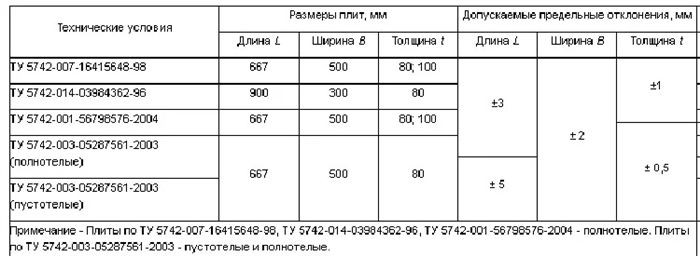
The maximum bending load on HDB walls is a crucial indicator. Maximum load indicators with thickness for blocks measuring 500 mm in length and 600 mm in width:
- 50 mm – 1.7 kN;
- 60 mm – 1.9 kN;
- 70 mm – 2.3 kN;
- 80 mm – 2.7 kN;
- 100 mm – 4.0 kN.
Blocks with the capacity to support such elevated loads are required in specific circumstances:
- 50 mm – 2.0 kN;
- 60 mm – 2.2 kN;
- 70 mm – 3.0 kN;
- 80 mm – 3.0 kN;
- 100 mm – 5.0 kN;
In addition, gypsum wall blocks must meet the following specifications, according to regulatory documents:
- The percentage of water absorption of hydrophobized products should not exceed 5%, and for waterproof products this figure is not standardized.
- Must have a class (NG) – non-combustible building material.
- The specific efficiency of radionuclides in the natural environment must not exceed 370 Bq/kg.
- Thermal insulation values must be no lower than the material of the main walls.
- Noise protection is determined by the building design.
Dimensions and specifications
A typical gypsum block’s measurements are width, height, and length.
- 188x190x390 mm;
- 80x500x667 mm;
- 100x250x600mm;
- 300x250x600mm.
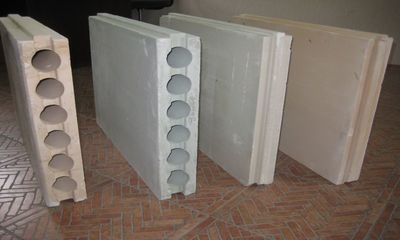
The characteristics of tongue-and-groove blocks (PGB) differ based on the application: wall, partition, and universal.
Wall PHB, length-width-height:
- 200x250x600 mm;
- 350x 250x 600 mm;
- 450x 250x 600mm.
Standard width-height-length partition blocks:
- 75x250x600 mm;
- 125x250x600 mm.
Features of the GSB:
- Weight from 20 to 30 kg.
- Compressive strength characteristics – 5.0 MPa.
- Bending strength characteristics – 2.4 MPa.
- Thermal conductivity coefficient from 0.29 to 0.35 W/m C.
- Noise insulation not lower than 43 dB.
When building walls or partitions, gypsum blocks are a flexible and environmentally responsible choice that come with benefits like ease of installation, sound insulation, and fire resistance. Compared to regular bricks, these blocks are easier to handle and transport because of their reduced weight. They also offer a smooth finish that minimizes the need for substantial plastering, which results in time and money savings. To avoid moisture damage, it’s crucial to make sure that the sealing is done correctly, and using the appropriate adhesive will ensure a tight fit. Making wise decisions for your building or renovation projects can be aided by having a thorough understanding of these characteristics and subtleties.
Production technology
Utilizing casting technology, GSB is made. Their primary source of raw materials is gypsum (G-5, 6, 7). The small amount of equipment includes container for obtaining the working composition, dispenser, screw gypsum mixer, and molds for the blocks.

Water, additives, and gypsum are all precisely dosed. Subsequently, the blend is whisked in a gypsum mixer and introduced into the mold under force. After that, the block ought to get stronger in a few days.
With such a minimal set, the most basic form blocks can be created independently, but experts do not believe this is economically feasible because the forms and equipment needed will cost more than the State Security Service actually spends.
To prevent it from degrading due to humidity, you will also need to buy a respectable quantity of gypsum component and store it under a canopy.
The tongue-and-groove gypsum block technology is more advanced and is not something that can be done at home. Large producers of these goods use gypsum ore instead of pre-made gypsum powder because it lowers the cost of a unit of the product.
Cycle of technology used to obtain PGB:
- Transportation of gypsum ore.
- Fragmentation of gypsum ore into powder.
- Heat treatment of powder gypsum in furnaces by firing.
- Gypsum transportation on a kneading line.
- Pouring the working mass in forms and its hardening.
- Excavation of blocks from forms.
Description of masonry technology
Before laying gypsum blocks, preparatory steps are taken. In order to prevent further deformation of the gypsum, experts recommend bringing the blocks into a room with a temperature of at least +5 C 24 hours prior to the masonry. Next, get the floor and the wall next to the partition ready.
If required, the flooring is removed from the floor and the cement mortar is aligned. A felt seal or cork backing is glued in the spot where the blocks meet the walls and floor.
GSB provides step-by-step instructions for building walls.
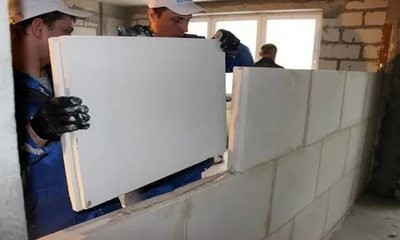
- If the partition is made of tongue-and-groove gypsum blocks, the ridge of the bottom row slabs is removed so that the future base of the wall is level. Apply an adhesive mixture for gypsum blocks to the sealant and install the first block to the adjoining wall, having previously mounted the brackets in the technological grooves from below and above, first screwing it to the wall and then to the floor.
- Level the level of the first block with a mallet.
- Each subsequent block of the 1st row is secured with a bracket to the floor. Places of connection with the floor and the previous block are lubricated with glue. Excess is immediately removed with a spatula.
- Each GSB is checked by level.
- A new element is placed only after the previous one has firmly set.
- The glue is diluted in small portions due to its ability to set quickly.
- After the glue has been used up, the tool is immediately cleaned of any residue.
- The second row is laid with ligation of 1/3 of the block, which is cut with a standard saw with a large tooth. In this case, it is not recommended to use an angle grinder due to the formation of gypsum dust.
- The gap between the outer row of the GSB and the ceiling is at least 2 cm.
- GSB is fixed to the ceiling with anchor brackets, and the free space is filled with polyurethane foam.
- If it is planned to install a doorway in the wall, then first mark a horizontal line on the floor and raise 2 separated rows of GSB.
- If the width of the door block is more than 0.8 m, it is allowed to lay GSB directly on the door frame. For larger widths, as well as in the case where more than 1 row of stones will be located above the door, install a lintel and fill the cutouts under it with glue.
- To lay electrical wiring, grooves are made using an electric drill.
- Places for electrical fittings are drilled with crowns.
- After laying the wires, the grooves are covered with putty.
Crucial! Only gypsum plaster should be used to complete GSB after priming the surface to prevent the gypsum block from absorbing moisture from the mixture. For such walls, paints containing liquid glass and lime are not appropriate.
Possible errors and difficulties
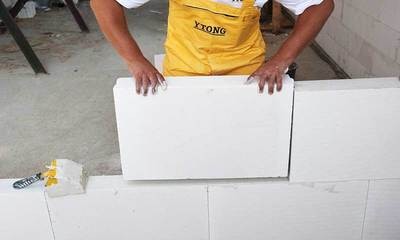
Even for inexperienced artisans, laying GSB is not a difficult process.
This is because the surfaces of this artificial masonry stone are smooth, lightweight, and easy to cut.
But builders frequently make mistakes that are very hard to fix afterwards.
Typical errors made when installing GSB walls:
- The masonry material was not acclimatized at a temperature of + 5C for 24 hours, which led to deformation of the wall.
- Poor preparation of the floor and wall adjacent to the GSB masonry: the floor covering, the finishing layer on the wall were not removed, the surfaces were not leveled and the elastic gasket was not laid.
- 1/3 of the block was not ligated.
- Poorly taped vertical and horizontal seams.
- The order of installation of staples through two blocks is broken.
- There is no gap after the top row in front of the ceiling.
- During the process of laying the blocks, they were not aligned accurately.
- The vertical and horizontal arrangement of the blocks is not respected.
- Low quality GSB products used.
- Non-moisture resistant products were installed in wet areas in the kitchen and bathroom.
Pros and cons of use
Gypsum is a material that’s used quite frequently in daily life, but gypsum blocks for walls are particularly well-liked. The numerous benefits of using this type of artificial masonry stone help to explain this:
- Simplicity and convenience of masonry, which is explained by the light weight and size of the gypsum block, which does not require hiring a large team of builders for construction. The weight of 1 m2 of solid GSB masonry is 82 kg, and hollow masonry is 67 kg.
- Masonry work does not require expensive equipment and tools.
- High level of environmental safety, which is explained by the natural components of gypsum blocks. This allows the use of such building materials in residential buildings.
- Smooth planes of gypsum block. After completing the masonry work, the developer can begin to carry out finishing work; the gypsum block is ready for any type of finishing.
- Normal microclimate in the house. Gypsum block can absorb excess moisture from the air and transfer it to the adjacent room if its level is lower. Consequently, a normal microclimate will be created in the house.
- High resistance to rotting processes. This quality is very important for partitions located in wet rooms.
- Low thermal conductivity. In other words, such walls retain heat perfectly. To compare thermal conductivity, a wall and GSB with a thickness of 8cm is equivalent to a concrete wall with a thickness of 40cm.
- High noise reduction. For interior partitions, this characteristic is of primary importance, even more than thermal protection.
- Highest fire resistance ability. Gypsum is a non-flammable material, and has transferred this property to its products. They can only be destroyed by high heat of 1100 C, but this can happen after no less than 3 hours of exposure to open fire.
- An acceptable price on the building materials market allows the developer to remodel a house or apartment on his own for funds that will not significantly affect the family budget.
Like any similar material, gypsum wall blocks have disadvantages. Buyers comprise the principal ones:
- Low load-bearing capacity of GSB, compared to other types of wall blocks and bricks. Attachments can be installed on such partitions using special fasteners.
- Low strength, therefore regulatory documents establish a maximum height of such walls 3.5 m.
Prices
Each city has a different price for gypsum blocks. Many developers think that their market value is high, particularly for the tongue-and-groove modification, but considering the cost of consumables and masonry work, this is not totally accurate. Additionally, a wholesale batch will cost the customer between 10% and 20% less.
| No | Brand and size mm/piece. in 1 m3 | Cost block/m 3, rub. |
| 1 | Hyphas 667×500×80/37.48 | 175/6559 |
| 2 | Knauf 667×500×100/29.98 | 246/7375 |
| 3 | Knauf waterproof 667×500×100/29.98 | 824/24703 |
| 4 | Sandin monolithic 667×500×80//37.48 | 288/10794 |
| Feature | Details |
| Material | Gypsum blocks are made from gypsum, a natural mineral. |
| Weight | They are lightweight, making them easy to handle and install. |
| Sound Insulation | Gypsum blocks provide good sound insulation for quieter rooms. |
| Fire Resistance | They are fire-resistant, adding safety to the construction. |
| Moisture Resistance | Some gypsum blocks are treated to resist moisture, suitable for bathrooms and kitchens. |
| Easy Installation | Blocks can be easily cut and shaped, speeding up construction. |
| Surface Finish | The smooth surface of gypsum blocks is ready for painting or wallpapering without additional plaster. |
| Environmental Impact | Gypsum blocks are eco-friendly, made from non-toxic materials. |
| Cost | They are generally affordable and cost-effective for wall construction. |
| Application | Ideal for non-load-bearing walls and partitions in residential and commercial buildings. |
When it comes to building walls and partitions, gypsum blocks are an adaptable and sensible option. Because of their well-known simplicity of use, they are a well-liked choice for both novice and expert builders. Because these blocks are lightweight, they are easier to transport and install, which cuts down on the total amount of time and effort needed for construction projects.
The exceptional fire resistance of gypsum blocks is one of their most notable qualities. Because of this, they provide an additional degree of fire protection for both residential and commercial buildings, making them a safe choice. Gypsum blocks also offer good sound insulation, which can contribute to the creation of calmer and cozier interior spaces.
When utilizing gypsum blocks, there are a few subtleties to take into account. Since exposure to moisture can erode their integrity, they are best used indoors. For them to stay durable and presentable over time, proper sealing and finishing are crucial. Additionally, it’s critical to confirm that the blocks’ structural load-bearing capacity satisfies the project’s specifications.
All things considered, gypsum blocks provide convenience, security, and usefulness. You can successfully integrate them into your construction projects and create strong, dependable walls and partitions that satisfy your needs by being aware of their advantages and disadvantages.


