
Although painting heated towel rails can be challenging, it’s a fantastic way to update the appearance of your bathroom. Different paints and preparations are needed for different materials. Whether the material of your towel rail is mild steel, chrome, or stainless steel, picking the appropriate paint is essential for a long-lasting and stylish finish.
To guarantee that the paint sticks correctly, stainless steel towel rails require specific primers. Chrome’s shiny, smooth surface, on the other hand, calls for a different strategy. Rust-resistant paint may be necessary for mild steel rails to maintain their aesthetic over time.
We’ll walk you through the process of priming and painting heated towel rails composed of different materials in this article. For the best results, you’ll learn how to choose the appropriate paint, prepare the surface, and apply the paint. You can make your towel rail look brand-new and breathe new life into your bathroom with a little work.
| Material | Recommended Paint |
| Steel | Heat-resistant enamel, epoxy-based paint |
| Stainless Steel | Special primer for stainless steel, acrylic or urethane enamel |
| Aluminum | Self-etching primer, acrylic or polyurethane paint |
| Brass | Primer for non-ferrous metals, oil-based or enamel paint |
- Selecting the right paint
- Requirements for paintwork materials for heated towel rails
- Types of primers
- Types of coatings
- Preliminary work and preparation of tools
- Tools, devices, related materials
- The process of painting and drying a heated towel rail in the bathroom
- Features of painting heated towel rails made of different materials
- Metal alloys
- Cink Steel
- Chrome surface
- Plastic pipes
- Recommendations and useful tips
- Video on the topic
- Painting heated towel rails
- Updating the coil in the bathroom with paints
- Review of Moire – painting options for heated towel rails
Selecting the right paint
You must select a paint that is appropriate for the heated towel rails’ operating environment if you want the new coating to last longer than a year. The primer choice that is made to prepare the surface can also be made using the same principle.
Requirements for paintwork materials for heated towel rails
The following qualities must be present in the paint:
- moisture resistance;
- wear resistance;
- resistance to friction, mechanical stress (shocks, chips, scratches);
- anti-corrosion;
- non-toxic;
- environmental safety;
- hypoallergenic.
Painting bathroom sanitary heating equipment is not a good use for paint intended for finishing walls, ceilings, or facades. It quickly and completely peels off. We require paint that is always resistant to high temperatures. A coil system may heat up to +180°C in some cases and +220°C in others. It is necessary for you to purchase paint that is intended to coat the pipes and surfaces of heating radiators.
Types of primers
The following primers are ideal to use on the surface of a heated towel rail:
- GF-21;
- primer-enamel "NOVA and Co";
- Eckart.
Similar to paint, primer must endure high temperatures and their abrupt fluctuations. The paint coating endures longer after priming than when painting an equipment’s surface without primer preparation.
Types of coatings
Heated towel rails can be painted with the following types of paints:
- Alkyd enamel. The basis of the composition is glypthal, pentaphthalic varnish. Resistant to abrasion and sudden temperature changes. Duration of service – 10-12 years.
- Acrylic enamel. The coating is durable during use. Different brands offer a wide range of colors. Has high hiding power and elasticity. Therefore, the applied layer always looks perfectly smooth, uniform, without drips or streaks.
- Aqueous dispersion with heat-resistant effect. Pros – dries quickly, does not have a strong strong odor of solvents, is environmentally friendly, does not harm the human body, has a long service life.
- Silicone paint. Component base – various resins, rubber, water. Withstands high temperatures, tolerates moisture, is resistant to wear, lasts 15-20 years. The most reliable are solvent-based paints.
One disadvantage of silicone paint and alkyd enamel is that, as the coating dries and solidifies, they release a distinct smell. However, when the paint is working, it doesn’t release any harmful compounds or overpowering odors.
Crucial! The best options are coatings that mimic any metal that complements the interior design or enamel with a silky, glossy shine effect.
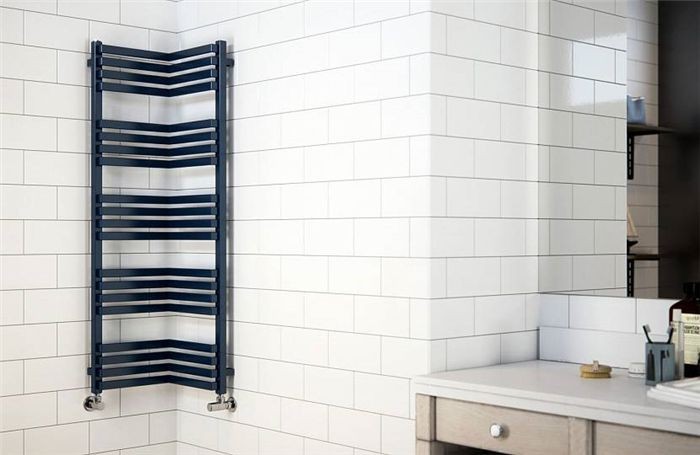
It is ideal to choose a paint shade that complements the interior finishing and furnishing tones. Heated towel rails are the most common application for chrome paint. Creating a copper pipe-snake highlights the loft, industrial, vintage, or retro style of the space while adding a chic, matte shine.
Paintwork materials in light green, olive, beige, and bluish tones will appeal to those who prefer more natural color schemes. Snow-white enamel isn’t a particularly effective fix. At first, she appears flawless. However, the coating eventually starts to turn yellow or take on a grayish tint after about 6 to 8 months.
Preliminary work and preparation of tools
After giving the heated towel rail’s surface some preliminary care, you must begin painting it. If this isn’t done, the coating will quickly lose its usability due to cracking, peeling, or rust showing through the layer.
Tools, devices, related materials
You will need the following supplies in addition to paint and varnish to prepare the structure’s surface and paint it:
- gloves;
- putty knife;
- wire brush or piece of sandpaper;
- Screwdriver Set;
- pliers;
- flute brush – 2 pcs. (narrow and wide);
- pile roller;
- paint sprayer (if necessary);
- adhesive primer with anti-corrosion properties;
- solvent or any detergent;
- rags.
Using a brush with natural bristles is the best option. The layer will then be applied and distributed uniformly, free of omissions, streaks, or ugly streaks. Use a roller with a coat of short pile in place of a brush.
Use a paint sprayer, a pneumatic tool, to paint pipes quickly and uniformly. However, in this instance, you must either paint the structure before installing it or use a specific painting film to cover all nearby wall areas. The movie has to be properly secured. Apply paint or primer to the heated towel rail’s entire exterior.
However, removing heated towel rails from the wall with pliers and screwdrivers is the standard procedure for painting them. After that, the entire procedure is completed, including cleaning the metal, degreasing, priming, painting, and drying completely. The structure isn’t put back in place until the screws are inserted into their original sockets.
It’s crucial to take the material of the rail into account when painting heated towel rails in order to guarantee that the paint will adhere correctly and withstand heat. Depending on the material—mild steel, aluminum, or stainless steel—each towel rail type needs a different paint type and method for preparation in order to produce a long-lasting and appealing finish. The right paint can ensure longevity and prevent peeling or discoloration. One example of such paint is heat-resistant enamel. For optimal results, proper preparation—which includes cleaning and priming—is essential. This will enable you to preserve your heated towel rail’s usefulness and visual appeal.
The process of painting and drying a heated towel rail in the bathroom
The primer has already dried before the paint is applied. You should wait to paint the surface if the adhesive layer is not completely dry. The paint and varnish mixture is gently mixed or thoroughly shaken. Take note of the painting product’s consistency, as certain enamel types require multiple stages of mixing. The mass is uniform and free of floating liquids, making it ready for use.
Applying several layers is necessary. However, there must always be a drying gap between them because the prior layer needs to be totally dry. Not only is it not touch-sensitive, but it also follows the guidelines that come with the finishing material. In about forty to sixty minutes, each layer dries and solidifies completely.
The heated towel rail is painted entirely and then allowed to dry for an additional day to ensure it is completely solid. Some experts advise allowing the paint to dry for a minimum of three, four, or five days. It can’t be utilized until after this. The room’s relative humidity should not rise above 50–60% while drying. As a result, it is advised against taking a bath while the equipment’s paint is drying.

Features of painting heated towel rails made of different materials
Painting heated towel rails composed of various materials has different requirements. Some are made of plastic and have pre-made protective coatings, so they don’t even need to be painted.
Metal alloys
It is crucial to remove rust and outdated decorative coatings. The coil must be thoroughly cleaned, all the way down to the metal, until it shines.
Cink Steel
The pipes are reliably protected from corrosion by the galvanized coating, so painting is not necessary. However, you can paint it with silicone or alkyd paint to fit the style.

Chrome surface
Painting should only be done on a smooth chrome surface that hasn’t lost any integrity. Not every color goes well with it. Sandblasting, or rough sanding, the chrome is required prior to painting. Paint won’t adhere well to the treated surface until then. On smooth chrome, however, Tessarol or Hammerite paint can be used as a special paint. It is sufficient to use a solvent to clean the chrome surface before applying them.
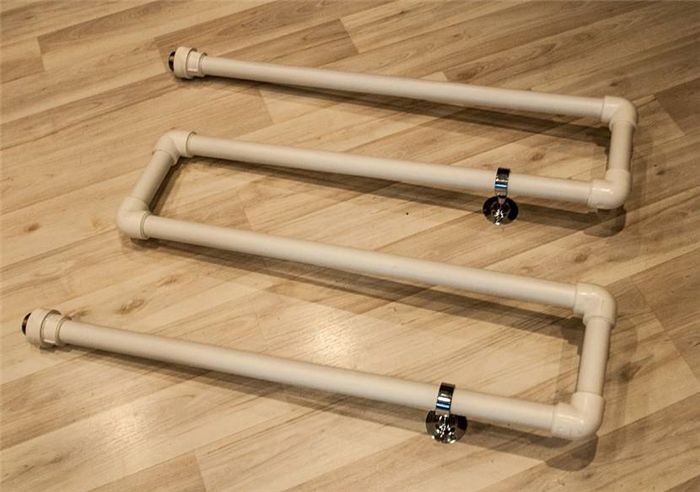
Plastic pipes
Does not need to be painted in order to provide extra operational security. They are only painted to match the interior design style for aesthetic reasons. Any polymer-based structure is painted with solvent-based paints that don’t include acetone or other caustic materials like ML or NTs.
Recommendations and useful tips
Painting advice for heated towel rails:
- When removing dirt or old paint, it is important to especially carefully go through the bends and joints with wall fasteners with sandpaper or a wire brush.
- Using a spray gun (paint sprayer) you can not only distribute paint evenly over the surface of the entire structure, but also save money – reduce the consumption of paints and varnishes.
- The best period for painting an already installed heated towel rail is any time outside the heating season. The heated towel rail cannot be painted when it is hot. The enamel simply won’t lay down evenly and won’t dry properly.
- If the enamel initially seems to be too dense in consistency, you need to dilute it with a solvent suitable for the type of paint.
- Before applying enamel, you need to make sure that there is no condensation on the pipes.
The new paint will not adhere well or last long if the old coating is not completely removed. This is particularly true for older chrome coatings, where new paint materials are applied very unevenly.

Painting heated towel rails can be a simple task if you know how to handle different types of paint. Selecting the correct paint is essential for longevity and aesthetics, regardless of whether your towel rail is composed of steel, aluminum, or another material.
To guarantee a long-lasting finish on steel towel rails, look for heat- and rust-resistant paints and primers. For aluminum rails, a non-ferrous metal primer must be used before a suitable topcoat can be applied. Paints that are resistant to the high temperatures found in bathrooms are beneficial for both kinds of rails.
It is important to take the time to thoroughly clean and sand the surface in order to ensure that the paint will adhere well and have a polished, even appearance. Applying several thin coats as opposed to one thick coat will help you get an even finish and prevent drips.
You can successfully paint your heated towel rails and improve the look of your bathroom while making sure the rails are durable and functional by using the appropriate supplies and adhering to these instructions.


