
Using mineral wool as interior roof insulation is a cost-effective and practical method of keeping your house cool in the summer and warm in the winter. Because of its exceptional insulating qualities, fire resistance, and capacity to fit snugly between rafters and joists, mineral wool is a popular choice.
By keeping the heat in during the warmer months and preventing it from escaping during the colder ones, proper insulation can dramatically lower energy bills. Mineral wool is a favorite material for both professional and do-it-yourself builders because it is not only efficient but also simple to install.
It’s crucial to comprehend the important procedures involved in using mineral wool to insulate your roof before beginning. This include clearing the space under the roof, measuring, cutting, and making sure the insulation is installed correctly to prevent gaps. You can attain optimal insulation performance and raise the general level of comfort in your house by following the correct procedures.
- DIY thermal insulation rules
- Methods for laying material on a pitched structure
- Between the rafters
- Above the supporting frame
- Installation technology for flat roofing
- Safety precautions
- Common mistakes and recommendations
- Video on the topic
- Insulating the attic from the inside! Roof insulation from the inside!
DIY thermal insulation rules
Laying the material outside or inside the room are the two possible ways that mineral wool can be used for roof insulation. Because of the performance characteristics of cotton wool, the second option is more frequently utilized.
Some guidelines should be adhered to both during the preparation phase and the actual material installation in order to ensure efficient insulation:
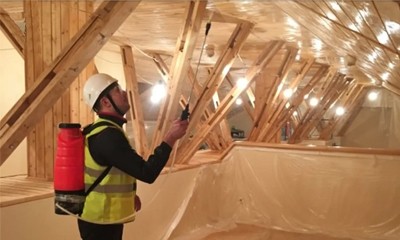
- Before installing the insulation, elements of the rafter system must be treated with special antibacterial and water-repellent compounds, which will protect both the load-bearing elements themselves and the mineral wool slabs.
- The unheated under-roof space of a private house is subject to a constant temperature contrast, which causes condensation to form. This means mandatory protection of the insulation from the negative effects of moisture using layers of waterproofing and vapor barrier materials.
- Before starting work on roof insulation with mineral wool, it is necessary to conduct a thorough check of the condition of the rafter system and roofing covering. The mineral wool fibers themselves do not absorb moisture, however, water can accumulate in the air cavities between them, and if only 2% of the mass of the insulation is wet, its effectiveness is halved.
Maintaining an air gap between the waterproofing layer and the cotton wool sheets is another essential guideline when using mineral roll insulation. To ensure the necessary air circulation and the potential for free evaporation of moisture, should it form, a gap of approximately 50 mm should be left.
Methods for laying material on a pitched structure
If it is decided to insulate a pitched roof, there are two primary approaches that should be considered: installing insulation between the rafters and installing wool directly on top of the roof’s supporting structure.
Generally speaking, the first option is better since it allows you to finish the task and preserve the attic’s interior space. You can install mineral wool directly on the rafters if this detail is unimportant.
Between the rafters
While there are a few technological guidelines that must be followed, the work algorithm for installing mineral wool between rafters on a pitched roof is not difficult. The insulation installation process is completed in a step-by-step manner, considering the unique features of each room:
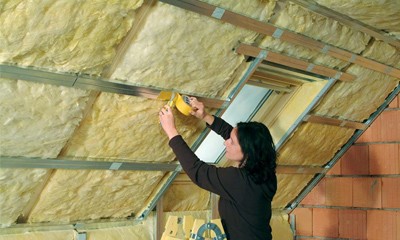
- In case of absence of a layer of rolled waterproofing or destruction of its integrity (relevant for old houses), it is necessary to carry out appropriate work. In this case, the waterproofing is mounted directly on top of the rafters with “entry” into the space between the beams. The material is fastened with a mounting stapler, individual sheets are laid with an overlap of ~15 cm, the joints are additionally taped.
- Mineral wool is cut into slabs, the width of which is several centimeters greater than the distance between adjacent rafter beams. This solution allows you to do without additional fastening of insulation. The slabs are laid from bottom to top.
- After covering the entire surface of the slopes with insulation, a vapor barrier layer is installed. This stage is also not difficult – the canvas is simply unwound over the area and attached to the rafters using the same construction stapler.
- The final stage of work is the installation of finishing materials – lining, OSB boards, etc.
The insulating elements may wrinkle or sag during operation if the thickness of the mineral wool is insufficient to maintain its own linear dimensions.
As a result, gaps will start to show and the finish’s effectiveness will be greatly diminished. In this instance, stretched twine or parallel slats are used to further secure the mineral wool in place.
Above the supporting frame
Installing mineral wool directly on top of the roof’s supporting frame is the only option if it is not possible to place it between the rafters due to the elements’ thickness surpassing that of the insulation:
- A layer of roll waterproofing is stretched and secured.
- A counter-batten made of timber with sufficient thickness is stuffed in the horizontal plane. The distance between the timbers is selected based on the width of the insulation.
- Mineral wool is laid between the timbers, while the joints of individual elements in different rows should be located with sufficient displacement – the formation of cracks is unacceptable.
- After laying the wool, the vapor barrier is secured and you can proceed to the decorative finishing of the surfaces.
Crucial! When working, it’s critical to make sure the insulation is firmly held between the rafters or sheathing and to seal the joints of rolled materials.
Installation technology for flat roofing
The general work algorithm won’t change much if insulating a flat roof is required, but there are a few additional features to consider.

- Ventilated roof – in this case, a certain distance is provided between the floor slabs and the direct roofing covering, used for technical purposes. Here, installation of insulation between the beams of the rafter system can be difficult or impossible at all, so the laying of mineral wool is carried out on the surface of the ceiling itself. The mats are laid end-to-end and secured using dowels or special adhesives. For this type of work it is necessary to use insulation with a thickness of 20 cm, which guarantees the necessary efficiency.
- Non-ventilated roof – internal insulation of a flat roof in this case is carried out in several stages. First, the surface is cleaned and leveled, after which insulation boards are mounted on the slabs using special dowels with wide washers. After laying mineral wool, its surface is covered with a layer of reinforcing mesh and plastering can be done with special compounds.
Suggestions. The characteristics of the room determine which insulation method is best, though any of the options listed below will work well if the work is done correctly.
Safety precautions
Wearing personal respiratory and vision protection equipment is the primary safety precaution that must be followed when working with mineral wool. Based on the structural characteristics of mineral wool, this condition exists. Numerous tiny dust particles are created during the material’s processing; under a microscope, these particles resemble sharp needles.
Without protection, someone working in a small area will unavoidably breathe in insulation particles, which could harm their exposed skin, mucous membranes, and respiratory organs. Long-term health issues may result from this. For similar reasons, the insulation needs to be kept out of children’s reach and any leftover material needs to be disposed of after work.
Common mistakes and recommendations
You can use your hands to work with mineral wool as insulation because it doesn’t present any significant technological challenges and doesn’t require the use of specialized tools. Here Common errors should be avoided and the following suggestions should be considered:
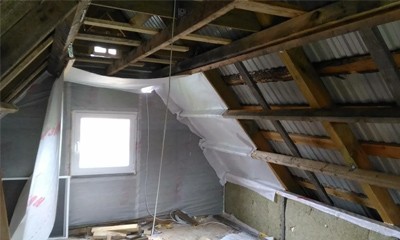
- During work, do not allow the insulation to get wet, as this will lead to a significant decrease in its characteristics. Ideally, work should be carried out in warm and dry weather, which will prevent not only direct ingress of water, but also prevent swelling from moisture in the air.
- The insulation should be laid close to the beams of the rafter system or the beams of the attic floor. Individual parts of the material are also mounted as close to each other as possible.
- The mineral wool layer must be protected with rolled waterproofing on the outside and covered with a vapor barrier on the inside of the room.
Note: Mineral wool should not be cut too wide, even with today’s technology that dictates that insulation elements must be laid slightly wider than the spacing between sheathing frame components.
A gap of two to three centimeters is sufficient for complete fastening, preventing the insulation from "bulging out" in the center or around the edges and enabling the wool to stay in place even in the absence of additional fasteners.
| Feature | Description |
| Thermal Efficiency | Mineral wool provides excellent insulation, keeping your home warm in winter and cool in summer. |
| Fire Resistance | It is non-combustible, offering added safety against fire hazards. |
| Sound Insulation | Mineral wool reduces noise, making your home quieter. |
| Moisture Control | It helps control moisture, preventing mold and mildew. |
| Easy Installation | Mineral wool is easy to cut and fit into roof spaces. |
| Environmental Impact | Made from natural materials, it is environmentally friendly and recyclable. |
One easy and efficient way to increase the energy efficiency of your home is to use mineral wool to insulate your roof from the inside. By using this technique, you can improve the year-round comfort of your living area by keeping your house cool in the summer and warm in the winter.
Because it’s easy to work with, fireproof, and offers superior thermal insulation, mineral wool is a popular option. An extra benefit is that it is soundproof, which contributes to a calmer home atmosphere.
Make sure there are no gaps and that the mineral wool is fitted tightly between the rafters when installing it. In order to maximize its insulating qualities and stop heat loss, proper installation is essential.
In order to prevent moisture from reducing the insulation’s effectiveness and possibly causing damage, don’t forget to install a vapor barrier. Taking this extra precaution will help ensure that your insulation remains intact for many years to come.
Making the effort to properly insulate your roof with mineral wool is an investment in your home’s long-term efficiency and comfort. The project is doable and has a lot to offer, so the effort is well worth it.
Using mineral wool as interior roof insulation is a wise move that will improve the comfort and energy efficiency of your house. Mineral wool offers superior sound insulation and fire resistance in addition to being a great way to keep your house cool in the summer and warm in the winter. In order to ensure that you get the best results for a more comfortable and energy-efficient home, this guide will take you through the essential procedures and factors to take into account when installing mineral wool insulation.


