
One of the most important choices you’ll have to make when roofing your house is whether to go with a pitched or flat roof. Every choice has advantages and disadvantages of its own that affect your home’s appearance as well as its usability.
The slope of a **pitched roof** makes it easy for snow and rainwater to run off of it. This timeless and popular design provides improved drainage and lowers the possibility of water pooling, which may cause leaks. In addition to their adaptability in terms of style, pitched roofs can accommodate different roofing materials such as metal, tiles, or shingles, which can improve their durability and curb appeal.
Conversely, a **flat roof** exhibits a more contemporary style and is frequently found in modern architecture. In comparison to pitched roofs, flat roofs are usually simpler and quicker to build, requiring less manpower and materials. In addition, they can be utilized to add more outdoor living space or to install solar panels, which is why eco-friendly designs are using them more and more.
When it comes to **cost**, flat roofs are typically less expensive up front because of their easier construction and need for fewer materials. However, because flat roofs may need more frequent inspections and repairs to avoid water pooling or membrane damage, maintenance costs can eventually increase.
**Durability** is an additional consideration. Because of their sloping design, pitched roofs are more resilient to severe weather and are less likely to sustain water damage. In addition, they typically last longer than flat roofs, which might need to be replaced sooner based on maintenance procedures and material quality.
The decision between a pitched and flat roof ultimately comes down to your personal preferences, financial situation, and needs. Finding out the advantages and disadvantages of each type of roof will help you make an informed choice that complements your house and way of life, regardless of whether you value modern efficiency and design flexibility or classic charm and durability.
| Flat Roof | Pitched Roof |
| Often cheaper to construct initially due to simpler design and fewer materials. | May be more expensive initially due to more complex structure and additional materials. |
| Roofing Composition: Typically uses materials like EPDM rubber, modified bitumen, or PVC membranes. | Roofing Composition: Utilizes materials such as asphalt shingles, tiles, or metal sheets. |
| Pros: Offers usable space for rooftop gardens, solar panels, or HVAC equipment. | Pros: Better drainage and less susceptibility to water pooling. |
| Cons: Requires regular maintenance to prevent leaks and en More prone to wind damage and may require more frequent repairs. |
- Criterias of choice
- What is a flat roof?
- Advantages and disadvantages
- Features of structures with slope
- Advantages and disadvantages
- What is better to choose?
- For a private residential building
- For non-residential buildings
- Which will cost cheaper?
- Useful video
- Video on the topic
- 20 arguments why a FLAT ROOF is better than a pitched ROOF for a modern home
- Flat or pitched roof? Advantages and disadvantages
- Flat roof or classic. What to choose? Which is cheaper?? Advantages and disadvantages! Let"s compare.
- A flat roof is cheaper than a pitched roof. Pros and cons of flat roofing.
- Pitched or flat roof. Which one to choose?
- FLAT OR PITCHED ROOF? DESTROYING MYTHS / BUILDING JUNK
- Flat roof – advantages: why a flat roof is better than a pitched roof | Which roof is better
- PITCHED ROOF OF A HOUSE OR FLAT?
Criterias of choice
Modern selection criteria are based on the fundamental design and functionality of roofing systems, accounting for owner preferences and the outcomes of centuries-long roof operation in Russia and overseas.
Pitch roofs were historically the most common architectural style in central Europe; however, flat roofs are currently quite trendy among Europeans.
Germany is a fashion leader, with green roofs becoming increasingly common in custom homes. In Russia, flat roofs are more common in multi-story urban buildings than pitched roofs, which are more common in private residential buildings.
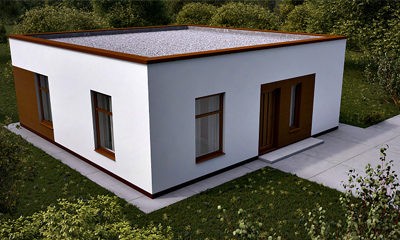
Currently, there is a shift in the private sector that favors flat roofs. Statistics show that the proportion of installed flat roofs is rising yearly and currently stands at around 30% in the private sector, based on various estimates.
Experts predict that this number will rise in the future as a result of the advancement of new building technologies and a rise in the construction of frame homes, which typically have flat roofs.
The primary expert comparison criteria are as follows:
- Design advantages on a flat roof, since there is no need to create complex under-roof systems to hold the roof.
- Lifetime, depends on the materials, but if we compare the traditional pitched slate and flat roofing felt construction, then the advantage is the pitched one, which lasts up to 60 years, and the roofing felt one does not exceed 20 years. However, new offers for flat roofs have appeared on the roofing materials market – seam metal sheets with copper, titanium or aluminum coating, the service life of which is more than 100 years.
- Low level of service – here the advantage of a flat roof.
- Drainage and sun protection – the advantage of a pitched roof is that the overhanging slopes cover the house from the sun and moisture, like an “umbrella”; its drainage system is also more organized and efficient.
- Ventilation system for under-roof space – more effective for pitched structures.
- Architectural advantages more for a pitched roof, since it is possible to organize additional living space in the under-roof space.
- Cost of installation and operation – advantage of flat roofs.
- Maintainability – advantage of flat roofs.
- Snow removal – advantage of flat roofs.
- Price – also an advantage for flat roofs.
Naturally, this hierarchy of benefits and drawbacks between pitched and flat roofing is not set in stone, as producers and designers of roofing materials are constantly seeking for innovative ways to reduce the drawbacks that come with each style.
Knowing the benefits and costs of each option is essential when choosing a pitched or flat roof for your house. Flat roofs are appropriate for modern aesthetics and rooftop installations like solar panels because they are less expensive and require less maintenance. However, because of drainage problems and exposure to the elements, they may need repairs more frequently. Pitch roofs, on the other hand, have a higher initial cost but lower ongoing maintenance costs due to their superior water drainage and resilience to bad weather. They also provide better ventilation options and additional attic space. The decision between them comes down to your climate, spending limit, and aesthetic tastes; each has unique advantages for homeowners thinking about building or remodeling projects.
What is a flat roof?

Flat roofs are either slab or beam by design. They are built with a 4 to 7 degree slight slope to allow atmospheric water to drain away. For information on how to build a flat roof on a private residence using only your hands, see this page.
Larger structures can also be equipped with an internal drain by installing a funnel in the lower surface area, with one riser for every 150 m². This is where enhanced waterproofing is carried out. Similar to pitched buildings, a traditional drainage system is installed on small roofs without a parapet.
Flat roofs are categorized according to their type of operation, design, and "roofing pie." These indicators indicate that flat roofs are:
- Unexplorable, The most budgetary and rapidly vegetable option, the presence of a person on it can only be in the process of repair or annual maintenance.This design does not require additional strengthening.
- Operated, People are constantly located on it, since recreation and service areas are organized on the surface, for example, pools and parking lots.
- Traditional, used for typical multi-story buildings. Execution of the “roofing cake” – concrete slabs, expanded clay concrete inclined screed, thermal insulation and waterproofing.
- Inversion, “roofing pie” is inverted compared to the traditional design, the thermal insulation is laid on top of the waterproofing, external finishing: tiles or lawn.
- Attic, with the location of communications, roof boiler rooms and ventilation systems.
- Roofless, may be exploited.
Note: For operated types with a minimum height of 1.2 meters, a parapet is installed on the flat roof if the house is taller than 10 meters.
Advantages and disadvantages
Flat roofs are becoming more and more popular every year, which can be attributed to both their benefits and the usage of modern roofing materials in new construction. Among the benefits of flat roofing, according to users and experts, are the following:

- Smaller coverage area, which leads to savings in materials and labor costs, both during construction and during repairs and maintenance.
- The price of the price of 1 m² of flat roof below the pittime is at least doubled (what is the cost of a turnkey flat roof?).
- The ability to get additional space for relaxation, which is especially important during construction in urban dense development.
- High speed of installation work, it is not required to invite professional climbers.
- Accessibility for the operation and cleaning of snow and leaves.
People list the following as drawbacks of a flat roof:
- Large accumulation of snow during snowfalls, which can cause destruction or leaks.
- Freezing and clogging of drains.
- Wetting the insulation due to impaired waterproofing tightness.
- Low service life, for rolled materials not higher than 20 years.
Features of structures with slope
GOST R ISO 6707-1-2020 provides an explanation of the term "napal roof," stating that the roof’s angle of inclination must be at least 10… 150.
These buildings date back several centuries, and they are highly favored throughout Europe. With so many years of use, artisans have created a plethora of unique design solutions.

- Single-pitch, consists of 3 mandatory components: rafter system, protective “roofing pie”, external covering. The most sensitive part of the structure is wood products. Wood has a limited service life, which, despite treatment with modern antiseptics and fire retardants, cannot exceed 50 years. This period is reduced by poor operating conditions, moisture and biological contamination.
- Gable, they are considered traditional in Russia, they can be symmetrical and asymmetrical, which differ in the size of the slope and the angle of location.
- Broken – a type of 2-slope with a break in the upper part of the roof.
- Four slopes – popular designs consisting of 4, and in some varieties more slopes. Features steep slopes.
- Tent, hip and half-hip – varieties of four-slope.
- Multi-pincer – complex roofs with many nodes.

The architect’s concept states that a pitched roof can have the most unusual shapes, but doing so will cost a lot of money because it will need to be built by highly skilled craftsmen.
The primary components of a pitched roof’s structure are:
- Mauerlat — the beam located along the perimeter evenly distributes the load on the outer walls when the rafters rest on them.
- Rafters – load-bearing wooden products installed at an angle.
- Ridge run – horizontally installed timber to form the roof ridge.
- Support posts – made from cut beams installed between the purlin and the beam.
- Sill – a beam mounted parallel to the ridge run. It is located along the length of the box or laid on top of a load-bearing wall dividing the building in half.
- Intermediate supports They must remove additional load in the case of the use of long rafters, for this an additional series of racks at a distance of 1/2 of the slope is installed, under which another 1 layout is placed.
- Intermediate run – perpendicularly installed beam that reduces the number of supports, and which several racks rest on.
- Gable – protective surface of brick or boards for closing a subcutaneous space.
- Roof pie: Moisture-dairy protection, heat insulator.
- Finish coating – Maybe from different materials.
Advantages and disadvantages
The pitched roof’s primary benefit is its ability to effectively retain water from atmospheric precipitation. Extra benefits of the pitched roofing system device:
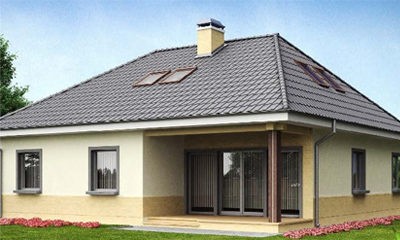
- The possibility of obtaining additional living space.
- Effective ventilation.
- High protective characteristics for heat and street noise.
- Architectural attractiveness.
- Long service life.
The following are some drawbacks of this roofing option:
- High cost.
- Long installation times.
- Complexity of installation, repair and maintenance work.
- High material consumption, especially increased consumption of wooden materials.
- Large roof area.
What is better to choose?
When designing a new home, a variety of factors are considered, including the area’s climate, building specifications, wall materials, architectural solutions, and local development codes. One of these factors is the choice of roofing.
While flat and low pitched roofs are appropriate for industrial buildings, they shouldn’t be used for residential construction. These coatings are the most vulnerable to sagging when there is a significant buildup of snow or ice. For this reason, the building’s safety and structural integrity are affected by the roof’s slope.
A large enough slope being present:
- Improves drainage of rain and snow. Therefore, in areas with higher rainfall, they prefer to build roofs with a steeper slope;
- Prevents the accumulation of snow or ice, as over time this moisture can cause roof damage from mold and leaks to cracks or even collapse;
- Allows you to organize a well-appointed attic space or even build on an attic without radically changing the design of the rafters.
Only ancillary buildings, such as bathhouses and outbuildings, look good with flat coverings.
For a private residential building
When it comes to residential buildings, private developers with limited space for construction favor high pitched roofs with extra equipment. It is preferable to have a sloping roof in regions with high annual precipitation and a flat roof in areas with high wind loads.

Hip or cross-shaped roofs are recommended by experts for pitched structures that can withstand wind potential well. Since these structures are fairly complicated, you will need to hire experts to put them into place. However, this kind can guarantee a high degree of tightness at the internal corners of the building. This decision will, of course, have an impact on the price, which is at least twice as high for pitched roofs.
Only flat roofs are installed on multi-story buildings above the fourth floor; in these cases, a decision must be made between options that are utilized and those that are not, as well as between attics and non-attics.
The customer’s financial situation and the requirement to install operational facilities—like rooftop boiler houses—will determine which option is best.
For non-residential buildings
Non-residential building roofs are typically flat, but a more precise decision will depend on the utility rooms’ intended use, the wall material, and the design project of the surrounding area. Utility rooms are typically small spaces without heating made of stone, bricks, wood, metal, sandwich, and SIP panels.

The purpose and duration of operation of such premises determine the type of roof and material to be used. Roof types on nearby buildings:
- Flat, used most often because it has a budget price, low material and labor intensity and high installation speed, however, with heavy snowfall, manual cleaning will be required. The roof consists of a heat insulator, vapor barrier, waterproofing and ceiling. To make a flat roof, any materials can be used from roll to sandwich and SIP panels. The installation of such a roof can be done independently and even in winter
- Single-pitch more preferable for climatic regions with high precipitation levels. Also a budget construction option, it can be built independently using a variety of roofing materials, the most preferred in terms of price and speed of the device are sandwich and SIP panels.
- Roofs with multiple slopes For auxiliary premises, it is economically impractical, but can be applicable according to the design project or in cases where the utility room has large sizes over 30 m².
Which will cost cheaper?
Accurately determining which type of roof to install—a pitched roof or a flat roof—will require considering expenses beyond just installation and roofing materials. All expenses related to the roof’s operational cycle, from installation to a full replacement, must be considered.
The cost of the material will initially determine the cost of the roof, as well as the volume and cost of installation. Additionally, annual maintenance, including current and overhaul, will be required.
The conditions and expenses associated with these measures vary depending on the design and occasionally surpass the owner’s initial outlay for installation and heat-shielding measures.

For instance, it costs 860 rubles per square meter to erect a standard flat roof made of soft rolled building materials, 1650 rubles per square meter for the most affordable slate roof, and 3800 rubles per square meter for a folded roof. Regulations state that roof replacement needs to be done as follows:
- for flat after 20 years;
- for pitched – 60 years;
- for seam -100 years.
In comparison to a seam roof, the true cost of a flat roof is (100:20)x 860 = 4300 rubles/m², and the real cost of a budget pitched roof is (100:60)x 1650 = 2749 rubles/m².

Useful video
You will learn from the video which type of roof is preferable, a pitched roof or a flat roof:
Both flat and pitched roofs have advantages and disadvantages that should be taken into account before making a decision, depending on your needs and circumstances. Flat roofs are frequently preferred for their contemporary design and potential for space-saving features like solar panel installations or rooftop gardens. They can be less expensive to install initially because they are typically easier and faster to build.
Nevertheless, in order to avoid problems like ponding water or leaks, flat roofs need to have careful drainage and waterproofing, which can eventually result in maintenance costs. Conversely, pitched roofs are recognized for their resilience and efficient water drainage, which allows them to be used in a variety of climates and lowers the possibility of water damage.
Pitch roofs can be more expensive at first because of their intricate materials and structure, but because of their longer lifespan and less upkeep needs, they frequently end up being more affordable over time. Pitch roofs also provide greater insulation options, which over time may lower heating and cooling costs and improve energy efficiency.
The decision between a pitched and flat roof ultimately comes down to budget, long-term maintenance schedules, architectural style, and climate considerations. The roofing composition that best meets your needs for cost-effectiveness, functionality, and durability will be determined by weighing these variables along with your own preferences and local building codes.


