
Establishing a sturdy base is essential for any construction, particularly for a structure such as a polycarbonate greenhouse. For supporting the greenhouse’s frame and making sure it endures weather, a pile foundation is a great option because it provides stability and durability.
Examine the location where the greenhouse will be installed before you begin. Make sure the ground is level and clear the area of any debris. This preparatory stage is crucial because it offers a solid foundation upon which to build the pile foundation.
Next, ascertain the necessary number and arrangement of piles. To support the structure above, piles are vertical supports pushed into the ground. This choice is influenced by various factors, including the greenhouse’s size, the soil in the area, and the weight it will support.
Be sure to take load-bearing capacity and durability into account when selecting materials for the piles. Piles made of galvanized steel or pressure-treated wood are popular options because of their durability. Make sure they extend far enough to touch bedrock or stable soil below the surface.
Mark the locations of each pile in accordance with your plan before you start construction. Make sure the pile holes are deep enough to hold enough weight by using an auger or post hole digger. Make sure the piles are plumb and properly aligned before placing them each firmly in their designated hole.
- Why choose such a foundation?
- How to make it yourself?
- What will be needed for construction?
- Site selection
- Step-by-step instructions for installing screw piles
- Video on the topic
- We screw in screw piles, the base for the greenhouse
- Pile foundation for a greenhouse
- DIY columnar foundation for a greenhouse
- Foundation on pipes, under a greenhouse.
- How to Make a Foundation for a Greenhouse
- Columnar foundation and bottom frame for a greenhouse.
- Foundation for a greenhouse (Do it yourself)
Why choose such a foundation?
Polycarbonate sheet greenhouses are good for year-round use. This establishes in advance the requirement to install a foundation in order to ensure stability and to isolate the building’s walls from ground contact.
The options available to the builder are piles, a single, reinforced concrete strip, blocks, and wood. Every construction style has advantages of its own and can be chosen for a polycarbonate greenhouse.
However, the developer ought to consider the pile foundation if he needs a fast, economical, and efficient solution.
Wooden or metal rods are buried in the soil mass and used for greenhouses. Building on "floating," weak soil with a high moisture content is best done with piles.
Select from the following pile foundation types:
- Structures made of metal or wood that are driven into the soil.
- Helical beams with blades that screw into the ground.
The displayed base type has the following advantageous qualities:

- simple technology that does not require the use of heavy machinery or special equipment;
- application for all types of soil, except rocky terrain;
- does not require labor for excavation work;
- a layer of fertile soil is preserved;
- does not affect nearby buildings and landscape elements;
- can be dismantled and moved along with the greenhouse to another site;
- costs less than building a strip or block base;
- if the construction technology is followed, it will last at least 70 years.
It should not be too difficult for the site owner to lay a pile foundation for a greenhouse if he has already done so for a house, fence, garage, or gazebo.
How to make it yourself?
Excavation is necessary for this technique of building a supporting structure for structures only in exceptional circumstances. You can install wooden and metal poles on most land plots by yourself by driving them into the ground.
Three to four persons are needed to install screw piles, and their strength is required to screw the column below the freezing point of the soil.
What will be needed for construction?
The choice of piles must be made by the builder first. The following factors separate the products from one another:
- Material: wood, metal, reinforced concrete.
- Section shape: circle, rectangle, pyramid.
- Device: hollow and solid.
The decision is made in light of the site’s geology, climate, and project’s viability from an economic standpoint.
Screw metal piles are the best option for polycarbonate greenhouses. These beams have blades on them, which are used to screw the structure into the soil.
Piles can be screwed beneath a small greenhouse without the need for specialized tools. However, the blades’ primary function is to compact the earth during turning, which guarantees the stability of the foundation and any structures built upon it.
To construct, you will additionally require:
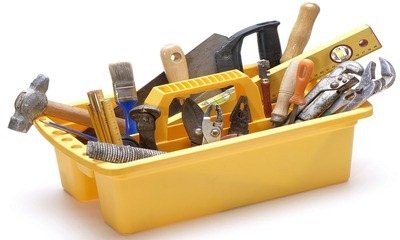
- fishing line and wooden stakes for marking the area;
- building level, tape measure;
- hammer, hacksaw;
- hand drill, shovel;
- scrap metal, levers;
- cement, sand;
- Bulgarian.
Site selection
Straight beneath the greenhouse’s walls are where the piles are built. Typically, greenhouses are placed where the sun shines for the majority of the day in order to fully facilitate photosynthesis in plants. Generally speaking, the site’s constraints and the owner’s requirements dictate the greenhouse’s dimensions.
Placing the structure in areas where groundwater is close to ground level is not advised. If not, the developer will need to empty the site using more methods.
This is accomplished by removing the top layer of soil, creating a cushion of crushed stone with sand inside, and then covering it with fertile soil.
Step-by-step instructions for installing screw piles
The foundation is ready for use at the start of construction:
- mark the area according to the size of the future greenhouse;
- determine the locations for installing the piles, starting from the corner points.
The recommended spacing between beams for greenhouses is no more than three meters. The bearing capacity of the soil and pile foundation must be ascertained for precise computations.
The ensuing algorithm is used to guide further construction:

- Before screwing in the piles, shunts are dug in the ground at a depth of 0.5 – 0.7 m in designated areas. To simplify the work, you can use a hand drill.
- Screwing in piles starts from the corner points. For work, technological holes are provided at the end of the pile through which scrap metal is passed. Pipes are put on its ends on both sides, which will serve as levers.
- The beam must be screwed into the ground to a depth no less than the soil freezing level. The work continues until the beam stops going into the ground because it has hit hard rocks. This is the only way the foundation will provide the necessary support.
- After the corner piles, install the remaining beams and screw them in strictly vertically. For accurate measurements, a magnetic level is used, which is attached to the shaft of the pile to ensure even distribution of loads. Deviations in the level during the screwing process should not exceed 2 degrees.
- When the piles go deep enough into the ground, their protruding parts remain on the surface. The ends of the beams must be cut off, leaving approximately 10 cm above ground level.
- Hollow piles must be filled with cement mortar, which will displace oxygen from the structure, thereby ensuring corrosion resistance.
Corners are welded to the ends of the piles after the foundation installation is finished. The method described makes it clear that piles under a polycarbonate table can be installed by hand, and construction work can be completed in a maximum of one to two days.
One of the drawbacks of polycarbonate is that it becomes very brittle at low temperatures. It’s critical to carefully lower the piles below the depth at which the soil freezes in order to guarantee the stability and dependability of the greenhouse foundation.
This value is typically 1.5 meters in the northwest and 1.2 meters in the Moscow region. It is advised to make clear the area’s specific value before beginning construction.
The following video shows how to install screw piles in a greenhouse:
This site contains all of the information you require regarding the layout and building of a pile foundation.
For stability and longevity, a simple and practical way to ensure your polycarbonate greenhouse is to build a pile foundation. You can evenly distribute the greenhouse’s weight across the foundation by carefully arranging the piles and spacing them apart.
First, take into account the size and shape of your greenhouse to determine the best places for the piles. Since it lays the groundwork for the entire structure, this step is very important. Make sure you precisely measure and mark each location.
Next, dig the piles’ holes, making sure they are sufficiently deep to extend below the frost line. This depth will shield the material from shifting and freezing-thawing cycle damage. Make sure every pile is positioned and heighted correctly by using a level.
After the holes are ready, place the piles there. Whether driving treated wooden posts or using concrete-filled tubes, make sure each pile is securely fastened to the ground. The required support against wind and other environmental factors is provided by this anchoring.
Once the piles are in place, join them with a strong frame. The greenhouse structure itself will be attached to this frame, which will act as its foundation. To make sure the frame is sturdy and able to bear the weight and movement of the greenhouse, use high-quality materials and tight fasteners.
Finally, make sure everything is level and safe by checking the foundation again. Before building the remainder of your polycarbonate greenhouse, make any necessary adjustments. You’ll be able to enjoy a sturdy and dependable structure for many years to come with a well-built pile foundation.
Use our step-by-step instructions to construct a strong pile foundation for your polycarbonate greenhouse. This article will guide you through the process in easy-to-understand steps, from selecting the appropriate materials to firmly placing the piles in the earth. Whether you’re a do-it-yourself enthusiast or a novice, these useful hints and techniques will assist you in building a solid foundation that will guarantee the longevity and stability of your greenhouse structure.


