
When there is a stove in the house, you want it to be not only a source of heat but also a beautiful element of the interior. After all, its original appearance is not always pleasing to the eye. Fortunately, there are many options for giving it a new look, and you can choose something for every taste and budget.
Finishing a stove is not just about aesthetics. Properly selected materials help improve heat transfer and make stove maintenance easier. Some methods are quite feasible for DIY work, while others require the hands of a master craftsman.
You can take the classic approach and tile the stove, plaster it, or paint it with heat-resistant paint. Or you can choose more original solutions, such as stone or decorative plaster finishes. Let's take a look at the most popular and practical methods, their advantages and features.
The stove can be finished in different ways, depending on the type of firebox (metal, brick) and where it is located (in a house, bathhouse, or cottage). Popular options include brick, tile (including terracotta or clinker), stone, or metal screen cladding. The main thing is to observe fire safety: there should be a gap between the hot surface and the finish, or heat-resistant materials should be used. Plaster with subsequent painting with special heat-resistant paint looks beautiful and practical. The choice depends on the style of the interior, budget, and desire to deal with installation.
What can be used to face a stove?
The facades of stoves that provide heat from coal and wood logs are elements that are always subject to a huge number of different requirements.
Non-combustibility, strength, durability, aesthetics, protection against physical and chemical changes under the influence of temperature, hygiene, ease of everyday use — there are many criteria for selecting the right materials. They must withstand intensive care with the use of caustic cleaning agents, cope with an impressive number of heating and cooling cycles, and increase the fire safety of the premises.

Surprisingly, there are plenty of facing materials that have all of the above qualities. They are sold in specialized stores in the form of ready-made clamping blocks, overlay panels, and dry mortars. Among the most popular options for cladding a home stove or fireplace are:
-
mixtures for plastering surfaces;
-
ceramic tiles with smooth corners;
-
facade bricks;
-
natural or artificial stones;
-
functional clinkers;
-
steel sheets;
-
majolica;
-
simple types of whitewash;
-
tile plates;
-
terracotta tiles for walls, etc.
All of the options presented have their own advantages and disadvantages. You need to choose very carefully, based on your current budget, the quality of the desired result, and the type of heating used.
Plaster
The cheapest, but less attractive and not very durable solution is to simply plaster the stove and then apply a coat of paint. This will give you a more or less decent finish, but it will deteriorate over time. You can handle the facade cladding work yourself, without involving experienced craftsmen. There are many obvious advantages to cladding material:
-
widespread availability — the mixture is available in any specialized shopping center.
-
affordable price — savings on the purchase of expensive tiles and heat-resistant panels;
-
the significant versatility of the frame elements allows you to refine the stove design of any popular type.
-
increased functionality — the solution increases the thickness of the tiles and the surface of the brick walls of the device, improving its efficiency.
Plaster provides the necessary level of fire safety, including through sealing, which reduces the chances of carbon monoxide gas entering the room.
Report a broken video!
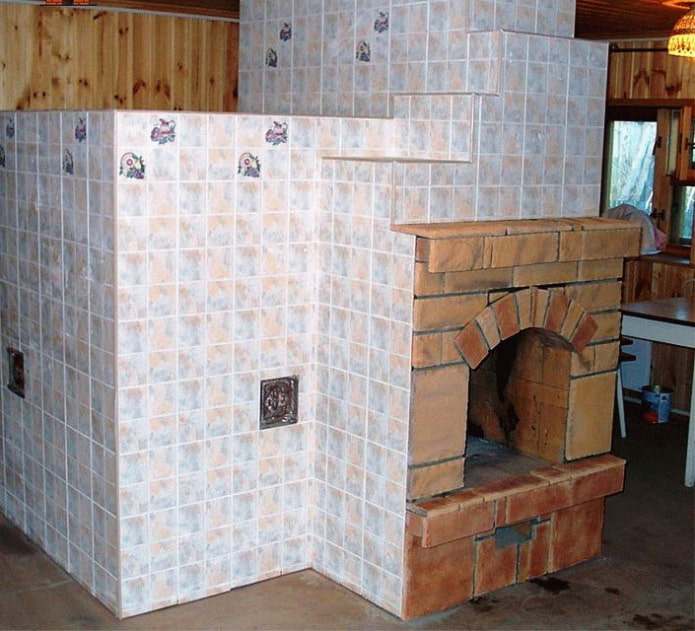
Tile
Another popular option, regularly found in private homes of various sizes. Tiles are considered one of the most versatile materials for facing stoves. They have a whole list of advantages: from high heat resistance and mechanical stability to the ability to accumulate heat and low water absorption. Ceramic blocks of this type are divided into five large groups:
-
tile is a budget-friendly facade, when purchasing which you should focus on the key parameter of heat resistance.
-
porcelain stoneware is a tile filled with all kinds of additives in the form of crushed fine-grained stone chips.
-
fireclay — heat-resistant porous bases with a fragile structure, laid in places with maximum temperature exposure.
-
terracotta is a simple glazed composition with a characteristic reddish-brown tint.
-
clinker is a clay analogue manufactured by pressing followed by engineered thermal firing.
Aesthetic appearance, affordable price, low weight, ability to accumulate and release heat, and exceptional durability—this versatile material has many obvious advantages.
Let's take a closer look at the most popular of these — tile. It is in high demand, but does not have any particularly impressive characteristics. Tile is a strong middle class material used for facing furnace structures. It does not have the necessary heat resistance and mechanical stability, and even the most heat-resistant options are highly dependent on temperature fluctuations.
During use, the panels may crack and lose their original, rather refined and neat appearance. In addition, craftsmen do not recommend purchasing products larger than 20×20 cm. Such models are completely unsuitable for use in cold rooms.
That is why it is not possible to equip a stove in a guest house or summer kitchen using this building material. The only significant advantage of these blocks is their ease of installation. Even a novice, initially unfamiliar with decorating such structures, can handle the installation of tiles.

Facing brick
One of the oldest elements used in various areas of construction. It is practical, attractive, and durable. It allows you to create beautiful facades for solid fuel heating and cooking stoves. It has a whole list of advantages:
-
incredible durability — a foundation laid by a true master craftsman will serve the owner for up to 100 years.
-
outstanding heat resistance — resistance to any sources of fire, reliable protection against changes under thermal influence;
-
100% eco-friendly — completely safe, made from natural components (clay, lime, quartz sand).
-
resistance to temperature fluctuations protects against structural damage to corners resulting from heating and cooling cycles.
-
the widest range — the opportunity to purchase decor that fits into any modern interior.
The only drawback of the material is the high requirements for installation. The maximum permissible deviations in width and length in a brick oven vary between 3 and 4 millimeters, respectively.
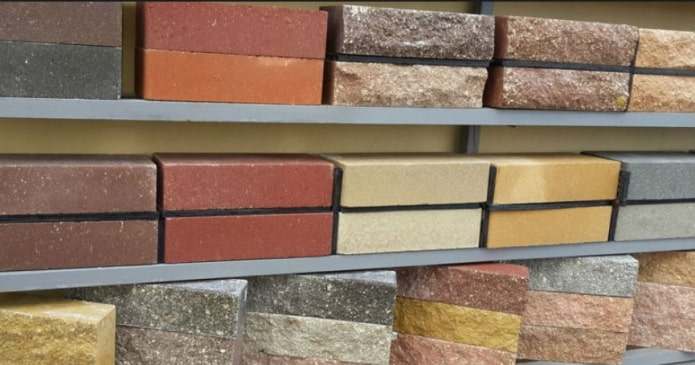
Clinker panels
A general name for building materials manufactured using a special Dutch technology. Finishing blocks are made from shale clay using high-temperature firing. In terms of technical characteristics, they are similar to natural stone. Among the main operational advantages are:
-
fire resistance — no loss of performance properties under the influence of high temperatures.
-
resistance to mechanical damage — reliable protection against scratches, breaks, chips, aggressive chemical environments, and adverse weather conditions.
-
thermal expansion coefficient — standard indicators ranging from 6-9% (the value depends on the number of additives).
-
highest heat capacity — the ability to accumulate thermal energy, with subsequent release into the external space;
-
protection from ultraviolet radiation — resistance to solar radiation and fading.
If all manufacturing technologies are followed, the cost of such material will be an order of magnitude higher than that of ordinary ceramic tiles. In addition, it is laid using special finishing mixtures and solutions.

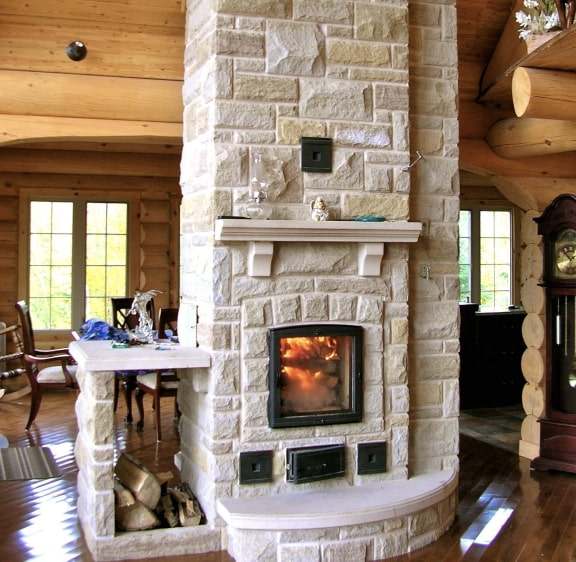
Design made of natural or artificial stone
Fireclay panels, tiles, marble, and other types of stone are a list of materials that have been used to build furnace walls throughout history. Experts paid particular attention to the latter component.
The fact is that natural or artificial stone belongs to a kind of premium segment. Its inclusion in the list of the best solutions for decorative finishing of solid fuel stoves is due to an impressive list of advantages:
-
environmental friendliness and 100% chemical and sanitary safety;
-
optimal weight proportions, convenient installation, fast drying time;
-
incredible resistance to mechanical damage.
-
no side effects during heating and cooling
-
basic care, not requiring particularly harsh cleaning agents and reagents;
-
durability, reliable service to the owner for many decades;
-
large selection of textures, easy to combine with any interior;
-
low water absorption, increased efficiency of the heating system.
The only drawback of natural or artificial stone is, of course, the cost. This solution should only be considered if you have a commensurate budget. Otherwise, you should look at less expensive alternatives — tile, clinker, or fireclay.

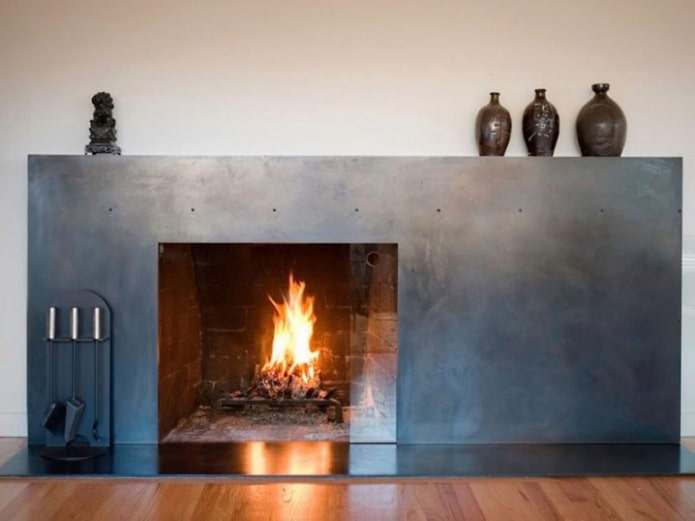
Metal frames and sheets
Metal is a material that can be used both for cladding and for laying stoves. Preference is given to galvanized sheets or their aluminum counterparts. Among the key operational advantages of the material are:
-
low cost.
-
speed with which the surface can be covered;
-
ease of installation;
-
aesthetic appeal (after painting);
-
the possibility of using ribbed sheets;
-
hygienic and easy to maintain.
However, this material has never been considered premium. Experts try to avoid it, citing an impressive list of major disadvantages:
-
excessive heating of the damper walls of the furnace, firebox doors, and ash pit.
-
short-lived paint and varnish compositions that need to be renewed.
-
poor interaction between ordinary paint and aluminum.
-
additional corrosion of the panels laid inside.
Houses with stoves made of metal sheets heat up faster. However, the efficiency of the design is offset by rapid cooling and increased fuel consumption.
Whitewashing
The simplest, fastest, and cheapest tool for covering the brick surface of a stove is, of course, plain whitewash. There are no particular advantages to this solution, as it belongs more to the class of budget alternatives. The only significant advantage of dry whitewash mixture is the ability to apply it yourself. All steps are carried out according to simple instructions that even a beginner can follow. As a result, the homeowner gets:
-
a fairly aesthetic cooking chamber (it looks beautiful after painting);
-
not very durable, but sufficiently sturdy construction that can serve the owner for at least several years.
-
a good set of fire safety standards — the solution fills the gaps, preventing the penetration of carbon monoxide;
-
increased functionality — the component makes the walls thicker, extending the heating and cooling time.
In general, this is an inexpensive but popular option that has its advantages. Many people use it as a temporary solution when they are on a tight budget.

Facade terracotta
The material is made from simple white clay and fired at high temperatures (from 1,000 °C). The rather difficult and lengthy technological process yields the desired result — companies produce smooth, dried, decorated, and polished tiles that can withstand impressive thermal and mechanical loads.
In addition to its interesting structure, the unit is characterized by its unusual appearance. Its shade resembles a mixture of classic brickwork, wild stone, and natural wood. Among the main operational advantages of this solution are:
-
100% environmental cleanliness and safety — can be used in places where there are children or people with diagnosed allergic diseases;
-
basic care and maintenance — a fairly dirty base color applied in a thin layer means that the owner of the stove will not have to spend personal time on thorough cleaning.
-
rich and aesthetic appearance — the material fits into any modern interior, ennobling the solid fuel heating system;
-
a wide range of textures — manufacturers offer huge catalogs of products, including analogues that imitate natural wood or stone.
-
increased efficiency — the material doubles the heat transfer parameters of the heating module, allowing the room to warm up much faster.
Terracotta has virtually no drawbacks, especially if you ignore its porosity. If handled incorrectly, the edges, side installations of the tiles, and the walls of the stove will simply crumble.

Recommendations for stove design
When choosing a stove for their home, people need to consider a whole range of different factors.
- First, you need to understand the features of the design itself. Cooking chambers can be corner, wall-mounted, front-facing, rotating, and built-in.
- Secondly, it is important to understand the features of the selected unit. It may have unique chimney directions, double walls, cool handles, hotplates for cooking, air supply regulators, and large viewing windows.


In order for the module to fit into the current interior, the cottage owner will have to pay close attention to the lists of standard design projects:
-
French Provence style — look for exclusively natural materials, choose plain light and pastel colors.
-
The aesthetics of rustic natural stones — we install the stove in the living room, creating a space for evening gatherings. We refine everything with natural wood and equip a terracotta or clinker cooking chamber.
-
Italian country style — combine sunny, simple, and modest shades with fairly rich decoration. Finish surfaces with Venetian plaster, trying to add as much stone as possible.
There are many options for refining the stove. But a high-quality design project can only be created independently based on the recommendations of experienced craftsmen.


How to tile a stove?
The process of facing the stove with your own hands does not seem difficult, especially if you follow the instructions carefully. The initial task is to determine the required amount of materials to purchase. When it comes to classic tiles and layers of plaster, the craftsman should calculate the area of the surface to be decorated, not forgetting the inter-tile joints (1.5-2 cm is added for them). The next step is to select the right tools:
-
reinforcing mesh;
-
hammer with rubber mallet;
-
chisel and hammer drill;
-
heat-resistant adhesive;
-
tile cutter;
-
metal profiles and spatulas;
-
a bubble or electronic level;
-
a grouting compound;
-
grinding machine;
-
fasteners for attaching the crosses to the guides;
-
primer for adhesion;
-
grout spacers.
The entire range of materials can be purchased in one go at any specialized construction store.
Step-by-step guide
The key to successful work is careful and comprehensive preparation. The surface of the furnace walls is cleaned of dirt, impregnated with a primer, and covered with a pre-selected heat-resistant plaster composition. To remove old finishing elements (if any), hammers, chisels, perforators, and drills are used. Once the initial masonry has completely dried, the craftsman should move on to the facing.
Step 1. Cutting the surface of the tiles for facing the stove and mixing the adhesive
Using a special tile cutter, we divide the panels according to a pre-selected pattern. The specialized device can be replaced with an ordinary angle grinder with the correct disc attachment. The adhesive composition is mixed strictly according to the instructions — the recommendations are printed directly on the bags with the building material.

Step 2. Forming the base plane
We start working from the bottom, laying a straight line on the lower edge of the panels, using a laser or bubble level.
Pay special attention to the degrees and deviations, as the quality of further work directly depends on the installation of the starting row.
Step 3. Facing subsequent rows
We proceed in a similar manner—apply tile adhesive to the panel, and then attach it to the work surface. We install special construction crosses between the lines to maintain uniform joint sizes.
Step 3. Levelling
The plaster layer must also be leveled using only an electronic or bubble level. If the appropriate tools are not available, the craftsman uses an ordinary string plumb line. The panels are pressed deep into place using a mallet — a small hammer with a rubber head. The specialist tiles the area exclusively in this order. First, he forms the planes, and then begins to install the tiles in them.
Step 4. Filling the joints
At this stage, you will need to use a special, pre-selected and purchased refractory grout. The component is laid in the joint area and then leveled with a trowel or a small roller.


There are no difficulties in this type of work. The main task of the craftsman is to maintain the level—that is why he should step away from the stove as often as possible and visually inspect the surface. Any deviations or distortions will cause a potentially beautiful structure to lose all its aesthetic appeal.
Video tutorial for beginners
Before starting the installation of ceramic, terracotta, tile, or granite panels, the owner of a coal- and wood-fired stove should familiarize themselves with all the nuances of the upcoming work process.
Significant versatility of frame elements — the ability to refine the design of any popular type of stove;
Ubiquitous availability — the mixture is available in any specialized shopping center;
Report a broken video! Another popular option, regularly found in private homes of various sizes. Tiles are considered one of the most versatile materials for facing stoves. They have a whole list of advantages: from high heat resistance and mechanical stability to the ability to accumulate heat and low water absorption. Ceramic blocks of this type are divided into five large groups:
Plaster provides the necessary level of fire safety, including by sealing the surface, which reduces the chances of carbon monoxide entering the room.
Affordable cost — savings on the purchase of expensive tiles and heat-resistant panels;
Increased functionality — the mortar increases the thickness of the tiles and the surface of the brick walls of the device, improving its efficiency. Tiles


