
When space in the bathroom or kitchen is limited, it seems that every centimeter counts. The idea of placing a sink directly above the washing machine may seem like a bold decision. But in practice, it turns out to be a very sensible and functional approach.
This layout allows you to combine two important areas into one, freeing up space for other needs. You get a full-fledged sink without sacrificing the convenience of having a washing machine right at hand. This is especially relevant for small apartments, bathrooms in “Khrushchev-era” buildings, or compact country houses.
In this article, we will explain in simple terms the main advantages of this solution, what to look for when planning, and how to avoid potential difficulties. You will see that it is not only practical but can also be a stylish element of your interior.
Pros and cons
Before deciding to install a sink, you should carefully consider this option, weighing all the pros and cons—you may have to abandon it at the planning stage.
First, let's look at the advantages:
- Rational use of space in a small bathroom. A washing machine installed under the sink allows you to place it in the bathroom itself, rather than moving it to another room, the hallway, or the kitchen. At the same time, shelves or a wall cabinet with a mirror can be placed above the faucet, making the most ergonomic use of the space.
- Original bathroom design. A well-installed sink will attract attention and surprise guests: the wide range of sanitary ware available on the market today allows you to choose any suitable shape that will look stylish and harmonious. Such an arrangement will speak to your taste and care for your surroundings.
- A sink above the washing machine, installed in the bathroom, has a huge advantage over the same design in the kitchen, since washing your face takes less time than washing dishes. In addition, the device located in the bathroom looks more appropriate.
See examples of small bathroom designs in Khrushchev-era apartments.
There are also many disadvantages to this solution:
- This type of design requires a special siphon and drain. When shopping in a store, you may find that it is impossible to buy everything in one place, so experts recommend looking for a fully equipped sink.
- In case of breakage, spare parts will be difficult to find.
- Inability to get close to the sink. If you are used to having empty space under the sink, it will be uncomfortable at first. It will be easier to get used to for those who have previously installed a bowl on a cabinet with hinged doors or pull-out drawers.
- A horizontal drain mechanism is prone to frequent clogging, which will have to be cleaned. The fact is that the drain hole is located at the back, and the bowl has a flat and shallow shape, so water always remains on its surface. You will have to remove the remaining moisture yourself with a sponge, otherwise the sink will quickly turn yellow and become stained.
- An electrical appliance installed near water sources is always a risk. The slightest leak due to improper installation of the sink or washing machine can lead to a short circuit, appliance failure, electric shock, or damage to the wiring.
How to choose a sink?
Do not install a regular washbasin above the machine: it is impractical and dangerous. Large companies that manufacture household appliances and sanitary ware produce sets that harmonize perfectly with each other, are easy to install, and do not waste the user's time searching for all the necessary parts. If you cannot find such a set, you will have to put together a “pair” manually.
Sinks designed to be installed above a washing machine are called water lilies because their shape resembles flat, rounded leaves.
While the drain hole in a standard bowl is located strictly at the bottom and in the center, in a “water lily” it is located near the back. This protects the washing machine from moisture even in the event of an unexpected pipe accident. The tap hole can be located in the center or in the corner of the sink, or it may not be there at all.
Unfortunately, shallow bowls create a lot of splashes, so when buying a design, it is important to find the most comfortable height.
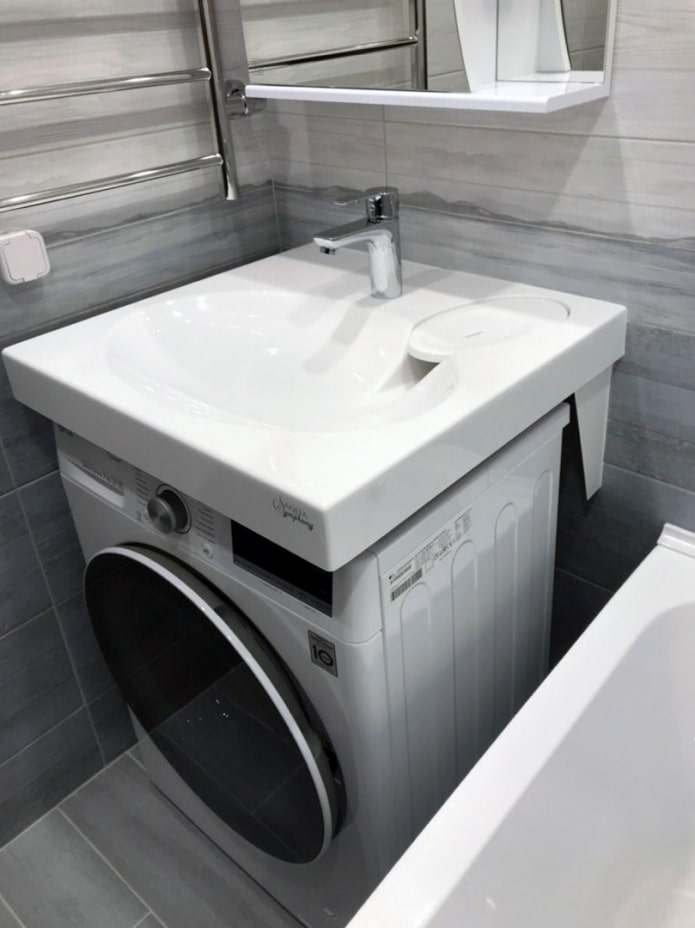

Ideally, the sink should be slightly larger than the washing machine so that it slightly covers it with a “visor.” Drain pipes should be located behind the electrical appliance, not on the body—in case of damage to the hoses and leakage, this placement will protect the equipment from water.
- Experts recommend choosing a product made of polymer concrete (artificial stone), which boasts wear resistance and durability.
- Cast marble is considered the best option, as it is comparable to natural marble in terms of aesthetic characteristics and surpasses it in terms of performance.
- A more budget-friendly solution is a sanitary ware sink; they are also resistant to mechanical stress, but weigh much more.
- If you want an inexpensive and lightweight sink, choose a porcelain product.
If you study the market more carefully, it is not difficult to find a washbasin from a reliable manufacturer to suit every taste and budget.

The photo shows a curved sink with a drain near the far wall. The tap hole is located at the top center, and to the left of it is a built-in soap dish.
What machines are suitable?
Not all devices are suitable for installing a washing machine under the sink: the most desirable option is to use a device that comes with a bowl. If you choose the equipment separately, you need to focus on the following parameters:
- The machine should have a front-loading door (i.e., a door that opens at the front). When installing, it is important to consider how convenient it will be to use the bathroom when ventilating the device after each wash.
- The recommended height of the appliance is 60 cm. When calculating the total height of the structure, add the dimensions of the sink and the distance between it and the equipment. The less free space between the two items, the more attractive and harmonious the structure will look.
- The total depth of the washing machine should not exceed 47 cm. The capacity of such products often does not exceed 3.5 kg, so a compact model may not be suitable for large families: you will have to wash quite often. It is also worth considering the gap between the wall and the machine for the placement of engineering communications. Sometimes, in order to fit the pipes, a small recess is made in the wall itself.
A good example of a bathroom design in a P-44 house.
It is noteworthy that small washing machines are more expensive than standard-sized models.

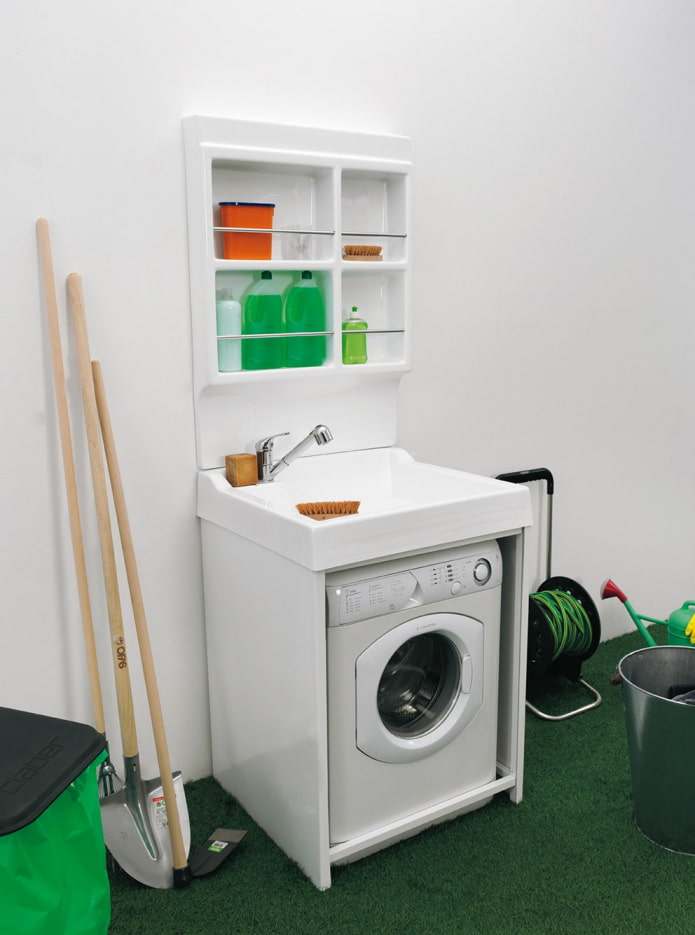

The photo shows the approximate parameters that should be used as a guide when choosing a sink and washing machine for a compact bathroom.
Installing a sink above the washing machine is a smart way to save space in a small bathroom or combined bathroom. Instead of leaving the space above the washing machine empty, you can use it wisely: a wall-mounted sink or a small washbasin will fit perfectly on top without interfering with the opening of the hatch. The main thing is to choose the right height, ensure convenient access to the plumbing, and take into account the weight of the structure. This solution is suitable for Khrushchev-era apartments, cottages, and small spaces where every centimeter counts.
Step-by-step installation instructions
To properly install the bowl above the washing machine, it is important to follow these steps:
- Check that the kit is complete according to the list in the instructions. We recommend doing this before purchasing. If any parts are missing, the product must be replaced.
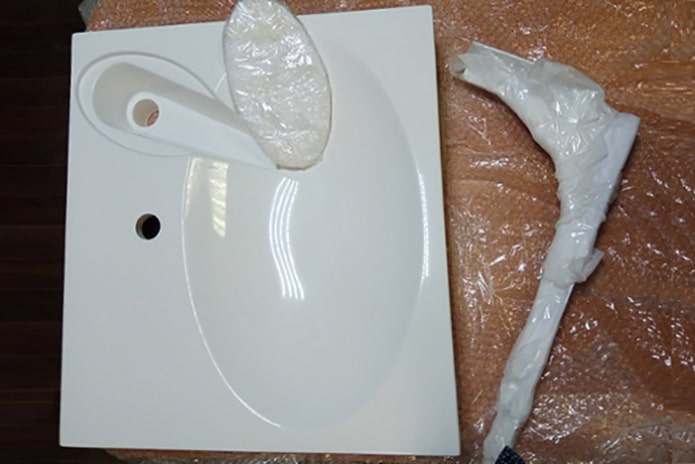
- We assemble the structure, starting with the installation of the sink. To do this, we connect the faucet to the mixer hole and then connect the cold and hot water supply pipes to it.

- After installing the faucet, mark the wall according to the preliminary measurements. Use a drill to make holes for the dowels and secure the brackets with screws. Apply sealant to the area of the sink that touches the back wall. Connect the faucet to the water pipe.
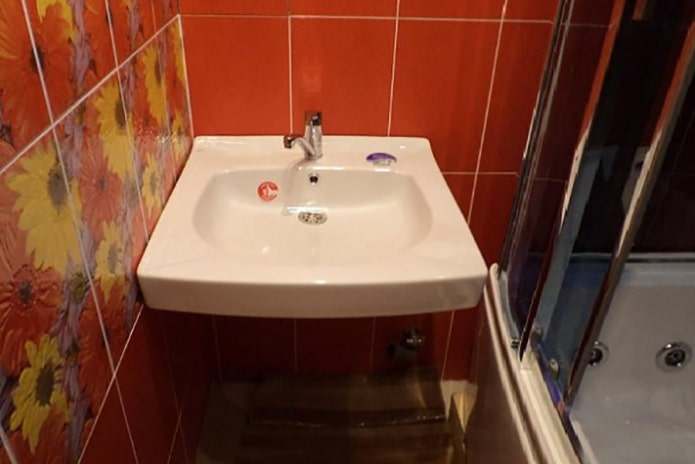
- Assemble the flat siphon and connect it to the drain, placing the seals underneath.

- Secure the pipe, connecting one end to the outlet pipe and the other to the sewer outlet. Apply sealant to the thread and all gaskets.
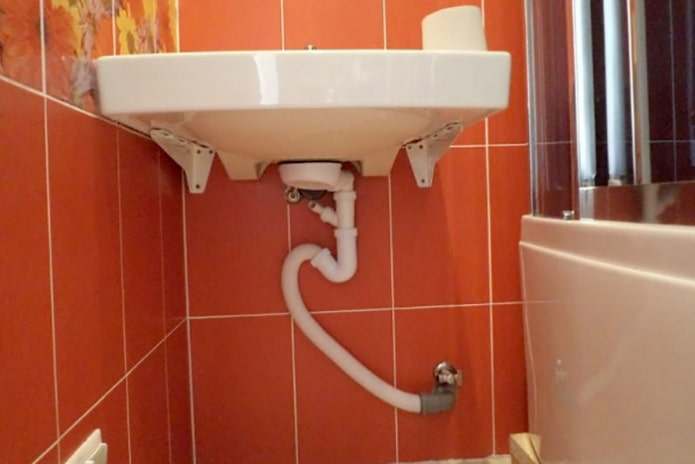
- We attach a flexible hose to the washing machine in such a way as to form a loop, which will act as a water seal.

- Connect the hose to the drain next to the connected sink pipe. If desired, the drain hose can be led into the bathtub.

- Carefully inspect the connection points of all pipes and joints. Check the sink for leaks by pouring water into it. If the installation is successful, install the washing machine and run a test wash.
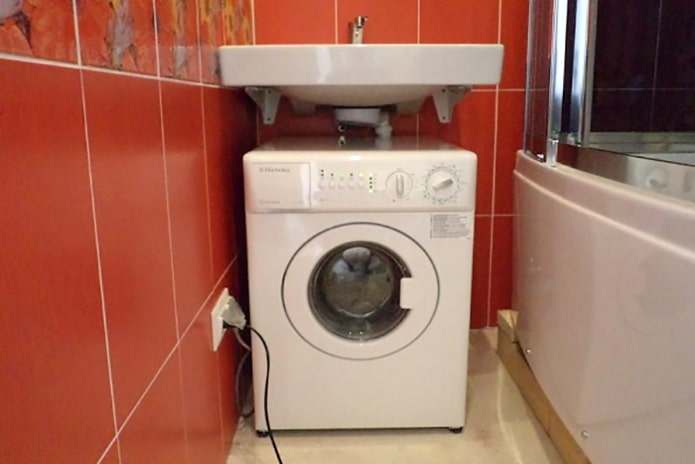
Installing the sink will be easier if you use a swivel faucet that will supply water to both the bathroom and the sink. In this case, you won't need to find space for additional plumbing behind the machine. At the same time, it is important that water from the faucet does not get on the electrical appliance when turning.
This video provides a very detailed explanation of how to assemble a mixer, sink, and washing machine by professionals:
Report a broken video!
So, installing a sink above a washing machine is a perfectly feasible idea that can be an excellent solution for small bathrooms or washrooms. It allows you to effectively use vertical space, freeing up floor space and combining two important areas into one compact one.
The main thing is to approach planning wisely. Carefully consider the choice of sink and washing machine models, their sizes, and utilities. Don't forget about reliable fastening and splash protection. These simple steps will help you avoid most potential problems.
As a result, you will not only get a practical and ergonomic area for washing and washing up, but also a modern, neat look for the whole room. This solution makes daily chores more convenient and the room visually more spacious and organized.


