
Selecting the appropriate materials for interior walls is essential for both practicality and style when building or remodeling a home. The materials you choose have an impact on longevity, upkeep, and even the environment in addition to how your living area looks and feels. Let’s examine some of the greatest choices for building interior walls in homes or apartments.
Gypsum board, sometimes referred to as plasterboard or drywall, is a common material option for interior walls. It is preferred due to its adaptability, affordability, and simplicity of installation. A core of gypsum is encased in layers of paper to form drywall. It offers a level, smooth surface that can be painted or embellished in different ways. In addition to being fire resistant and aiding in sound insulation, drywall is a good choice for living rooms, bedrooms, and other spaces where noise reduction and privacy are crucial.
If you’re searching for something greener, think about utilizing organic materials like wood. Any room can be made to feel cozy and welcoming with the addition of wood paneling or planks. Wood is renowned for its innate beauty and can be painted or stained to fit your preferred style of interior decor. It also has good insulation qualities, which aid in controlling the humidity and temperature inside. It’s crucial to remember, though, that wood might need more upkeep than other materials in order to avoid warping or moisture damage.
Ceramic tiles are yet another robust and adaptable choice. Ceramic tiles are frequently used in kitchens and bathrooms, but they can also be a chic option for interior walls in other rooms of the house. They are simple to clean and maintain because they are impervious to stains, moisture, and scratches. Numerous colors, patterns, and textures are available for ceramic tiles, opening up countless design options. They are perfect for places with a lot of traffic or where cleanliness is important.
Use exposed brick or concrete for a modern, industrial aesthetic. These materials offer superior thermal mass qualities and give your house a sense of character and history. A minimalist look can be achieved with concrete, while exposed brick walls can add a rustic charm. Both materials are low-maintenance and long-lasting, but they might need special treatments to stop moisture seeping in and discoloring them.
The ideal material for interior walls ultimately comes down to personal taste, financial constraints, and needs. Any option will improve your living space in a different way, whether you choose exposed brick or concrete, ceramic tiles for their durability, wood for their natural beauty, or drywall for its ease of use and affordability. To help you weigh the benefits and drawbacks of each material and make an informed choice that complements your house and lifestyle, think about speaking with a qualified contractor or interior designer.
- The importance of making the right choice
- Requirements
- What is suitable for construction?
- Brick
- Drywall
- Panels
- Expanded clay
- Gas and foam blocks
- Best material to build a partition
- Average price in Russia
- Video on the topic
- Repairing walls in an apartment / What is the best material to use to build partitions in an apartment?
- Interior partitions made of plasterboard. Pros and cons | Building a house in Germany.
- What to build a partition in an apartment from?
- What is the best material to build walls from. Types of materials for erecting walls.
The importance of making the right choice
When choosing a consumable partition base, one should always consider its intended use, such as dividing a workspace or sleeping area, a bathroom, studio, or kitchen.
This is because, while some materials may be appropriate for a given zone, others are not advised at all.
Moisture-repellent materials, for instance, are required in the kitchen or bathroom to distinguish an apartment from its neighbors. The apartment should be densely populated, well-insulated from noise, etc.
Simultaneously, the type of partition wall specified in the construction plan—solid, with a doorway, sliding, transparent—should inform the selection and cost of consumables. However, each one should blend in nicely with the room that is being designed.

Here, a crucial detail is particularly related to sensible planning and precise project design that maximizes the amount of useable space.
The drawing simultaneously permits the use of a partition wall for shelves, hanging cabinets, and the determination of soundproofing properties.
You can work with the architectural bureau in your area (city) or the wall structure installation company’s specialists to finish a drawing (layout of partition walls).
Working under a contract with businesses is typically thought to be more advantageous since they provide clients with a free planning project, provided that the construction team works at the designated location.
When preparing documents for redevelopment, companies or bureaus perform calculations and precise measurements, particularly when this involves completed housing that is already occupied.
They also resolve a host of other problems, which save the customer a great deal of time when implemented.
If the homeowner chooses to handle the renovation on his own, he must buy the materials himself, obtain the BTI’s approval for construction or renovation, hire experts to create an act for completing the work at his own expense, and make an effort to create the drawing accurately.
When building partitions with your own hands, the resulting structures must meet the following requirements:
- be strong (you need to know the rules of installation and anchoring);
- made from high-quality materials from trusted manufacturers;
- carry out its main functional (zoning) function;
- ensure the creation of privacy and comfort;
- protect from noise in other parts of the room;
- have an aesthetic appearance and suit the design of the apartment (house);
- maintain quadrature of space.
Regardless of the material chosen, all partition types when selecting a structural insulating wall must adhere to the GOSTs and SNiPs listed in a comprehensive reference book of standards. This book refers to all regulations whose use is deemed appropriate and correct in construction, even at the planning stage.
The intended style, whether it be loft, minimalism, art deco, hi-tech, classic, etc., is always the main focus of the room’s design. Other factors to consider are the consumables’ affordability, longevity, and environmental friendliness, as well as their ease of installation, operation, and maintenance.
Brick, plasterboard, monolith, gas and foam blocks, SIP and sandwich panels, expanded clay, and plaster are the best materials for partition installation.
In the realm of home construction and renovation, choosing the right material for interior walls is crucial for both durability and aesthetics. This article explores various options like drywall, plaster, and wood, weighing their pros and cons to help homeowners make informed decisions. Factors such as cost, ease of installation, sound insulation, and environmental impact will be discussed, offering practical advice on selecting the best material based on individual needs and project goals. Whether it"s enhancing soundproofing in a busy household or achieving a rustic charm with wooden walls, understanding these materials" characteristics ensures that your interior walls not only stand the test of time but also reflect your personal style and functional preferences.
Requirements

The following general requirements for building materials apply regardless of whether the partition wall installation—which is both structural and thermal insulation—will take place in a home or an apartment:
- Compliance with the declared characteristics and dimensions specified by the manufacturer in the instructions, quality certificate and other related documents.
- A proven manufacturer whose activities are regulated by Russian quality standards and requirements for the manufacture, storage and transportation of industrial products.
- Cost-effective and light weight, which does not place additional load on the foundation.
- Stability, density and strength of the installed structure, with the simultaneous use of a metal profile (aluminum or any high-quality steel alloys).
- Adhesion with any substances and fasteners during installation.
- Moisture resistance (especially for bathrooms, washrooms and kitchens).
- Hygiene and environmental friendliness (the use of products made from natural materials must guarantee the safety of human health, be easy to clean, and not be prone to the formation of mold and mildew – vapor permeability and ventilation must be sufficient).
- Fire resistance (should not spontaneously ignite from electrical wires located in the walls, as well as from household appliances used).
- Be no more than 6 m (corresponding to one floor, or give or take this indicator), and carry only its own weight.
- Have sufficient illumination and ventilation of the space without violating its spatial integrity.
Regardless of the material chosen, the partitions themselves must also be marketable, have appropriate thermal properties (i.e., not be cold), and be fit for their intended use.
It is possible to add insulation or additional soundproofing to the structural thermal insulation wall.
Simultaneously, they ensure that a ventilation system is installed in the kitchen, bathrooms, and other areas, and that it is installed on two layers of waterproofing that are laid on the floor.
What is suitable for construction?
The most widely used materials for dividing spaces in homes and apartments fall into distinct categories and have unique installation requirements, costs, and uses.
The size of the designed structural system and the difficulty of its installation, appropriate for a particular kind of room, determine how reliable their use is.
Brick
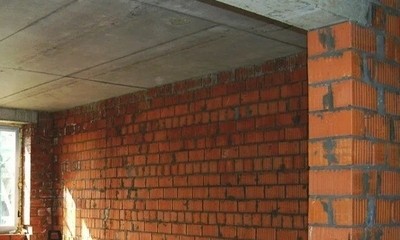
Bricks of the ceramic, silicate, and clinker types are used to create partitions.
Better suited for individual residences. It may be either full or empty. Products with hollow interiors can drastically lower the structure’s weight.
Advantages:
- strength and durability:
- suitable for any interior;
- versatility of use;
- can be used as decor, without special finishing;
- moisture resistance;
- creation of any wall thickness, with a standard norm of 530 (mm).
Minuses:
- put a load on the foundation;
- require precision installation with dressing and adherence to precise technology;
- painstaking and time-consuming installation;
- high price for the material and work with it.
This section contains more details about the subject matter.
Drywall
It is installed on a prefabricated structure composed of a metal profile, is among the lightest materials, and does not put any load on the foundation.
Advantages:
- ease of operation during installation;
- simple processing (grinding);
- adhesion to any materials;
- the possibility of creating niches, shelves and any design ideas;
- quick dismantling;
- low cost;
- non -combustibility;
- obtaining a smooth, flat surface, ready for decoration;
- moisture -resistant panels are found;
- immunity to mechanical strokes.
Minuses:
- Low sound insulation.
Panels
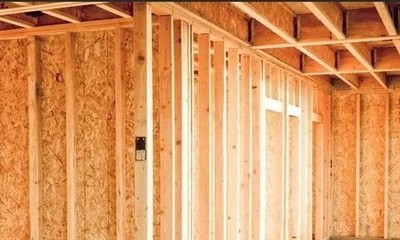
Sandwich panels, or SIP panels, are most frequently used as partitions.
The panel’s wall pie is made up of multiple layers that are easily joined to form a single structure. The layers vary in size, thickness, and external coating (wood or metal).
Advantages:
- strength;
- durability;
- quick installation, thanks to the locks of spike-az on the side surfaces;
- water resistance;
- do not require waterproofing and additional insulation;
- do not emit toxic substances;
- resistant to fire for 2-3 hours;
- They have good sound insulation
- are found in the form of ready-made frames from manufacturers, which are instantly assembled and strengthened.
Minuses:
- require dry installation and storage under the same conditions;
- Careful transportation is required so that no dents form on the surface.
See this page for additional details on panel wall materials.
Expanded clay
Expanded clay is a contemporary material that works by using strong cement grades and granulated baked clay at the same time to create a stable structure.
Accessible in a variety of sized and shaped blocks.
Advantages:
- durable, slightly smaller in performance than brick;
- has durability;
- simple installation, processing and finishing;
- easy to work with when arranging communications and fastenings;
- has good sound insulation performance;
- accumulates heat well;
- is resistant to moisture.
Minuses:
- more suitable for homes.
This section contains further details on this.
Gas and foam blocks
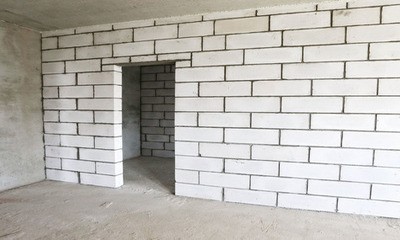
Aerated blocks are large, light, and interact well with mortar made of sand and cement. They also come in a variety of shapes.
Advantages:
- easily installed;
- suitable for creating thin and thick walls;
- are strong and reliable;
- belong to a non -combustible group;
- low cost.
Minuses:
- low vapor permeability, wall pie requires ventilation;
- high moisture -absorbing ability, careful waterproofing is needed;
- require an additional layer of thermal insulation;
- additional decoration and plastering are needed.
Other materials used include wood, glass and monolithic ceilings, pasteen blocks, etc. a range of materials, but the ones on the list are the most widely used and frequently encountered in construction.
More details about gas blocks and foam blocks can be found here and here, respectively.
Best material to build a partition
Naturally, every homeowner or apartment owner has personal preferences, so they can select the partition’s material based on availability and taste.
Plasterboard, SIP, and sandwich panels are the best materials for interior walls because they are quick to install, affordable, sound-absorbing, thick, functional, and easily disassembled (if needed).
The Russian Federation’s top manufacturers of the aforementioned materials at reasonable prices are regarded as follows:
- Drywall – “Knauf gypsum” (Dzerzhinsk, Chelyabinsk, Kolpino), “Volma”, “Gipsopolymer”, “Gifas”. The price is 150 (9.5 x 1200 x 2500 mm) – 412 (2500 x 1200 x 12.5 mm) rubles.
- SIP panels – “Hotwell”, “Russip”, “Garus”, “VILLOZI HOUSE”, “Ekoeurodom”. Cost on the construction market – from 2,520 rubles./m2 (2500 x 1250 x 120 mm)
- Sandwich – “Stroypanel”, “Teplant”, “Stimet”, “Tehnostil”, “TSP-panel”. The price is from 885 to 5,574 rubles./m2, depending on the thickness (30 mm – minimum) and the presence of galvanized coating. With wood covering it can cost much less.

Moreover, monolithic walls are an option. However, they work better in private homes and are especially advised for multi-story buildings (beginning at two stories).
In this case, reinforced elements (rods and mesh) are used to pour concrete, sand, gravel, and strong grades of cement into the structure using formwork.
You can create a variety of interior wall types, such as frame, masonry, sliding, and pocketed walls, using any type of partition material.
Average price in Russia
In Russia, construction companies typically list the cost of materials for dividing walls on their official websites.
A table can be used to display the average cost of services:
The creation of glass partitions is the most costly, starting at 800 rubles per square meter, as all work involving this material is thought to be more complex.
Due to the material’s fragility, attention, coordination, and clarity are all necessary.
Buying supplies on your own is not a good idea, especially if professional assistance is expected. Businesses typically work directly with manufacturers, and buying building supplies and fasteners in bulk for them is far less expensive than doing it separately at retail.
For your home’s interior walls to have both visual appeal and practicality, the right material selection is essential. One of the most often used options is drywall, sometimes referred to as gypsum board or plasterboard. It’s inexpensive, simple to install, and offers a smooth surface for wallpapering or painting. Due to its versatility and suitability for a wide range of indoor environments, drywall is a preferred choice among many homeowners.
If you want something more robust and soundproof, think about using brick or concrete. These materials work really well to create a sturdy, sound-absorbing partition between rooms. Compared to drywall, they require more work and are heavier to install, but they are stronger and can improve the home’s insulation and thermal regulation.
Materials like bamboo or reclaimed wood can be great options if you place a high priority on environmental sustainability. Bamboo is a green material that eco-aware homeowners can use because it grows quickly and is renewable. In addition to adding a touch of rustic charm, reclaimed wood encourages recycling and lowers the need for new wood resources.
Use fiberglass reinforced panels (FRP) or metal panels for a low-maintenance, modern aesthetic. These materials are perfect for kitchens, bathrooms, or any other area that gets a lot of moisture or spills because they are long-lasting, mold- and moisture-resistant, and simple to clean.
The ideal material for your interior walls will ultimately depend on your tastes in terms of design, finances, and particular requirements. There is a material that meets your needs, regardless of how important affordability, sustainability, durability, or aesthetic appeal are to you. You can make sure that your decision meets your needs in terms of functionality and aesthetic appeal for many years to come by carefully weighing these factors.


