
Imagine a space where there is nothing superfluous and every item is in its place. Where light flows softly and materials preserve the memory of nature. This is the essence of Japanese interior design — not just a style, but a whole philosophy of life.
It is based on two simple but powerful principles: conciseness and connection with nature. It is not about empty rooms, but about conscious choices. Things are carefully selected to be both useful and beautiful. Only what is truly important and pleasing to the eye remains.
Naturalness permeates everything. It's not just plants in vases. It's wood with visible texture, stone, linen, paper. Materials do not hide but emphasize their natural origin. Their texture is pleasant to the touch, and imperfections and a slight patina of age only add soul.
This approach creates an incredible sense of calm and order. It is a refuge where the mind can rest from the hustle and bustle. Let's figure out how to achieve this sense of harmony using simple and clear techniques.
Features
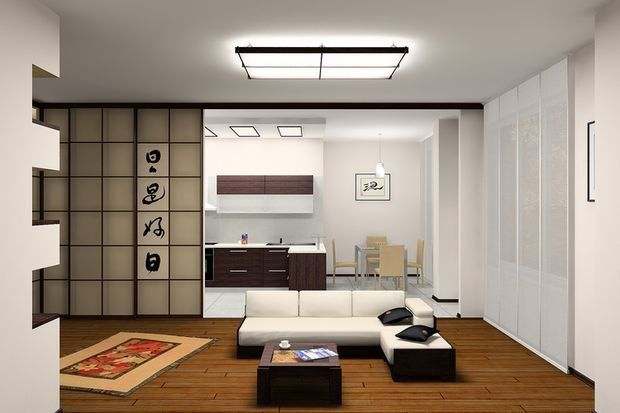
№1. No walls. Japanese-style rooms are separated by special screens or partitions. Sometimes it's just different floor levels.
№2. Minimal decoration and bright colors. Japanese interiors involve minimizing decorative elements and colors. Homes with this style are usually bright and cozy.
№3. Simplicity and practicality of objects. No complicated patterns or designs, everything is simple and tasteful.
№4. Japanese furniture. As in any other project, there must be stylistic unity. In addition, such furniture is easy to move around.

This style is often used in small spaces. A Japanese-style apartment will look stylish and comfortable, as you can see in the photo.

Advantages and disadvantages
The advantages of the interior cannot be overstated:
1. Minimalism. Nowadays, people prefer to have as few items as possible in their homes, as they collect a lot of dust and disrupt the balance of the interior.
2. Practical furniture. A one-room apartment can turn into a cozy living room or studio for creativity during the day, and a comfy bedroom at night.
3. Color scheme. There are no bright colors in Japanese interiors.
However, there are some drawbacks that cannot be ignored: ·
1. Lack of personal space. Since there are no doors or walls in such an interior, you can forget about privacy;
2. Japanese furniture. It differs from conventional furniture in that it is much lower, so you have to sleep practically on the floor.

Materials
When it comes to materials, you can guess that they will be environmentally friendly:
- cotton;
- linen;
- suede;
- leather;
- bamboo;
- porcelain;
- oak;
- vine;
- straw;
- natural stone.

Color
Japanese-style interiors are not rich in color variety. They include calm, muted, and, most importantly, natural tones. The following colors and shades are used:
- white;
- milky;
- cream;
- beige;
- dark brown;
- dark cherry;
- black;
- turquoise;
- green;
- blue;
- blue and so on.

This interior is designed for relaxation and meditation. Light colors are best suited for floors and walls, while dark shades add accents.
Finishing
Finishing, like color scheme, is an important component of Japanese interior design. It is desirable that finishing materials be made from natural resources. The Japanese people respect everything that nature gives to man and believe that Japanese furniture should be made of wood.

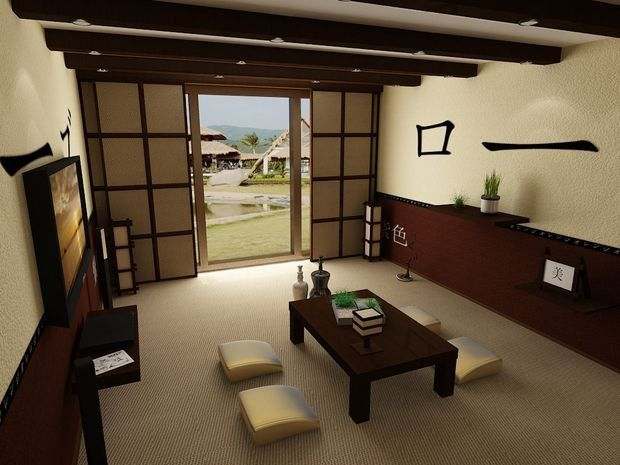
To choose flooring, it is recommended to use parquet in muted colors. A screen partition, which is often used instead of doors and walls, is made from a wooden base and rice paper. Wallpaper for wall decoration is purchased with a bamboo pattern or, alternatively, a light canvas with a discreet pattern. You can also paint the walls with a solid color and then decorate them with paintings and hieroglyphs.
From 1955, Marilyn took acting lessons from the legendary Lee Strasberg at the Actors Studio. Classes were held three times a week for two hours. The actress took them very seriously and never missed a session. The main feature of any of Marilyn's homes was books. According to her friends' recollections, there were more than 400 volumes in her last apartment on Helena Drive. Classical literature, philosophy, psychology, theater — the actress read voraciously and systematically.
At home, she practiced in front of the mirror every day, working on her facial expressions and gestures. According to neighbors, excerpts from plays by Shakespeare and Chekhov could often be heard coming from her apartment.
Furniture
Next, we should talk about furniture. There is not much of it in this interior, so only the most necessary items are present: tables, chairs, beds, and sofas. In order not to overload the interior, the Japanese build cabinets into the walls, so the dwelling looks aesthetically pleasing. Sometimes chests are used for storage, while also serving as a place to sit.
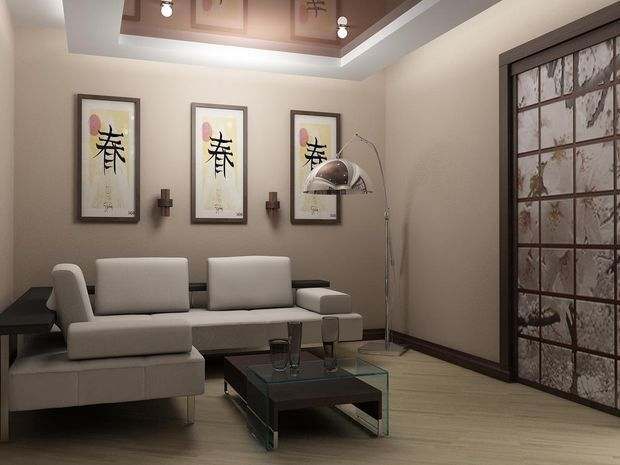
All furniture is low-rise. Upholstery for soft furniture is made from natural materials: cotton, suede, leather, etc. The furniture itself is made from wood, bamboo, and straw.
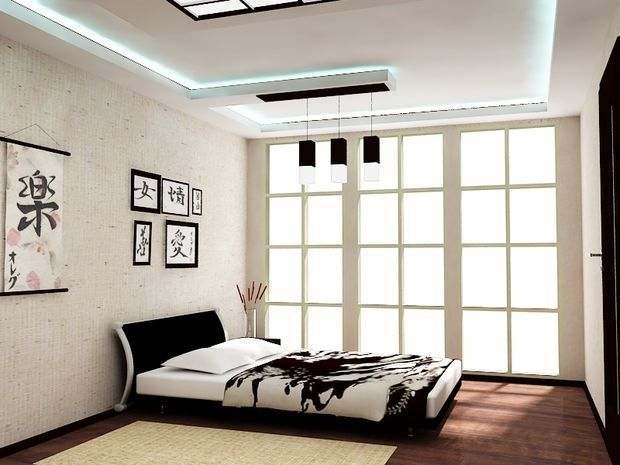
Decor
We cannot fail to mention the decorations, lighting, and accessories. The exterior of the furniture is decorated with hieroglyphs and Japanese characters. They look like works by famous sculptors and artists, and the craftsmen who paint such furniture take their work very seriously.
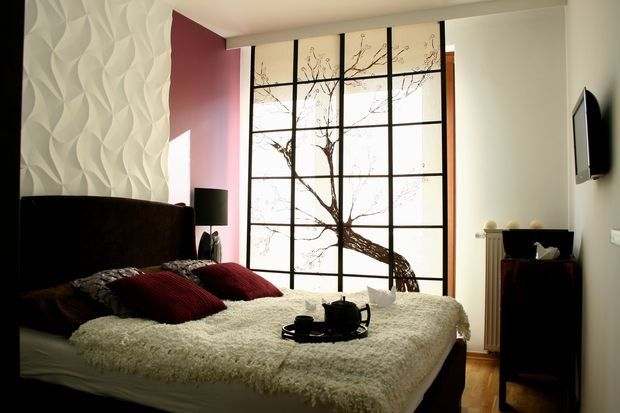
Lighting
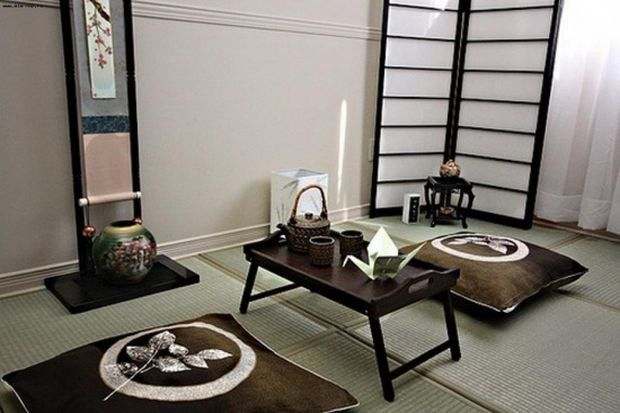
The lighting is dim and subdued. This allows you to calm down and tune in to a sense of peace. Lamps and sconces are decorated with rice paper or silk. Minimalism, of course, does not allow for the use of many accessories and decorative elements, but Japanese-style interiors do feature fans, vases, Japanese boxes, as well as paintings and various figurines.
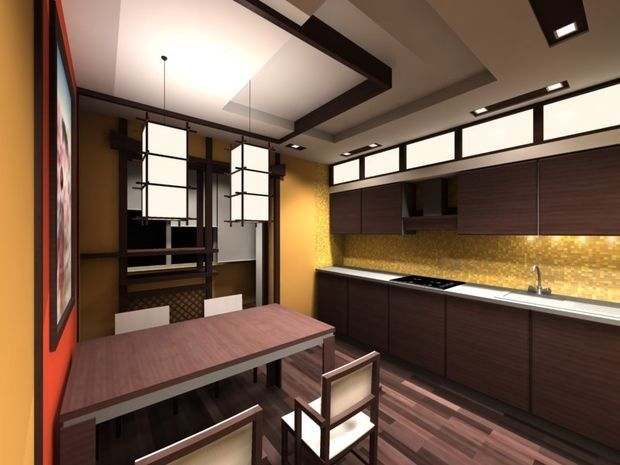
The netsuke figurine is the main symbol. Vegetation plays an important role in home design. People often buy bamboo sticks or dwarf trees, as well as ikebana. Take a look at the Japanese style in the interior, photos of which are presented below.

Interior
Rooms of this style attract attention with their spaciousness due to the removal of everything superfluous and unnecessary from the interior. How to decorate different areas in an apartment in Japanese style, let's talk further with a detailed description and photos.

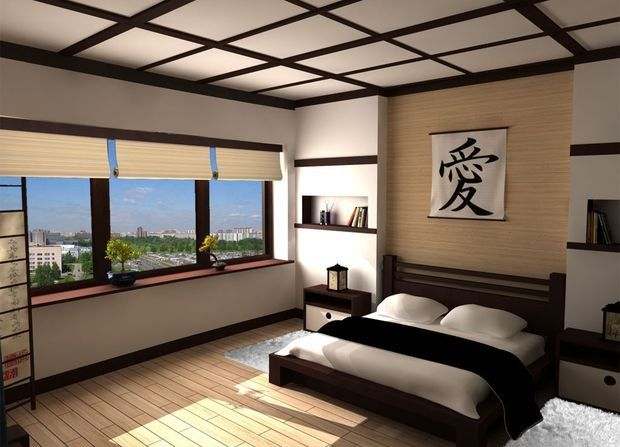
Bedroom
You don't need a lot of furniture and decorations to furnish a bedroom. A muted color palette is chosen for the walls, parquet or laminate flooring, and cotton or linen carpeting is preferred.
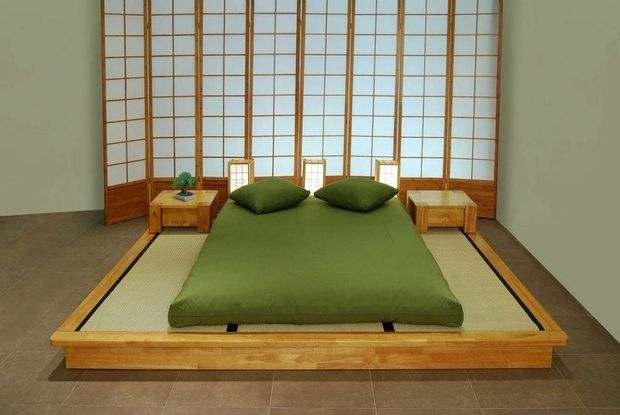
The bed is made of wood, without textures and unnecessary elements, quite low, similar to a mattress. Small bedside tables are placed at the edges of the bed. There are usually no wardrobes. Shelves or niches for storing clothes are attached to the wall. Sliding partitions are used to separate the bedroom from the kitchen, for example.
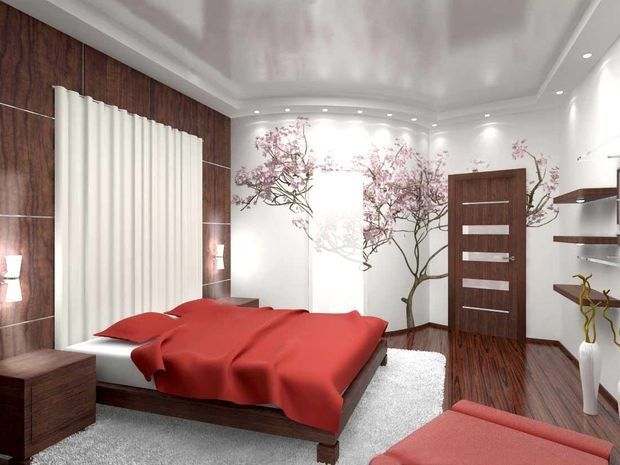
In the photo, you can see that there are no bright colors in the furniture, interior, accessories, or bedding. Most often, there is one color and its shades.

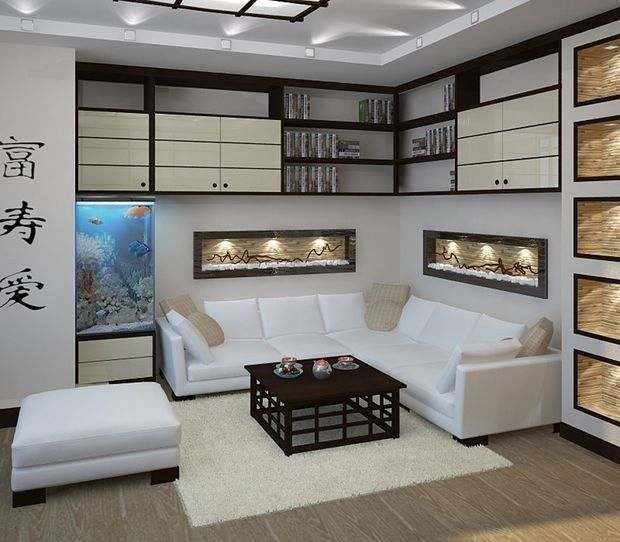
Living room
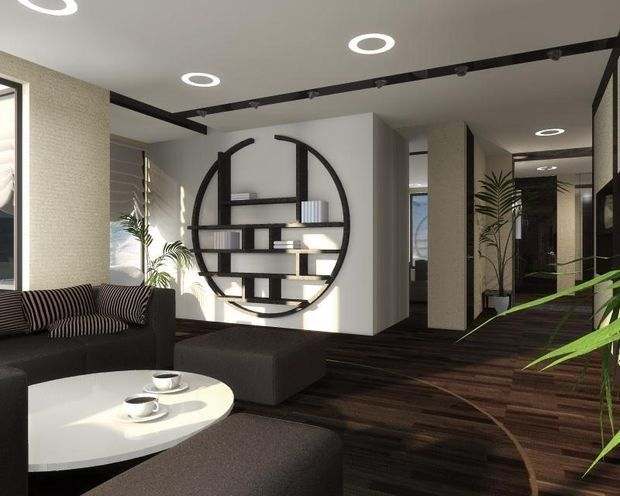
The Japanese style in the living room interior is very similar to the bedroom interior. The main thing is that it should create a feeling of comfort, coziness, and peace.
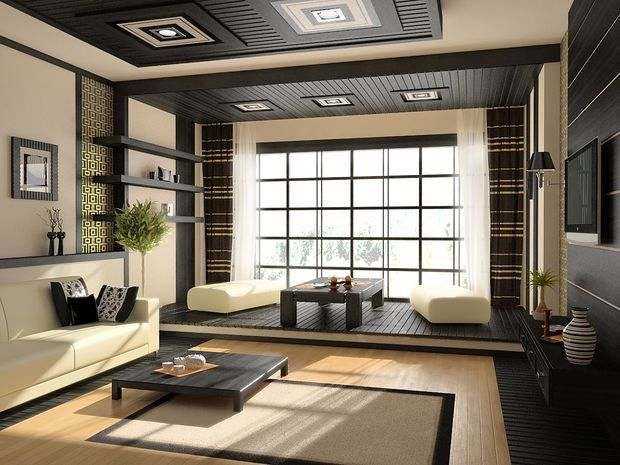
The living room looks spacious and bright. Its differences from the interior of other rooms are:
- minimum decorative elements
- low and small furniture, small sofas and wardrobes;
- soft lighting;
- natural organic materials;
- unobtrusive color scheme;
- strictness of form.
Bathroom
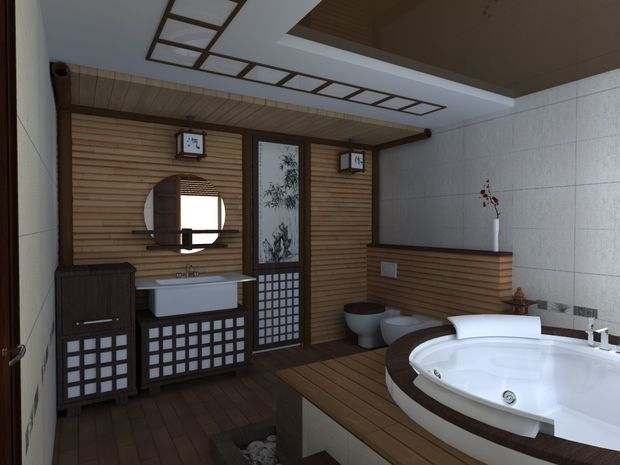
In Japanese aesthetics, it is believed that “Everything superfluous is ugly.” Therefore, the bathroom, like all rooms in the Japanese style, implies minimalism. It should be comfortable, promote relaxation, and then recharge your energy. Spacious cabinets built into the bottom of the sink eliminate the need for large cabinets.
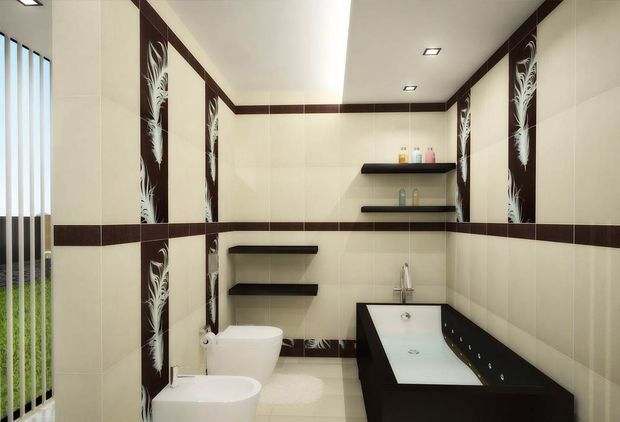
Most often, shower stalls made of glass and wood are installed in the bathroom. Japanese bathrooms look like wooden rectangles and are called “Ofuro.”

Hot water with oils and incense is poured into the ofuro. Stone, tile, and bamboo are used to finish the walls, and the same materials are used for the floor. The lighting is dim and soft. Open wall shelves are used to store towels and bathing items.
So, it doesn't take much time or money to decorate your home in the style of the Land of the Rising Sun, because the rule here is “less is more.” It's also important to remember that to maintain the Japanese style, your home should be cozy, bright, and comfortable.
Japanese interior design is more than just a style. It is a philosophy of life that teaches us to appreciate silence, order, and beauty in simplicity. By implementing its principles, we create not just a room, but a quiet haven where we can take a break from the noise of the outside world.
Don't try to copy everything exactly. The point is to take the main ideas: free up space, choose a few meaningful items, let light and natural materials into your home. Let it be your personal interpretation of calm and harmony.
As a result, this approach changes not only the appearance of the home, but also our well-being. A space free of chaos helps us think more clearly. Try starting small — remove the unnecessary, add a plant or natural texture, and you will feel how your home becomes calmer and cozier.


