
When we hear the word “screen,” we often imagine an elegant oriental partition with silk paintings. And this is indeed one of its most famous and beautiful incarnations. But a screen is much more than just a decorative item.
At its core, a screen is an amazingly practical and versatile invention. It is a mobile wall that can appear wherever it is needed right now. With its help, you can divide a room into zones, create a cozy corner, hide unsightly details such as a clothes rack, or simply block out bright light for relaxation.
Today, screens are enjoying a new wave of popularity. Designers create them from a wide variety of materials: lightweight plastic, frosted glass, wood, metal, and even live plants. They can be strictly minimalist, vintage, or ultra-modern. Such a partition allows you to quickly change the layout without renovation, adding dynamism and individuality to the interior.
From ancient Chinese masterpieces to modern design solutions, the screen has come a long way, but its main purpose has remained the same: to delicately and ingeniously organize our living space, allowing us to control the light, views, and atmosphere in our homes.
Screens are a simple but convenient way to divide a space, hide unwanted items from view, or add coziness to an interior. They are foldable, lightweight, mobile, and suitable for both home and office use. They are most often used in small apartments, children's rooms, or hallways — places where it is important to save space while maintaining order and comfort.
- Folding screens
- In the photo: Partition screen from the Carlo factory, designed by Pessina Carlo.
- In the photo: Kamelia screen from the Rugiano factory.
- Single-screen screens
- In the photo: SOFTWALL screen from the B & B Italia factory, designed by Gerhards Carsten – Gluecker Andreas.
- In the photo: Maria model from Casamania.
- Flexible screens
- In the photo: Viper screen from Fritz Hansen, designed by Jakobsen Hans Sandgren.
- Advantages of screens:
Folding screens
This is the first, and previously the only known design: a rigid frame and several panels connected to each other like an accordion. They are fastened with piano or furniture hinges, and sometimes with soft materials (strips of leather or fabric). Decorative screens used to be made on a wooden frame, and since the end of the 19th century, they have also been made of metal. Now, along with these materials, plastic is used, which is especially common for office models. Decorative screens have richly decorated panels: carved or forged grilles, glass or light wooden panels (with fillets, carvings, gilding), fabric, paper, plastic or plexiglass sheets. Screens are made in different styles: from country and baroque to high-tech.
The height of the panels is 1.5–1.8 m with a width of 40–60 cm. These dimensions allow you to use the screen to create a small temporary wall that will not clutter the space too much.

In the photo: Partition screen from the Carlo factory, designed by Pessina Carlo.
The number of screen panels varies from two to practically infinity. The most common are three- and four-panel screens.)

Screens – panels. Any roller blind can act as a space divider. But in addition to textile partitions, manufacturers offer plastic, metal, and even leather hanging single-screen partitions.
In the photo: Kamelia screen from the Rugiano factory.
Single-screen screens
They were invented at the beginning of the 20th century, when the concept of open-plan offices emerged and it became necessary to divide the workspace into sections. In terms of design, these models are not very different from folding screens, except that they consist of a single rectangular panel that is larger in size. Such screens can divide not only workplaces, but also tables in cafes, and separate examination areas in medical institutions. For stability, they need either two legs with wide bases or bracket-shaped supports. The latter can be fitted with wheels. Companies focused on the office sector (for example Caimi allow screens to be connected to each other to create a mobile wall. Home furniture manufacturers are inventing screens in unexpected shapes. For example, the following types of screens are available: round (Edra), or soft walls with slots for newspapers and books (B&B Italia coat racks for the hallway (),Longhi).

In the photo: SOFTWALL screen from the B & B Italia factory, designed by Gerhards Carsten – Gluecker Andreas.
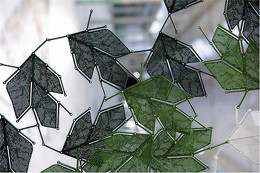
Composite screens. There is a special category of screens that are assembled from separate elements, like a puzzle. The buyer decides for themselves what length and width of partition they need and purchases the required number of elements. As a rule, these are plastic sections, but there are also textile mosaic partitions.
In the photo: Maria model from Casamania.
Flexible screens
These screens have appeared relatively recently. They are not a set of panels, but a single wall that can be bent as desired, creating a whole maze. Each manufacturer offers its own design, but most often it consists of rigid slats or tubes fastened with flexible materials. Such a decorative screen can be easily unfolded into a partition, and when it is no longer needed, it can be rolled up into a compact roll.

In the photo: Viper screen from Fritz Hansen, designed by Jakobsen Hans Sandgren.
Examples of flexible screens (folded like a sheet of paper).
Advantages of screens:
- the screen does not require special installation.
- it is easy to move from place to place, allowing you to quickly change the layout of the room and temporarily separate areas.
- when folded, it takes up a minimum of space—it can be stored in a closet or storage room.
Screens are an amazingly flexible and multi-purpose element of the interior. They can instantly divide a space into zones, create a cozy corner, or hide what should not be visible yet. Their value lies in their mobility and simplicity.
Today, there is a huge selection of screens available. You can find both classic wooden models with oriental motifs and modern versions made of metal, plastic, or even fabric. This opens up a wide range of possibilities for incorporating screens into any interior, from minimalist to boho.
Ultimately, a screen is more than just a partition. It is a tool for creativity that allows you to change the atmosphere in a room without renovation and high costs. It adds not only functionality to the space, but also a special charm, lightness, and intrigue.


