
Are you annoyed by the strange behavior of your Malyutka washing machine? Wait a little while before calling a technician! With a little DIY know-how, many common problems with these machines can be quickly and affordably resolved. You can save time and money by doing repairs yourself, whether the problem is an electrical fault, a noisy spin cycle, or a water drainage issue.
The first step is to grasp the fundamentals of how your Malyutka washing machine operates. These devices work on the simple tenets of filling with water, agitating to clean clothing, draining used water, and spinning to remove extra moisture. Most issues stem from these fundamental operations, frequently as a result of wear and tear on parts like electrical components, belts, and hoses.
Be sure you’re safe before beginning any repairs. If there is a problem with the water supply, shut off the water supply and unplug the machine. Your best friend will be a toolkit that includes basic instruments like wrenches, pliers, and screwdrivers. Numerous fixes, like changing a belt or clearing a clogged drain pump, are relatively simple and can significantly improve the functionality of your machine.
Our guide will take you step-by-step through common problems and their fixes. You’ll discover how to identify issues, locate affordable replacement parts, and carry out repairs without having to bother about scheduling a service appointment. Prepare to restore your Malyutka washing machine’s dependability with these easy do-it-yourself suggestions!
- The main reasons for model malfunctions
- Baby
- Baby 2
- How to repair it yourself: instructions
- Disassembly
- Solving the problem with the activator
- Fixing a leak
- Engine repair
- Replacing the oil seal
- Other possible breakdowns
- Prevention and cleaning
- Video on the topic
- washing machine repair baby, lybid, fairy, agate, zirochka and others
- the most cunning nasty malfunction in a washing machine baby
- Malyutka washing machine repair
- resuscitation of the "baby" washing machine
- Disassembly (repair) of the Malyutka washing machine
The main reasons for model malfunctions
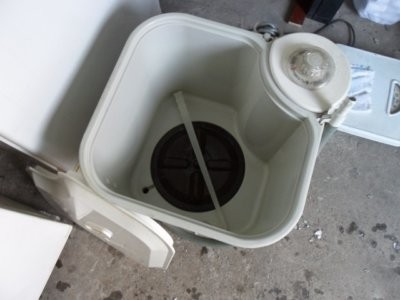
Smaller, manually operated models from the SM series of washing machines spin a lot of water that has powder dissolved in it to wash clothes or linen. On the side of the tank, vertically, is the machine activator.
The home appliance’s unadorned design does not set it apart, so repairs for malfunctions are typically quick and easy.
List of common problems:
- the machine hums instead of washing and then turns off;
- the activator rotates too slowly or “slips” during operation;
- the laundry wrinkles significantly, holes appear on it, the machine makes a lot of noise;
- housing leaks occur;
- the hose is leaking;
- the device cannot be turned on;
- the machine turns on, makes a hum, but the activator does not rotate;
- washing is interrupted shortly after it starts, followed by a stop
heating the case; - The machine does not activate, it smells like burnt wiring.
Baby
Activator in design, the Malyutka washing machine can wash up to two kilograms of laundry at once thanks to its large water tank. Other than washing clothes, the device’s design does not support any other functions. Due to its rudimentary construction, the unit is unable to heat water or squeeze it out.
Traditional Malyutka laundry machines include:
- tank for loading laundry;
- activator with blades, which, when rotated, ensure the washing process.
The device is started by the engine, and the control module—a mechanical timer with a relay—allows you to customize how long the program lasts. A capacitor protects the motor from spikes in the mains voltage.
Baby 2
An electric heating element in a more contemporary model helps heat water to the proper temperature. Their basic working principle is the same as that of the earlier gadget. Occasionally, they are fitted with centrifuges to gently spin clothes.
With our in-depth guide, you can easily and affordably repair your Malyutka washing machine. You can take on repairs yourself without going over budget with our comprehensive instructions and helpful advice, whether you’re repairing common problems like leaks or handling performance hiccups. By managing your appliance maintenance now, you can avoid wasting money on pricey repairs and time waiting for service technicians.
How to repair it yourself: instructions
The straightforward Malyutka washing machine, which is characterized by its small size and straightforward design, can be repaired using the steps listed below.
Learn more about diagnosing and fixing washing machine problems on your own by clicking this link.
Disassembly

You’ll need to disassemble it in order to perform repairs and diagnostics. Style:
- tank for washing and soaking clothes;
- casing that houses the electric drive.
The following will be the order of events:
- Remove the plug from the back of the casing.
- Lock the electric motor with a narrow screwdriver.
- Unscrew the activator with a key, which is easy to make yourself.
- The casing is attached to the tank with six bolts, which will also need to be removed.
- Then remove the switch, remove the housing fasteners. Now the machine is disassembled and ready for repair.
Please enjoy this video, which shows you how to dismantle the Malyutka washing machine:
Solving the problem with the activator
The "Malyutka" style of washing machines do not have a standard drum. Instead, an activator does the work of combining the loaded laundry.
Its functioning could be interfered with by the following issues:
- Tank overload. It means that the maximum permitted weight of the laundry has been exceeded, and the activator power is not enough to mix it. Remove the laundry, allow the machine to cool for 15–20 minutes and repeat the start with a reduced amount of laundry.
- Activator shaft clogged. Most often, threads are wound around the shaft of the device, which interferes with operation. Repair consists of emptying the tank, disassembling and removing interfering threads, accessories or fragments of fabric.
- Activator offset from the main axis. “Symptoms” – the appearance of holes or severe creasing of clothing, increased noise levels during operation. You will have to remove water and clothes from the tank, disassemble the machine and fix the part. If it is deformed, replace it.
Fixing a leak
The Malyutka washing machine may have leaks in a number of locations:
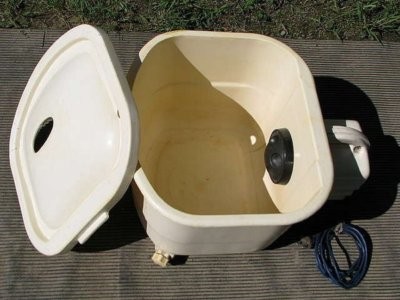
- Along the wall of the laundry bin. Most likely, such a nuisance will be caused by a loose o-ring. To inspect damage, you need to dismantle the activator, study the sealing ring and replace it with a new similar part. It can be purchased in a finished form or independent is made of rubber suitable in thickness and density.
- Along the activator axis. The leak can mean a breakdown in the flange knot. To disassemble the flange, you will need to unscrew the fasteners, remove the casing and get the part. Replacement can be subject to both sealing gum and a weakened spring ring.
- From the hose. These details in an inexpensive washing technique are made of rubber. The material is inclined over time to dry out, which leads to the occurrence of cracks and leaks during operation. When leakage in the area of the hose occurs, it is simply replaced by similar.
- In the area of the corps. Baby "Baby" is made of plastic, which is not talked enough. Mechanical stress leads to cracks, which threatens water leakage and damage to laundry during washing. You can try to repair the damage with glue, but you will have to work carefully. If the crack is significant, it will be dangerous to use the device.
Engine repair
An open circuit could be the cause if the washing machine does not begin to operate after you connect it to the power source. It will be necessary to disassemble the equipment completely in order to locate the breakdown.
The following is the action algorithm:
- Dismantling the activator.
- Case opening.
- Removing the casing covering the engine.
- Removing flange assemblies.
- Removing the washer located on the motor shaft.
- Removing the protective elements of the casing, which are decorative plugs.
- Unscrewing screws.
- Disconnecting the rubber seal while simultaneously disassembling the half-body elements.
The electrical parts are then put to the test. You will need an ohmmeter mode multimeter in order to accomplish this. Check the wiring and semiconductor parts’ serviceability on a regular basis.

- If it is visually visible that the nuts, terminals or screws have oxidized, they are cleaned with sandpaper and re-checked.
- If a broken wire is found, it will need to be connected with a special block. It is not recommended to use the twisting method in this case.
All wiring components must be inspected during the inspection, and any worn areas need to be replaced or properly insulated.
It is wise to periodically inspect the electrical circuit of the "Malyutka" when working independently with its semiconductor components.
Should a severe motor issue be identified, like winding burnout, fixing it might prove to be excessively costly. Professionals advise getting a new washing machine or even changing the unit. In both scenarios, the amount of expenses will be roughly equal. A two-winding, single-phase asynchronous motor is typically installed in Malyutkas.
Replacing the oil seal
One of the causes of leaks or electric motor breakdown is wear, in which case the component needs to be replaced. It is situated where the car’s engine and tank converge. You must unscrew the activator in order to disassemble it and examine it. The shaft thread can be either right or left, depending on which way the activator moves in its primary motion.
The thread in which the shaft is mounted may be ripped, necessitating the replacement of the entire activator if the oil seal is severely damaged.
Other possible breakdowns
Both the countdown timer and the on/off device malfunction frequently. It is better to swap out such parts for new ones right away because it is not practical to repair them. To accomplish this, take apart the problematic parts:
- turn out the small cap located near the switch;
- unscrew the nut located under it;
- remove the washer;
- disconnect the device from the wires and remove it.
After cleaning, gasoline is applied to the switch contacts. The parts will need to be replaced if these procedures are ineffective. They are inexpensive.
The unit will need to be replaced with a new one if the thermal relay fails; it cannot be fixed. It’s crucial that they have exactly the same qualities.
Reassembling the engine half-cases will need to be done after all repairs and component replacements are finished.
- To do this, carefully tuck the rubber seal around the perimeter of the joint.
- The flange is mounted assembled so that the drainage hole is at the bottom.
- To secure, carefully tighten the screws and the activator body itself.
Prevention and cleaning
Lubricating the electric motor bearings is one preventive measure that can prolong the life of the "Malyutka" small washing machine. Bearing maintenance is appropriate for thick-consistency lubricants (CIATIM-201, US-1, SIOL, FIOL). Liquid mineral oils are the ideal treatment for sliding bearings. The mixture that is used to maintain domestic sewing machines is appropriate.
Taking matters into your own hands can frequently save you time and money if you’re having problems with your Malyutka washing machine. Doing your own appliance repair doesn’t have to be difficult. With the correct strategy and a little knowledge, you can successfully handle everyday issues.
Make a diagnosis of the issue first. Does the machine make strange noises or is it not draining properly? Finding the problem and solving it are essential. For model-specific troubleshooting advice, refer to the user manual. Numerous problems can frequently be solved with easy fixes like cleaning the filter or unclogging the drain hose.
Get the required parts and tools before starting any repairs. For most fixes, simple tools like pliers and screwdrivers will suffice. Make sure the replacement parts are compatible with your Malyutka model if you need them. A lot of suppliers of parts provide reasonably priced options that are simple to order online.
The most important thing when doing repairs is safety. Whenever possible, turn off the water supply and unplug the machine from the power source. To prevent errors, take your time and work in a well-lit area. Citing online guides or discussion boards can offer more advice from people who have dealt with comparable repair difficulties.
In addition to saving money on servicing fees, fixing your own Malyutka washing machine can teach you a lot about how your machine works. Your washing machine’s lifespan can be increased with routine maintenance and prompt repairs, guaranteeing that it will continue to function well for many years to come.


