
Have you ever experienced noise disturbances from your neighbors or outside vehicles entering your apartment? By substantially reducing unwanted noise, soundproofing your walls can improve the tranquility and enjoyment of your living area. Soundproofing is a wise investment if you want to increase comfort, improve the quality of your sleep, or create a quiet home office.
Improving a wall’s capacity to stop sound from entering a room from the outside or from one room to another is known as soundproofing. Good soundproofing can make a big difference in apartments, where walls are usually thinner than in houses. Through comprehension of soundproofing concepts and techniques, you can convert your home into a more peaceful haven.
There are several methods for soundproofing an apartment wall, and each has advantages and things to take into account. The aim is to break the path of sound waves and lessen their impact inside your living space. This can be achieved by adding mass to the wall, damping vibrations, and sealing gaps. Certain methods may be more appropriate depending on your unique needs and the design of your apartment.
Contemporary soundproofing methods target impact noises like vibrations or footsteps in addition to airborne noises like music or voices. By taking a comprehensive approach, you can be sure that all possible sources of unwanted noise are addressed in your soundproofing efforts, improving overall acoustic comfort. There are solutions to fit different budgets and levels of complexity, whether you’re planning soundproofing measures during renovations or retrofitting an existing wall.
- Types of noise and their sources
- Types of household noise in apartments
- Functional purpose of apartment soundproofing
- Soundproofing methods
- Types of soundproofing materials
- Important point
- Soft insulation
- Solid insulation
- How to soundproof a wall in an apartment
- Handy sound insulation
- Plasterboard sound curtain
- Gluing sound insulation to the wall is as easy as shelling pears and cheaper than cheap
- Soundproofing walls in an apartment
- How to choose the best sound insulator
- Airborne noise control materials
- Impact sound insulation
- How to make soundproofing with your own hands
- Preparatory work
- Types of modern materials for soundproofing apartment walls
- Features of choice of subtle noise insulation
- Liquid soundproofing materials for walls
- Decorative soundproofing of walls in an apartment
- Soundproofing with plasterboard
- Video on the topic
- We collected 5 soundproofing systems in one video! Checking MYTHS at the Institute of Building Physics!
- Best Soundproofing for Apartment Walls | Which sound insulation to choose | Advice from Alexander Komissarov
- Wall sound insulation in the apartment. How to make sound insulation from neighbors inexpensively?
- Wall sound insulation in the apartment
Types of noise and their sources
The noise level in the house will always be uncomfortable for the occupants if the wall’s sound insulation was done improperly when the house was being built. Based on their physical characteristics, two categories of noise can be identified:
- Air;
- Structural.
It is essential to identify the type of noise and its sources in order to appropriately soundproof walls in a home.
Airborne noise: what is it? These are the sound waves produced by vibrations in the air. The voice of a person or animal, traffic signals in cities, and noises produced by machinery and musical instruments are some examples of sources of airborne noise.
The vibrations of the floor, ceiling, and wall planes produce structural noise. Sound waves are produced through the transfer of energy from the source to the planes. Any mechanical actions directed toward the wall, ceiling, or floor plane are sources of structural noise.

Types of household noise in apartments
There can be one or more sources of background noise that have a detrimental effect on someone’s mental health. The most bothersome noise in homes comes from a variety of sources. This:
- Loud conversation behind the wall;
- Sound equipment speakers turned on at full power;
- The heavy steps of an adult or the tramp of children running on the floor above;
- Playing musical instruments;
- Rearranging neighbors" furniture;
- Turned on hammer drill or other working construction tools.
The apartment’s internal and external walls must be soundproofed in order to protect you from noisy neighbors and outside noise, such as that caused by public transportation.
Functional purpose of apartment soundproofing
The walls and ceilings in the apartment have inadequate insulation from the construction phase, which is the cause of the increased background noise. Most issues related to more noise in residential areas can be resolved with well-executed sound insulation. So, instead of arguing with your neighbors and trying to work things out, it would be wiser for you to soundproof the apartment’s walls yourself.
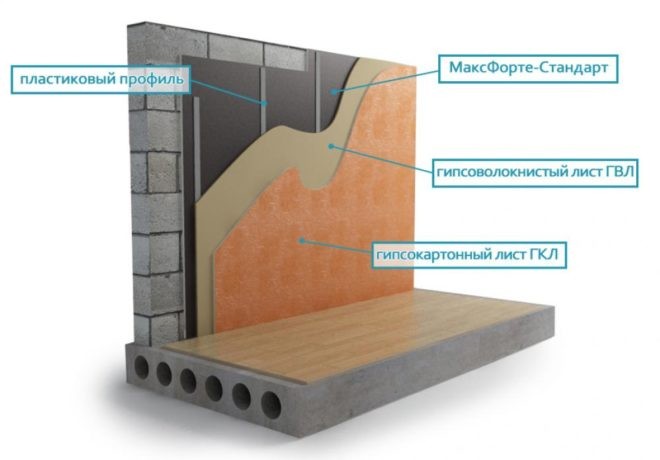
Soundproofing methods
Four techniques for soundproofing residential spaces can be used thanks to the use of contemporary building materials and technologies:
- Decoupling is an effective method during construction or major renovations. Based on the principle of vibration or sound transmission through building structures. In panel construction, different sets of beam fastening studs are used for two adjacent wall panels – this prevents the spread of vibration between them. A house that was built using one set of studs for two adjacent panels should use vibration decouplers. True, this is complicated by the need to dismantle old walls, floors and ceilings. Therefore, this method is not used for do-it-yourself soundproofing of walls.
- Absorption method. In the hollow walls of modern buildings there is air, which perfectly transfers vibrations from one wall surface to another according to the drum principle. This can be avoided by using sound-absorbing materials. In addition to sound insulation, they create an additional thermal effect, since sound energy is converted to a small extent into thermal energy. The degree of absorption of sound energy depends on the thickness of the layer of material used.
Significant soundproofing is also accomplished when external walls and ceilings are waterproofed and thermally insulated.
- Increasing the mass of the wall. Based on the principle of dependence of soundproofing properties on the density of the material used. The thicker and heavier the material used on the wall, the more sound insulating it will be. This method is most effective for isolating airborne noise, but will not eliminate noise that has a structural source.
- The attenuation method is the most effective of all methods used to soundproof walls with your own hands. The combination of sound-absorbing and vibration-insulating materials makes it possible to abruptly stop sound and convert sound energy into heat. This method allows you to limit the penetration into the apartment of low-frequency noise that is of a structural nature and arises as a result of impacts, the operation of electrical tools or construction equipment.
Types of soundproofing materials
It’s no accident that we focused so much on the physical aspects of noise and soundproofing techniques; a particular kind of soundproofing is employed in each instance, taking into consideration the material’s qualities.
Sound insulators come in three primary varieties:
- Special. They are used to create acoustic effects in a room, mainly used in theaters, cinemas, and recording studios;
- Materials for protection against airborne noise;
- Vibration noise insulators.
The final two sets of materials are used to manually soundproof a wall in your home or apartment. They let you keep your house quiet from outside noise and from bothering your neighbors.
Contemporary soundproofing materials frequently possess a hybrid nature, providing simultaneous protection against both airborne and structural noise. Nonetheless, it is important to remember that window and door openings are particular risk areas that require dependable sound protection.
Important point
When selecting materials by hand for soundproofing apartment walls, people frequently make a big mistake by conflating the ideas of sound absorption and sound insulation. It’s critical to remember that these are two entirely distinct ideas.
Although they are a necessary part of any soundproofing project, sound-absorbing materials do not actually provide soundproofing. Most sound-absorbing materials improve the room’s acoustics while still transmitting sound. They work well in spaces where sound sources are present in order to reduce the effects of echo.
Sound-absorbing materials are not appropriate for providing effective sound insulation from external sources; instead, we need insulating materials that guard against noise and ringing.
Materials for soundproofing come in two varieties:
Soft insulation
Roll-type insulators composed of different types of fibers are included in this category. Among them are:
- Self-adhesive or conventional soundproofing membranes made from fibers of natural or synthetic origin. The most popular type of soft insulation today is Texaund – an ultra-thin heavy membrane based on the natural mineral aragonite and binding polymers. This material, due to its elasticity, fire resistance and high sound insulation qualities, has given a new direction in the process of sound insulation.
- Glass fiber (glass wool), mineral wool. Used for insulating walls and ceilings, including frame structures, but requires additional external protection. Available and relatively cheap material.
- Polyester fabric. It is used as a substrate for laminate flooring and has good sound insulation properties.

Solid insulation
Slabs or panels constructed of soundproofing materials are examples of this type of insulation:
- Foam boards. They are the most common cheap soundproofing material. The best option for those who want to soundproof a wall from neighbors without significant costs.
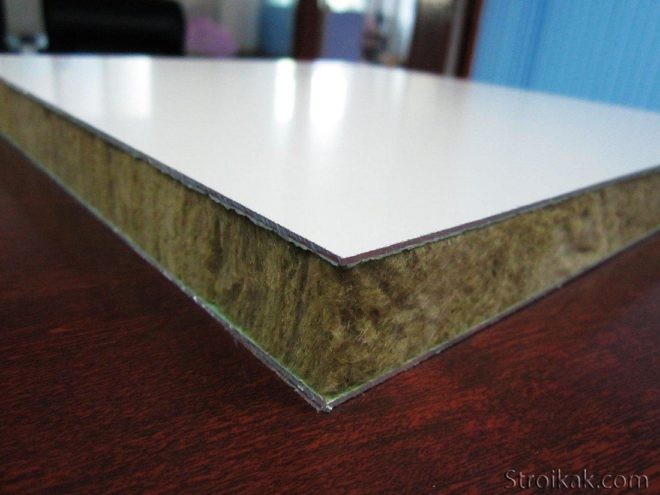
- Combined panels. Construction made of chipboard sheets, synthetic materials or cork with a layer of mineral wool or quartz sand.
- Basalt fiber slabs. Reliable soundproofing material, which can additionally be treated with moisture-repellent compounds.
- Synthetic boards. Made from polyester fibers. Thanks to easy cutting, they are popular in the construction of frame housing.
- Fiberglass boards. They are made using the staple weaving method, which enhances their sound-absorbing properties. Used as an insulating material in frame construction and for suspended ceilings.
- Cork boards. One of the most expensive soundproofing materials, made from natural balsa fiber. They are distinguished by environmental friendliness and high sound insulation ability.
How to soundproof a wall in an apartment
There are a few of the easiest techniques you can employ to separate a wall from its neighbors:
Handy sound insulation
The simplest and least expensive method of shielding yourself from loud neighbors or the street is to do this. Ordinary interior items can be used to reduce noise levels by twenty to thirty percent.
- Thick curtains on the windows muffle street sounds made by city transport.
- A rug hung on the wall creates the same effect. It perfectly absorbs sounds from the outside – be it the street or noise in a neighboring apartment.
- If you put a carpet on the floor, it will significantly reduce the outgoing noise when moving around the apartment.
- A wall of furniture placed along a common wall with them will help get rid of penetrating noise from a neighboring apartment.

Plasterboard sound curtain
Plasterboard sheets are a versatile material that can be used to reliably insulate against external noise and create soundproof partitions within rooms. When placed on two separate frames, gypsum plasterboard partitions have better sound-absorbing qualities than when they are mounted on a single frame. Without additional insulation, the first option works well for sound insulation.
In the second option, it is advised to use two plasterboard sheets with an intermediate layer of viscoelastic materials in order to increase sound insulation. Additionally, gypsum boards should be clad with sheets of fiberboard, gypsum fiber board, and less rigid analogues afterward. Elastic gaskets are used at fastening points to lessen the rigidity of the connections between the cladding and the frame structure, which reduces the transmission of vibrations.
The characteristics of soundproofing walls in an apartment are displayed in the video below:
Gluing sound insulation to the wall is as easy as shelling pears and cheaper than cheap
The simplest and most straightforward method of soundproofing an apartment is to attach soundproof roll materials to the ceiling and walls with adhesive. They fit nicely on the prepared surface and are simple to cut. Even though roll sound insulation is more expensive than plasterboard, it can be installed separately and doesn’t require extra money.
Soft sound insulation installation doesn’t call for any specialized training. Almost all city apartment owners who wish to save money and time by doing their own work can benefit from it. Use wallpaper with an artificial floral design as a light sound-absorbing option. This will allow the walls’ ornamentation to double as extra sound-absorbing material.
We’ve provided a number of methods for lowering the noise level in a city apartment. The choice that is best for each situation must be made individually, taking into account the anticipated outcome and financial capacity.
Soundproofing walls in an apartment
City dwellers live with constant noise all day and even at night. These days, it’s crucial to protect yourself from noises coming from televisions, cars on the street, and adjacent apartments.
This issue can be resolved, and a person’s life can become peaceful and comfortable, with modern materials for soundproofing walls in an apartment.
For complete sound insulation, one material is usually insufficient; therefore, it is best to employ a variety of techniques and materials with varying compositions and thicknesses.
How to choose the best sound insulator
It is important to ascertain the kind of noise that needs to be removed before selecting any such material. The most common kinds of noise in contemporary apartments are:
- Drums. Sound waves penetrating through solid materials of ceilings and walls. For example, the noise of a hammer drill, impacts, steps.
- Air. Enter the house through the air, for example, the noise of cars on the street, conversations, TV sounds, music.
- Structure noise. Combines the properties of percussion and air.
A different set of materials and techniques for sound insulation are needed for each type of noise.
When walls in apartments are properly soundproofed, noise from outside or from neighbors is reduced, which greatly improves comfort. This article examines workable strategies and materials for soundproofing walls, emphasizing both professional and easy-to-do DIY options. Through comprehension of these methods, homeowners can design more peaceful living areas that encourage leisure and seclusion.
Airborne noise control materials
Porous soundproofing materials for walls are necessary to eliminate airborne noise because sound waves are dispersed through the pores and openings, not entirely absorbing the noise.
As a result, buildings’ supporting structures are responsible for insulating against airborne noise. Sand, expanded clay, and other bulk materials are poured between the layers of metal or wooden beams, which are utilized in addition to monolithic walls.
Using liquid materials with vacuum-containing elements, such as rubber, fiberglass, mineral wool, and glass, is effective.

Impact sound insulation
Materials that absorb vibration and shock are used to shield against impact noise. Materials for soundproofing walls combine the qualities of absorbing vibration and dissipating sound because impact noise is 20 dB stronger than air noise.
Massive floors must be made when building a building frame for sound insulation, which is a costly and labor-intensive process.
Efficient application of unique floor plans, such as floating. For sound absorption, special insulating pads are positioned underneath the coating. In addition, foam-based carpets and coverings are utilized.
Effectual noise-absorbing goods:
- Acoustic plates Shumostop (20 mm), which consist of two plates: fiberglass and basalt.
- Thin roll slabs Schumanet 100 Combi (5 mm) for laying under screed.
How to make soundproofing with your own hands
You won’t be able to live in an apartment in a noisy neighborhood without more soundproofing. The aforementioned panels are installable on their own:
- ZIPS (soundproofing sandwich panels).
- Decorative, with a filler of loose materials.
- Made of wood fiber or pressed cork chips. Provide protection from vibration and impact noise. Used for soundproofing walls in houses located near noisy objects: highways, factories, warehouses.
- Polyethylene foam, elastomer plates. Rarely used due to high flammability, short service life, although they have good soundproofing properties.
- Polystyrene foam. Suitable for eliminating structural noise. Has vibration-absorbing, noise-absorbing properties, as well as high thermal insulation. Disadvantages: high flammability, significant reduction in room area.
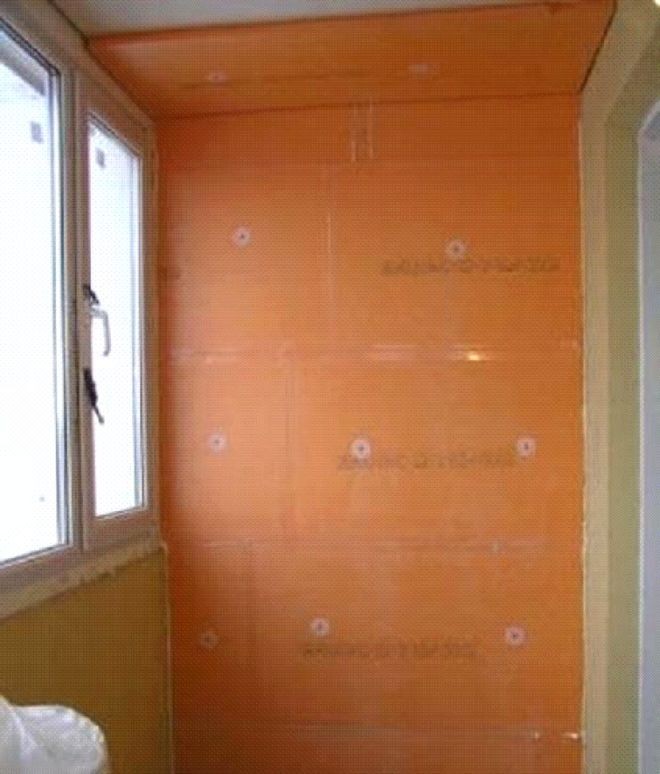
Thin, high-density materials to reduce sound:
- Liquid. When using them, the area of the room is not reduced, no preliminary preparation is required, and complete sealing is possible.
- Fiberglass, randomly laid glass threads. Perfectly protects against sounds and vibrations. Used for pasting joints of slabs, other structural elements, as well as walls.
- Wallpaper backing (for example, polyethylene). There is no need to perfectly level the walls in the apartment with putty. The backing itself will hide imperfections and unevenness.
Paper is wrapped around polyethylene on both sides and gathered into a roll. Consequently, cutting this material into pieces of any size and adhering them together without overlapping is sufficient.
Keeping the room temperature at least 10 is a requirement. It is necessary to apply any wallpaper to the room once it has completely dried. You can use water-based paint to paint the wallpaper because the substrate has the ability to repel water.
Preparatory work
In case you choose to soundproof the walls in your own apartment, it is a part of the overall renovation of the apartment. First up on the preparatory list is sealing joints and fractures between slabs.
If the cracks are tiny, putty needs to be carefully filled in. Big ones are either filled with rags or polyurethane foam. It’s important to fully compress the rags.
Eliminating through sockets—which will require changing the electrical wiring—is a crucial aspect of the task. All other sockets need to be properly fastened into their respective sockets.
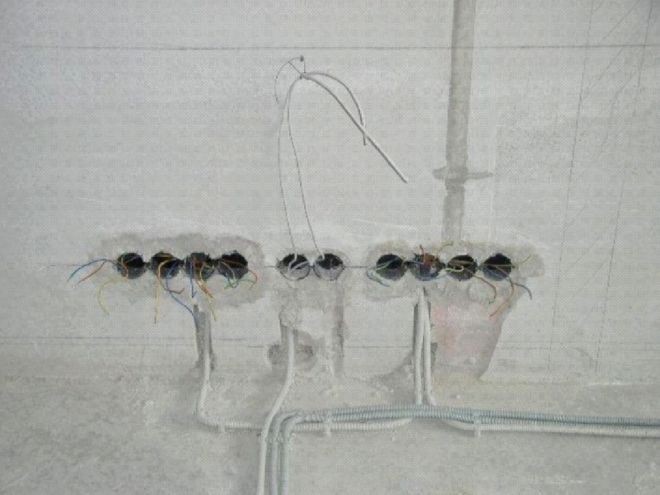
The walls of the apartment have a good degree of sound insulation thanks to a thick layer of premium elastic plaster and putty. That is, normal apartment-neighbor noise can be mitigated without resorting to yelling or loud music.
Types of modern materials for soundproofing apartment walls
Frame and frameless systems are used for walls and ceilings. These systems are very effective when the design parameters are correctly calculated and installed.
To ensure that there are no technological infractions, experts should be consulted if there are even the slightest doubts about their competence.
The installation features are the only distinction between frame and frameless systems. Because they are easy to mount and have a low chance of installation errors, carcassed are appropriate for independent installation.
The term frameless systems is ZIPS. This panel is sandwiched and ranges in thickness from 40 to 120 mm. This panel is first fixed to the wall, and it is then sealed with 12.5 mm of weighted drywall.
This system has demonstrated the highest level of efficiency over the last 20 years. The third iteration of the ZIPS-111 ultra (55 mm) is currently available. 11–13 dB is the additional noise insulation index.
At first glance, frame structures resemble suspended ceilings and typical cladding. They actually consist of a set of acoustic elements with a noise insulation level ranging from 2 to 5 dB and general building elements.
The surface of the walls and ceiling align when frame structures are used in conjunction with sound insulation installation.
Features of choice of subtle noise insulation
It is important to consider the useful area of the room when selecting a subtle noise-insulating material because it does not cover up much of it.

Different kinds of thin materials
- Soft. The effectiveness is 95%. These include mineral wool. For high noise insulation, a layer of 50 mm thick is sufficient, although cotton wool is covered with sheets of drywall and metal profile, which makes the design thicker.
- Semi -burning. Consist of soft, but compressed in solid slabs, materials. Effect up to 70%. A layer of material is used less than 50 mm.
- Tough. Low noise insulation (less than 50%), but great subtlety, which is relevant for small apartments.
Among the thin materials are:
- Noise block or loaded vinyl. Despite the extremely small thickness (2 mm), it is very heavy, as it contains aragonite and mineral barite in the form of small particles.
- Foamed polyethylene, covered with two layers of paper on both sides. It has extremely small sound insulation, that is, unable to protect from sound above a whisper. Used as an addition to other materials.
- Cork. Natural material 30-50 mm thick, beautiful appearance, increased ability to absorb noise and sounds. It is used simultaneously as an element of decor and sound absorber.
- Panels von Star (Germany). Resemble drywall, but much harder. The sheet weighs 20 kg, there is a filler inside the panel that absorbs noise.
- Tecsound membranes also consist of aragonite with the addition of polymers. Have a thickness of 3.5 mm and increased flexibility. Safe in terms of ecology and fire.
You can accomplish the desired result without thickening the system as a whole by using Tensound for noise insulation. A unique textbook SY with a self-stick foundation is regarded as exceptionally good.
Utilized in both frameless and frame buildings.

Liquid soundproofing materials for walls
The process of applying liquid polyurethane foam to the wall’s surface is known as "liquid material soundproofing." These are the characteristics of this mixture:
- Capable of completely sealing a room, fills all the cracks in the walls and creates a layer of monolithic protection from sounds, insects, and rodents. Also used for processing door or window openings.
- In addition to soundproof, sound-insulating, sound-absorbing qualities, it has the ability to retain heat, so you can subsequently save on heating costs.
- The material is lightweight and does not create a load on the structure of the house.
- Does not require preliminary preparation of the wall surface, as it has a high adhesion rate, and during the work there is not a lot of construction waste generated.
- Service life is about 50 years.
This kind of sound insulation installation is thought to be expensive and labor-intensive. They consider the requirement for costly specialized equipment when treating individual properties, which is unfeasible to buy for processing a single apartment.
It will also cost money to call experts. The price of treated wall is roughly 2,000 rubles per square meter.
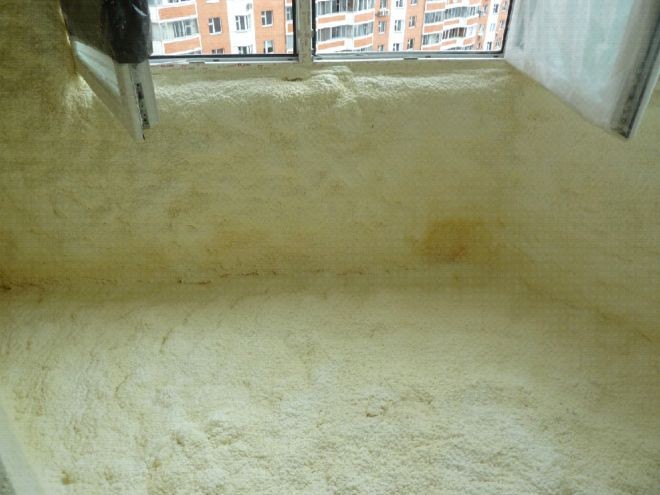
Liquid modern materials come in a wide variety for insulating walls in apartments; the quality and price of these materials vary depending on where they are made.
- Synthesia (Spain). Relatively low price, environmentally friendly, applied to the wall at any temperature and weather.
- Ecotermix (China and Russia). High fire resistance, resistance to fungus and mold. Low cost.
- Demilec (USA). Considered premium material. The price is compensated by the level of noise protection.
- Bayer (Germany). High quality, reasonable price.
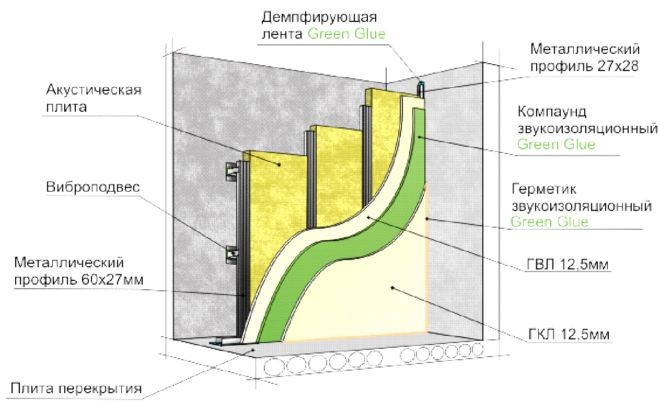
Sound-absorbing liquid Applying Green Glue, also known as Quiet Glue Pro (Quiet Glue), between layers of common building materials, such as between plywood, drywall, and flooring sheets, is done in the United States. Loss of area is roughly 5 cm.
Decorative soundproofing of walls in an apartment
In order to provide sound insulation of this kind, ornamental panels are used. Mounting them with your hands is simple. even a novice, pre-preparing walls is not necessary, and there is no trash left over after the device.
Features of ornamental panels:
- Subtlety. Do not affect the area of the room.
- Ease. The mass of one plate-panels with an area of 1.5 m is 4 kg.
- Performance of versatile functions: In addition to protection against noise, such panels are kept in the room, they are used to decorate.
- Simplicity of installation and dismantling.
- A wide selection of materials for exterior decoration: vinyl, paper wallpaper, fabric, tree.
Among the decorative panels are:
- Wood-fibrous slabs. They are connected by the PAZ-Ship method, attached to the walls of concrete using glue, on other surfaces-using a stapler. Resistant to mechanical, chemical influences, durable, differ in great hardness.
- MDF panels. Increased density, durability, ease of installation, moisture resistance, fire resistance.
- HDF. Perforated soundproofing panels. Most often used in public places: cafes, restaurants, cinemas, clubs, as they have lace trim, which is very decorative.
In addition, they are employed in furniture manufacturing, wall decoration, and facade and ceiling finishing.
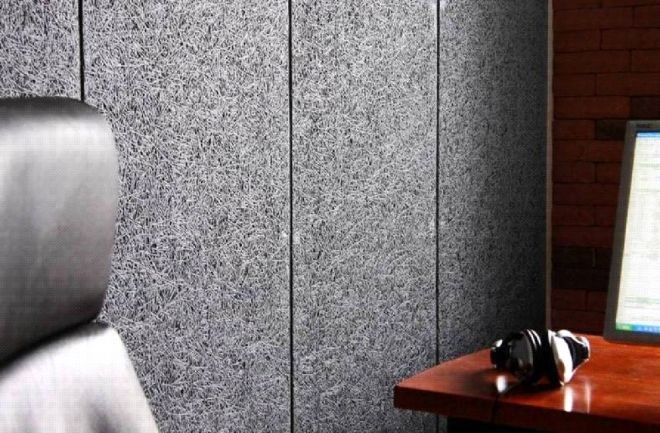
One of the drawbacks is that installing panels on all of the room’s wall surfaces is required for sound insulation; covering just one wall has no impact.
Although these panels are more costly than other materials, installing them doesn’t require prepping the walls in advance, saving both time and money.
Soundproofing with plasterboard
The surface of the room wall can be covered with fiberglass or plasterboard mixed with mineral filler. This is an established, time-tested method that is far less expensive than pre-made panels.
Because of its design, drywall provides good sound insulation from outside noise. It is made up of two metal bases at the bottom and a thin sheet of drywall at the top.
The void that exists between the sheet and the wall is filled with mineral fiber, basalt, and fiberglass. You need multiple layers of cladding for extra protection: either two sheets of plasterboard and gypsum fiber or two layers of plasterboard applied simultaneously.
It is not possible to attach the sound-absorbing material to the wall without a specially prepared frame on which it is laid.

You will need to consider the width of the rolls of this material when assembling the frame. The frame’s slats or bars must be wider than the filler’s thickness in order to allow for an air gap.
The substance is positioned in the voids created by the slats. Then plasterboard can be used to cover it. Silicone or sealant are used to seal seams.
| Material Type | Effectiveness |
| Acoustic Foam Panels | Reduces mid to high frequency noise; less effective against low frequencies. |
| Mass Loaded Vinyl (MLV) | Provides good sound insulation by adding mass to the wall; effective against both high and low frequencies. |
| Soundproofing Insulation (e.g., Mineral Wool) | Absorbs sound waves and reduces noise transmission; effective across a range of frequencies. |
| Double Drywall with Green Glue | Creates a soundproof barrier with layers of drywall and damping compound; effective against various frequencies. |
An apartment’s quality of life can be greatly improved by soundproofing a wall to lessen noise disturbances from nearby units or outside traffic. Soundproofing techniques are useful if you want a quieter living area or are coping with noisy neighbors or the outside world.
Increasing the wall’s mass is one of the most popular techniques. This calls for the use of bulky materials such as soundproofing panels, mass-loaded vinyl, or drywall. These substances lessen the amount of noise that travels between rooms by absorbing and blocking sound waves.
Increasing the insulation value of the wall is another sensible strategy. One way to stop sound from passing through walls is to install soundproof insulation inside the wall cavity, such as fiberglass batts or mineral wool.
It’s also essential to seal voids and fractures. Sound can enter through even tiny gaps around doors, windows, and electrical outlets. Sound leakage can be reduced by using weatherstripping or acoustic sealant to help create a tighter seal.
You should think about combining these techniques for best results. Comprehensive soundproofing can be achieved by addressing impact noise as well as airborne noise and layering materials. The optimal strategy for your apartment will be determined by evaluating the construction of your walls and your particular noise concerns.
These soundproofing techniques can help you create a more enjoyable and tranquil living space that is free from unwelcome noise disruptions. For apartment owners looking to improve their quality of sleep, focus more clearly, or just unwind without interruptions, soundproofing is a wise investment.


