
In contemporary building and renovation projects, mineral wool under plaster is an essential step for insulating a house’s facade. This technology is essential for improving a building’s comfort and energy efficiency, particularly in areas with different climates. Mineral wool insulation helps control indoor temperatures by forming a thermal barrier on the outside walls, which lessens the need for excessive heating or cooling.
Mineral wool is highly valued for its superior thermal and acoustic insulation qualities. It is typically crafted from natural rock or slag materials. It functions by creating air pockets inside its fibrous structure, which reduces the rate at which heat is transferred through walls. In the long run, this results in lower energy bills in addition to maintaining a steady indoor climate. Furthermore, mineral wool is non-combustible, giving the structure an extra degree of fire protection.
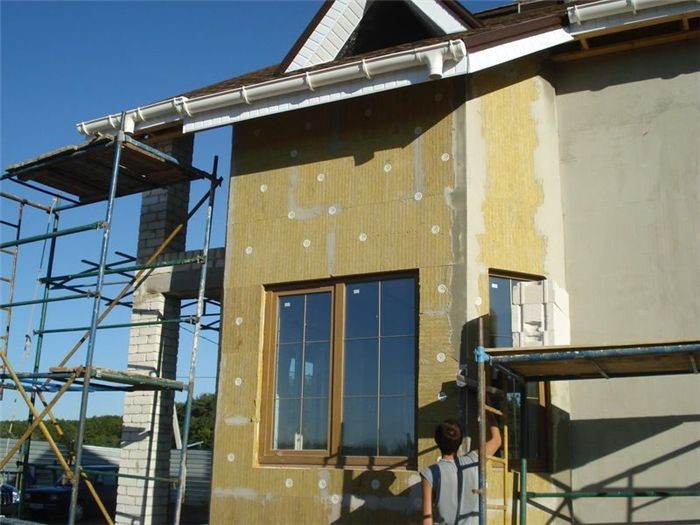
The exterior surface must first be thoroughly prepared before applying mineral wool insulation to a house facade. This include clearing the walls of any debris, caulking any fissures or flaws, and priming the walls appropriately to guarantee the insulation adheres well. After that, the mineral wool boards or mats are precisely measured and cut to fit against the wall surface without any gaps that might reduce the effectiveness of the insulation.
Depending on the particular needs of the project, the mineral wool panels are fastened to the facade either with adhesive or mechanical fasteners once they are in position. The purpose of these fasteners is to firmly retain the insulation against the wall while facilitating heat expansion and contraction. Following correct installation of the insulation, a smooth finish and weather resistance are achieved by covering the mineral wool with a layer of render or plaster.
| Materials Needed: | Mineral wool, adhesive mortar, mesh reinforcement, plaster |
| Steps: | 1. Prepare the facade surface. 2. Apply adhesive mortar and embed mineral wool. 3. Fix mesh reinforcement. 4. Apply plaster in layers. |
- What is mineral wool?
- Pros and cons of using mineral wool for external thermal insulation of a house
- Materials and tools for performing work
- Facade surface preparation
- Video on the topic
- Cracks and destruction of the facade, we understand the reasons for their occurrence, low-quality components
- How to glue mineral wool to the facade of a house, it’s simple.
- Workers violate the technology of gluing mineral wool! Here"s how you can"t insulate facades!
- Technology for gluing mineral wool to foam glue, window slopes and insulating facades with mineral wool
- Insulation of the facade with mineral wool. Pasting cotton wool
- Checking the quality of facade work on a private house, opening the facade covered with cracks, violations
What is mineral wool?
Façade mineral wool is denser and hydrophobic (repels water), in contrast to wool used for interior work. The only forms of mineral wool that are produced are slabs measuring 0.6 x 1.2 m and 0.5 x 1 m, which are used for insulating the exterior of wooden, brick, and other types of houses. The material can have a thickness of 5, 10, or 15 cm. Mineral wool slabs measuring 10 cm are the most common type.
Mineral wool comes in three different types:
- basalt;
- fiberglass;
- slag.


In the meantime, basalt glass wool is thought to be the greatest choice for insulating a wooden house’s exterior because of its exceptionally low thermal conductivity.
Pros and cons of using mineral wool for external thermal insulation of a house
The main reasons insulation is so popular are:
- low thermal conductivity of the material, and therefore high thermal insulation characteristics;
- excellent sound insulation;
- good level of fire safety (after all, mineral wool does not support combustion);
- vapor permeability (provides “breathing” for the house, which is especially important if the house is not wooden, but stone);
- resistance to fungi and rodents;
- relative environmental friendliness and safety of the material (harmful substances are released only when heated to more than 300 ° C);
- simple installation technology.
As drawbacks, the following should be noted:
- change in the volume of insulation and the appearance of cracks in it (occurs only when there is no reinforcing layer);
- if mineral wool is not treated with a hydrophobic solution, all its thermal insulation characteristics will come to naught, because it almost instantly absorbs moisture.
Materials and tools for performing work
What you’ll need to install insulation beneath plaster is:
- guide profiles;
- building level;
- glue;
- mineral wool;
- mesh for reinforcement;
- spatula and facade plaster;
- dowels.
Learn the efficient method of using mineral wool under plaster to insulate a home’s facade. By decreasing heat loss, this technique not only improves energy efficiency but fortifies the building’s exterior against moisture and weathering. Discover how this eco-friendly option offers long-term durability and thermal comfort, making it a wise pick for contemporary building and remodeling projects. Does this fit the bill for what you’re after?
Facade surface preparation
It is vital to level and clean the wall surfaces to remove any dirt or oil stains before applying insulation and plaster. Technology dictates that any metal components on the exterior walls that could rust must be removed. In the event that these metal elements are strategically significant, the use of acrylic-based plaster must be immediately avoided in order to maintain the oxygen flow beneath the plaster.

Low heat conductivity is a requirement for the insulating material. Thus, the best type of wool is mineral wool, specifically the variety having a density of 140 kg/m².
Plaster cannot be placed over insulation if the walls still have any remnants of the previous coating, paint, plaster, or anything else.
It’s important to mark the zones’ borders with sags before applying insulation. Sags are robust nylon cords that are fixed at a specific point in a vertical, horizontal, and diagonal orientation. They are stretched between the fittings’ pins (which must be removed; do not drive them in too tightly).

It is much simpler to assess the wall geometry after the sags are installed. It is necessary to attach the sags so that they are at least 1 centimeter away from the mineral wool. The guide profiles can be installed after the wall has been marked.
Using mineral wool under plaster to insulate a home’s facade is an essential step in improving comfort and energy efficiency. Mineral wool acts as a thermal barrier to help control indoor temperature, keeping houses warmer in the winter and cooler in the summer. Over time, this lowers heating and cooling expenses while simultaneously enhancing living conditions.
Preparing the facade, applying the mineral wool insulation, securing it properly, and adding a plaster layer are the crucial steps in the process. Every step is essential to guaranteeing the insulation’s efficacy and longevity. A smooth surface for application is ensured by careful preparation, and the mineral wool is securely fixed to prevent shifting and maintain its thermal performance.
Selecting mineral wool for insulation purposes on facades has several advantages. In addition to its thermal advantages, it is non-combustible, water-resistant, and has excellent sound insulation qualities. Because of these characteristics, it is a flexible option that can be used for both new construction and renovations, improving the overall sustainability and quality of buildings.
All things considered, insulating the facade with mineral wool under plaster not only increases energy efficiency but also fosters a more sustainable and comfortable living space. It’s a wise investment that benefits homeowners by lowering energy costs, raising property values, and improving their quality of life.


