
It seems that in the world of watchmaking, everything has already been invented before us. But fashion has an amazing property — it moves in a spiral, bringing back forgotten treasures from time to time. Today, amid growing interest in vintage and unusual mechanisms from the past, an amazing phrase has resurfaced: “jumping hour.” This eccentric and charming feature, which many considered a relic, is gaining momentum again.
To understand its essence, imagine a regular clock. The hours and minutes move smoothly across the dial. With a “jumping hour” clock, everything is different. Its time display is discrete — the hour number is in a separate window and changes instantly at midnight and noon. It is not a smooth flow, but a rhythmic, almost tactile click of time that can be observed.
This idea is not new. Similar mechanisms existed in pocket watches in previous centuries, but they peaked in popularity during the experimental 1970s and 1980s. At that time, designers boldly broke with convention, and the “jumping hour” became a symbol of progress and technical ingenuity. And then it was almost forgotten, supplanted by the dominance of classic and smart watches.
Now is the time to return. In the age of digital screens, we are once again drawn to physical, mechanical magic. Seeing the numbers clearly “jump” in the dial window is a special pleasure. It is a reminder that time is not just a continuous flow, but a series of separate, important moments. Manufacturers, from niche manufacturers to major brands, are returning to this concept, offering a fresh take on an old idea. It seems that the “jumping hour” is ready to take its place in the sun once again.
Opera beginnings
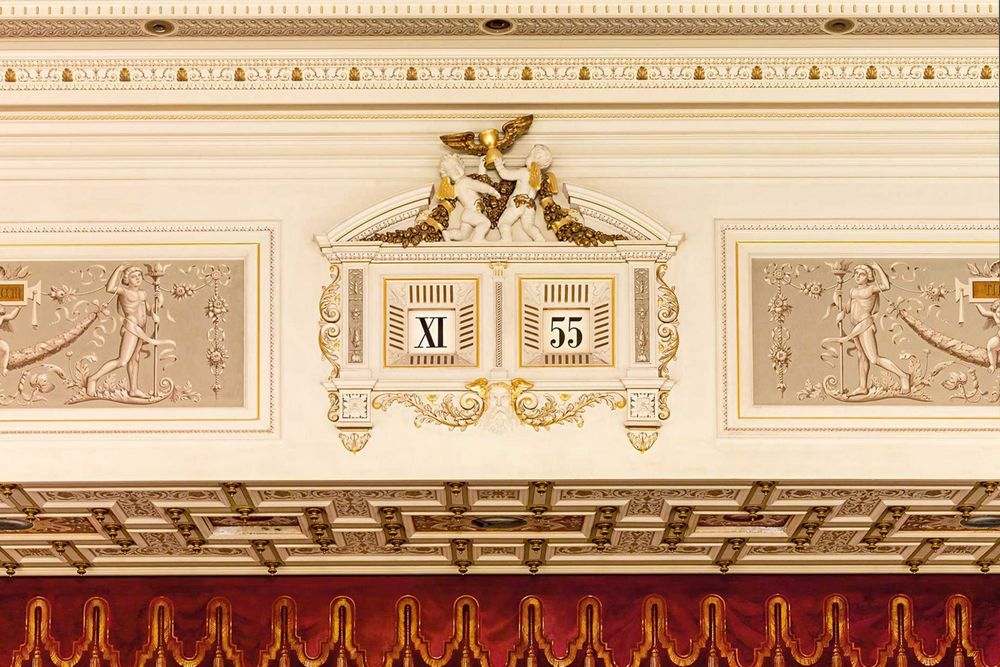
The first watches with jumping discs instead of hands appeared at the Semper Opera House in Dresden.
The history of this complication, reminiscent of future electronic watches, began in 1841 in Dresden. The first watches with jumping discs instead of hands appeared in the newly opened Semper Opera House. They were installed directly above the stage for the convenience of the audience—they could check the time without taking their wristwatches out of their pockets. Not only the hours but also the minutes were switched by jumps in these clocks, with the minute disc jumping at 5-minute intervals. Interestingly, despite the fact that the opera house was destroyed and rebuilt several times, the clock, created by the royal court watchmakers, still adorns the frieze above the stage. At the end of the 19th century, the jumping hour appeared in pocket watches. Without dwelling on the technical aspects of the issue, it must be said that the creation of such a mechanism required great skill and technological research. Nevertheless, a model with an intricate complication was developed by Joseph Paulweber. From 1884 onwards, the IWC manufactory produced a record number of watches with the new mechanism in just a few years — almost 16,600 pieces. The mechanism was subsequently modernized and improved, as the power reserve was initially only one day, and the complex parts had to be made by hand, which made the watches very expensive and not particularly accurate due to the massive disc responsible for the numbers in the window. Perhaps this is why these elaborate watches lost their popularity as quickly as they gained it, and by the end of the 19th century, demand had almost dried up.
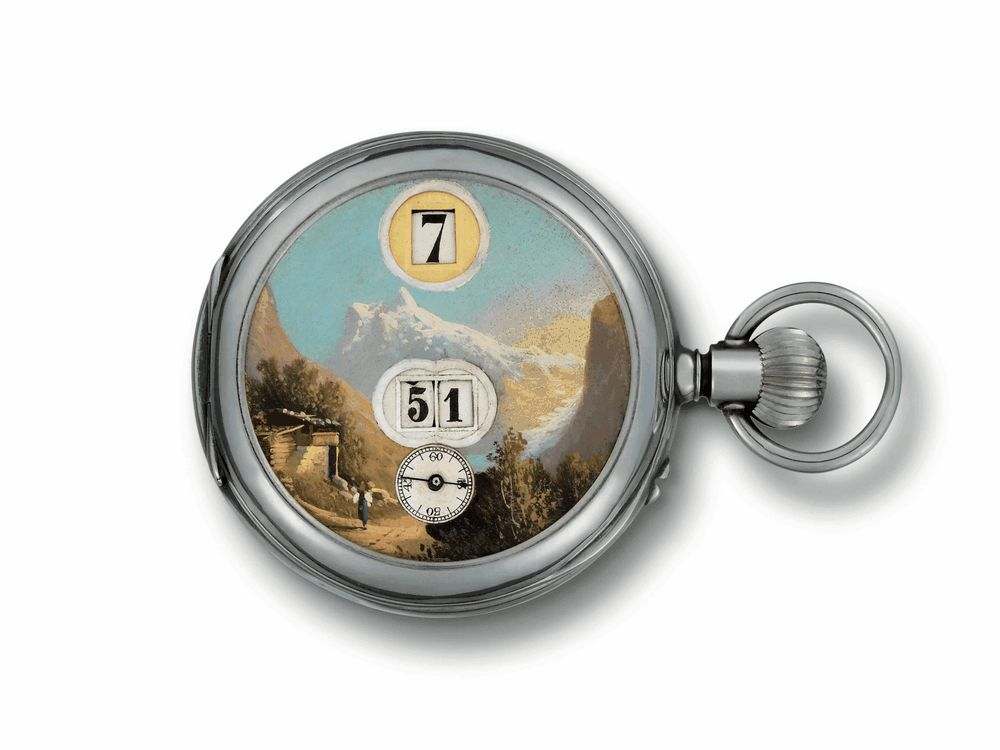
IWC pocket watch model with jumping hour and rare hand-painted dial, 1887.
A leap into the roaring twenties
A new wave of popularity awaited watches with jumping hours in the interwar years of the 20th century — an era of luxury, glamour, and a focus on technological progress. Owning a wristwatch with as many intricate features as possible became the height of fashion. So-called montres à guichets (window watches) came into vogue. They offered protection for the dial (before mineral glass replaced ordinary glass) and fit perfectly into the Art Deco aesthetic with its emphasis on form and finish. Global brands enthusiastically took up the revival of complications in new forms and concepts. For example, Audemars Piguet created watches in a closed metal case with small openings for the hour and minute hands, while Cartier offered models with a jumping hour in a window and a classic minute hand. Breguet invented the “wandering” jumping hour — the hour window moved across the dial, displaying the minutes in parallel. Rolex added this fashionable option to its popular Prince line. As the complication grew in popularity, some manufacturers began to specialize in developing jumping hour mechanisms for supply to other brands. Jumping hour models became so widespread that everyone, from students to movie stars and military officers, could find a watch to suit them, especially since jumping hour watches were advertised as the ideal timepieces for athletes, aviators, and the military. Despite this, World War II, which demanded anything but decorative solutions from watchmakers, brought production of watches with this function to a standstill — and later, many other, more practical models of wristwatches appeared, from aviator watches to chronographs.
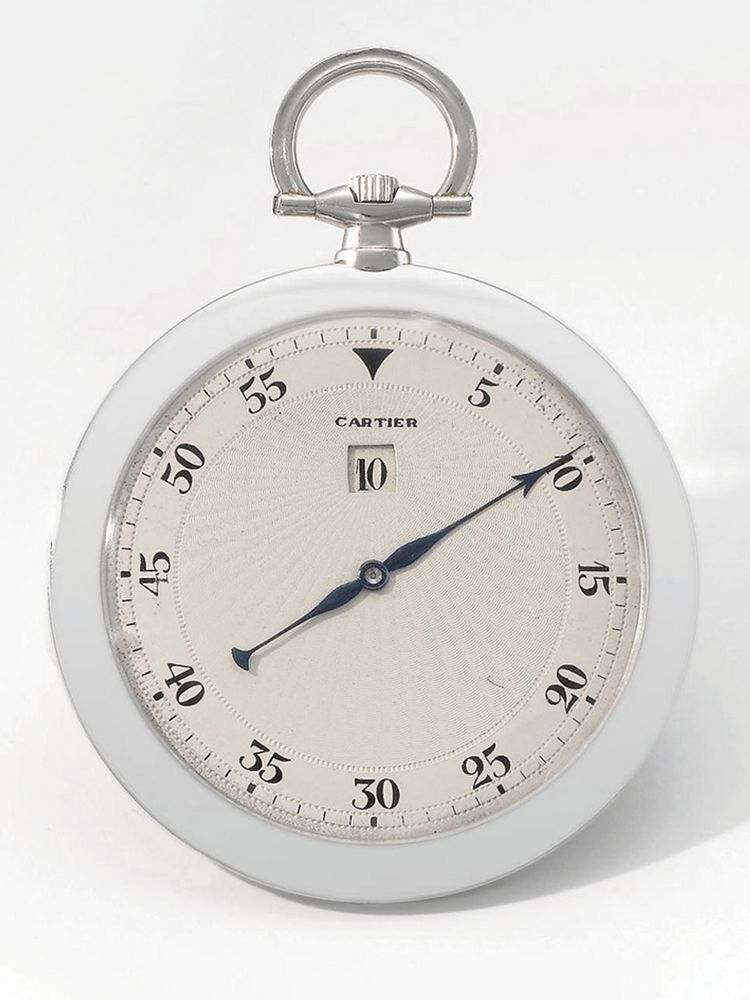
A rare platinum watch with an open dial and jumping hour, Cartier, 1916.
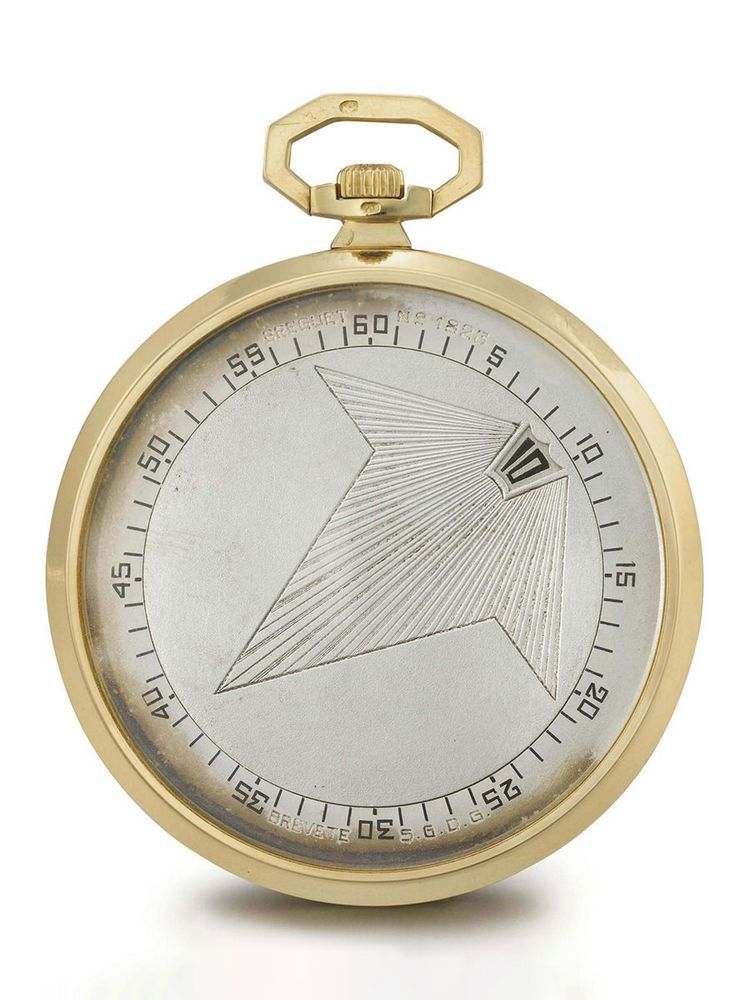
Breguet pocket watch, 1928.
Fashion has a habit of coming back — and now the “jumping hour” style, which was particularly popular in the 80s and 90s, is back in vogue. We're talking about bright clothes with voluminous silhouettes, fitted waists, and broad shoulders, where every element screams drama and confidence. Today, this look is returning not as an exact copy of the past, but as a modern interpretation — with lighter fabrics, restrained colors, and an appropriate touch of defiance. People are choosing it again to stand out, to feel brighter and freer. It's not just a fashion trend — it's a way of saying, “I'm here, and I'm happy with myself.”
At the turn of the millennium
At the end of the 20th century, however, the jumping hour made a comeback. In 1989, Patek Philippe decided to reissue the 1927 model ref. 3969 with a barrel-shaped case and a dial with a jumping hour window and a central minute hand to mark its 150th anniversary. The watch was released in two limited editions — 450 pieces in rose gold and 50 pieces in platinum. Cartier decided to shake things up a bit too — in 1996, the company released a limited edition Tank à Guichets in gold (yellow and rose) and platinum. In the latest series of watches, the crown was located at the traditional “3 o'clock” position. At the end of the 20th century, many as yet unnamed but promising and determined newcomers entered the global watch market. They eagerly picked up on the old but actively reviving trend and presented their new products with complications. One of the first in this regard was Daniel Roth, who released a model called “Papillon” (French for “butterfly”), which was distinguished by the fact that, in addition to an enlarged aperture with hour indication, it offered the owner an alternative retrograde minute indication. François-Paul Journe, an independent watchmaker, reimagined the complication by creating the Vagabondage model, in which the jumping hour was presented in the form of a wandering window. In 2010, his FP Journe released the Vagabondage II model, which featured not only a jumping hour but also jumping minutes. It was followed by the Vagabondage III model, which became the first watch with a jumping seconds display — the chronometer put on a real show: the hour window “wandered,” the minutes “jumped,” and the seconds were counted down in reverse order.
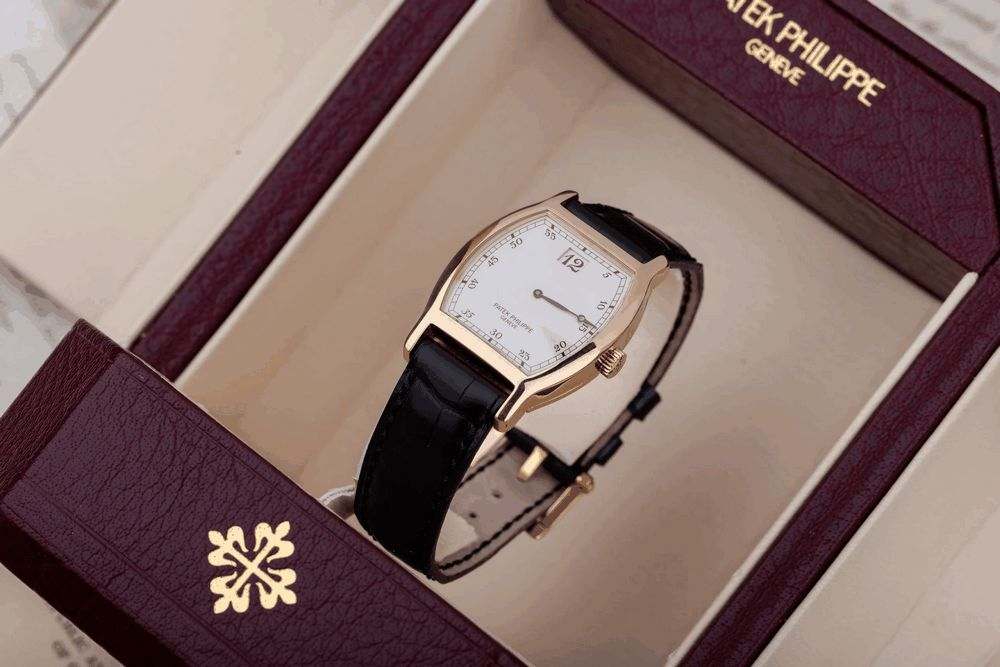
Limited reissue of model ref. 3969, 18-carat rose gold, Patek Philippe, 1989.
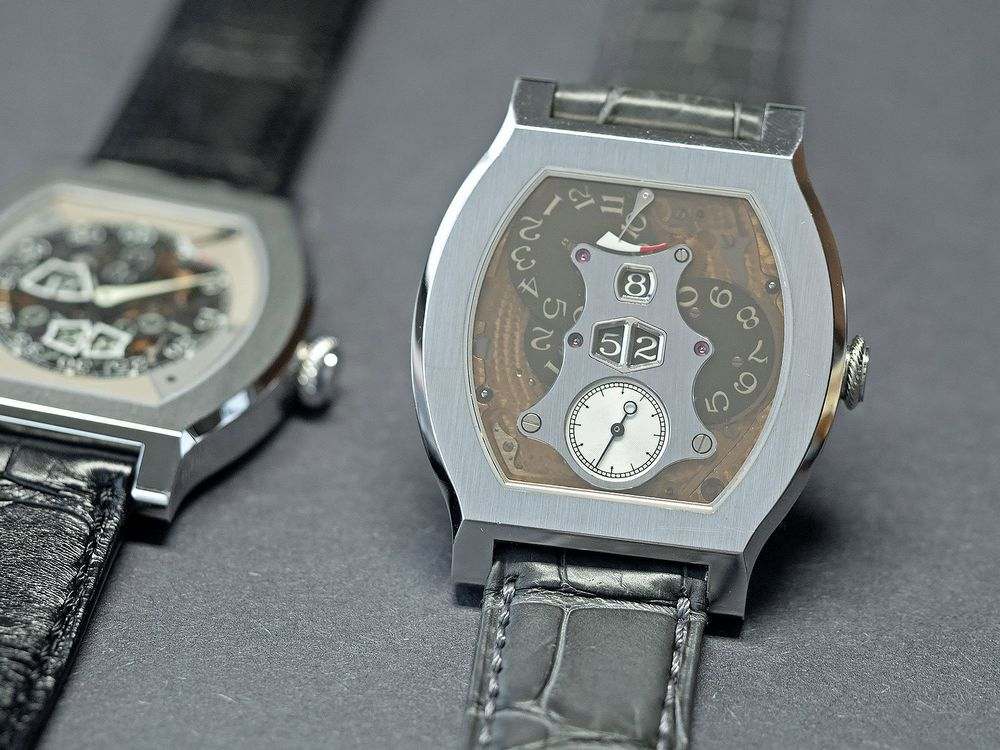
Model Vagabondage II, FP Journe, 2010.
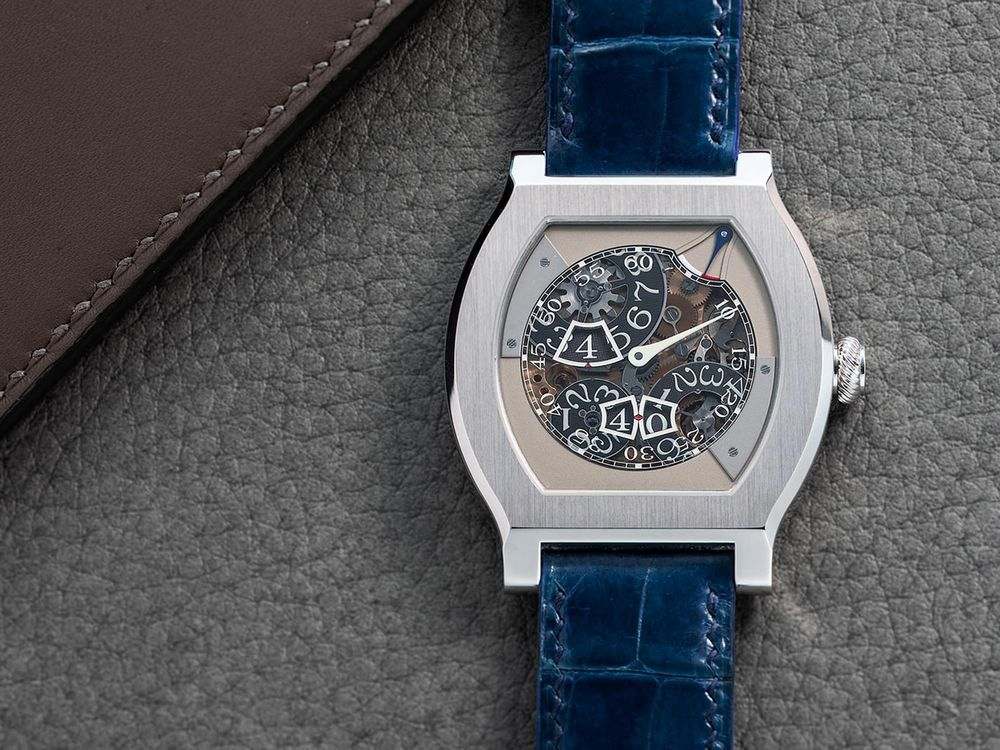
The Vagabondage III model by FP Journe is a watch with a mechanism produced in a limited edition of 137 pieces.
In the early 2000s, Vianney Halter introduced the Harry Winston Opus 3 watch to the world — a mechanism with jumping hours and minutes that also counted down the last four seconds before the jump and displayed the date and time of day (day/night).
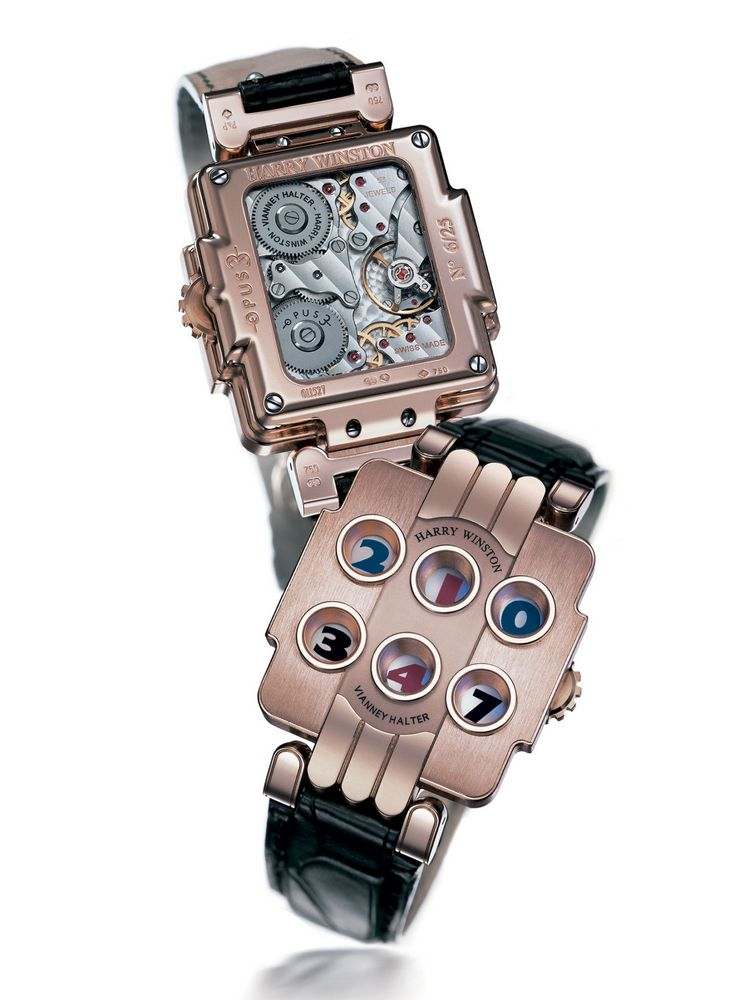
Harry Winston Opus 3 watch, 2003.
So, the “jumping hour” is back in the spotlight. This is not just a passing trend, but a return to the value of thoughtful design and playful experimentation with time. In the world of digital dials, this mechanism offers a special, almost tangible pleasure.
When you choose a watch with this feature, you are not just choosing a device for counting minutes. You are getting a stylish accessory with character that will set you apart from the crowd. It is a conversation piece, a small technological marvel on your wrist, reminiscent of the elegance of the past, reimagined for the present.
Fashion is cyclical, and the return of the “jumping hour” is a vivid confirmation of this. It demonstrates that true charisma and attention to detail never go out of style completely. Perhaps now is the perfect time to take a fresh look at watches.


